
Most people park the car in October and wait for April. That's five months without seat time.
Here's what a lot of Colorado drivers don't know. Both of our big road courses keep running open lapping through the winter. It's cheaper, it's quieter, and it comes with a few rules of its own.
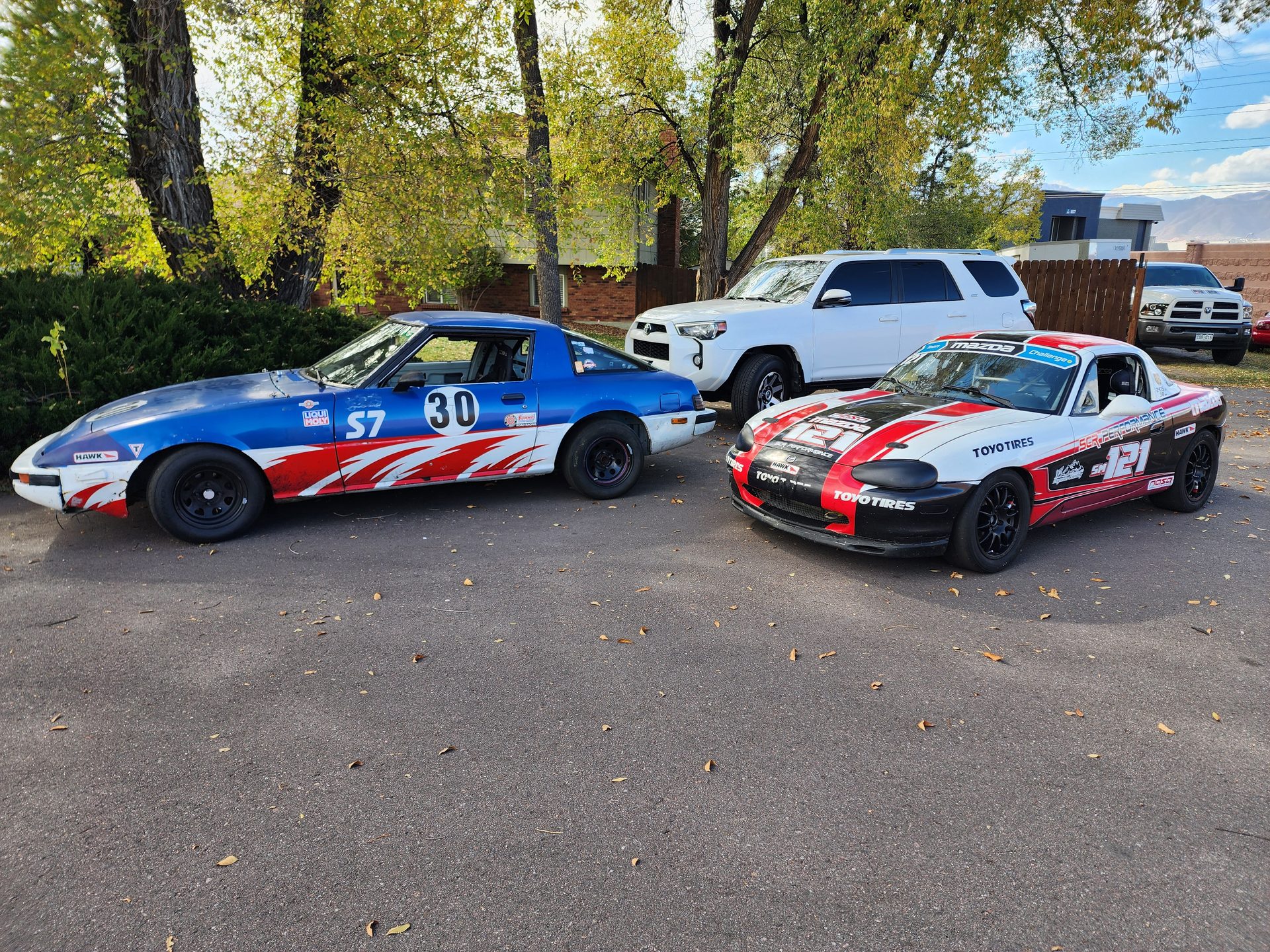 Our Spec Miatas in the paddock on an October day. The season doesn't have to end when the leaves do.
Where you can drive this winter
Two tracks matter for Front Range drivers. Here's what each one publishes right now.
| High Plains Raceway (Byers) | Pueblo Motorsports Park | |
|---|---|---|
| Winter season | About Nov 1 to Mar 31 | Select dates on the calendar |
| Days | Saturdays and Sundays | Mostly Sundays |
| Track time | 11 a.m. to 3 p.m., no lunch break | 10 a.m. to 3 p.m., five 30-minute car sessions |
| Price | $159 (paid by midnight the night before), $179 after | $140 full day |
| Shared with bikes? | Check the day (the schedule lists a drivers/riders meeting) | Yes, cars and motorcycles alternate each half hour |
High Plains Raceway calls winter lapping "tentative." If fewer than 15 people sign up by noon on the Friday before, the day is canceled. Everyone registered gets a 100% credit toward a future lapping day. Weather calls happen no later than 8 a.m. on the day. The track asks you to check the hotline (303-769-4771) instead of calling the office.
Pueblo Motorsports Park lists its dates on MotorsportReg. As of today, the calendar shows winter open lapping on November 1, 15, 22 and 28, plus January 17. Cars run at the top of the hour and motorcycles run at the bottom.
Compare that to summer. A full summer weekday at HPR is $219, or $239 if you pay late. Winter costs less, but you also get a shorter day. Four hours at HPR is still a lot of laps if you're honest about how much driving you can actually absorb.
If you've never driven either track, read our High Plains Raceway guide and Pueblo Motorsports Park guide first.
Your tires are the biggest change
This is the part that catches people. Performance tires have a temperature floor.
GM's service guidance for its own cars is blunt. High-performance summer tires lose performance in the cold. GM recommends winter tires for cars driven a lot below about 40°F. It says these compounds can lose flexibility below 20°F and crack in the tread. It sets competition tires even higher. They "should not be driven at temperatures below approximately 50°F."
That's one carmaker's guidance, not a universal law. Your tire maker's word beats it. But the pattern holds across the industry. The stickier the tire, the more it hates the cold.
So on a 38-degree morning, an R-compound tire is not the grippy tire you know from July. It's harder, slower to warm up and easier to slide.
A few habits help:
- Give the tires an extra lap or two. Coach Tom Long says cold mornings take "an extra lap or two" for tire temps to reach their operating range.
- Start a little high on pressure. Long suggests adding about a pound on cold mornings, then bleeding pressure once the tires are hot. His rule of thumb: every 10 degrees of ambient change is worth about one pound.
- Don't flex frozen tires. If your tires sat in a freezing trailer overnight, let them warm up before you mount or drive on them.
We cover the warm-up side in more detail in cold tires vs. warm tires.
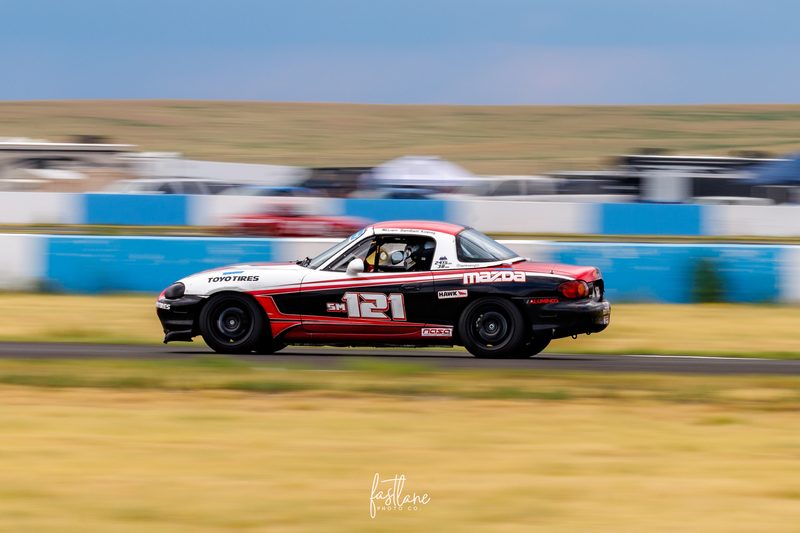 Colorado blue sky at High Plains. Winter days can look like this too. The asphalt just doesn't feel like August.
The car needs a slower start too
Cold doesn't stop at the tires. Oil, gearbox fluid and coolant all need time to come up to temperature.
Tom Long's cold-weather advice is to see at least 160 degrees on water temperature, with a similar oil temperature, before you use the full rev range. He also points out that cooling systems can work too well in the cold. Some racers tape off part of the grille for cold morning sessions. Long says the same can apply to brake ducts. Pedal shudder can be a sign the brakes are running too cool.
Watch the gauge, though. Tape is a tool, not a set-and-forget fix. If the afternoon warms up, pull it.
Two more cold-weather checks:
- Coolant. A street car on normal coolant is fine overnight. A race car running straight water is not. Read the antifreeze and freezing problem before you leave one in a cold trailer.
- Battery. Cold weakens a tired battery. A jump pack in the trailer is cheap insurance.
Plan for the cancel
Winter lapping in Colorado depends on two things you don't control. Enough signups and decent weather.
That changes how you plan. At HPR, a day with fewer than 15 drivers is called off at noon Friday. Weather can still change things that morning. So:
- Register early. It helps the day reach its minimum and saves you $20.
- Check the status Friday afternoon before you hook up the trailer.
- Have a backup weekend. If Saturday falls through, the next weekend is fine.
- Read the credit rules. HPR's credits last until December 31 of the year after you paid. A day the track cancels for low signups isn't lost money. It's postponed. No-shows get nothing, though.
The drive to Byers or Pueblo on a snowy morning is its own judgment call. If you tow, our Colorado towing guide covers the passes and trailer math.
Is a winter track day worth it?
For most people, yes. Here's why.
You get seat time when everyone else is on the couch. Smaller winter fields can mean more open track. The skills you keep sharp in January are skills you don't have to relearn in April.
Just reset your expectations. Winter is not the day for a personal best lap. Treat it as practice. Work on your line, your braking points, and your vision. Leave the lap timer for spring.
And dress for the paddock, not the cockpit. It can be cold and windy between sessions. Bring warm layers for standing around, but don't drive in a bulky coat that pins your arms.
If you want to stay sharp off-track too, our racing off-season plan lays out what to work on between now and spring.
When you do head out, a simple checklist keeps the cold-morning scramble under control. The free Race Day Ready Pack has one you can print.
Sources: High Plains Raceway: Open Lapping Days, Pueblo Motorsports Park on MotorsportReg and its November 15 winter lapping listing, GM TechLink: Summer Tire Performance and Cold Weather Cracking, Tom Long Racing: Tires and Temperatures on Cold Days, Tom Long Racing: Cold Weather Racing Tips. Prices and dates checked October 20, 2026. Winter schedules change and days can cancel, so confirm with the track before you go.
Do you believe?