
You can own the right truck, the right trailer, and a perfectly strapped-down car and still get humbled on the drive. Not by the track. By the road that gets you there.
Colorado towing is its own skill. The grades are longer than most people are used to, the air is thinner than your engine wants, and the wind on the plains has ended more than one trip early. Here's how the drive to our tracks actually goes, and how to run it without cooking your brakes or scaring yourself.
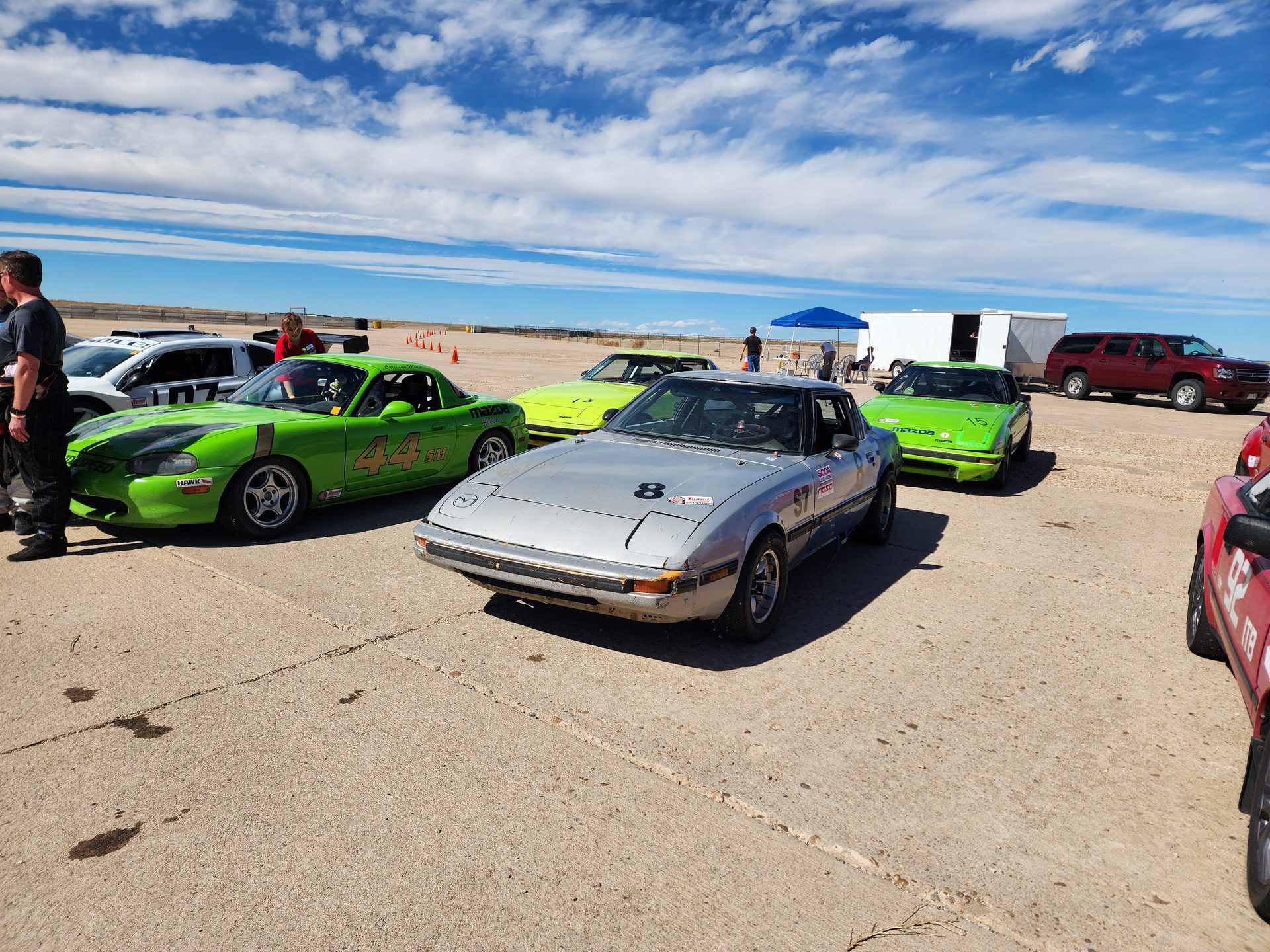 Two of our cars in the driveway. The hard part of the weekend often starts the second these get loaded.
Know the route before you know the truck
The two tracks most Front Range racers tow to sit on opposite kinds of road, and they ask different things of you.
High Plains Raceway is out east near Byers, at roughly 5,000 feet. You get there on I-70 east from Denver, then Highway 36 for 17 miles of open prairie. The drive is flat. No real grades. The whole challenge here is wind, not braking.
Pueblo Motorsports Park sits south on I-25. To reach it from Denver or Colorado Springs, you cross Monument Hill, the high point on I-25 between the two cities at about 7,352 feet. That means a real climb and a real descent in both directions, plus the run down toward Pueblo.
So the drive is a tale of two problems. HPR tests your loading and your nerves in a crosswind. Pueblo tests your brakes and your gears. Plan for the one you're actually facing.
The descent is what will hurt you
Climbing a grade with a loaded trailer is mostly a patience game. You'll be slow, your temps will climb, you back off and let the engine breathe. Annoying, not dangerous.
The descent is the dangerous half, and it's the part first-timers get wrong.
The failure mode is brake fade. Ride your brakes down a long grade and the pads and rotors get so hot they stop biting. It builds slowly, then all at once. The early warning is a faint burning smell or a pedal that feels soft and far away. If you feel that, you're already in trouble.
Here's how you avoid it:
- Gear down before the descent, not during it. Drop your automatic into a lower range, or your manual into a lower gear, at the top. Let the engine hold the rig back. The rule of thumb: descend in about the same gear you'd need to climb it.
- Brake in short, firm bursts, not one long drag. Slow to a safe speed, get off the pedal, let everything cool, repeat. A continuous 15-plus-second brake application is how you bake the system.
- Pick a speed and defend it. On a steep grade, 10 to 15 mph under the posted limit is not slow, it's smart. Let the impatient guy pass.
Your engine and transmission are your primary brakes on a descent. Your wheel brakes are the backup. Most people run that backwards and pay for it.
Colorado posts runaway-truck ramps on its worst grades for exactly this reason. You never want to be the passenger vehicle that needs one.
Altitude taxes the tow rig too, not just the race car
We've written before about how much power a race engine loses at altitude. The same physics hit your tow vehicle.
A naturally aspirated truck makes roughly 3 percent less power for every 1,000 feet of elevation. Climb Monument Hill from Colorado Springs and your truck is working with real handicap by the top. You'll feel it: the same throttle that held 70 on the flats now barely holds 55 on the grade.
That's not a problem, it's just information. Plan for a slower climb. Turn off the cruise control on grades so it doesn't hunt and hammer the transmission trying to hold a speed the mountain won't give you. Watch your transmission temperature if your truck shows it. And if you're a diesel or a tow package with an exhaust brake, this is exactly what it's for.
Turbocharged and supercharged tow vehicles recover most of that lost power. If you're shopping a tow rig specifically for Front Range duty, that's worth knowing.
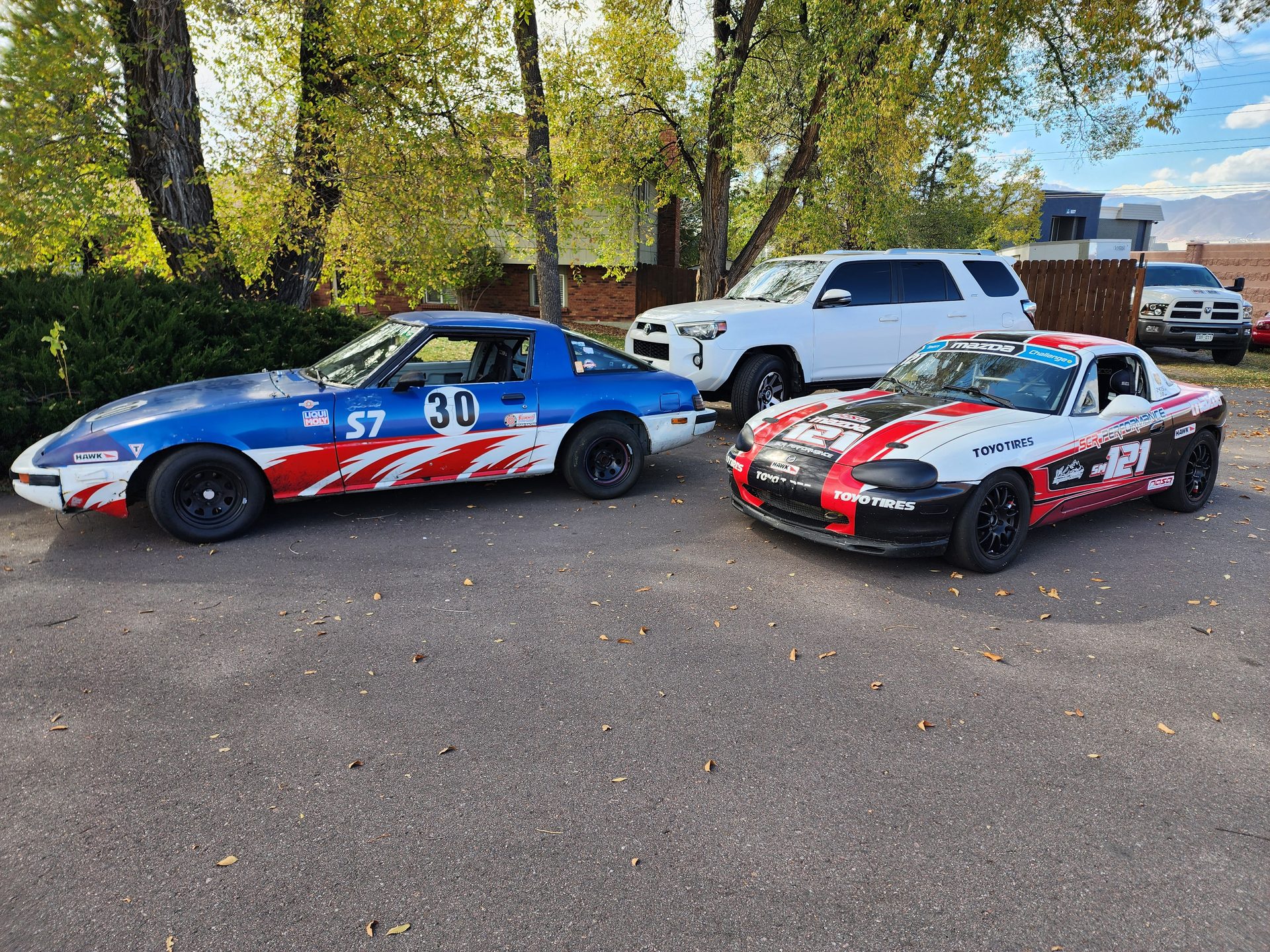 Every car in this photo climbed a grade or crossed the plains to get here. Nobody posts that part.
The plains will try to blow you around
If Pueblo is a brake problem, High Plains is a wind problem.
The prairie east of Denver has nothing to slow a crosswind down. A spring gust out there will shove a tall, light trailer around like it owes it money, and an empty or lightly loaded enclosed trailer is the worst offender. This is a genuine white-knuckle stretch on a bad day.
Two things keep you planted:
- Load heavy and load low. Put your heaviest gear, your toolbox, your fuel, low in the trailer and slightly ahead of the axle. That gets your tongue weight right and drops the center of gravity so the wind has less leverage.
- Slow down before you think you need to. Sway gets exponentially worse with speed. Backing off 10 mph turns a scary moment into a manageable one.
For a bumper-pull setup, a weight-distribution hitch with built-in sway control is the single best upgrade for Front Range towing. It restores load to your truck's front axle and actively fights the side-to-side motion a crosswind starts. It won't make a gust disappear, but it turns "pull over and wait it out" into "ease off and keep rolling."
The legal stuff you can't skip in Colorado
Two Colorado rules matter for anyone towing a race car, and they're not optional.
Trailer brakes are required at 3,000 pounds. Colorado law (CRS 42-4-223) says any trailer with a gross weight of 3,000 pounds or more must have brakes on all wheels, operable by the driver from the cab. A loaded car hauler clears that threshold easily. So you need working electric brakes on the trailer and a brake controller in your truck. On a long descent, those trailer brakes are also what keep the whole rig from trying to pass you.
The breakaway system has to actually work. The same law requires that if the trailer comes off the ball, its brakes apply automatically. That's a battery-powered breakaway switch, not just a safety chain. The catch: that little battery drains and dies, and almost nobody checks it. Test it every season. It's the cheapest insurance you own.
If you're still sorting out which trailer to buy in the first place, we broke down open versus enclosed versus renting in how to get your race car to the track. This post is about surviving the drive once it's loaded.
Here's the honest bottom line. Towing to a Colorado track isn't hard, but it's unforgiving of the person who treats it like a flat-land highway cruise. Respect the descent, respect the wind, give the altitude its due, and check your breakaway battery. Do that and the drive becomes the boring part of the weekend, which is exactly what you want it to be.
And if wrestling a truck and trailer over Monument Hill is the thing keeping you off the grid, there's a way around it. Our arrive-and-drive program means the car, the trailer, and the tow rig are already at the track. You bring a helmet and drive.
Do you believe?
Sources: Colorado Revised Statutes 42-4-223 (trailer brakes and breakaway, via FindLaw), Monument Hill / Palmer Divide elevation (Wikipedia), High Plains Raceway track info and directions, Andersen Hitches: towing in mountains, grades and engine braking, and Lippert: what a weight-distribution hitch does. Elevations, grades, and regulations verified against these sources as of September 2026. Always confirm your tow vehicle's rating on its door-jamb sticker and check current state law before you tow.