
Nobody warns you about this part. You save for the car, you find the car, you get it through tech. Then it sits in your driveway and you realize a race car does not drive itself to Byers.
Getting the car to the track is a real cost, a real skill, and where a lot of first-year budgets quietly blow up. So here are the four honest options, what each one weighs, and what it takes to pull it here in Colorado.
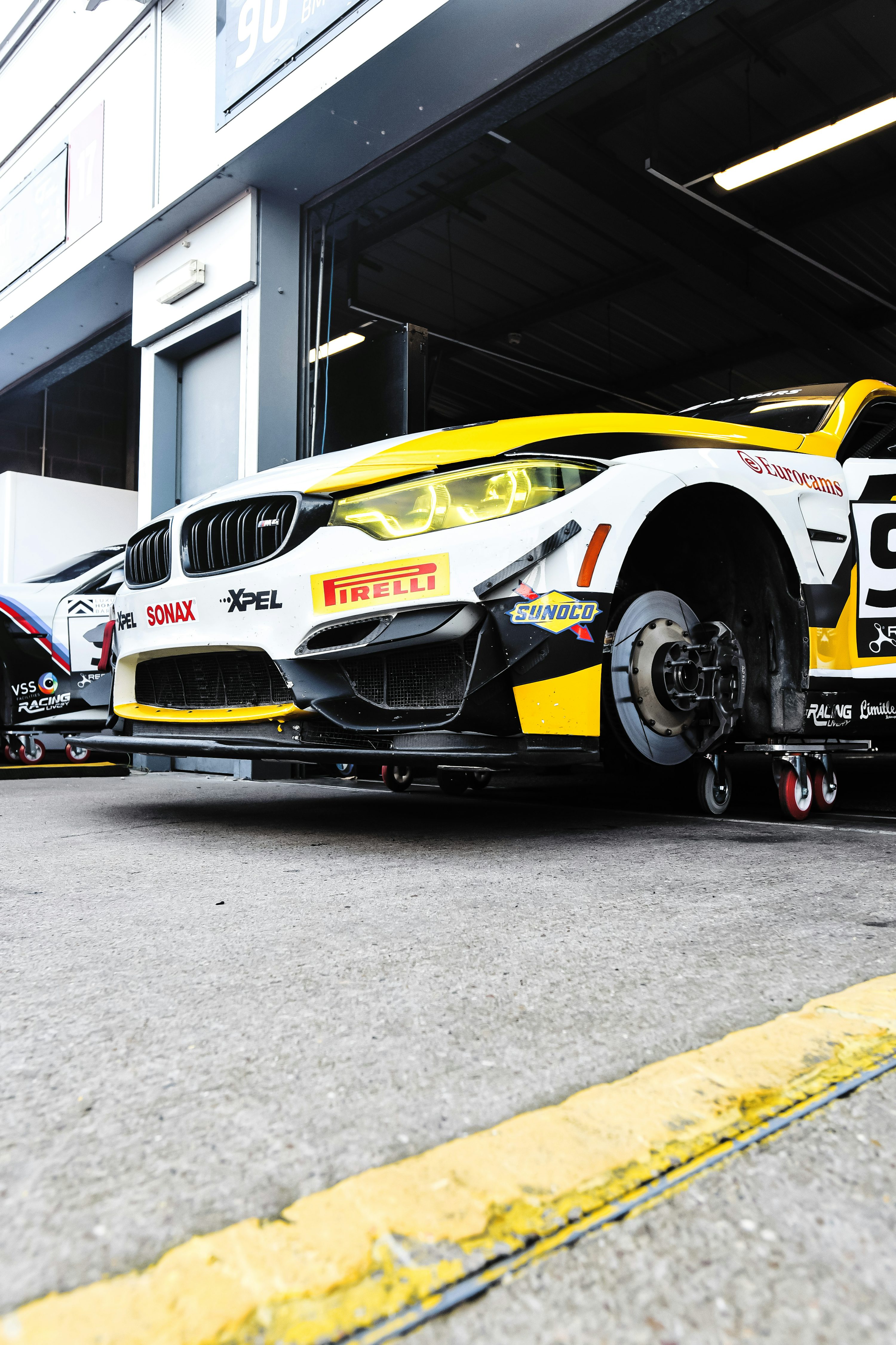 Photo by Swansway Motor Group on Unsplash.
Start with the weight math, not the trailer
Most people shop for a trailer before they know what they're pulling. Do it the other way around.
A Spec Miata is about as light as a real race car gets. NASA's 2026 Spec Miata rules set minimum weights of 2,275 pounds for a 1990-93 1.6, and 2,400 to 2,450 pounds for the later 1.8 cars. Those numbers include the driver, so call it roughly 2,100 to 2,300 pounds sitting on the trailer.
A common 18-foot steel open car hauler with a 7,000-pound GVWR weighs somewhere between about 1,500 and 2,200 pounds empty, depending on the builder and the deck.
Add it up:
| Item | Weight |
|---|---|
| Race car (Spec Miata, no driver) | ~2,100–2,300 lbs |
| Open steel 18-ft car hauler, empty | ~1,500–2,200 lbs |
| Tires, tools, fuel jugs, spares, canopy | ~300–600 lbs |
| Loaded trailer, total | ~4,000–5,000 lbs |
Now the number that actually matters. Tongue weight on a bumper-pull car hauler typically runs 10 to 15 percent of the loaded trailer weight. On a 4,500-pound rig that's 450 to 675 pounds pressing down on your hitch.
Your tow rating is not the limit. Your tongue weight, your hitch, and your brakes are the limit.
A modern half-ton truck handles this without breaking a sweat. Most midsize crossovers do not, even when the brochure says 5,000 pounds. Check the sticker in your door jamb, not the internet.
Option 1: Drive it there
If your track car still wears plates, driving it to the track is legitimate. Plenty of good drivers started exactly this way, and there's nothing embarrassing about it.
The honest tradeoffs:
- You use up your street car. Track pads squeal and dust everywhere. Race-oriented tires wear fast on the highway and get greasy in the rain.
- You have no spares. Whatever fits in the trunk and passenger seat is your entire toolbox.
- A failure strands you. Cook a wheel bearing at High Plains and you are 60-plus miles from Denver with no way home except a tow bill.
The rule I'd give a first-timer: drive it there for HPDE if the car is healthy and mostly stock. Stop driving it there the moment you start removing seats, adding stickier tires, or chasing lap times.
And once you go wheel-to-wheel, this option ends. A caged race car has no plates, no title in many cases, no wipers, and no business on I-25. It gets towed. That's not a preference, it's the law.
Option 2: An open trailer, the grassroots default
This is what most club racers use, including plenty of people who could afford better.
New open car haulers commonly run somewhere around $3,000 to $8,000 depending on length, deck, and construction. Used ones show up constantly, and a solid steel hauler with good tires and working brakes is one of the better buys in the sport.
Why open wins for most people:
- Light enough that a half-ton truck, and sometimes a properly equipped SUV, can pull it
- Far less drag, which means noticeably better fuel economy over a 300-mile round trip
- Easy to park, easy to back, easy to see around
- Cheap to fix when something breaks
What you give up is weather protection and security. Your car rides in whatever the sky is doing, and you can't lock tools inside it. You'll want a good set of straps, a spare trailer tire you've actually checked, and a tarp.
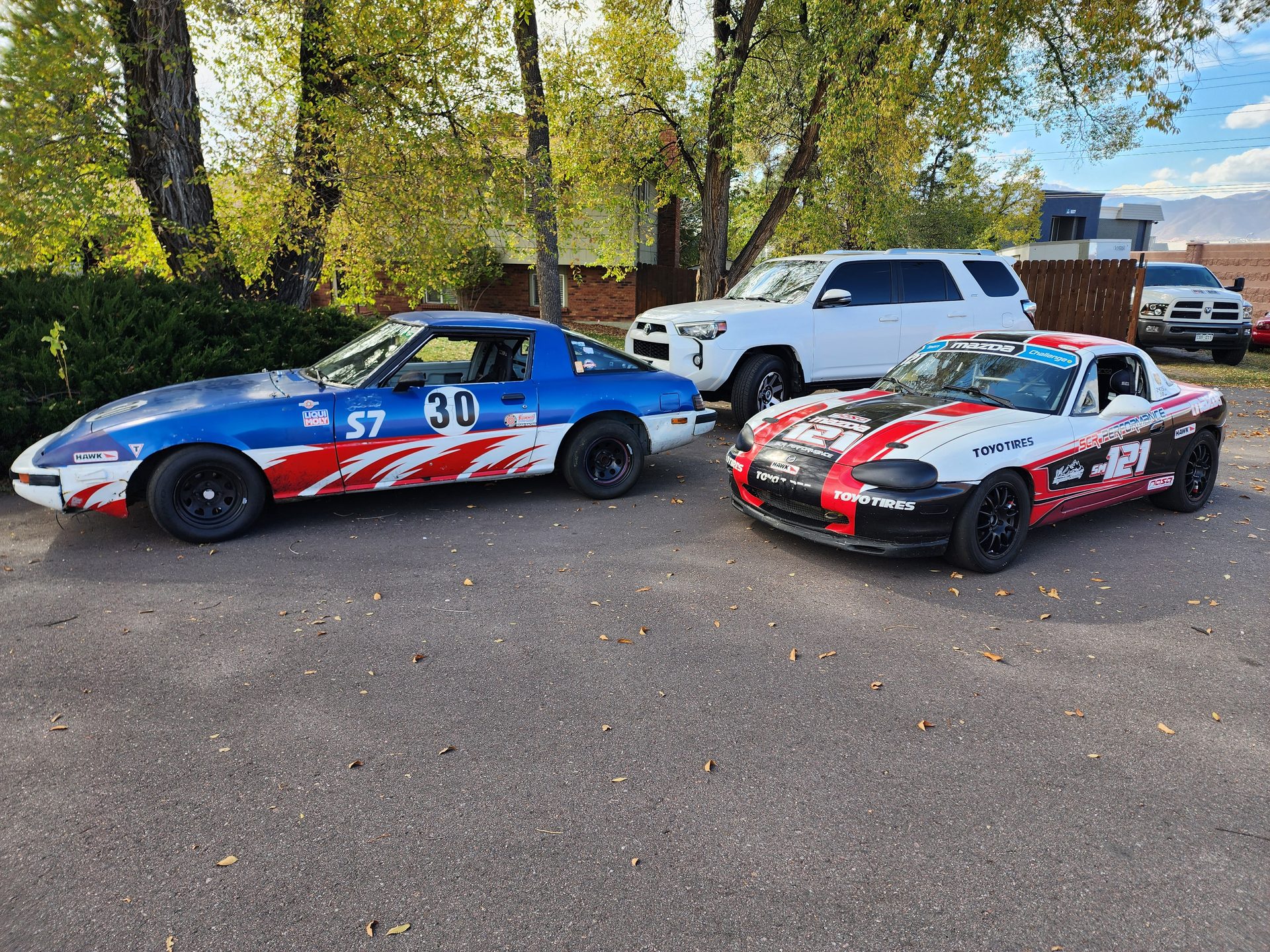 Every car in this photo got here on a trailer. That's the part nobody puts on Instagram.
Option 3: Enclosed, and when it's worth it
Enclosed trailers start around $10,000 new and climb well past $30,000 once you add cabinets, a workbench, and lighting. Used is where the value is.
What you're really buying isn't weather protection. It's a rolling shop and a locked garage. Your tools live in it. Your spares live in it. You load Thursday night and leave Friday morning without repacking anything.
The cost is real, though, and it's not just the purchase price. The drag and weight hurt fuel economy on every trip. You need a legitimate tow vehicle, not a borderline one. Backing one into a paddock spot in the dark is a learned skill. And storage becomes a monthly bill for a lot of people.
My honest take: an enclosed trailer is a second-or-third-season purchase. Buy seat time first. A lot of racers who buy enclosed early end up selling it and going back to open.
Option 4: Rent, borrow, or split a rig
You don't have to own anything to get to your first few events.
Rent a trailer. U-Haul's auto transport holds up to 5,290 pounds and weighs about 2,210 pounds empty. It'll take a Miata easily. The requirements are strict and worth reading before you show up: a 2-inch ball rated for at least 2,000 pounds, external mirrors on both sides, working lights, a tow vehicle whose curb weight exceeds the loaded trailer, and a 55 mph maximum. In-town towing equipment generally rents in the $20 to $90 per day range. One catch: rented trailers have a firm return schedule that doesn't always match a race weekend.
Skip the tow dolly for a race car. A dolly leaves two wheels on the ground, which means unregistered wheels rolling down a public highway. It also requires your tow vehicle to outweigh the towed car by at least 750 pounds. For a caged car with no plates, it's the wrong tool.
Split a rig with someone. This is the most underrated answer in club racing. Two-car open trailers exist, paddock friends have empty space, and plenty of racers will haul your car for a share of fuel. Ask around at your first event. Racers are more generous than the internet suggests. For a true one-off, a commercial transporter can also beat buying a truck and trailer you'd use six times a year.
Towing in Colorado: wind, altitude, and the brake law
Three things make Front Range towing its own animal.
Trailer brakes are a legal requirement, not an upgrade. Colorado law requires trailers of 3,000 pounds gross weight or more to have brakes on all wheels, operable by the driver from the cab, and rigged so they apply automatically if the trailer breaks away. Any real car hauler clears that threshold. That means functioning electric brakes, a brake controller in your tow vehicle, and a breakaway cable with a charged battery. Check the breakaway battery every season. Most people never do.
The wind on the plains is not a joke. High Plains Raceway sits out east of Denver off I-70, in open country with nothing to block a crosswind. An empty enclosed trailer in a spring gust is a genuinely unpleasant experience. Load heavy items low and slightly forward, and slow down before you think you need to.
Altitude costs you power and brakes. A naturally aspirated tow vehicle makes less power up here than the brochure promises, and the run down to Pueblo Motorsports Park on I-25 means real grades in both directions. Gear down on descents instead of riding the brakes. If you want the full lay of the land on both tracks, we wrote up getting started in road racing in Colorado.
Budget the trip, too. Fuel for a tow rig, a night in a hotel or a cot in the trailer, and food for the weekend are real money that never shows up in the entry fee. We break those down in the hidden costs of owning a race car.
Here's what I'd tell someone standing in their driveway right now. Don't buy a trailer for a season you haven't run yet. Drive the street car to HPDE, rent or share a rig for your first few wheel-to-wheel weekends, and let your actual event count tell you what you need. The trailer is the easiest thing to buy later and the easiest thing to overbuy today.
And if towing is the specific thing standing between you and a race weekend, that's a solvable problem. Our arrive-and-drive program exists because the car, the trailer, and the truck are already at the track — you just show up with a helmet.
Do you believe?
Sources: NASA 2026 Spec Miata national rules, Colorado Revised Statutes 42-4-223 (brakes), U-Haul auto transport specifications, U-Haul tow dolly requirements, Grassroots Motorsports forum discussions on open vs. enclosed trailers, and published trailer specs from Leonard USA. Weights, prices, and regulations verified against current published sources as of August 2026. Trailer prices vary widely by region, builder, and used-market condition. Always confirm your specific tow vehicle's rating on its door-jamb sticker and check current state law before you tow.