
You brake a few feet later than the lap before. The rear steps out on exit. You catch it, and then you don't.
Twelve seconds later you're sitting in the dirt with the engine off, heart running about 180, watching a corner worker wave a yellow flag at you.
Almost nobody explains what happens next. So here it is, in order, from the first two minutes to the bill that shows up later.
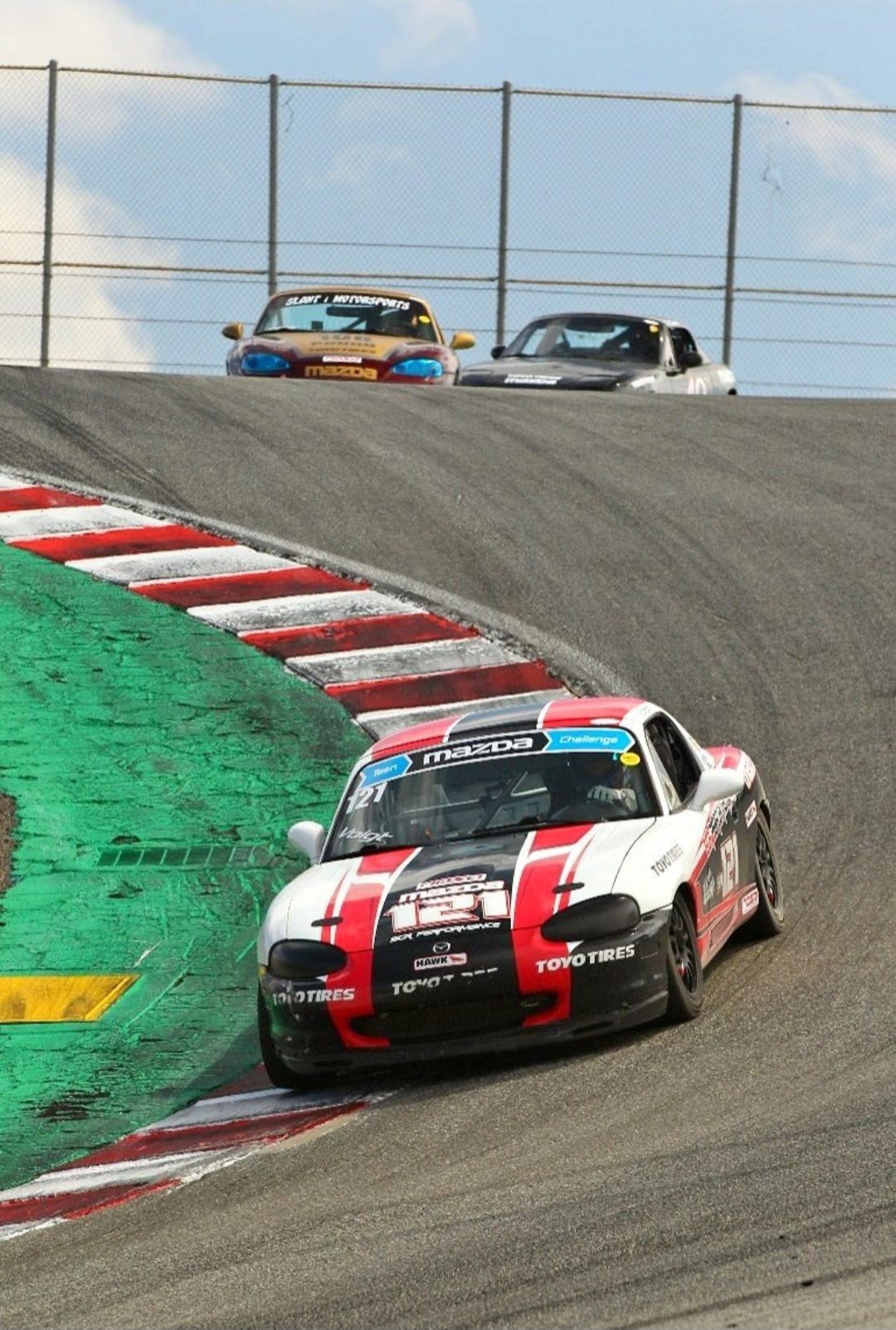 Most incidents don't happen at 130 on the straight. They happen at the exit of a corner you were starting to feel good about.
The first two minutes are on you
Stay in the car.
Belts on, helmet on, hands visible. Corner workers are trained to look for a driver moving. If you sit there slumped and still, they escalate to a red flag and a medical response, which is the right call but a big deal for everybody on track.
Do not get out and walk around on a live circuit. Cars are still coming, they're still fast, and dust or a blind crest means they may not see you until it's too late. The only reason to get out is fire.
Then wait for direction. The corner worker will either wave you back on when there's a gap, or hold you until the session is neutralized. If you're waved back on, you go straight to the pits. Not one more lap. Not "just a cool-down." Straight in.
What the flag station does
For a simple spin in a safe spot, you'll usually get a stationary or waving yellow at that station. Everyone in the area slows, no passing, and the session keeps running.
If you're in a dangerous position, buried in a runoff you can't get out of, or leaking anything, they'll go to a full-course yellow or a red flag. That means every car on track slows to a crawl or stops so a safety truck can get to you.
Yes, you just stopped a session for 200 people. It feels awful. It is also completely routine at every club event in the country, and half those people have done it themselves. Nobody in the paddock is keeping score the way you think they are.
The black flag and the conversation
Written rules from the major organizers say it plainly: any driver who spins or leaves the track surface with all four wheels must immediately come in and speak to an event official. Not doing it earns you a black flag.
That conversation is not a punishment. It exists for three reasons.
They check the car. Dirt packed into a radiator, a bent control arm, a flat-spotted tire, a cracked wheel, gravel wedged in a brake duct. Plenty of cars come back from an off looking fine and are genuinely unsafe. Expect the car to get looked over, and at some events re-teched, before you're cleared to go back out.
They check you. An official or your instructor will ask what happened. Answer honestly. "I got greedy on the brakes and lifted mid-corner" gets you a useful coaching conversation. "I don't know, it just spun" gets you a longer conversation.
They log it. If there was contact with another car, most organizations require an incident report before anyone goes back out. In NASA's competition groups, contact means a body-contact report filed in impound, and cars can't even be worked on without an official's approval.
Contact is a much bigger deal than a solo spin. HPDE has no passing outside designated zones and no racing, so two cars touching is a rules failure, not a racing incident. It commonly ends the day for both drivers.
Will they send you home?
Honest answer for a first spin: no.
Everyone spins. Instructors and event officials expect it from novice groups, and a clean single off with a good debrief is treated as part of learning. You'll likely be back out the next session.
You get sent home for a pattern, not an incident. Repeated offs in one session. Ignoring flags. Passing outside the zones. Contact. Getting a warning and then driving right back over your head. Organizers are watching your judgment much more closely than your lap time.
The other version of "sent home" is mechanical. If the car is bent, it's done for the weekend, and that's usually the decision that actually ends your day.
The bills nobody warns you about
Here's the part people really want to know.
Your car. Your normal auto policy almost certainly excludes on-track driving. Track-day insurance is a separate short-term policy, it covers physical damage to your own car, and it usually carries a deductible around 10% of the car's value. Insurers who write these policies say a single off-track excursion commonly runs $10,000 to $50,000 or more in damage, and they cite a routine example of brake fade into a tire barrier at $8,000 to $12,000.
The track's property. This is the one that blindsides people. Nearly every drivers meeting includes a line about damaging the facility, and it means what it says: guardrail, Armco, tire barriers, catch fence, dirt work, fluid cleanup. Track damage can run into the thousands or tens of thousands. And most track-day policies include no liability coverage at all for anything other than the insured car. If you want the barrier covered, you have to specifically buy that.
Getting the car home. Track-day insurance generally doesn't cover the trip to or from the track, and a disabled car in the paddock is your problem at 5pm on a Sunday. A roadside membership with 100 miles of towing helps, but only if the shop you want is inside 100 miles.
Which is the argument for trailering in the first place. The single most repeated piece of advice from people who've been through this: bring the car on a trailer, and the worst day becomes an expensive inconvenience instead of a logistics emergency.
The practical stuff to do that same day
Take photos before anything gets moved. The car, the barrier, the marks on the surface, the whole scene.
Ask the organizer if they're writing an incident report, and ask for a copy.
Call the people at home before they see it on social media. That call takes 90 seconds and saves a very bad hour.
Then be honest with yourself about going back out. If your hands are still shaking, sit a session. Adrenaline makes you feel ready long before your judgment comes back.
The Colorado version
If you're running at High Plains Raceway out by Deer Trail, or at Pueblo Motorsports Park, the same rules apply with local specifics worth knowing.
HPR is blunt that nobody sets foot on the property without signing a liability waiver first, and their facility rules already spell out that you'll be charged for repairs if you damage the asphalt or what's under it. The principle carries: the facility is not absorbing your mistake.
HPR is also about an hour east of Denver and a good deal further from Colorado Springs, which matters when you're pricing a flatbed. Figure out which shop you'd use and whether your towing coverage reaches it before you need the answer, not after.
The one question worth asking at the drivers meeting: "What's the damage policy if someone hits the barrier?" Ask it out loud. Every organizer I've met answers it straight.
There's one version of all this where the worst case is a phone call instead of a five-figure bill, and it's the one where you're not driving your own car. In a full arrive-and-drive season with us, the car is ours, the crew is ours, and your exposure is written into the agreement before you ever turn a lap, so you know your number going in instead of finding it out in a tow truck.
Crashing is not the thing that ends most racing careers. Being too afraid of it to ever start is.
Do you believe?
Sources: SCCA Track Day Rules (2025 edition), PCA National HPDE Committee Minimum Standards, Traction Insurance — 5 Things Track Day Insurance May Not Cover, Lockton Motorsports — Examples of Track Day Claims, High Plains Raceway Facility Rules, and a CorvetteForum thread of first-hand accounts from drivers who have crashed at track days. Damage figures are ranges published by track-day insurance providers as of August 2026, not quotes for your car. Rules language varies by organizer and region, so read the supplemental regs for your specific event.