
Here's the sentence that ruins a lot of first track days: "Your normal car insurance won't cover this." Most people find that out after they've already put the car into a wall.
So let's answer the question before you're standing in the paddock deciding. Do you need track day insurance, what does it actually cover, and what does it cost?
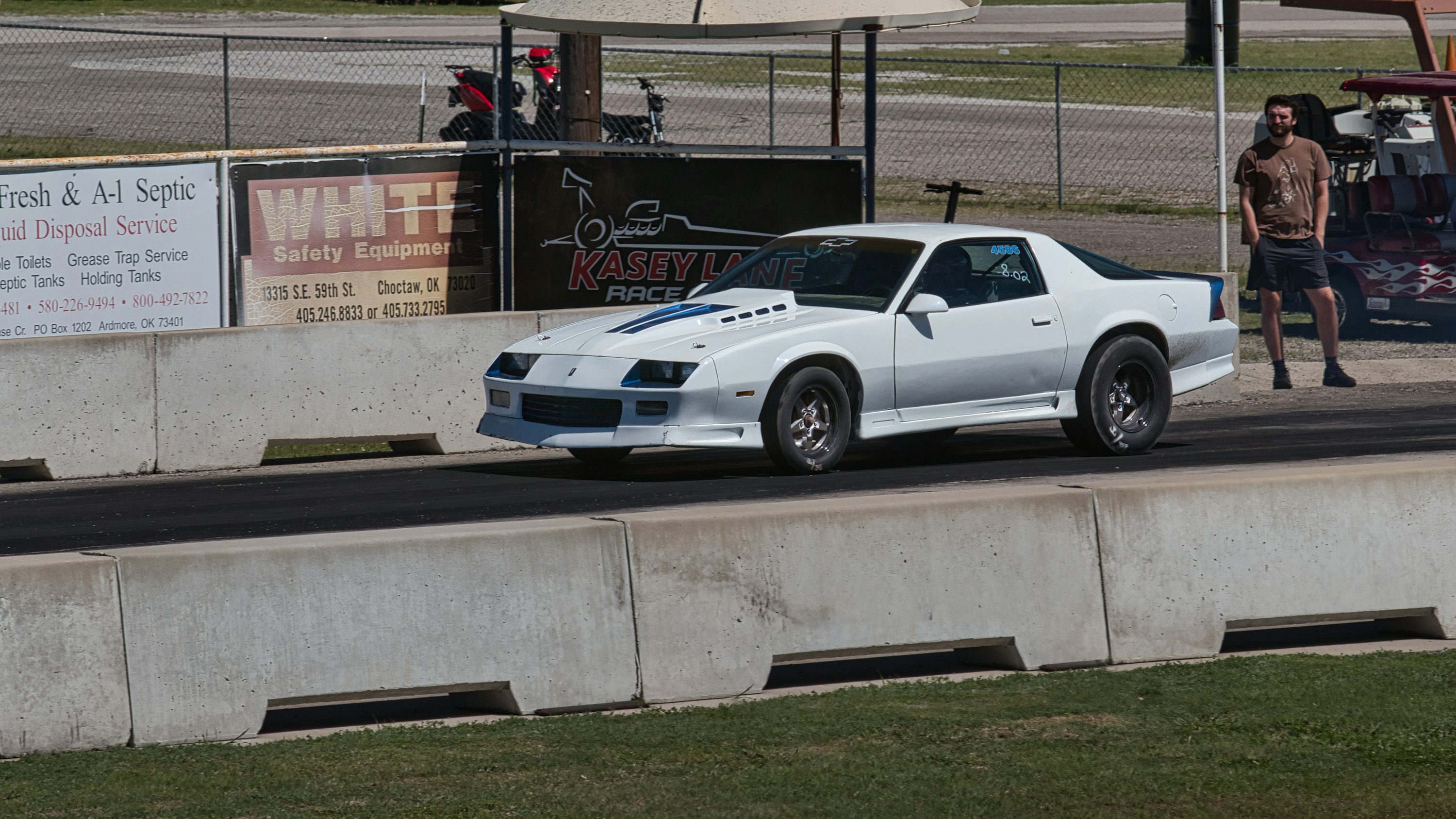 Photo by Chandler Cruttenden on Unsplash.
I'll give you real numbers and the honest tradeoffs. No fear-selling. Just what I'd tell a friend before their first HPDE.
Does Your Regular Car Insurance Cover Track Days?
Almost certainly not. This is the part people get wrong.
Most personal auto policies have a "racing and speed contest" exclusion buried in the fine print. It usually kills coverage for any organized track event, including a High Performance Driving Education day where you're not even racing anyone.
Some insurers argue HPDE isn't "racing" because there's no wheel-to-wheel competition. Sometimes that holds up. Often it doesn't. You do not want to be testing that theory with a bent chassis and a $12,000 estimate.
Your daily-driver policy is built for the commute, not the corner. Assume it stops working the moment you cross onto the track surface.
The safe move is to call your insurer and ask them directly, in writing, whether they cover on-track driving. If they say no or dodge the question, that's your answer.
What Track Day Insurance Actually Covers
Track day insurance (sometimes called HPDE insurance) is a short-term policy that covers physical damage to your own car during a track event. That's the core of it.
Here's what most policies do and don't include:
- Covered: damage to your car if you crash, spin into a wall, or have a mechanical failure that wrecks the car
- Sometimes covered (as add-ons): towing and storage if the car's disabled, personal safety gear, some personal injury options
- Usually NOT covered by default: liability for damage you cause to other people or to track property
- Almost never covered: wheel-to-wheel racing, and often timed competition unless you specifically add it
That last point matters. HPDE insurance is built for driver's education days, not for door-to-door racing. If your event mixes HPDE run groups with competitive racing, many policies won't pay out at all. Read the terms for the exact event you're running.
How Much Does Track Day Insurance Cost?
The price is tied mostly to your car's value. As a rough rule, budget somewhere around 0.6% to 0.8% of the car's value per event.
Real-world 2026 ranges look like this:
- $30,000 car: roughly $150 to $230 per event day
- $60,000 car: roughly $370 to $410 per event day
- $90,000 car: roughly $560 to $600 per event day
Your driving experience, the track, your claims history, and any modifications all move the number. A first-timer in a modified car pays more than a seasoned instructor in a stock one.
There's one more line item that surprises people: the deductible. Track day policies usually carry a percentage-based deductible, commonly 10% of the car's value. Some providers let you pick 5% for a higher premium or 15% to save money.
So on a $30,000 car with a 10% deductible, you're on the hook for the first $3,000 of any claim. The insurance saves you from the catastrophic bill, not the fender-bender.
Do You Actually Need It?
Honest answer: it depends on what you're driving and what you can afford to lose.
If you're taking a car you own outright, love, and couldn't replace on a whim, insurance is cheap peace of mind. A few hundred dollars to protect a $40,000 car is a rational trade.
If you're in a beater you paid $4,000 for and would shrug off writing off, the math flips. The premium plus the deductible might approach the value of the car. A lot of experienced track rats "self-insure" cheap cars for exactly this reason.
There's a third path that sidesteps the whole question. When you run an arrive-and-drive program, you're driving the team's car, not yours. The way damage responsibility works there is spelled out in the rental agreement up front, so you know your exposure before you ever turn a lap. No hunting for a policy, no percentage-of-value math on a car you don't own. It's one of the reasons arrive-and-drive is the lowest-hassle way to get real seat time.
The Colorado Angle: HPR, Pueblo, and Local Events
If you're running here in Colorado, this isn't hypothetical. High Plains Raceway out in Byers and Pueblo Motorsports Park both host HPDE and track days all season, and the organizers expect you to sort your own coverage.
High Plains Raceway even links track day insurance options directly from their site, which tells you how normal it is to buy a policy for a single event out here. NASA Rocky Mountain and the Colorado car clubs that run days at these tracks operate the same way: the event fee gets you on track, but your car's protection is on you.
The practical move for a Colorado first-timer: pick your event, check whether it's pure HPDE or mixed with competition, then get a one-day quote for that specific date and track. Buying per-event is standard, and it's usually cheaper than an annual policy unless you're running a lot of weekends.
The Bottom Line
Track day insurance covers physical damage to your own car at an HPDE. It costs roughly 0.6% to 0.8% of the car's value per day, carries a deductible around 10%, and does not cover wheel-to-wheel racing. Your regular auto policy almost certainly won't help you on track.
Whether you need it comes down to one question: could you afford to replace this car tomorrow? If not, insure it. If it's a cheap car you'd walk away from, maybe don't.
And if the whole "what if I crash my own car" worry is what's keeping you off the track, that's exactly the wall a full-season arrive-and-drive seat is built to remove. You bring a helmet and the belief that this is possible. We handle the car.
Do you believe?
Sources: AllChoice Insurance — How Much Is Track Day Insurance, Hagerty HPDE & Track Day Insurance, Lockton Motorsports — HPDE Guide to Personal Auto Policy Exclusions, High Plains Raceway — Track Day Insurance. Cost and coverage figures verified against currently published rates as of July 2026. Actual premiums vary by car, track, provider, and driving history, so get a quote for your exact event before you buy.