
You live near some of the best road courses in the Rocky Mountains, and you still don't know how to actually get on one. That's the gap I want to close today.
Colorado has a real racing scene. It's just not obvious from the outside. Nobody hands you a map. So here's the honest one — the tracks, the path, and what it costs to go from "I want to try this" to actually turning laps.
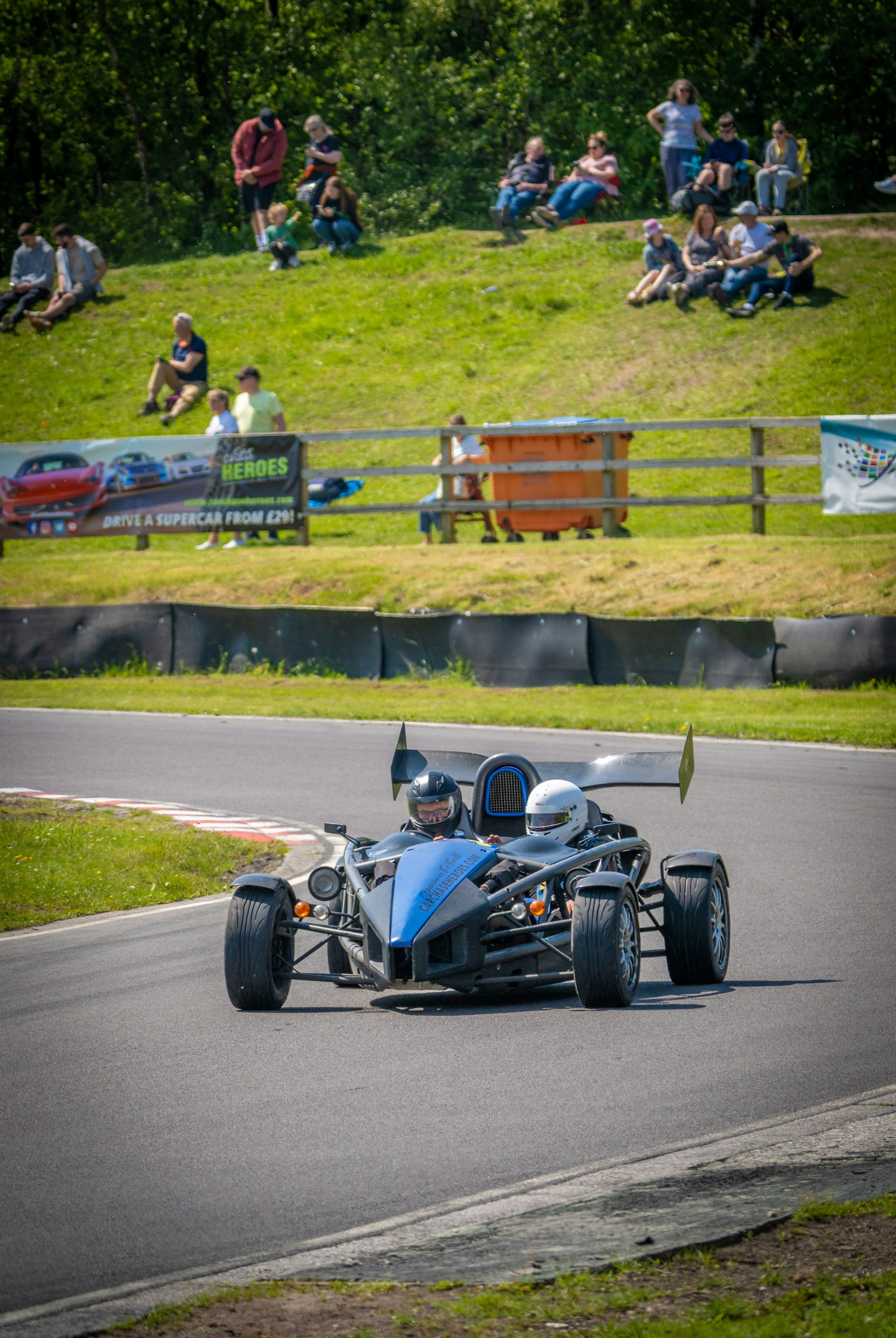 Photo by Jonny Gios on Unsplash.
The Colorado Tracks You'll Actually Run
There are three road courses in the state most beginners will touch. Each one is different.
High Plains Raceway (Byers). This is the big one. It's about an hour east of Denver, out on the plains. The full course is 2.55 miles with 15 turns and around 300 feet of elevation change per lap. It even has a "Prairie Corkscrew" section that nods to Laguna Seca's famous descent. It's a driver's track — technical, flowing, and long enough to teach you something new every lap. Both NASA Rocky Mountain and the Colorado Region of the SCCA run here.
Pueblo Motorsports Park (Pueblo). A 2.2-mile road course with 10 turns down in southeastern Colorado. It mixes long, fast straights with hard braking zones into tight corners. Great place to learn car control because it punishes sloppy braking and rewards patience. NASA and SCCA both run here too.
Pikes Peak International Raceway (Fountain). Just south of Colorado Springs. It runs a 1.3-mile interior road course, and it's a popular home for SCCA's Track Night in America. One honest heads-up: 2026 is PPIR's final season of public motorsports events before the property gets redeveloped. So if you've been meaning to run it, this is the year.
Three real tracks, all within a couple hours of the Front Range. Access isn't your problem. Knowing the path is.
Start With a Track Day, Not a Race
Here's the mistake I see people make. They think "racing" means wheel-to-wheel, door-to-door, license-required competition from day one. It doesn't. That's the deep end.
The shallow end is called HPDE — High Performance Driving Education. You bring your street car, a helmet, and pass a basic tech inspection. An instructor rides with you. You learn the line, braking points, and how to be predictable around other cars. No wheel-to-wheel passing, no license needed.
Track Night in America (SCCA's beginner-friendly program) and NASA HPDE events are the two easiest front doors in Colorado. Both are built for someone who has never turned a lap in their life.
Do this first. Every fast racer I know started exactly here, whether they admit it or not.
The Path From Track Day to Racing License
Once you've caught the bug, here's how the ladder actually works. NASA makes this the clearest of anyone.
- Run HPDE1 through HPDE4. You move up the groups as your instructor signs off on your skills — car control, awareness, and consistency. This isn't a one-day school. It's a progression across multiple events.
- Get to HPDE4. By the time you're here, you're running solo (no instructor in the car) and you're competent.
- Take a competition school or checkout ride. For your provisional NASA competition license, you either do a weekend comp school focused on racecraft, starts, and passing, or — if you have a lot of seat time — schedule a checkout ride where officials watch you drive.
- Race. Now you can enter wheel-to-wheel club events.
One money-saving tip most people miss: if you plan to run both NASA and SCCA, it's usually cheaper and faster to get your NASA license first, then cross over. And if all you ever want is track days and autocross, you never need a competition license at all — a basic membership covers it.
The Colorado Region of the SCCA also runs Solo (autocross) events around Denver. Autocross is the cheapest legitimate seat time in the state. It's cones in a parking lot, one car on course at a time, and it teaches car control better than almost anything for the money.
What It Actually Costs to Get Started
Let me give you real ranges, not marketing numbers.
- Autocross: roughly $40–$75 per event plus a membership. This is the cheapest way to start, full stop.
- HPDE / track day: commonly around $200–$500 for a day depending on the org and track. You'll also want a helmet (rent or buy) and to prep your car (fresh brake fluid, good tires, nothing loose).
- A full club-racing season: this is where it jumps. Between entries, tires, fuel, consumables, and the car itself, a competitive Spec Miata season realistically lands around $12,000 to $25,000 or more once you own the car — and front-runners who bolt on fresh tires every weekend spend well past that. A bare-bones first-year on used tires and fewer weekends can come in lower, but plan for the higher end. We break the season math down honestly in what a Spec Miata season really costs.
That gap between a $60 autocross and a five-figure season is exactly where most people stall out. They fall in love at the track day and then hit the wall of owning, towing, and maintaining a race car.
The Shortcut Nobody Tells Beginners About
Here's the part I wish someone had told me when I started. You don't have to own a race car to go road racing in Colorado.
I run LeadFoot Racing out of Colorado Springs, and one of the biggest barriers we watched people hit was the car itself. Buying it, trailering it, wrenching on it, storing it. The driving is the fun part. Everything else is the tax.
That's why arrive-and-drive exists. You show up with your gear and your entry, and the car, the crew, the coaching, and the setup are already handled. It's the fastest way to find out if you actually love this before you spend $10,000 finding out. For a lot of people, it's also just the smarter long-term math — no trailer, no garage full of parts, no cold morning fixing something at 6am.
Colorado's tracks are ready for you. The path is real and it's walkable. The only question left is whether you take the first step.
If you want to skip the car-ownership wall entirely and just drive, see how our arrive-and-drive program works.
Do you believe?
Sources: High Plains Raceway – Track Info, Pueblo Motorsports Park – Road Course, SCCA – Pikes Peak International Raceway, How to Go Road Racing With NASA, Colorado Region SCCA. Track specs and licensing paths verified against current published information as of July 2026. Cost ranges reflect current event pricing plus my own racing experience.