
You stomp the brake pedal at the end of the straight. The pedal buzzes under your foot, and for a second you think something broke.
Nothing broke. That's ABS doing its job. The real question for track days is whether you should leave it on. For most new drivers the answer is yes. Here's why, and where the answer changes.
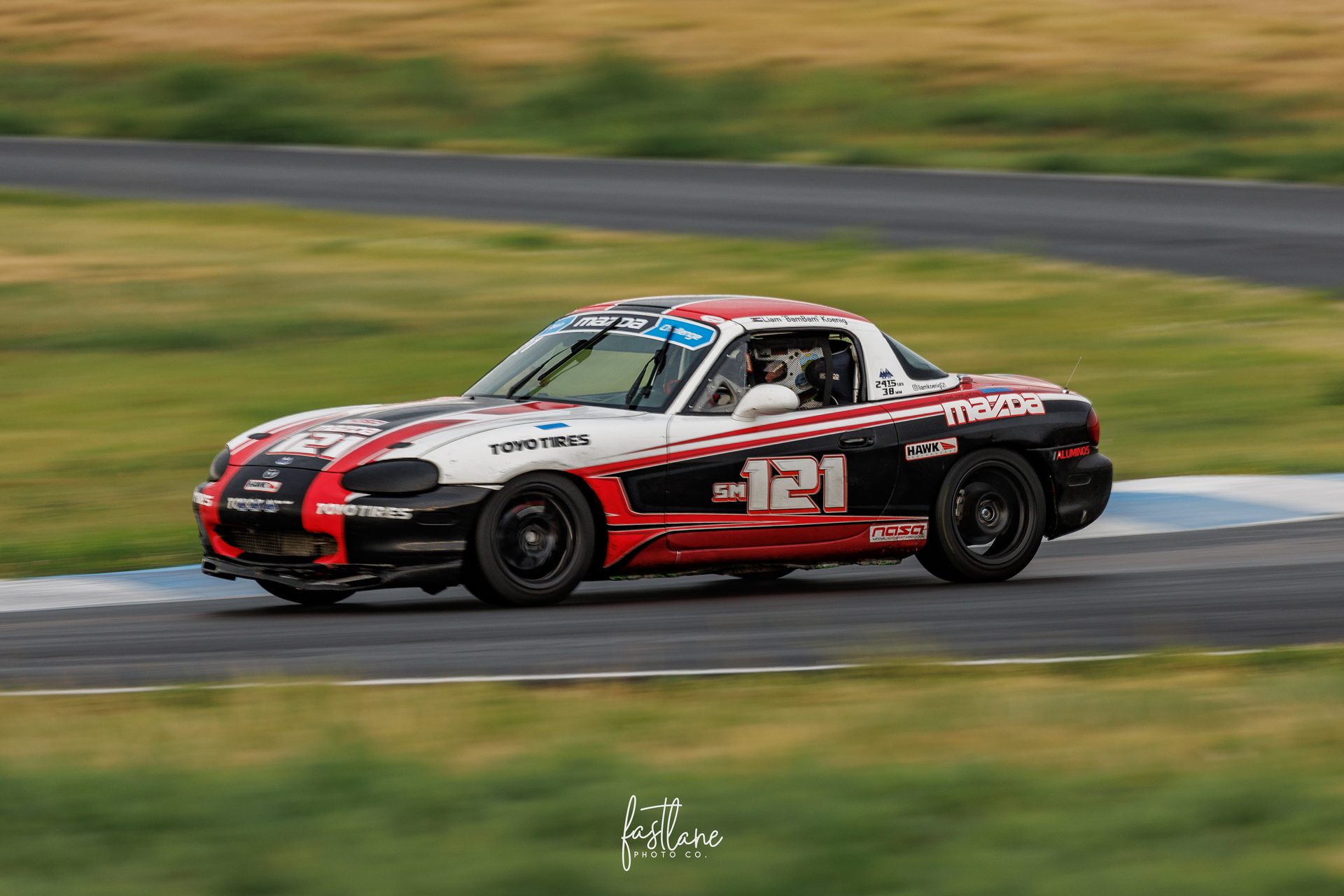
What ABS does when you brake hard
A locked tire slides instead of rolling, and a sliding tire can't steer. ABS watches the wheel speeds. If one wheel is about to lock, it eases the pressure on that wheel and then applies it again, many times a second.
You feel that as a fast pulse in the pedal. The pedal may also sink a little. Forum drivers describe both, and both are normal. The pulse means the car is working at the edge of grip so you don't have to.
The key point is that ABS lets you hold the brake hard and still steer around something. A locked-up car just plows straight on.
Why beginners should leave it on
At your first HPDE, the scariest moment is the one nobody plans. A car spins in front of you. Or you arrive at a corner too fast. Most people freeze, or they stab the pedal as hard as they can.
That's exactly when ABS earns its keep. One driver in a forum thread put it bluntly: people freeze on track and slam the brakes, and without ABS that can mean a wall or at least four wheels off. That's one person's opinion. It still matches what I see in the paddock.
There's a second reason. You're learning where the limit is. ABS makes that lesson cheaper. A flat-spotted tire costs real money, and so does a tire that's out of round for the rest of the day.
Another driver on a Nissan forum said it well: "Don't disable ABS, learn to use it." Most drivers in that thread turned off the stability control and kept the ABS.
Also, a quick note on the line between the two. Stability control and traction control are different systems. Those are the ones people usually switch off first, and that's a separate talk with your instructor. ABS is much harder to turn off on most cars anyway, and many cars have no switch at all.
Does ABS make you slower?
Sometimes, a little. The honest answer depends on the car.
Ross Bentley, the Speed Secrets coach, says it depends on the system. On a good ABS, using it fully during hard straight-line braking works well. On a less refined one, riding deep into the ABS can stretch your braking zone.
He also describes what he calls "tickling" the ABS. That means pressing just hard enough to barely trigger it, so it pulses now and then. On some cars that stops in less distance than stomping all the way into it. His advice is to test it on track and see what your car does.
Here's what the evidence does not show. I couldn't find any controlled test that proves ABS costs a new driver meaningful time. What I found is driver opinion. Some say it's slower than clean threshold braking. Others say their lap times were a bit more consistent with it on. So treat the gain from switching it off as small, and treat the risk as real.
Experienced drivers who brake right at the limit every lap may want it off. That's a choice for later, and for a car set up for it.
How to brake with ABS on track
Technique matters more than the switch. Here's what works.
- Brake hard, then hold. In a straight line, press firmly and keep your foot there. Don't pump. The system is already doing the pumping for you.
- Don't let the pulse spook you. Buzz and a sinking pedal are normal. Releasing early because it feels strange is how new drivers lose braking distance.
- Ease off as you turn in. Bentley's rule is to trail off the pedal as you turn into the corner. Full ABS belongs to the straight part of the zone. Our post on trail braking covers how to release smoothly.
- Treat ABS in a corner as a message. A driver on a 350Z forum said ABS firing mid-turn is a sign you need to be smoother or change something. It often shows up in tightening turns where you carried too much speed. See decreasing radius corners for that one.
- Log it if you can. The same forum suggested recording wheel speed to see when and why ABS fires. That's a good habit once you're ready for data logging.
When ABS can act strange on track
Track pads grab harder than street pads. One 350Z owner said his race pads usually trigger ABS the moment he reaches his braking point. That's the pad doing its job, and your braking point is probably too late for a beginner anyway.
Heat is the other thing. Fade can come from hot pads or boiling fluid, and either changes how the pedal feels. Fresh brake fluid and the right pad compound matter more than anything ABS does.
If your pedal feels long or soft after a session, tell the tech inspector or your instructor. Don't guess.
ABS and racing classes
ABS is not a one-answer topic once you move from HPDE to wheel-to-wheel. Mazda's Spec MX-5 package, for example, lists ABS braking among its key features. That's one class, though. Other classes have different rules, and I could not find a single NASA rule that covers every car.
So read your class rules before you change anything on the car. Ask your region's tech chief if the wording isn't clear. The same goes for any club or HPDE group: ask the organizer if you plan to modify the system.
If you're at High Plains Raceway or Pueblo, the cold mornings matter too. Tires and pads are slow to warm up, so ease into your first few stops. We cover that in cold tires vs. warm tires.
The short version
- Leave ABS on for your first seasons of HPDE.
- Brake firmly, hold the pedal, and ignore the buzz.
- Trail off the pedal as you turn in.
- Treat ABS in the middle of a corner as feedback, not as failure.
- Switch it off only if your car, your class and your skills all say it's time. The time you'd gain is small.
Sources: Speed Secrets (Ross Bentley): Should I use ABS when braking for a corner on the race track?, my350z.com forum: 350Z ABS on corner entry, Performance Racing Industry: Mazda Motorsports announces Spec MX-5 plans (2019), Grassroots Motorsports forum: ABS brakes for HPDE (read through search results only, since the site blocked a direct fetch). Checked October 2026. Forum posts are driver opinion, not test data. Your car's manual and your event organizer are the authority.
Want a simple pre-weekend checklist that includes brakes, fluid and tires? The free Race Day Ready Pack has one.
Do you believe?