
Most people shop for track pads the way they shop for tires. Find the most aggressive thing that fits, bolt it on, feel fast.
That logic gets people in trouble. A brake pad isn't better or worse. It's tuned for a temperature window, and running one outside its window is how you end up long into a braking zone wondering what went wrong.
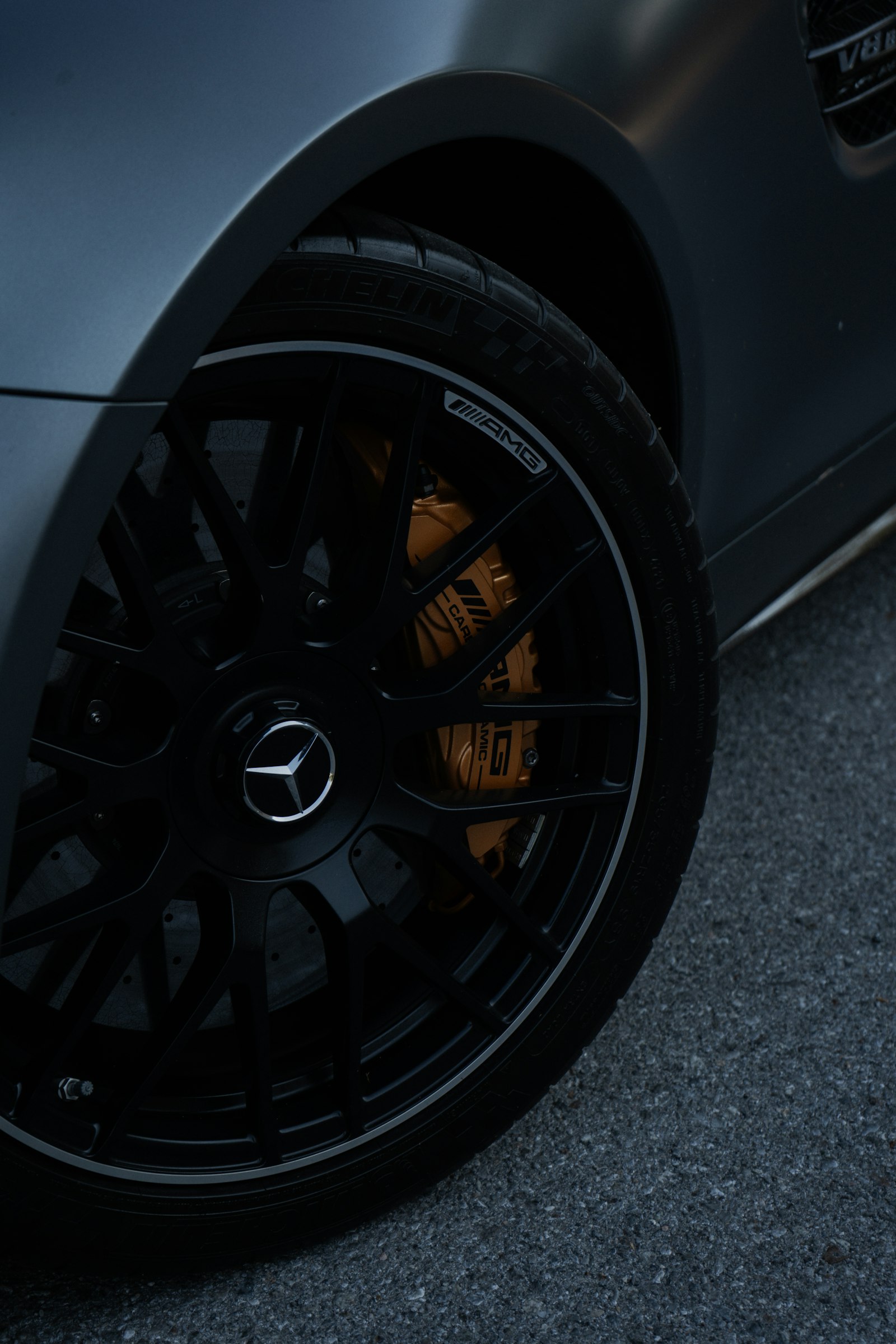 Photo by Rana Singh on Unsplash.
Why Street Pads Quit on Track
Your factory pads are engineered around commuting. Stoplights, a mountain grade, the occasional panic stop. That covers a fairly narrow band of heat, and the compound is optimized to be quiet, clean, and grabby when it's cold.
Twenty minutes of track driving blows past that band in a handful of laps.
When friction material gets hotter than it was designed for, it stops biting. The pedal still feels firm and high. The car just doesn't slow like it did two laps ago. That's true brake fade, and it's a pad problem.
A soft, sinking pedal is something else entirely — that's your fluid boiling. I covered that half of the equation in our post on racing brake fluid. Here we're staying on the pads.
A pad isn't fast or slow. It's in its window or it isn't.
Compound Temperature Windows Are the Only Spec That Matters
Every serious pad manufacturer publishes an operating range. Learn to read it, and most of the confusion goes away.
| Compound | Operating range | Built for |
|---|---|---|
| Carbotech 1521 | Ambient to 800°F | Street, light autocross |
| Carbotech AX6 | 50°F to 1,000°F+ | Autocross, entry HPDE |
| Carbotech XP8 | 200°F to 1,250°F+ | Track days and racing |
| Carbotech XP10 | Fade resistance past 1,475°F | Racing front axle |
| Hawk DTC-30 | Lighter race compound, common rear pad | Racing rear axle |
| Hawk DTC-60 | 400°F to 1,600°F (best 700–1,100°F) | Racing front axle |
Look at that DTC-60 line. It doesn't start working until 400 degrees, and it isn't happy until 700.
That's the thing nobody tells you. A race pad below its window is not grippier than a street pad. It's just cold. You'll get a firm pedal and mediocre stopping power on your out lap, and if that's the lap you carry into turn one, you're going to learn something the hard way.
The flip side is just as real. A street compound past 800 degrees isn't a mild version of a race pad. It's a pad that's done.
So What Should You Actually Run?
Pick based on how you use the car, not on what the fast guy in the paddock runs.
Fewer than about four track days a year, and you drive the car to the track. Get a street/track hybrid and leave it on. Carbotech 1521, Hawk HP+, EBC Bluestuff, PFC Z-rated. These give up some ultimate heat capacity in exchange for cold bite you can trust on the drive home. For a novice run group at seven-tenths, that's the right trade.
Regular HPDE, and you're willing to swap pads at the track. Now you can run an AX6 or an XP8 and get real temperature margin. Bring a floor jack, gloves, and 20 minutes. Swapping pads in the paddock is easy once you've done it once.
Wheel-to-wheel racing. Full race compound, and pay attention to bias. On a Miata you almost never want the same compound at both ends. The setup most Miata shops recommend is XP10 up front with XP8 in the rear. In the Hawk range, DTC-60 fronts get paired with DTC-30 rears for the same reason.
Stronger front pad, softer rear pad. That keeps the rear from stepping out under threshold braking. Run the same aggressive compound on all four corners of a light rear-drive car and you'll find that out at the worst possible moment.
Our safety-gear partner OG Racing has a good deeper read on initial bite, torque curves, and rotor friendliness across the major brands.
Bed Them In or Waste Them
New pads need heat cycled into them before they'll work right. Skip this and the friction material can chunk, glaze, or lay down an uneven transfer layer that shows up later as vibration.
Carbotech's track procedure is the one I'd follow, and most manufacturers say something close to it:
- One to two laps of moderate braking. Several medium stops down to a slow roll. Warm the pads and rotors gradually.
- Two to four laps of hard braking. A series of hard stops down to a slow roll, until you feel a hint of fade. Don't lock the tires.
- Cool completely. Stay off the brakes, roll into the paddock, and let everything come back to ambient. No less than 30 minutes.
The whole thing is 5 or 6 laps. Roughly 10 to 15 minutes.
One more detail: don't park with the brakes clamped while they're glowing. Hold the car on the handbrake or chock it. Sitting hot with pressure on a hot rotor is how you imprint pad material and buy yourself a shudder that feels like a warped rotor.
What They Cost and When to Swap
Real numbers, for a Miata, because that's the car I know best. A front set of Carbotech pads starts around $196 and a rear set around $180 through Discovery Parts, depending on compound. Call it $350 to $400 for a full set of race pads. That's more than street pads, and worth it the first time you don't have to lift early.
Knowing when to replace them is simpler than people think. Swap when the remaining friction material is about the same thickness as the steel backing plate. That's the standard Essex Parts publishes, and it's a good habit.
Two things worth knowing about wear:
- It accelerates. A pad might eat 1mm per session when new and 1.5 to 2mm per session once it's 80 percent worn. The last quarter of a pad goes fast.
- It's uneven. Inner pads usually wear quicker than outers because they get less airflow. Rotating pads inner to outer, and side to side, buys you real life.
I'm not going to give you a "pads last X track days" number, because it isn't a real number. Car weight, track layout, tire grip, and how late you brake all move it. Measure yours after every event and you'll learn your own rate in two weekends.
The Colorado Wrinkle
Out here you get a small gift and a small tax.
Thin air at 5,000-plus feet means less power and lower terminal speeds, so there's less energy going into the brakes to begin with. Our High Plains Raceway track guide walks the layout, and the big braking zone off the front straight is the one that eats pads.
The tax is that thinner air carries heat away less efficiently. Same airflow, fewer molecules to move heat into. On a hot afternoon at Pueblo, a marginal pad and marginal brake ducting will find each other.
Nothing exotic to do about it. Just don't assume a pad that survives at sea level has the same margin here, and check thickness at the end of the day instead of the start of the next one.
The Mistake That Costs the Most
Leaving race pads on the car for the drive home.
They're loud, they dust everything, and they have almost no bite at ambient temperature. A cold stoplight at the bottom of the off-ramp is not where you want to learn that your pads need 400 degrees to wake up.
If you only own one set, run a street/track compound. If you want a real race compound, own two sets and swap. That's the whole decision.
Buy for your temperature window, bed them properly, and measure them after every event. Do that and brakes stop being the thing that ends your day — which frees you up to spend your attention on driving.
If you'd rather skip the pad math entirely and just go drive, that's what our arrive-and-drive program is for. We handle the brakes, the fuel, and the setup. You show up and get in.
Do you believe?
Sources: Carbotech — Choosing the Correct Compound, Carbotech — Bedding Procedure and Maintenance, Hawk Performance — DTC-60, Essex Parts — Track and Racing Brake Pad Owner's Guide, EBC Brakes — Best Brake Pads for Track Days and HPDE, Discovery Parts — Carbotech Miata pads. Temperature ranges and pricing verified against currently published manufacturer and retailer figures as of September 2026. Pad life is a range, not a promise — your car, your track, and your braking points all move it.