
You turn in. The corner looks like a fast sweeper. Halfway through, it keeps going. And going. The exit you planned on isn't there, the car is pushing toward the outside, and your hands are adding steering they don't have.
That's a decreasing radius corner. It catches almost every beginner at least once. Here's how to drive it, and what to do when a long corner wants two apexes instead of one.
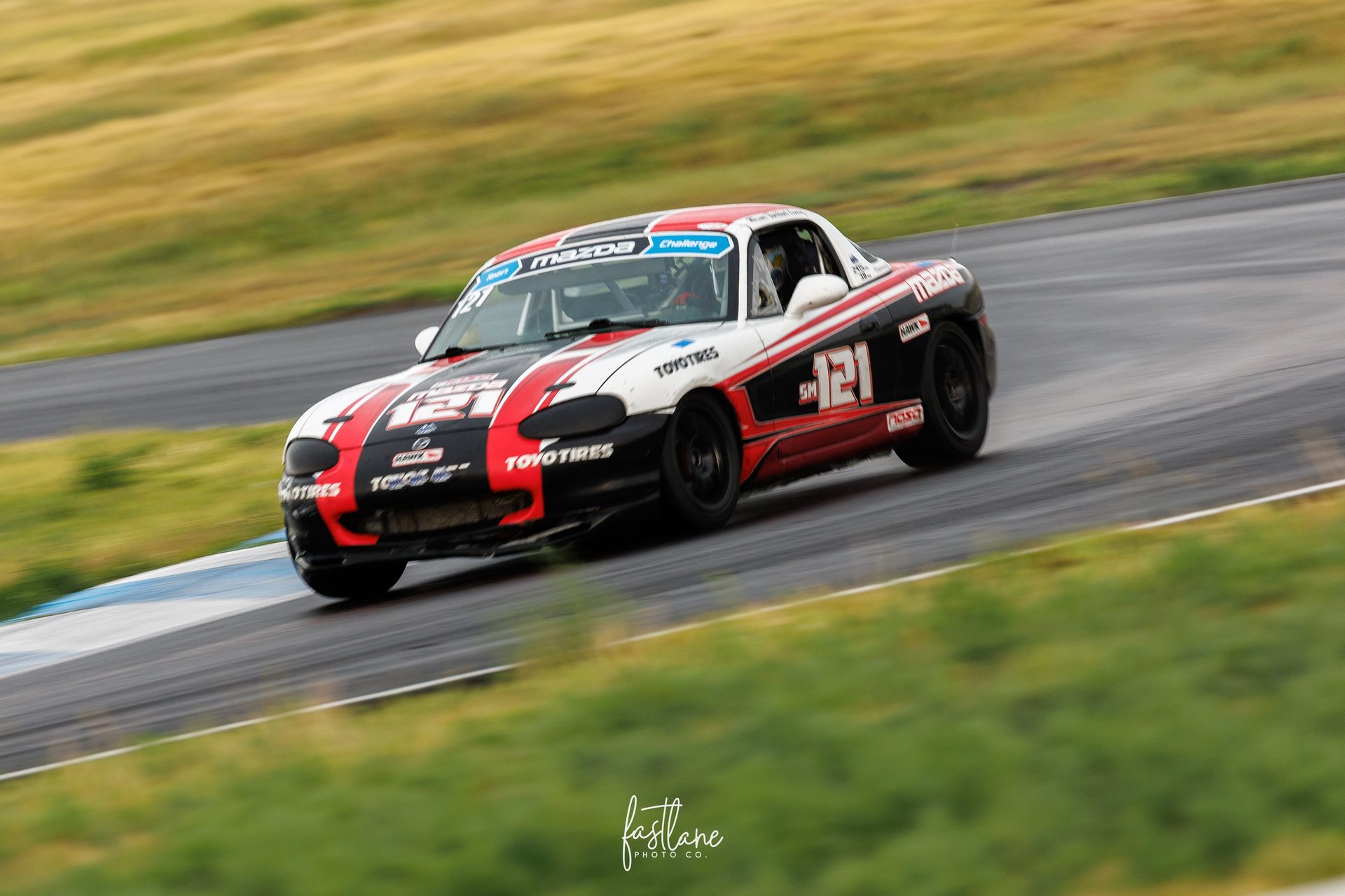
What a decreasing radius corner is
Most corners you learn first are roughly constant radius. They bend at about the same rate from entry to exit, like part of a circle.
A decreasing radius corner tightens as you go. The first part is a wide, gentle arc. The second part is a tighter one. Wikipedia's racing line entry puts it simply: the first section has a larger radius than the second.
The opposite exists too. An increasing radius corner opens up as you go. Tight entry, wide exit. Those are the friendly ones. You can get on the throttle early and let the car run out with the road.
Here's the quick comparison:
| Corner type | What it does | Where time is won | The beginner trap |
|---|---|---|---|
| Constant radius | Bends at one steady rate | A clean late apex and early throttle | Turning in early |
| Decreasing radius | Starts wide, tightens | Patience on entry, a late apex | Carrying too much entry speed |
| Increasing radius | Starts tight, opens up | Early, committed throttle | Being too timid on exit |
Why tightening corners bite beginners
The entry lies to you. Your eyes see a wide arc, so your brain picks a speed that fits a wide arc. Then the arc shrinks.
Now you're asking the tires to do two things at once. They have to slow the car down and turn it harder. Tires only have so much grip to share between braking and cornering. Ask for more than they have and the front washes wide. That's understeer, and we cover what it feels like in understeer vs. oversteer.
The second mistake is the apex. A natural turn-in point for the wide first half puts you at the inside way too early. When the corner tightens, you're already pointed at the outside edge with nowhere left to go.
In a corner that tightens, the speed you carry in is borrowed. You pay it back mid-corner, and the interest is steep.
How to drive a decreasing radius corner
None of this is exotic. It's the racing-line basics, pushed a little further. If turn-in, apex and track-out are new words, start with what is the racing line first.
-
Brake for the tight part, not the wide part. The slowest point of the corner is near the end, not the start. Set your entry speed for that, or close to it. Early on, err slow. You can always add speed next lap.
-
Stay wide longer. Don't dive to the inside curb on entry. Hold the outside edge, or close to it, through the first half. You're saving room for the part that tightens.
-
Aim for a late apex. Wikipedia notes the goal of a late apex is to lengthen the radius you turn on at the exit. Ross Bentley's rule of thumb from Speed Secrets helps here too: the slower the corner, the more you move to a later apex. A tightening corner usually ends slow, so it usually wants a late one.
-
Let the brakes help you turn. Easing off the brake pedal gradually as you turn in keeps weight on the front tires. That's trail braking, and it helps the car rotate. Bentley's guidance is that slow, tight corners need more trail braking and fast, wide ones need less or none. Learn it with an instructor first. Our trail braking explainer walks through the basics.
-
Look through it. Your hands follow your eyes. If you stare at the first half, you'll drive the first half. Look ahead to where the corner tightens and then to the exit. More on that in where to look on track.
-
Throttle only when the wheel starts to unwind. If you're still adding steering, you're not done slowing down. Get on the power once you can see the exit and your hands start opening up.
The honest truth: a tightening corner is rarely where you win a lot of time. It's where you lose a lot if you overcook the entry. Slow in, tidy apex, clean exit. That beats a heroic entry and a trip through the grass.
When a long corner wants two apexes
Some corners are just long. Think of a turn that wraps 180 degrees, or close to it. Here you have a choice. Drive it as one big arc with one apex, or drive it as two corners with two apexes.
Bentley's answer on Speed Secrets is that it mostly depends on the corner's length. For long, roughly 180-degree corners, his rule of thumb is to "drive it in hard and deep, collect it in the middle, and drive it out hard." He warns that a single apex on a corner like that usually means you're entering slower than you need to.
The shape is sometimes called a diamond line:
- Enter fast on a diagonal and clip the first apex area.
- Let the car drift out a little in the middle. This is the slowest point and where the car turns sharpest.
- Come back in to the second apex and open up the exit from there.
Coach Adam Brouillard of Paradigm Shift Driver Development adds a rule worth remembering: avoid a speed reversal between the two apexes. Don't accelerate after the first apex and then brake again before the second. Your speed should change steadily between them. In a corner that tightens, that means steadily slowing. In one that opens up, steadily speeding up.
He also points out the two apexes are linked. A later second apex generally calls for an earlier first apex, and the reverse holds too.
Pro drivers deal with the same shapes. In a MotoIQ lap guide for Circuit of the Americas, Billy Johnson calls Turn 6 a "double-apex, decreasing-radius right hander that's a little tricky." His advice there is to carry entry speed and give up some exit to set up the next turn. That's a reminder that the best line depends on what comes next.

How to spot these corners before you drive them
You don't want to find out a corner tightens at 70 mph. A few ways to learn it first:
- Walk or ride the track. Stand at the turn-in point and look at how the inside edge curves. A tightening corner shows it plainly on foot. We go deeper in how to walk a race track.
- Read the track map and ask. Long corners that wrap near 180 degrees are where the one-apex-or-two question comes up. Our High Plains Raceway guide notes that the tightest corner there turns 160 degrees with a slight off-camber. That's the kind of corner to ask your instructor about before you go out.
- Watch the rubber. The dark, rubbered-in strip on the pavement shows where most cars drive. On a double-apex corner, you can often see two clipping points on the inside.
- Go slow for your first laps. Build speed lap by lap. A corner that surprises you at 80 percent is a lesson. At 100 percent, it's a tow truck.
Ask your instructor how they drive each long or tightening corner. Different cars and different drivers pick different lines, and Brouillard notes that a corner can be one apex for a slow car and two for a fast one. There's no shame in asking.
Your next step
Pick the one corner that scared you most last time. Next session, change one thing there, like a later turn-in or an earlier brake point. Then note what the car did. One corner, one change, one note.
That debrief habit is why we built the free Race Day Ready Pack. It includes the session log and checklists we use at LeadFoot Racing.
Sources: Wikipedia, Racing line, Speed Secrets: When should I use a double apex in corners?, Speed Secrets: What types of corners should I use trail braking on?, Paradigm Shift Racing: The rules of the racing line, MotoIQ: Fast Lap with Billy Johnson, Circuit of the Americas. Checked October 2026. Technique advice here is based on these sources plus my own track time; your instructor's call on your car and your track wins.
Do you believe?