
"We've never sponsored anyone before."
Most racers hear that and start writing the thank-you-anyway email.
It's not a rejection. It's the most winnable sentence a business owner can say to you, and almost nobody treats it that way.
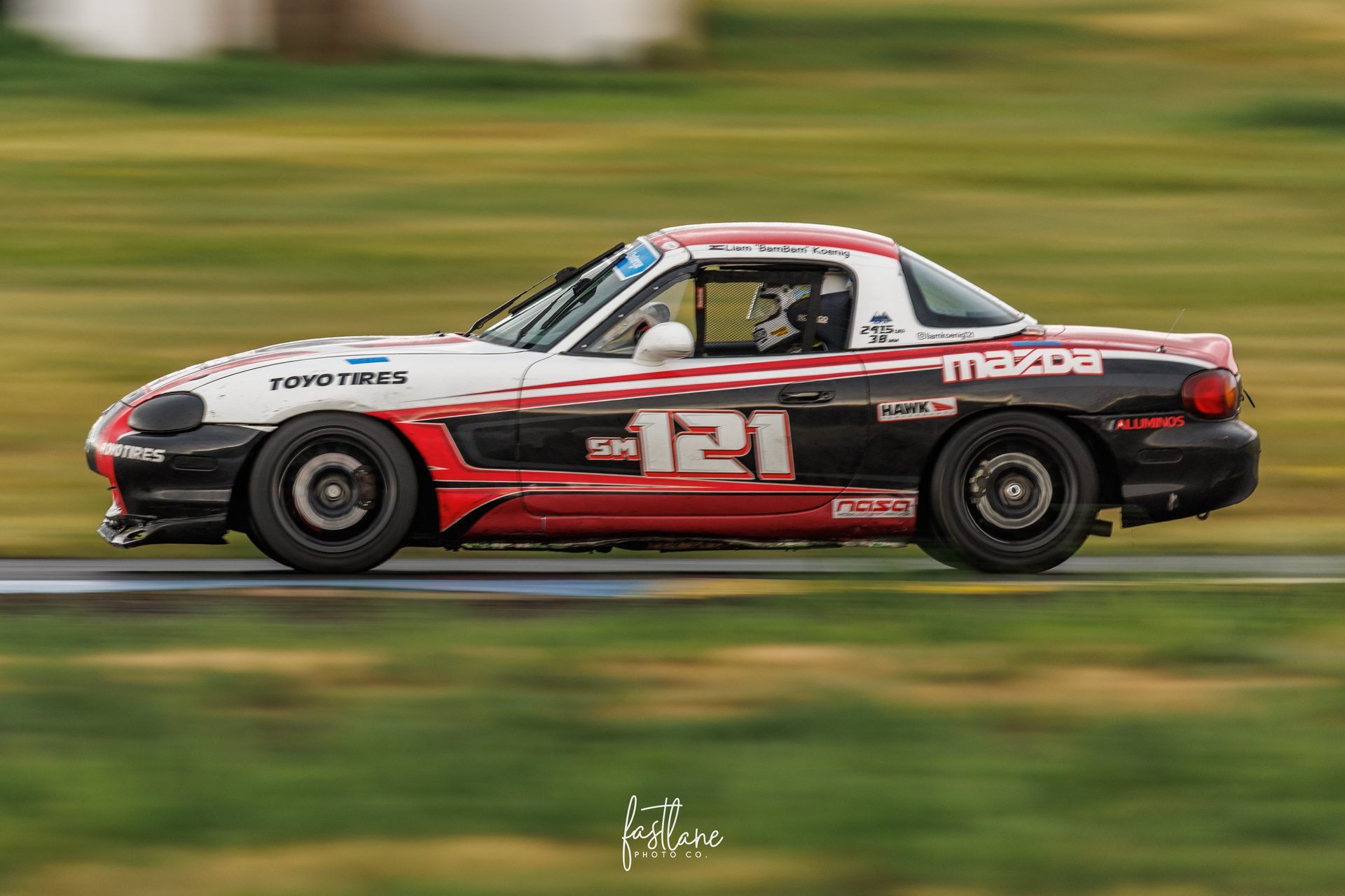 The #121 at High Plains Raceway, August 2026. Somebody has to be the first company on a car. Your job is making that feel normal.
They've already sponsored something. Just not a race car.
Here's the number that should change how you read that objection.
The NFIB Research Center surveyed small business owners for its Small Businesses' Contribution to the Community report in November 2024. Ninety percent said they had financially supported a community group, charity, youth sports program, school, or similar organization in the previous twelve months. Sixty-six percent said that support went to sports-related activities. Sixty-three percent gave in-kind on top of that.
Read that again. Nine out of ten already write the check. Two out of three already point it at sports.
So when a shop owner tells you they've never sponsored anyone, they usually mean they've never sponsored motorsports. The muscle is built. The banner is already hanging at the Little League field. What's missing is a category, not a budget.
That reframes your whole pitch. You're not talking someone into generosity. You're asking money that already moves to move somewhere with a better return.
If you don't have a list of those businesses yet, start with the free Local-Business Sponsorship Workbook — it's built for exactly this kind of prospect.
"We don't do sponsorship" usually means "we don't do bad sponsorship"
The Sponsorship Collective has a blunt take on brands who claim they don't do sponsorship. They're not rejecting the concept. They're rejecting the version they've seen: money for a logo, on a thing, with a made-up audience number next to it.
Their line is that sponsorship is a verb, not a product — it's an action a company takes to get an outcome, not a package they purchase off a sheet.
So stop leading with the word.
Bad open: "I'm looking for sponsors for my 2026 Spec Miata season."
Better open: "You told me your slow month is February. I've got 400 local car people in one building in February and nowhere for them to buy brakes."
Same ask. One of them sounds like a donation. The other sounds like a marketing decision. A first-timer will never say yes to the first one, because they have no shelf in their head to put it on.
The competitor isn't another racer. It's doing nothing.
When you pitch a brand that already sponsors someone, you're fighting for a slot. When you pitch a first-timer, you're fighting inertia — and inertia wins a lot.
Matt Dixon and Ted McKenna's The JOLT Effect studied recorded B2B sales conversations at scale and found that 40 to 60 percent of deals are lost to no decision at all. Of those losses, 44 percent came from a genuine preference for the status quo. The other 56 percent came from indecision — the buyer wanted to move and froze, because they were afraid of getting it wrong.
That's business software, not race cars. But the fear translates exactly.
Your first-time sponsor isn't scared of $1,500. They're scared of the conversation where their business partner asks why there's a race car on the books and they don't have a good answer.
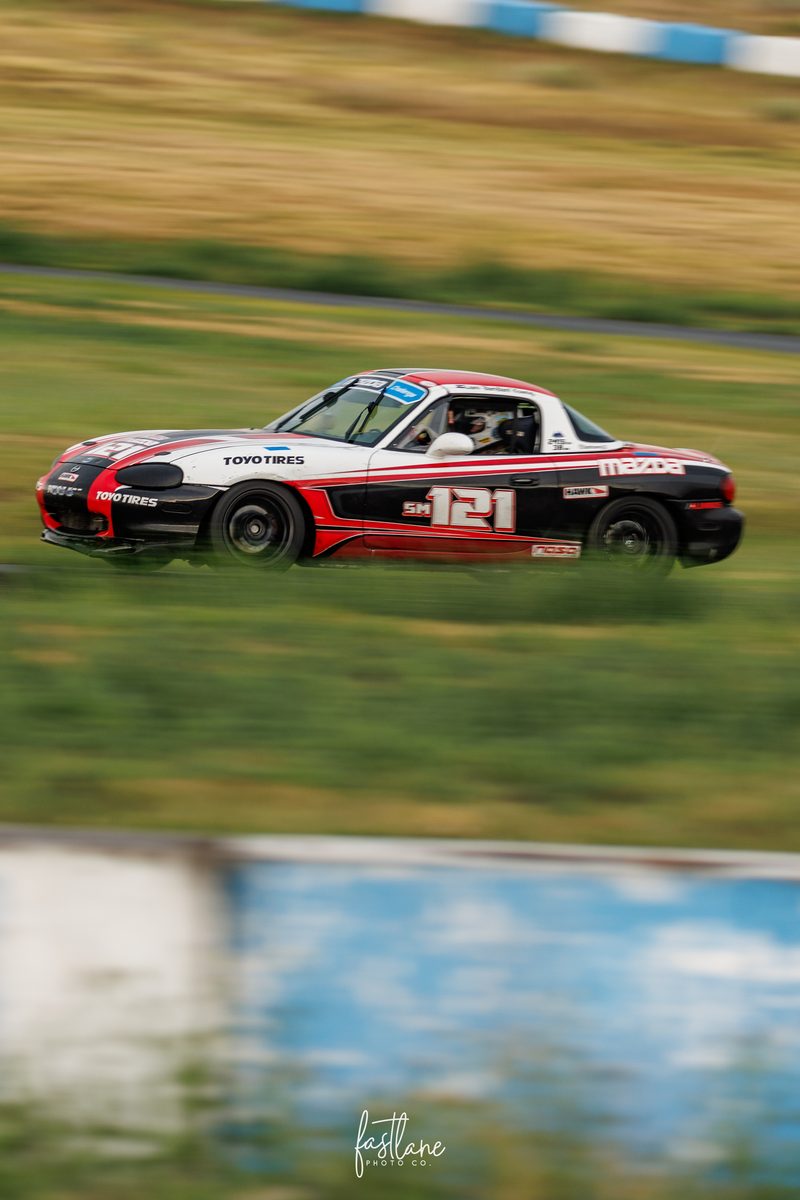 Full commitment from #121 at the NASA weekend. The commitment you're asking a first-time sponsor for should be a lot smaller than this.
Make the first deal small, dated, and reversible
The last letter of JOLT stands for take risk off the table. That's the whole playbook for a no-precedent buyer.
Four things do it:
Sell one event, not a season. A season is a leap. One race weekend is a test with a finish line on the calendar. If it works, you have a real conversation in October instead of a cold one.
Attach the money to a nameable thing. "Sponsorship" is abstract. "Your name covers the entry fee and the tires for the Pueblo weekend" is concrete — and those are real, checkable line items. A NASA or SCCA weekend entry runs around $500, and a fresh set of Spec Miata race tires is around $1,200. Naming what the money buys is not begging. It's an invoice with a story.
Put dates on every deliverable. Decals on by this date. Photos delivered within this many days. Report in their inbox on this date. Vague promises are exactly what makes a cautious buyer freeze.
Give them a clean exit. No auto-renew on a first deal. Say out loud that if the report doesn't justify it, you'll shake hands and stay friends. Racers think that line loses deals. It closes them, because it removes the thing they're actually afraid of.
What I would not do is guess the number. How much to actually charge is a separate job with a real method behind it, and that's in how to price racing sponsorship.
Write the sentence they'll repeat to someone else
This is the part most pitches skip, and it's the part that decides a first-time sponsor.
The person reading your email is not the last person who has to approve it. There's a spouse, a partner, an office manager, or an accountant who will hear about it secondhand. Your pitch has to survive being retold badly by someone who wasn't excited.
So hand them the retelling. One clean paragraph: what it costs, what they get, by when, and how they'll know if it worked.
Then keep proving it in season. Sending a mid-season report is the single cheapest thing you can do to make year two automatic, and I broke the whole cadence down in what to send a sponsor mid-season.
One honest note: how they book the expense is between them and their accountant. Don't offer tax advice you're not qualified to give. You'll sound like an amateur fast.
Because this pitch is doing double duty — selling and teaching a brand-new category — it is the single easiest pitch in racing to get subtly wrong. That's the exact document I'd want a second set of eyes on before it goes out, which is what Proposal Review is for.
What I'd never do to a first-time sponsor
A first sponsor who feels burned doesn't just leave. They tell other business owners in a town where every owner knows every other owner. That's your whole market, gone over one oversold number.
So don't inflate your reach. If your audience is small, say it's small and sell what's actually good about small — real attention, a real person, a real town. I wrote the full version of that conversation in what to send when a sponsor asks for your numbers.
Don't promise podiums. Promise the deliverables you control.
And be honest about where we're coming from. Most of LFR's own partners — Engine Ice, OG Racing, Les Schwab, Liquid Moly — came to us through the motorsports world, where the category already made sense. I'm not going to pretend we converted a dozen first-timers from scratch. What I can tell you is that every deal we've kept was kept the same way: small first, delivered early, reported without being asked. The reasons we said yes to each of them run in both directions.
If "we've never done this" is the wall you keep hitting, the rest of the objections have answers too — ranked, with the comeback for each.
Go send it
The first company on your car is the hardest one to land and the most loyal one you'll ever have. Nobody forgets being first.
Before you send that pitch, get it inspected. Proposal Review is $147 and it's a line-by-line teardown of your actual proposal — the ask, the structure, the deliverables, the exit — from someone who funds real Spec Miatas with this exact process. You send a version that's been pressure-tested instead of a version you hope is fine.
If you'd rather build the whole thing yourself first, The First Sponsor System is $67 and includes the templates, the audience-value calculator, and the outreach sequences. Build it there, then send it to Proposal Review before it hits a real inbox.
Ninety percent of small business owners already gave money to something this year. None of them started out doing it.
Sources: NFIB Research Center — Small Businesses' Contributions Shape Their Communities (November 2024), The JOLT Effect — What Is the JOLT Effect, The Sponsorship Collective — Things Sponsors Say When They Claim They Don't Do Sponsorship, The Sponsorship Collective — Why Sponsors Say No, RTR Sports — Sports Sponsorship: The Benefits for Small Businesses. The 90 / 66 / 63 percent figures are NFIB's, self-reported by small business owners over a trailing twelve months, and describe community giving generally — not motorsports sponsorship specifically. The 40–60 percent no-decision figure and the 56/44 indecision-versus-status-quo split come from JOLT's analysis of recorded B2B sales conversations and are labeled here as business-to-business sales research, not motorsports data. Entry-fee and tire costs are LFR's own current pass-through numbers for a NASA or SCCA Spec Miata weekend. I dropped a widely repeated "$6.20 returned per $1 spent" sponsorship figure during research because I could not trace it to a published study. No customer, sales, or survey data of our own is claimed anywhere in this post. Nothing here is tax or legal advice.
Do you believe?