
Everybody wants to know how to get a sponsor.
Almost nobody asks the flip side. When a sponsor finally says yes, how do you decide if it's the right one? Because saying yes to the wrong partner is how good teams end up stuck to a logo that does nothing for them.
We've got a handful of sponsors we're proud of. Here's the honest reason we said yes to each — and what that taught us about "fit."
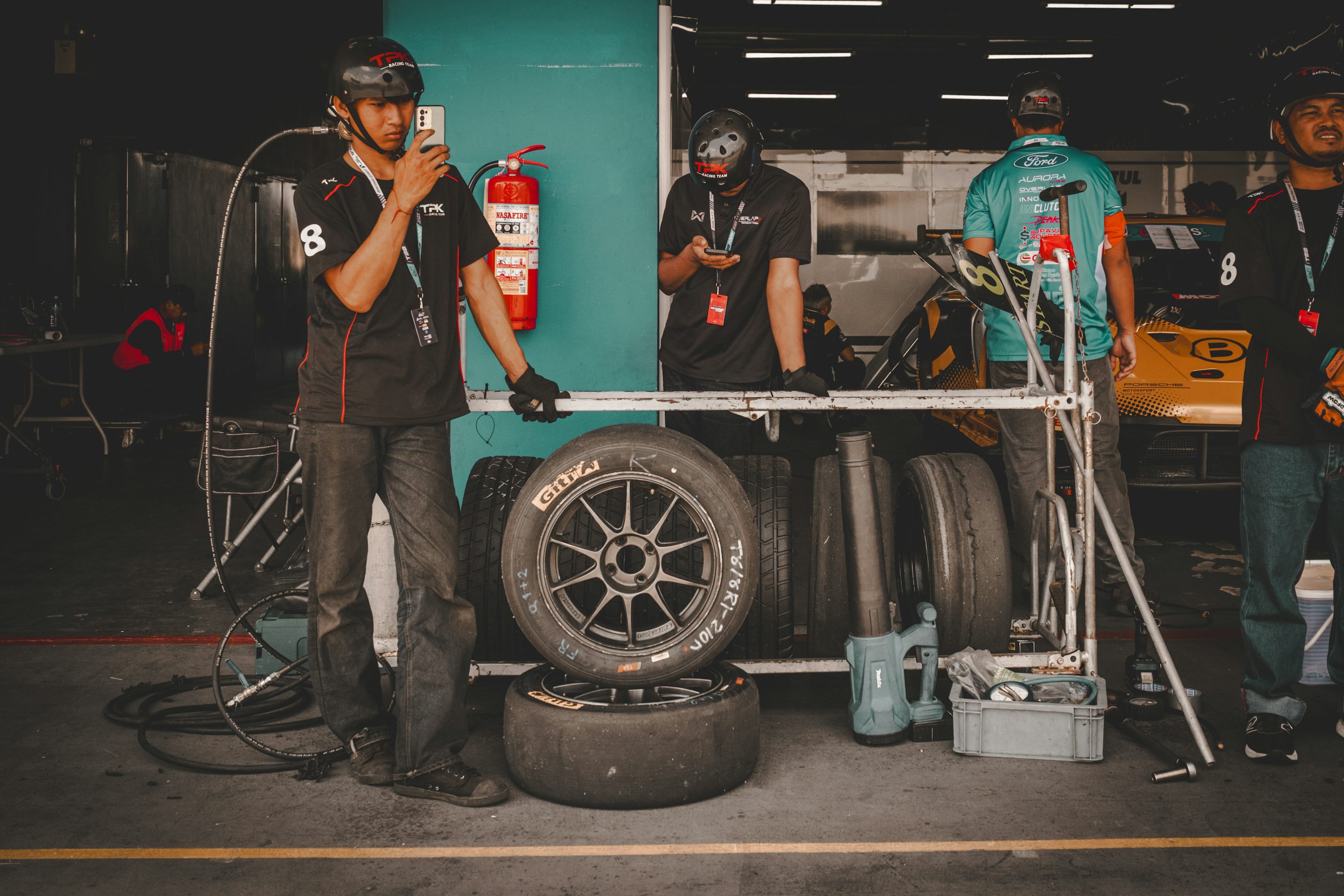 Photo by BHARAT VISHAWAKARMA on Unsplash.
Fit isn't about the check size
Here's the thing most racers get backwards. They rank sponsors by how much money is on the table.
We learned to rank them by something else. Does the product actually make our team better, and can we tell a real story about it? Because a sponsor's true value isn't the logo — it's realized through activation, the stuff you do together after the deal is signed.
If we can't stand behind a product on the track, we can't tell a real story about it. And if we can't tell a real story, the sponsor gets nothing, we look fake, and the deal dies at renewal.
Fit means both sides win when the relationship is working the way it's supposed to.
That's the filter. Every sponsor below passes it.
Engine Ice — because we'd use it anyway
Engine Ice makes our coolant. We run their ICE Water product in the race cars, and we'd run it even if they'd never sent us a dime.
That's the cleanest kind of fit there is. When you already believe in a product, the "activation" isn't a chore — it's just you being honest at the track. We can talk about heat management on a hot Pueblo weekend because we actually deal with it.
Brands want emotional access to a community, not just a spot on the commercial break. A team that genuinely uses the product gives them exactly that. So the lesson for you is simple. Your best first sponsors are the brands whose stuff is already in your trailer.
OG Racing — because they help us grow
OG Racing is our safety-gear connection out of Virginia. We're a dealer, which means the relationship isn't just "give us free helmets." It's a two-way thing — we move product, they support the program.
That mattered to us. The strongest sponsorships aren't charity. They're a business relationship where you offer real marketing value in return for support. When both sides have something to gain, both sides show up.
We built our whole outreach approach around finding partners like that — the ones where the value flows both directions. If you want the exact framework we use to structure a two-way pitch, it lives in The Get-Funded System, our $67 do-it-yourself kit with every template and tool in one place.
Les Schwab — because the math was undeniable
We burn through a lot of tires. Spec Miata isn't kind to rubber, and mounting, balancing, and disposing of that volume adds up fast.
Les Schwab handles that side for us. It's not flashy. Nobody's going to screenshot a tire-disposal partnership. But it saves real money on a real recurring cost, and that's a kind of sponsorship value people underrate.
Here's the point. Not every sponsor is a hydration brand splashed across your car. Some are the quiet local business that kills a line item on your budget. Both count. A good sponsor solves a problem you actually have — and one of ours is a pile of used tires every weekend.
LIQUI MOLY — because the credibility runs both ways
LIQUI MOLY supplies our oil and additives. It's a name that carries weight in motorsports, and being associated with it says something about our program.
That's the last piece of fit — reputation. Sponsors check each other. When a cautious brand sees names they respect already backing you, it tells them they're not going first. We wrote a whole post on borrowing trust from the sponsors who already said yes, because it's one of the most powerful moves in the game.
A sponsor whose reputation lifts yours is worth more than a bigger check from a brand nobody's heard of.
What "fit" actually comes down to
Line those four up and the pattern is obvious. We didn't chase the biggest number. We chased partners where:
- We could tell a true story about the product
- The value flowed both directions
- The deal solved a real problem on our budget
- Their name lifted our credibility
That's fit. Miss all four and you've got a logo. Hit all four and you've got a partnership that renews.
Here's the part that helps you right now. You don't need our sponsors — you need the same filter, pointed at brands in your world. Most racers skip this step and take the first yes. Then they wonder why the relationship goes cold.
If you're trying to build a list of the right brands to pitch — the ones you can actually tell a true story about — that's exactly what The Get-Funded System is built to help you do. Templates, the fit framework, the outreach, the follow-up. One kit, $67, no guessing.
Start before you spend a dollar
You don't have to buy anything to use this. If you're not sure where to even begin, we built 25 free sponsorship email templates to get your first honest pitch out the door.
But once your outreach starts working, the question flips from "how do I get a yes" to "is this the right yes." That's when a real system pays for itself. The complete do-it-yourself version is The Get-Funded System — $67, and it's the same thinking that got us the four partners above.
Saying yes to the right sponsor is a decision, not an accident. Learn to make it on purpose.
Do you believe?
Sources: The Sponsorship Collective — Finding the Right Sponsors for Your Motorsport Team, RTR Sports — How Sponsors Choose Racing Teams, Trackside Careers — A Practical Guide to Sponsoring a Race Car. Sponsor-fit principles verified against these sources as of July 2026. Our sponsors, products, and the reasons we chose them are first-hand from LeadFoot Racing's own experience.