
Most people don't choose a racing league. They join whichever one a friend already races with, then find out two seasons later that the other club runs twice as many events at the track 45 minutes from their house.
That's a fixable mistake. There are more ways into wheel-to-wheel racing in the US than most new drivers know about, and they don't all want the same license, the same car, or the same money.
Here's the honest map.
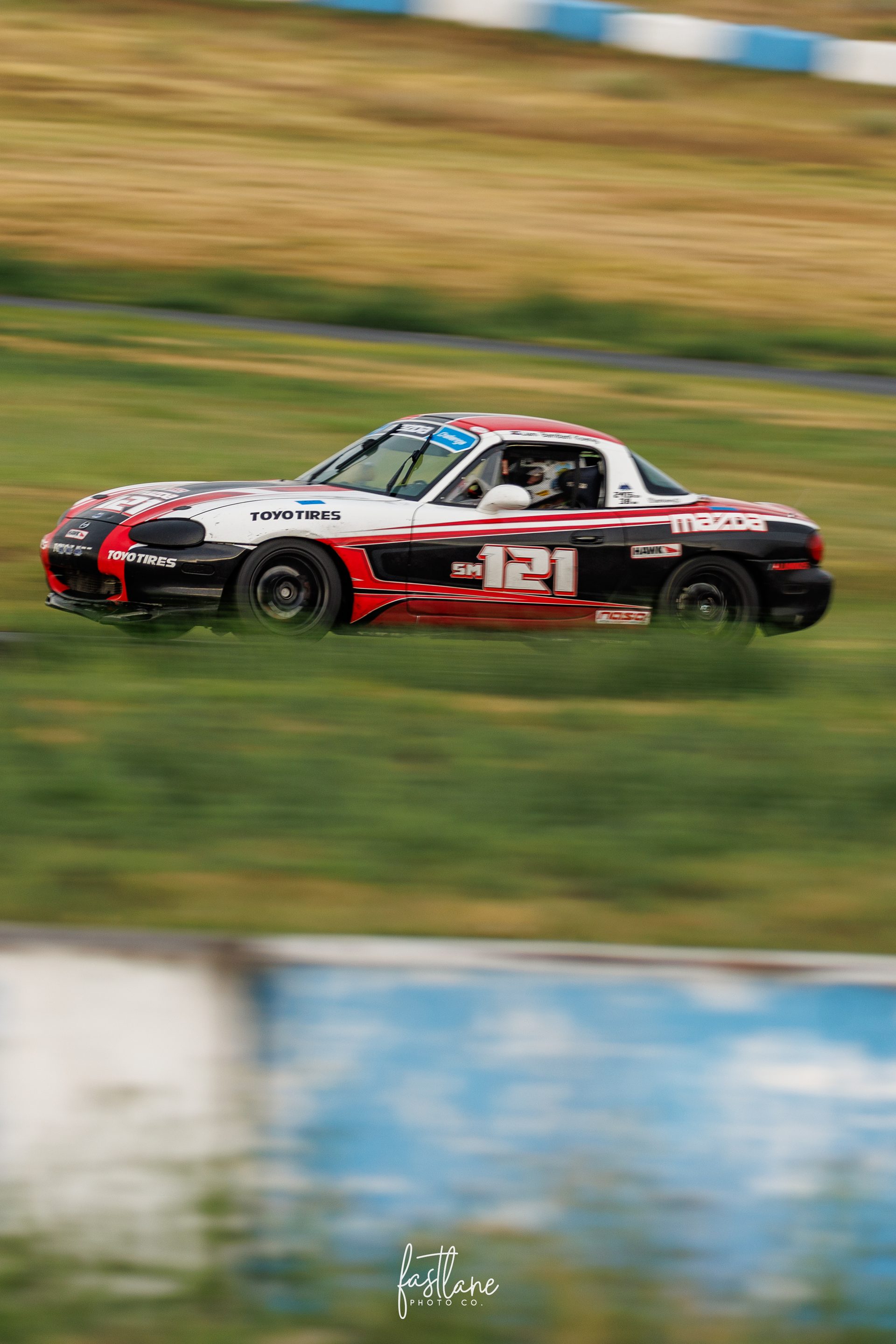 Our #121 at the NASA weekend at High Plains Raceway. We picked NASA because of where it runs — that should be your first filter too.
Start With the Calendar, Not the Club
Before you compare rulebooks, do something boring. Pull up the 2027 schedules for every organization within a day's tow of your house and count the weekends.
That count is the single biggest factor in how much you'll actually race. A club with six local events beats a "better" club with two, every time. Towing 900 miles sounds romantic in February and expensive in June.
In Colorado, that math is easy. NASA Rocky Mountain and SCCA both run at High Plains Raceway and Pueblo Motorsports Park, and Rocky Mountain Vintage Racing is based here too. In other parts of the country the answer flips hard — the Northeast has a deep SCCA calendar, and NASA is stronger in the West and South.
Count first. Compare second.
NASA: The Ladder Is Built Into the Weekend
NASA (the National Auto Sport Association) runs one weekend that contains the whole progression. The same event offers HPDE levels 1 through 4, a Time Trial program, and wheel-to-wheel race groups, all at once.
That structure is the reason a lot of drivers start here. You can show up in your street car for HPDE1, work up through the levels with an instructor, and apply for a competition license without ever changing organizations or paddocks.
NASA publishes five ways to earn that license: the HPDE1-4 progression, a competition school, six TREC endurance events, an experience review of your racing resume, or a checkout ride with an official. You also need a current membership, a racing physical, and an open-book test on the Club Codes and Regulations.
One thing to plan for: your first NASA license is provisional, honored by your home region, and you stay a "rookie" until you've completed eight races without a significant incident. I broke all of this down in how to get your racing license.
If you're not ready for wheel-to-wheel, NASA's Time Trial is the in-between rung — I covered what time trial actually is separately.
SCCA: The Biggest Class List and a Real Championship
SCCA (the Sports Car Club of America) is the older, bigger club, and the difference shows up in two places: class depth and a national championship you can actually qualify for.
The path in is a membership, online driver school modules, a medical clearance, a Novice Permit, an accredited drivers school, and three successful race weekends to convert to a full license. What the SCCA drivers school weekend looks like is its own post.
The part that matters long-term is what sits above regional racing. Run the U.S. Majors Tour and you can earn a Runoffs invitation. For 2026 SCCA simplified that: three Majors weekends with at least three individual race finishes, or a "2+2" path of two Majors weekends plus two regional weekends. The old requirement to finish in the top half of the standings is gone. The 2026 Runoffs is 18 run groups at Road America on October 3-4.
SCCA also owns the cheapest legitimate door in the sport. Track Night in America needs no membership and no track experience — just an 18-year-old with a driver's license, a helmet, and a street car in good shape. Three 20-minute sessions, entries generally in the $160 to $200 range depending on the track, and SCCA published more than 130 of them across 30 tracks for 2026.
If you have never turned a lap on a road course, do that before you compare competition licenses. It costs less than a set of brake pads.
The Endurance Leagues: The Cheapest Way to Get a Race Start
This is the category new drivers skip, and it's often the best answer.
Team endurance racing splits one entry across a group of drivers. The cost of a race start drops by the number of people in your tent, and you get hours of green-flag traffic instead of two 25-minute sprints.
ChampCar Endurance Series doesn't require a traditional competition license at all. You need a valid state or international driver's license and a current ChampCar membership, and first-time road racers attend a free driver school session at the event. Races run 7 to 24 hours, cars are sorted by a Vehicle Performance Index that adds penalty laps if you build over your allowance, and the entry covers the car, all drivers, all crew, and paddock space. Their published price for the 2026 Sebring Under the Stars weekend, for example, was $1,950 on early pay — split four ways, that's a race start for less than a set of tires.
Lucky Dog Racing League is similar in spirit. No racing license, just a valid driver's license, a Snell helmet, and a head-and-neck restraint. Two drivers minimum for races up to 12 hours, three for a 24. Published rates run around $500 per driver or roughly $2,000 per entry, and crew, family and guests don't pay a gate fee. For 2026 the car has to be 2011 or older.
World Racing League sits one step up. WRL's licensing page asks for at least an entry-level competition license and a basic medical, with alternate paths if you don't have one — a racing resume showing a minimum of eight hours of wheel-to-wheel experience plus a series contact, or significant advanced/solo HPDE experience and instructor status for a provisional.
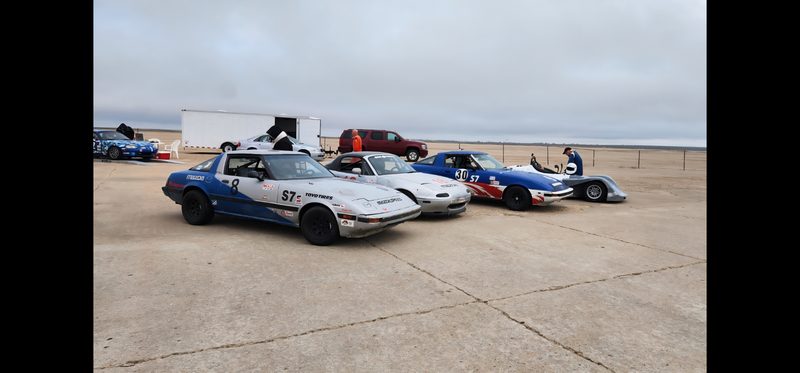 Different cars, different rulebooks, same paddock. Almost nobody stays loyal to exactly one organization.
The Clubs Everybody Forgets
Two more categories are worth a look, especially if you already own a specific car.
Vintage racing. Rocky Mountain Vintage Racing runs an annual competition driving school for drivers 18 and up who have access to an eligible car with a current logbook. Finish the school and you get a provisional license; two clean race weekends converts it to full. Membership is published at $100 a year, with a competition license/membership at $150, and RMVR says its license is accepted by most vintage associations in North America. It also accepts SCCA, NASA, Skip Barber and Bondurant credentials coming the other way.
Marque clubs. PCA Club Racing requires PCA membership, a minimum age of 18, and a physical. If you have no race experience, their rookie route wants a log of at least 12 track days in the past 24 months — HPDE, time trial, or equivalent — plus the PCA Club Racing School held on day one of every club race weekend. BMW CCA Club Racing works similarly: join the club, graduate the BimmerWorld BMW CCA Club Racing School in your own car for a rookie license, then four safe race weekends inside two years for a full competition license.
Notice the pattern across all of them. Every organization accepts the others' licenses in some form. You are not locking yourself in for life.
How to Actually Pick One
Run these five filters in order.
- Where do they run? Count local weekends on the 2027 schedules. This decides more than anything else on the list.
- What car do you have, or want? Find the class with cars in it at your track. A class with three regional entrants is a parade, not a race. This is a big part of why we build our program around Spec Miata — the grids are real.
- Solo or team? If money is the barrier, endurance racing is the cheapest honest race start in the country. If you want your own results and your own car, go club racing.
- How much hand-holding do you want? NASA's HPDE-to-race ladder is the most structured on-ramp. SCCA's school-plus-three-weekends is the most traditional. ChampCar and Lucky Dog will let you race with a street license and a free school session.
- What's the entry fee? Budget around $500 per NASA or SCCA weekend, plus roughly $85 SCCA national dues plus regional dues, or around $69 for NASA. We broke the entry fee line item down here.
 Whichever club you sign with, the first weekend feels the same. Preparation is what makes it fun instead of frantic.
Whichever one you pick, the weekend itself runs on the same handful of things: paperwork, tech, a schedule you didn't write, and gear that has to be where you can find it. That's why we give away the Race Day Ready Pack — checklists, a packing list, and a session log you can use at a NASA weekend, an SCCA regional, or a 14-hour ChampCar race without changing a thing.
And if the honest answer is "I want to race, I just don't have a car or a crew," that's the exact gap Kart to Car exists to close.
The Answer Most Racers Land On
Two clubs, not one.
Most people I know in this paddock hold a license with their primary organization and run the other one when the schedule lines up or the home region takes a weekend off. Cars legal in NASA Spec Miata are usually legal in SCCA. Licenses cross over. There is no loyalty test.
Start with whoever runs the most weekends you can get to. Get eight races or three weekends under your belt. Then decide if you want the second membership card.
Here's the part nobody's rulebook covers: every league on this list costs money, and the entry fee is where most first seasons quietly die. That's a funding problem, not a racing problem. The First Sponsor System is the $67 kit we built to solve it — the templates, the prospect research process, and the pitch structure we use to get a local business to cover the weekends.
Pick your league. Then go pay for it.
Do you believe?
Sources: SCCA — I Want to Road Race, SCCA — 2026 Runoffs Classes and Qualification Criteria, Track Night in America, NASA Rocky Mountain at High Plains Raceway (MotorsportReg), Mazda Motorsports — Five Ways to Get Your NASA Competition License, ChampCar Endurance Series FAQ, Lucky Dog Racing League — Getting Started, WRL Licensing, RMVR — Competition License, PCA Club Racing Rules, BMW CCA Club Racing — How to Race With Us. License requirements, fees and 2026 schedules verified against each organization's published pages as of September 2026. Entry fees and dues vary by region and event — confirm on the current registration listing before you budget.