
Four hundred dollars. Sometimes five, sometimes more if you wait too long to sign up. That's the number on the registration page, and it's the first real bill a new racer sees.
It also stings, because you'll get somewhere around two hours of green-flag time for it. So let's open the box. Here's what that fee buys, what it quietly doesn't, and why it's still one of the better deals in motorsport.
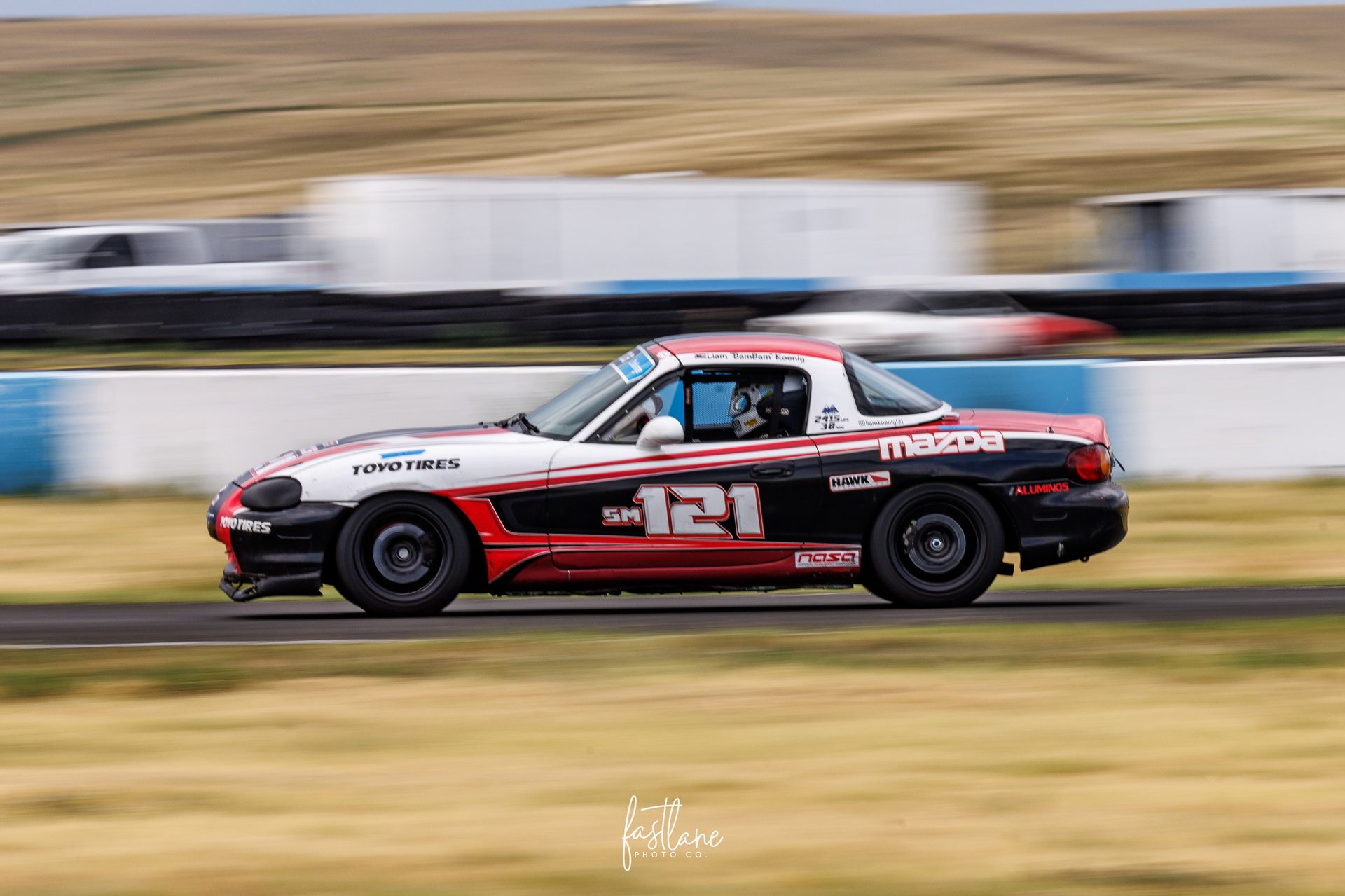 Everything behind the car in this photo is what your entry fee paid for.
The number, honestly
Entry fees move by club, by region, and by how early you register. But the range is tight enough to plan around.
A recent NASA Rocky Mountain event schedule listed a race-weekend entry at $399 early, $449 late, and $499 at the track, with single-day entries at $249 to $279. That's a published schedule and fees drift upward, so treat those as a floor rather than a promise.
SCCA regional club races land in a similar spot. A widely circulated cost breakdown from a California region put a regional entry at $515 plus a $30 compliance fee. Different coast, different year, same neighborhood.
For our own budgeting at LeadFoot, we plan about $500 per NASA weekend per driver. That's the honest planning number for Colorado in 2026.
One thing worth flagging: at LFR the entry fee is always a pass-through. The driver pays the sanctioning body directly. It isn't team revenue, and you should be suspicious of any program that buries it in a package without saying so.
What you actually get on track
Strip away the romance and a club race entry buys you a credentialed spot in a run group for a weekend. In practice that usually means:
- A practice session on Saturday morning
- A qualifying session that sets your grid
- A race Saturday and a race Sunday, sometimes with a second qualifying session
- Your transponder times, live scoring, and official results posted afterward
- A class, a car number, and points in a championship somebody is actually tracking
Add it up and you're looking at roughly 90 minutes to two hours of green-flag running across two days, depending on your region and how many run groups share the day. We walked through how that clock unfolds hour by hour in our Spec Miata race weekend schedule.
That ratio shocks people. Two hours for five hundred dollars sounds brutal until you look at the other half of the invoice.
The invisible half of the bill
Here's what nobody puts on the registration page.
A club race weekend needs the whole track rented. Not a corner of it. All of it, for two days, exclusively. It needs an ambulance and paramedics on site the entire time the track is hot. It needs fire and rescue crews, tow trucks, a timing and scoring team, a tech shed, a registration desk, stewards, grid workers, and three or four flaggers at every corner station.
The Colorado Region SCCA lists all of those as separate volunteer specialties: flagging and communication, course marshals, emergency services, starters, pit and grid, scrutineering, timing and scoring, and registration. Roughly a hundred people can be working a single weekend.
Almost none of them are paid.
Your entry fee doesn't buy the workers. It buys the facility, the insurance, and the equipment. Volunteers are the only reason it isn't triple.
One SCCA region published its actual books for a two-day club race back in 2008, and the shape of it still holds. On 250 entrants at $280 each, the track rental alone was $46,000. Insurance ran $31 per entrant, about $7,750. Add trophies, the sanctioning fee, and food for the workers, and the listed costs came to $60,410 against roughly $70,000 in entries. Costs have climbed a lot in the years since. The proportions haven't.
That's the honest answer to "why is this so expensive." It isn't. It's a nonprofit-scale operation running on a knife edge, and your entry is one of 200 slices covering a five-figure day.
The insurance piece is worth understanding on its own. SCCA membership includes participant accident coverage at sanctioned events, with up to $1,000,000 in medical expense reimbursement, plus emergency medical evacuation and accidental death and dismemberment benefits. What it explicitly does not cover is damage to your car. That's a separate purchase, and a lot of new racers assume otherwise.
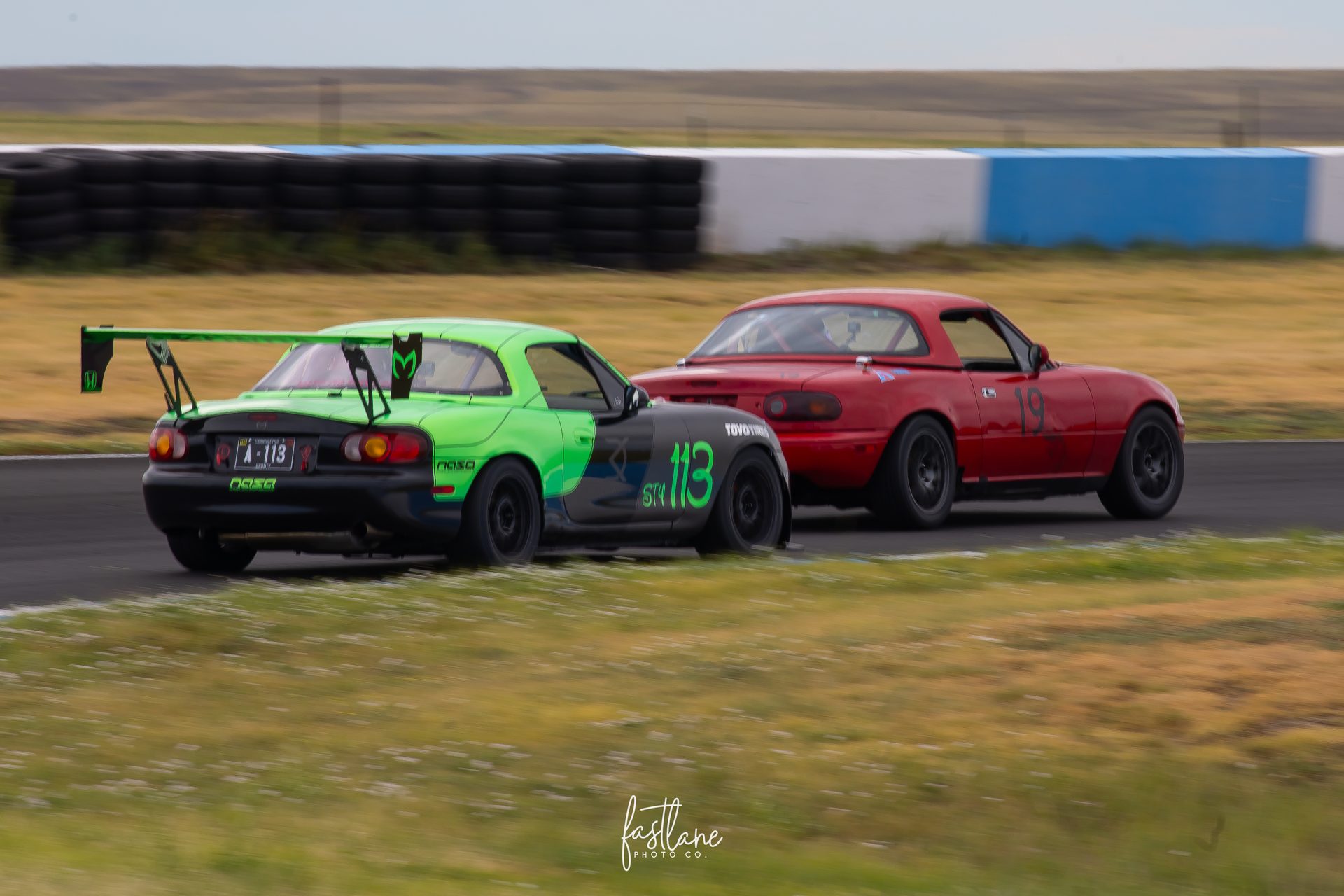 The #19 in traffic at High Plains. Two hours of this is what the weekend is built around.
What the entry fee does not cover
This is where first-year budgets break. The entry is the headline number, not the total.
| Item | Typical 2026 cost | Notes |
|---|---|---|
| Club membership | NASA $69/yr; SCCA about $85 national plus $10 to $25 regional | Required before you can enter anything |
| Competition license | SCCA Novice Permit around $110, upgrade to Regional around $75; NASA regional fees vary and aren't published nationally | Varies by region, confirm with yours |
| Transponder rental | About $40/day or $80/weekend | Or buy your own |
| Garage or covered paddock | Extra where it's offered | Most club racers run off a pop-up canopy |
| Late or at-track registration | A $50 late fee is common | The easiest money you'll ever save |
| Crew and guest gate fees | Varies by track | Ask before you bring six people |
| Tires, fuel, brakes, entry-day damage | The actual money | Far more than the entry itself |
We broke the licensing side down separately in what a racing license really costs. Short version: the paperwork is cheap, the seat time to earn it is not.
Four ways to pay less for the same weekend
None of these are clever hacks. They're just the discipline that separates a $500 weekend from a $700 one.
Register early, every single time. The gap between the early rate and the at-track rate is often $100. That's a set of brake pads for doing nothing but opening your laptop three weeks sooner. Refunds usually cost you a processing fee too, commonly around $30, so make the call before you commit.
Buy your own transponder if you're running a full season. At $80 a weekend, six events puts rental in the same range as owning one outright. Check current pricing before you jump, but the math turns over fast.
Ask your region about worker credits. Many clubs reward volunteers with credits, discounted entries, or free seat time at other events. What's offered varies a lot by region, so ask the worker chief directly instead of assuming.
Share the paddock. Splitting a canopy, a generator, and a tire pressure gauge with one other racer takes real money off the weekend and it's how most people meet the friends who'll push their car back to the trailer someday.
So is it worth it?
Here's my take after enough weekends to have an opinion.
Five hundred dollars for two hours of driving is a bad deal if all you want is laps. If that's the goal, a track day or an open lapping day at High Plains Raceway will give you far more time for far less.
But that's not what you're buying. You're buying a grid, a rulebook, a corner station watching every inch of the track, a medical crew on standby, and a result that goes in a record that follows you. You're buying the thing that makes it racing instead of driving.
Of everything on a race weekend invoice, the entry fee is the line I complain about least.
If the rest of that invoice is what's keeping you off the grid, we built our arrive-and-drive program for exactly that. You handle your entry and your gear. We handle the car, the crew, and everything else in the paddock.
Do you believe?
Sources: Colorado Region SCCA volunteer specialties, SCCA: Insurance at SCCA Events, What You Should Know, "How Much Did That Racing Event Just Cost You?" (club event cost breakdown), Kanga Motorsports club racing cost breakdown, NASA NorCal FAQ (membership), and NASA Rocky Mountain event listings on MotorsportReg. Entry and membership figures reflect published rates as of September 2026 and vary by region and event. Always confirm current pricing on your own event's registration page before you budget.