
The license itself is the cheapest part of getting a racing license. In club fees, you're looking at under $300.
That number surprises people. Then they find out what it costs to earn the right to fill out those forms. That's the part nobody puts in the brochure, so let's put it here.
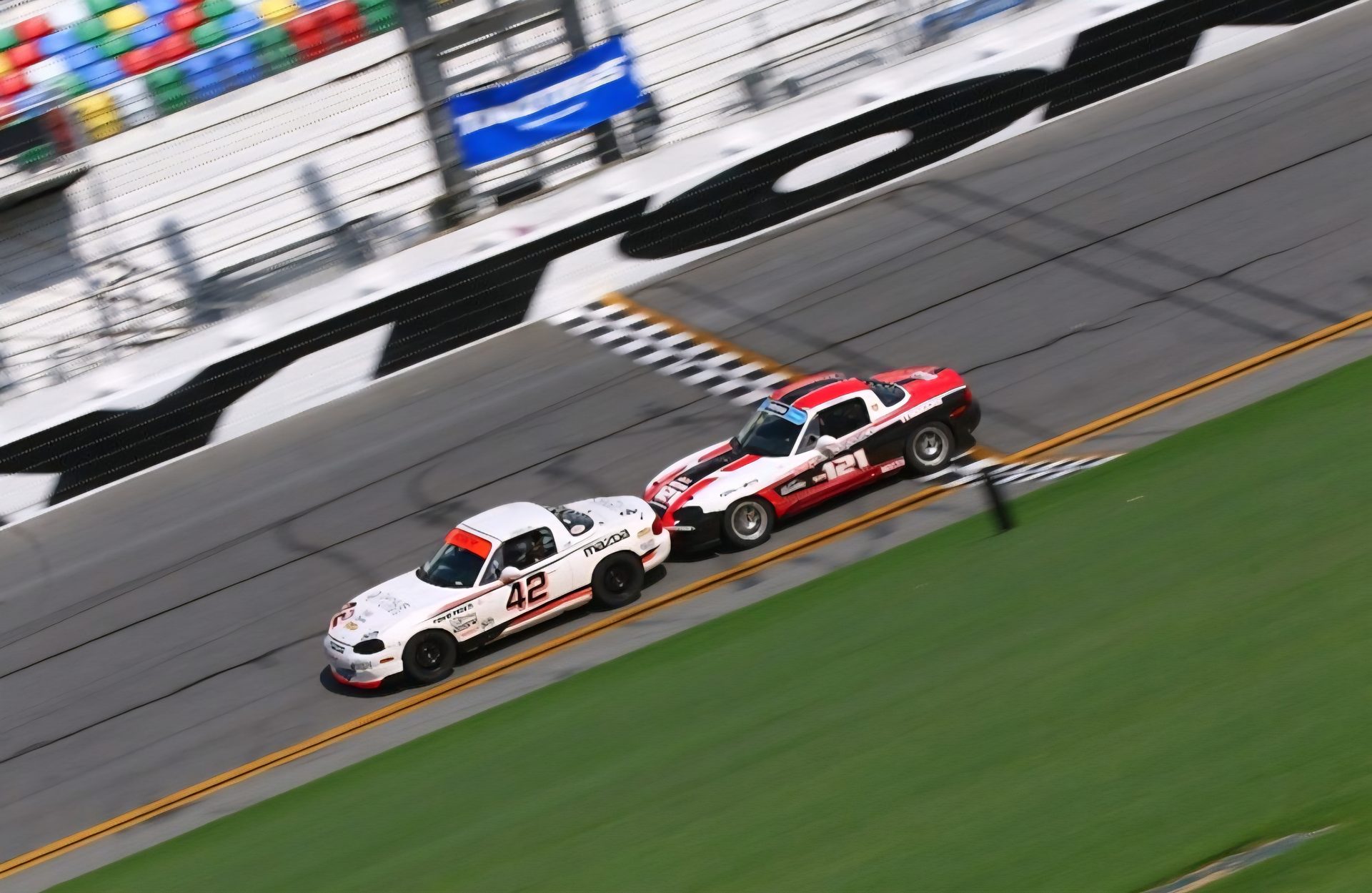 This is what the license buys you. The paperwork is cheap. The seat time to earn it is not.
The Club Fees Are Small (Here's the Breakdown)
Both big US road racing clubs work the same way. You join, you prove you're safe, you get a provisional ticket, you convert it to a real one.
SCCA publishes most of its numbers. National individual dues are $85 a year. Your region adds another $10 to $25 on top, so most members pay somewhere between $95 and $110. Chicago Region SCCA lists $105 for an individual and $145 for a family.
Then the license side. The SCCA Novice Permit runs about $110, and converting that permit into a Regional Competition License costs $75 sent to Central Licensing.
| SCCA line item | Cost |
|---|---|
| National dues | $85/year |
| Regional dues | $10–$25/year |
| Novice Permit | ~$110 |
| Novice Permit to Regional Competition License | $75 |
| Club fees, start to finish | ~$280–$295 |
NASA is less transparent online. Membership is $69 a year per NASA NorCal's FAQ, though I've seen $79 quoted elsewhere, so check the current rate when you sign up. From there it's a license application, a medical application, and an open-book test on the Club Codes and Regulations.
NASA doesn't publish a national license fee on its public pages, and regions handle their own schools. That's frustrating if you're trying to budget. One thing that is published: NASA New England charges a $50 processing fee if you use the self-certification medical option instead of a doctor-completed physical.
So the paperwork lands under $300 either way. If someone told you a racing license costs thousands, they were talking about the schooling, not the license.
The Real Cost Is the Seat Time
Neither club hands you a license for a check. You have to prove you can be trusted in traffic. There are basically three ways to do that, and they cost wildly different amounts.
Route 1 — Work up through HPDE. With NASA, you run their high performance driving events from HPDE1 through HPDE4, then apply or attend comp school. NASA Arizona lists 8-plus days in HPDE4 before you're ready for competition school. That's not one weekend. That's a season or two of event entries.
Route 2 — Go straight to competition school. Both clubs accept an accredited race school. This is the fast lane. You show up, you learn, you leave with a certificate.
Route 3 — Get credit for experience. If you've raced karts, run another sanctioning body, or have video and results to show, NASA will let a regional director review your resume. Some drivers do a checkout ride instead, where an official watches you drive and signs off.
Here's what those look like in dollars. These are real published prices from schools and clubs, not estimates.
| Path | What it costs | Car included? |
|---|---|---|
| Race school with car provided (Flatout, 1 day) | $1,995 | Yes |
| SCCA Novice Permit program (FastLane, 2 days) | $4,995 | Yes |
| Full Competition License school (FastLane, 3 days) | $7,495 | Yes |
| Competition school, bring your own car (Podium Club AZ, 2 days) | $2,895 | No |
| SCCA driver school car rental | $500–$2,000 | Rental only |
| HPDE weekend entry (NASA Rocky Mountain, published schedule) | $399 early, $449 late | No |
That spread is the whole story. Route 1 looks cheap per weekend and adds up over a season. Route 3 is nearly free if you already have a racing resume. Route 2 costs the most upfront and takes the least time.
None of them is wrong. Pick based on which you have more of: money or patience.
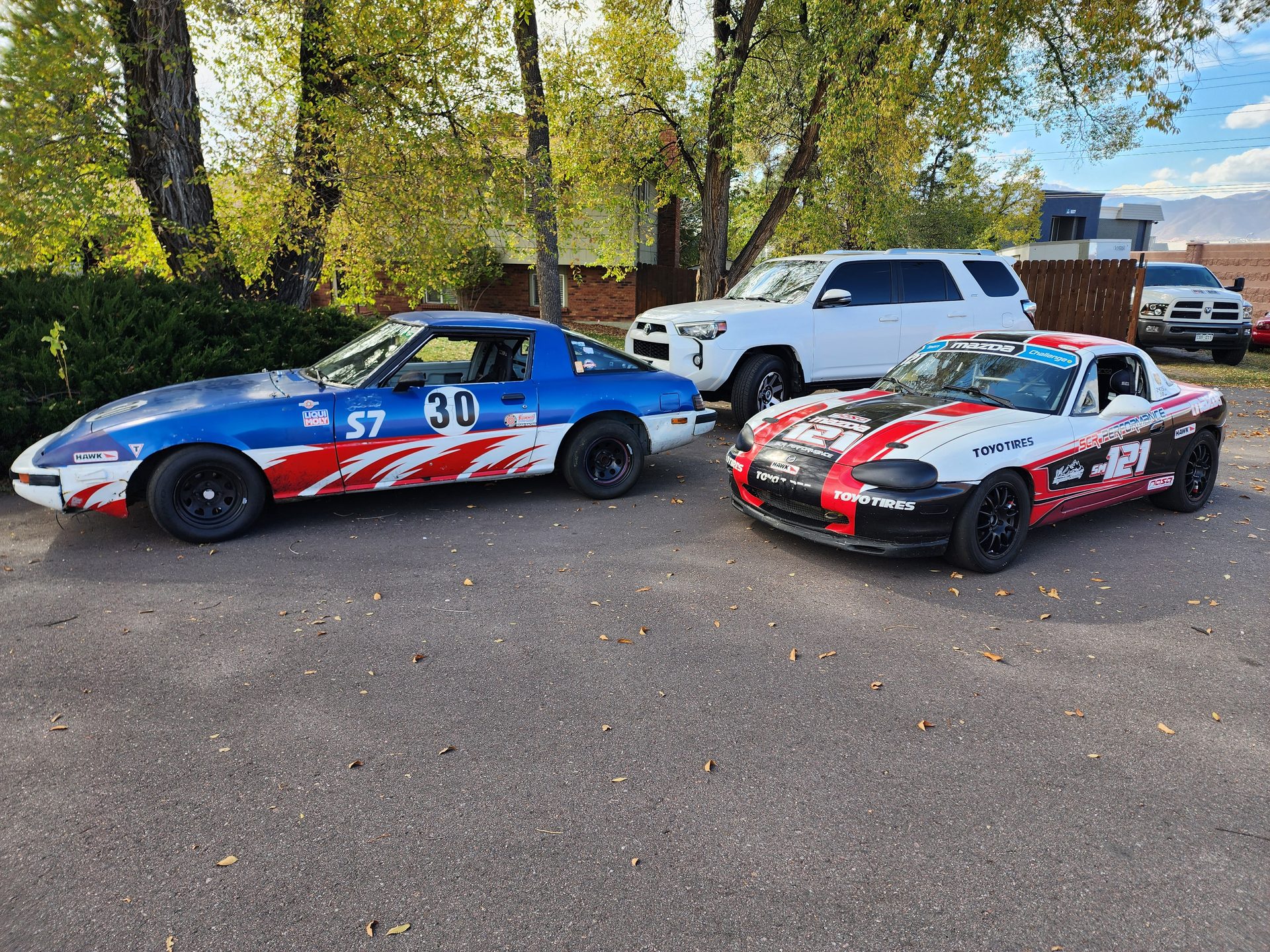 Our paddock at a NASA weekend. Every car here belongs to somebody who got through the licensing process first.
The Costs Nobody Puts on the Checklist
This is where budgets break. Not on the license fee. On the six things around it.
The medical. Both clubs want you cleared to race. NASA requires a physical exam. SCCA uses medical clearance, which for most adults is a yearly self-declaration and gets stricter at 60 and up. Call your doctor and ask what a sports physical costs before you assume it's free.
Safety gear. You can't do competition school in jeans. A suit, helmet, HANS device, gloves, and shoes are their own line item, and buying all of it new before you know you'll stick with racing is a rough way to spend money. We rent a full set to our drivers for $300 an event for exactly that reason. If you're new to this side of it, read our breakdown of why a HANS device isn't optional.
A car that passes tech. Every path except the "school provides the car" route assumes you have something legal to drive. That's the biggest hidden number in the entire process.
Transponder. NASA Rocky Mountain's published schedule listed transponder rental at $80 a weekend, $40 for a single day. Small, but it's real, and it surprises people at registration.
Travel. Fuel, tow, hotel or camping, food for two or three days. If your nearest track is four hours away, that's a real line in the budget every single event.
Time. Not a dollar figure, but the one that actually kills most attempts. Competition school and novice weekends happen on specific dates. You have to be there.
The license is a formality. The car, the gear, and the seat time are the actual price of admission.
What It Costs to Actually Use the License
Getting licensed is a one-time problem. Racing is the recurring one.
NASA Rocky Mountain's published entry schedule showed $399 for early weekend registration, $449 late, and $499 if you paid at the track. Budget around $500 a weekend and you won't be shocked.
Then there's everything else. A competitive Spec Miata race weekend on fresh tires runs roughly $2,000 to $3,500 all in if you own the car and do your own wrenching. Fresh tires alone are about $1,200 a set. Front-runners who replace tires every single weekend spend far more than that over a season.
That's the honest math, and it's why we built our arrive-and-drive program the way we did. A prepped car, crew, coaching, and data every session for $5,000 a weekend, with entry fees passed straight through at cost. It's not cheap. It's also less than buying a car, a trailer, and a tow vehicle to find out whether you like racing. If you're a young driver coming out of karts or sim, Kart to Car is the structured version of that same idea.
Before any of it, if you want the step-by-step licensing process itself, we wrote that up separately: how to get your racing license with SCCA or NASA.
So What Should You Budget?
Three honest scenarios, built from the numbers above.
You already have a car and track experience. Club fees under $300, a comp school or checkout ride, gear you already own. Call it $500 to $1,500 and a couple of weekends.
You're starting from zero with your own car. Membership, several HPDE weekends at roughly $400 each, comp school, gear, travel. Realistically $3,000 to $6,000 spread across a season, and that's before the car itself.
You want it done fast and don't own a race car. A full competition license school with the car provided runs $1,995 to $7,495 depending on the school and length. Add club fees and gear on top.
Notice none of those is "the license costs X." Because it doesn't. What it costs is however much seat time you need to become a driver a race director will trust on a full grid.
How Most People Actually Pay For It
The drivers I know who get licensed and keep racing almost never fund it out of one paycheck. They fund it in pieces. A local business covers entry fees. A shop covers tires. A brand covers gear.
That's not a fantasy reserved for fast people. It's a process, and the hardest part is knowing who to ask.
Skip the research — we already did it. The Get-Funded System includes the sponsor list: real companies that back grassroots racers, what they give, and how to approach them, plus the pitch you send them. It's $67, and it's the difference between guessing and having a list.
Do you believe?
Sources: SCCA — I Want to Road Race, SCCA New Jersey Region — Go Racing, Chicago Region SCCA — Membership, NASA NorCal FAQ, NASA Arizona — Race Licensing, NASA New England — Competition School, FastLane Racing School — SCCA Race Licensing, NASA Rocky Mountain event listing on MotorsportReg. Club fees and school tuition verified against published pages as of August 2026. NASA Rocky Mountain entry and transponder fees come from a published NASA RM event schedule and should be treated as a floor, not a current quote — confirm at registration. Per-weekend racing costs reflect LFR's own published pricing plus our real operating numbers.