
You can't just show up to a wheel-to-wheel race and drive. You need a competition license. And figuring out how to get one is where a lot of would-be racers stall out — the process sounds like a maze of forms, schools, and rules.
It's not that bad. I've gone through it, and I've walked drivers through it. Here's the honest, step-by-step version for the two clubs most people start with in the US: NASA and SCCA.
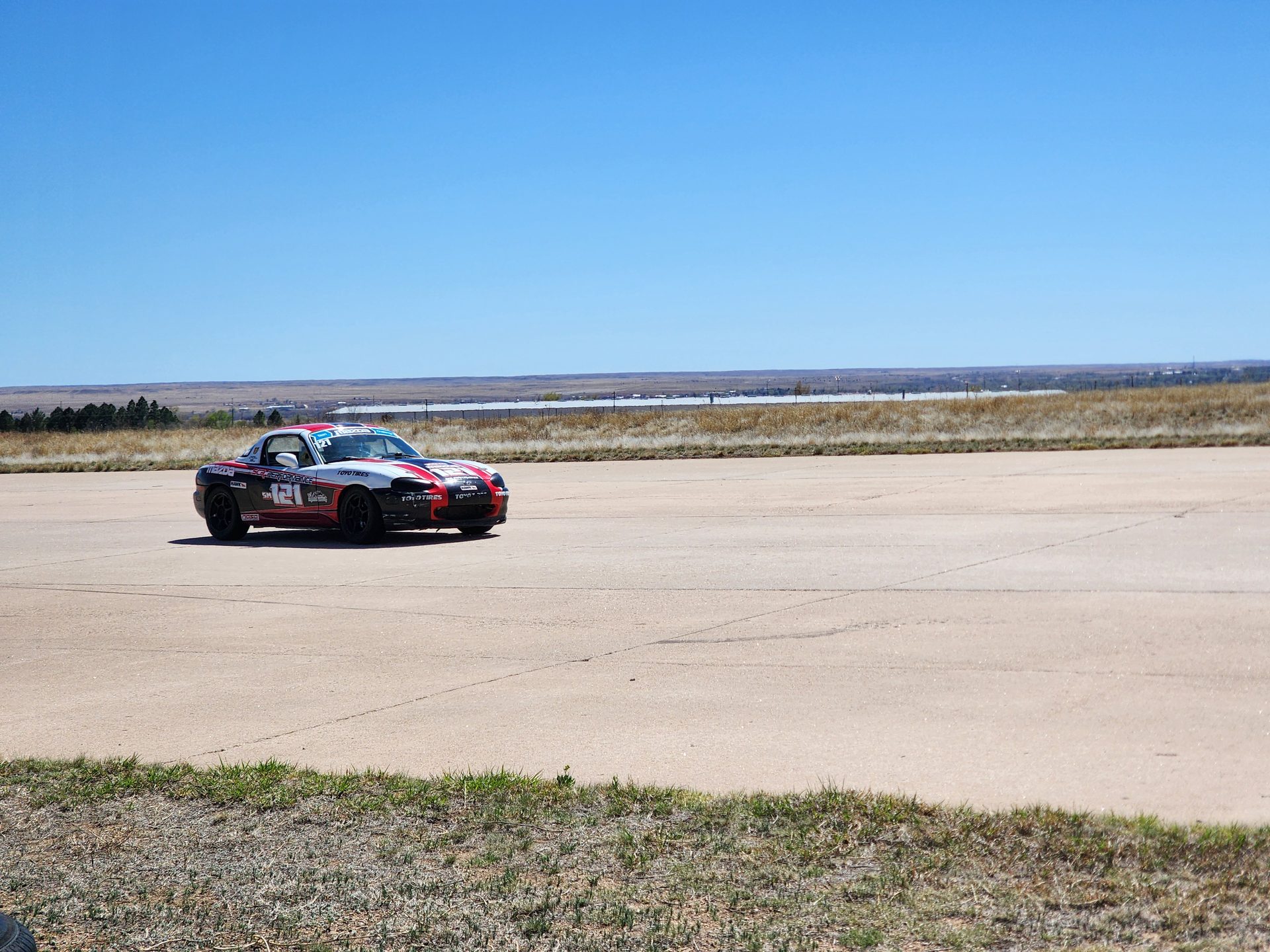 Our #121 Spec Miata on the front straight. Getting here starts with a license — and it's more doable than most people think.
First, Know the Difference: License vs. Track Day
A lot of new drivers mix these up, so let's clear it up fast.
A track day or HPDE (High Performance Driving Event) does not require a competition license. You show up with your street car, run in groups, and lap the track with instructors. No wheel-to-wheel passing. This is how most people get their first taste of a track.
A competition license is what you need to race door-to-door against other cars. That's a different thing, and it takes real steps to earn. This post is about that second one.
If you've never turned a lap on a real circuit, do a couple of HPDE days first. It'll make the licensing process faster and safer. Then come back to this.
The NASA Path
NASA (the National Auto Sport Association) runs the Rocky Mountain region I race in, out of tracks like High Plains Raceway and Pueblo Motorsports Park. Here's how their license works.
The prerequisites
Before you can apply for a NASA competition license, you need three things done:
- Be a current NASA member.
- Pass a physical examination required for racing. Your doctor signs off that you're fit to race.
- Pass an open-book written test on NASA's Club Codes and Regulations. It's the rulebook — flags, procedures, safety.
Get those three squared away and you're eligible to earn the license itself.
The five ways in
NASA gives you more than one route, which I actually love. Per Mazda Motorsports and NASA's own licensing page, the paths are:
- HPDE progression — run NASA's HPDE program from HPDE1 up through HPDE4, then apply. This is the natural path if you're starting from zero.
- Competition school — attend NASA's comp school (or an accredited outside school like Skip Barber or Bondurant) and apply with that credit.
- TREC enduros — run six of NASA's Team Racing Endurance Challenge events and earn your license through them.
- Experience review — if you've raced before, like an outdoor karter, upload a driving resume and let the regional director review it.
- Checkout ride — schedule a ride where a NASA official watches you drive and evaluates your control and awareness.
The rookie period
Here's the part nobody tells you upfront, and it's where a lot of explainers get it wrong. When you first earn your NASA license, it's provisional and honored only by your home region. NASA calls you a "rookie."
Once your provisional (rookie) logbook is signed off and you've run four races without a significant incident, NASA National issues a National Competition License that's honored across every region. That's the ticket that lets you race outside your home region.
Being classed a "rookie" is a separate thing. You keep the rookie label until you've completed eight races clean — but shedding the rookie tag and earning the cross-region national license are two different milestones. Don't conflate them the way most write-ups do.
That whole window isn't a punishment. It's the club making sure you can race clean before you're loose in every paddock in the country.
The SCCA Path
SCCA (the Sports Car Club of America) is the other big club, and cars legal in NASA Spec Miata are usually legal in SCCA too. Their license path looks a little different.
Step 1: Join and clear the basics
Become an SCCA member, complete their online driver school modules, upload a copy of your state driver's license, and get medical clearance. For most adults that clearance is a yearly self-declaration. Drivers 60 and up have stricter, doctor-verified forms.
Step 2: Buy a Novice Permit and attend a school
You purchase the Novice Permit from the SCCA store, then attend an SCCA-accredited driver's school (or a Race Experience event) to get your school credit on record.
Step 3: Run three weekends
With your novice permit, you enter regional events. Once you run three successful race weekends, you convert that novice permit into a full competition license.
The pattern is the same in both clubs: prove you can be trusted in traffic before you get the full ticket. Three weekends for SCCA; four clean races for your NASA national license (with the rookie label falling off at eight).
One note — your SCCA novice permit is valid for two years from the date it's issued. You need to finish the school and the three weekends inside that window, so don't buy it and sit on it.
There's also a shortcut. Complete a Level 4 accredited race school and you can buy a full competition license directly, skipping the three-weekend novice grind.
NASA vs. SCCA, Side by Side
| NASA | SCCA | |
|---|---|---|
| Membership required | Yes | Yes |
| Physical / medical | Physical exam for racing | Medical clearance (self-declaration for most adults) |
| Written / online | Open-book Club Codes test | Online driver school modules |
| School | Comp school or HPDE1–4 | Accredited driver's school + Novice Permit |
| Provisional stage | Provisional, home region only (rookie label until 8 races) | Novice Permit, valid 2 years |
| Cross-region / full license after | 4 clean races (national license) | 3 successful weekends |
Neither is "better." Pick the one that runs the tracks near you. In Colorado, NASA Rocky Mountain and SCCA both run at High Plains and Pueblo, so you've got options either way.
How Long Does This Actually Take?
If you're motivated, you can go from zero to a provisional license in a single school weekend — comp school on the weekend, license application after. From there it's a matter of banking your rookie races or novice weekends across a season.
Realistically, plan on most of one season to go from your first competition school to a full, everywhere-honored license. That's normal. Use that first season to get clean, get fast, and learn the paddock.
The Part That Trips People Up
The forms aren't the hard part. The hard part is the same one that stops people from ever entering their first race: figuring out what car to run, how to get it to the track, and whether you can afford a full season of learning.
That's exactly the gap our Kart to Car program is built to close. It's made for drivers coming out of karts or sim racing who want to earn a competition license and race a real car — without buying, towing, and rebuilding one first. You get seat time, coaching, and a path through the licensing process with people who've done it.
You don't need to have all of that figured out to start the license process. But knowing the steps above means you're already ahead of most of the paddock.
If you want to earn your license and get racing without doing it alone, take a look at the Kart to Car program. That's the version of this that comes with a crew.
Do you believe?
Sources: Mazda Motorsports — Five Ways to Get Your NASA Competition License, #DRIVENASA Licensing, SCCA — I Want to Road Race, GO 4 IT Racing Schools — SCCA Novice Permit Guide. License steps and requirements verified against NASA and SCCA official pages as of July 2026; specific numbers (4 clean races for the NASA national license, the 8-race rookie window, 3 SCCA weekends, 2-year novice permit) reflect current published club rules plus my own experience.