
One car. One closed mountain road. One clock.
No other traffic, no corner-by-corner battles, no chance to make it back next lap. You get a couple of runs, and the fastest one is your result. That's a hill climb, and it's one of the oldest forms of motorsport still running in America.
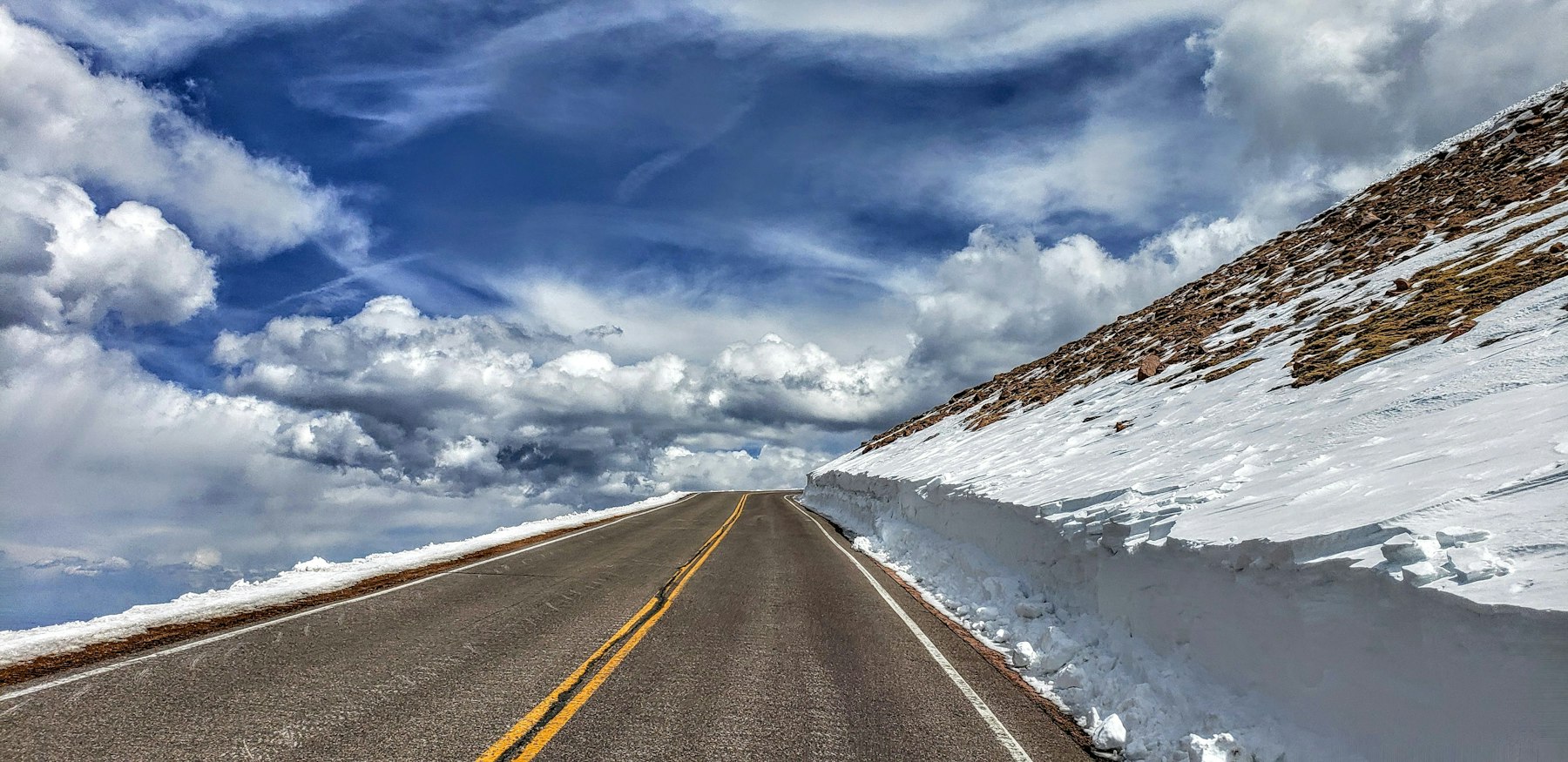 The Pikes Peak Highway. Twelve and a half miles of it becomes a race course once a year. Photo by Ethan Rush on Unsplash.
What a hill climb actually is
SCCA defines it simply. A HillClimb is a competition where "one car at a time competes on a closed public road," usually with climbing elevation as the defining feature.
It's one of three formats inside the SCCA Time Trials program, alongside Time Attack (best lap on a race circuit) and TrackSprint (a standing start to a flying finish on part of a track). If you've read our breakdown of time trial racing, a hill climb is the same scoring idea moved onto public pavement.
Courses run anywhere from under a mile to over seven. Giants Despair in Pennsylvania has been running a one-mile course since 1906. Mount Equinox in Vermont is 5.2 miles with 3,100 feet of climb. Colorado Hill Climb Association courses generally sit in the two-to-five-mile range.
You'll get several timed runs across a weekend. Some events take your single best, some sum them. Read the supplemental regulations for your specific event, because this varies by region and organizer.
The safety bar is higher than a track day, not lower
This is the part people get backwards.
A hill climb looks casual from the outside. One car on a road, no wheel-to-wheel contact, no packs. So new drivers assume it's an easier door to walk through than club racing.
It isn't. There is no runoff on a mountain road. There's a rock wall on one side and nothing at all on the other. The safety requirements reflect that.
SCCA sets the minimum for a HillClimb at Safety Level 2, while a lot of Time Attack events run at Safety Level 1. That step up means:
- A racing-specific bucket seat, properly mounted
- A four-point roll bar with the hoop above the top of your helmet
- A 5-, 6-, or 7-point harness to SFI 16.1 or FIA 8853
- A fire suppression device, two pounds minimum
- A fire-resistant suit (SFI 3-2A/5 or FIA 8856), gloves, socks, and leather shoes
- A current Snell-rated helmet
Hill climbs add one requirement on top. Arm restraints are required in any open car, and closed cars need a window net or arm restraints. That rule exists for exactly the reason you think it does.
You also need a logbook. SCCA requires an SCCA Time Trials or Road Race logbook, or one from an accepted racing organization. If you're not sure what that means, we covered what a logbook is and how to get one separately, and when a roll cage actually becomes mandatory too.
One honest heads-up on helmet dates. SCCA's hillclimb safety page lists Snell 2015-or-newer stickers, while its general Safety Level 2 page lists SA2020 or newer. Those two published pages don't match. Email the event organizer before you buy a helmet, not after.
The license is the easy part
Here's the good news. The paperwork is not the barrier.
For a typical SCCA hillclimb, entries are open to holders of a Time Trials license, a Time Trials Novice Permit, a Hillclimb license, or a Club Racing competition license or novice permit. On top of that you need an SCCA weekend or full membership and a valid state driver's license.
And the Novice Permit is genuinely open. SCCA Time Trials issues it to drivers with zero or minimal competitive track experience. Membership plus a driver's license gets you the credential. Four events with satisfactory ratings moves you past novice.
So the credential is cheap and fast. The car prep is the real cost.
What a hill climb entry actually costs
Real published 2026 numbers, not estimates.
| Event | Sanctioning | Entry |
|---|---|---|
| Duryea Hillclimb (PA) | SCCA Blue Mountain | $260 early / $285 |
| Spring & Fall Weatherly (PA) | Weatherly Hillclimb Assn. | $180 early / $200 (one day $115 / $130) |
| Dragon Hillclimb (NC) | SCCA Appalachian | $350 early / $425 |
| Pine Mountain Hillclimb (GA) | SCCA Appalachian | $350 early / $425 |
Add an SCCA weekend membership if you're not a member — listings show $25 to $30 depending on the event.
Recent Colorado Hill Climb Association listings on MotorsportReg have run roughly $160 to $300 for a weekend entry, plus a club membership. CHCA has also listed a discounted junior entry for racers under 18, which is rarer than it should be in this sport.
Compare that to a club race weekend. A NASA or SCCA wheel-to-wheel entry is usually in the $400 to $500 range before you've bought a tire. A hill climb entry is often half that.
The catch is what you bring. You still need the tow rig, the gear, the tires, the fuel, and a car that passes tech at Safety Level 2. The entry fee is the small number in a hill climb budget, same as everywhere else in racing.
Hill climbing in Colorado
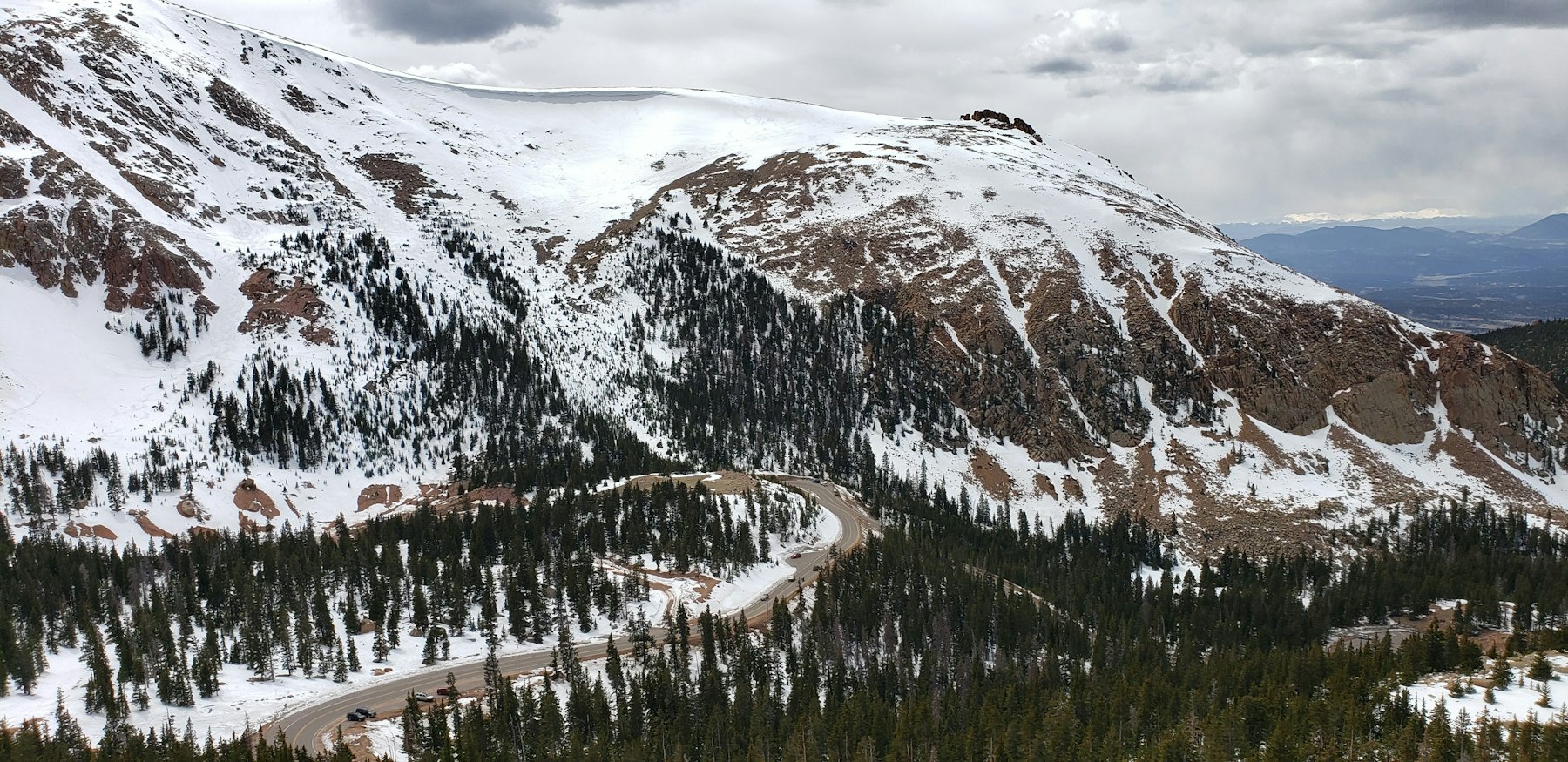 This is what a hill climb course looks like on a normal day. Note what's on either side of it. Photo by Ethan Rush on Unsplash.
If you live here, you live in one of the best hill climb states in the country.
The Colorado Hill Climb Association runs a summer-and-fall schedule on closed roads at venues including Rangely, Monarch, Lands End, and Temple Canyon. Their 2026 calendar put Rangely on May 16-17, Lands End on August 1-2, and Temple Canyon on August 29-30. Courses are two to five miles of real mountain road.
Then there's the big one. The Pikes Peak International Hill Climb is 12.42 miles, 156 turns, and it finishes at 14,115 feet. It's the most famous hill climb on earth and it's forty minutes from our shop.
It is also not something you can enter. PPIHC's own rulebook is blunt: the organization "will invite and receive entries only from selected competitors," and it sets the size of the field. You submit a Request for Invitation during a fixed window — for 2026 that was December 4 through January 29 — and officials decide based on what they judge to be your ability to perform. The Director of Competition can require you to demonstrate you can drive competitively before you're even allowed to practice.
Rookies who get in face extra rules. You must practice every single section of the course or you're disqualified from the event. Missing rookie orientation carries a $500 minimum fine and possible disqualification. There's a medical history form and a health screening at registration.
The next Race to the Clouds is set for June 27, 2027. Watch it. Don't plan your first competition weekend around it.
One more Colorado-specific thing worth knowing. A hill climb takes you from mountain-town elevation to well above it, and your engine feels every foot. We broke down what altitude costs you in horsepower — on a course that gains thousands of feet, the car you launch with isn't the car you finish with.
Should a hill climb be your first competition?
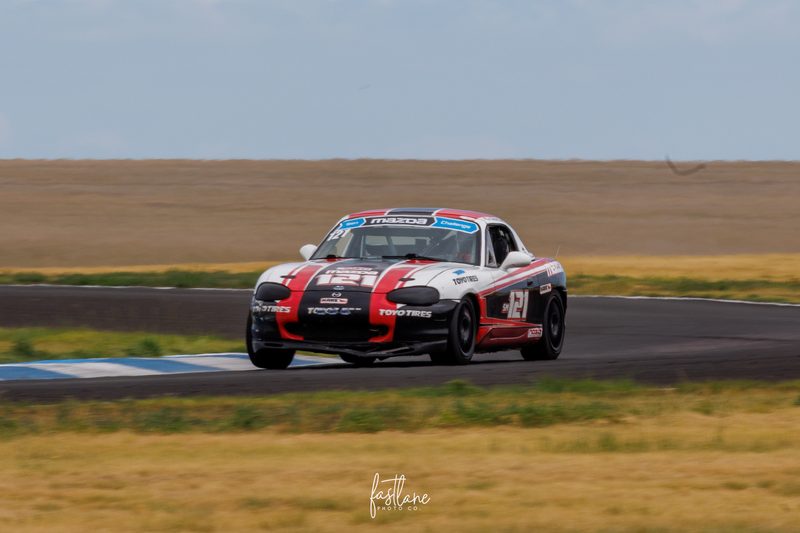 And this is what a circuit gives you that a mountain road doesn't: curbing, paved runoff, and room to be wrong. The #121 at High Plains Raceway.
Honest answer: usually not, but sometimes yes.
It's a great fit if you already have a caged or roll-bar-equipped car with a logbook, you want a real timed result without trading paint, and you'd rather drive a mountain road than a circuit. The entry is cheap, the field is friendly, and the credential is easy.
It's the wrong first step if your car is a street car and you're hoping to ease into competition. A track day or a Time Attack event will take you as you are. A hill climb wants a seat, a bar, a harness, a suit, and a logbook first.
And there's the part nobody puts in the brochure. A mistake on a circuit usually means gravel and a bruised ego. A mistake on a hill climb course can mean a lot more than that. Drivers who do this well have almost always logged real seat time somewhere with runoff before they tried it.
That's not a reason to avoid hill climbs. It's a reason to earn one.
If you're in Colorado and you want to find out where you stand before you commit to building a car, we run Spec Miatas at High Plains Raceway and Pueblo with NASA Rocky Mountain, and our arrive-and-drive program exists so you can get a coached weekend in a prepped car without owning one.
Sources: SCCA HillClimb Safety Rules, SCCA Time Trials Safety Levels, SCCA Time Trials Basics, PPIHC 2026 Rule Book, Pikes Peak International Hill Climb, Colorado Hill Climb Association, event listings on MotorsportReg. Entry fees are published 2026 event rates and change year to year — always verify on the current event listing and read the supplemental regulations before you register.
Do you believe?