
Nobody spends four hundred bucks and a tank of gas hoping to get black-flagged on lap three for being too loud.
But it happens. Usually to the guy with the new cat-back who never thought to check the number before he registered.
Sound limits are one of the few things that can end your day before lunch, and they're also one of the easiest things to solve ahead of time. Here's how they work.
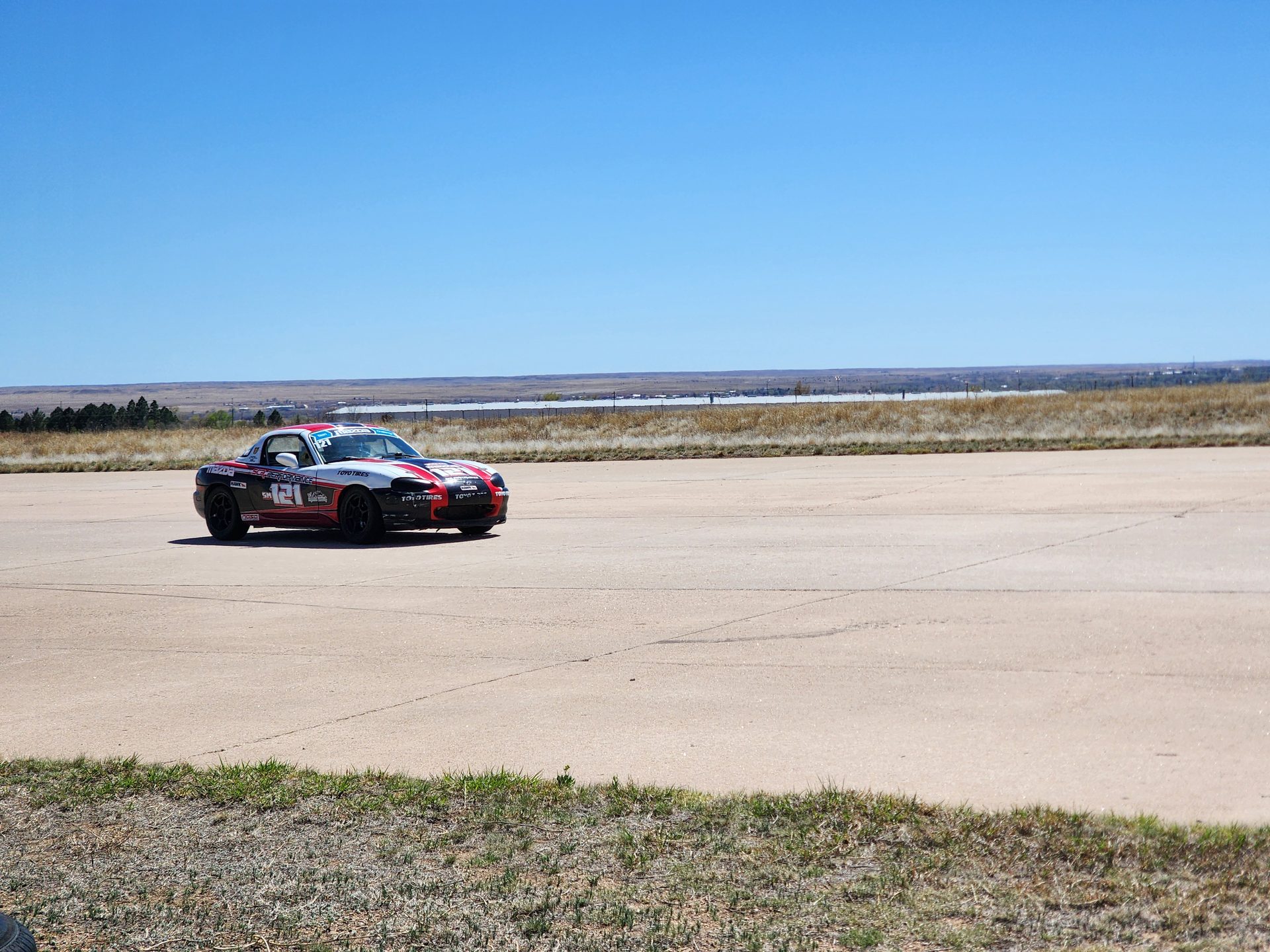 A Spec Miata runs a muffler by design. It's not the car that gets sent home for noise.
Why tracks have a sound limit at all
It isn't the track being difficult. It's the neighbors.
Almost every road course in the country operates under a county permit, a zoning agreement, or an old lawsuit settlement that caps how much noise can cross the property line. Break the cap enough times and the track doesn't lose a customer. It loses race days.
So the number gets enforced hard, and it gets enforced on you.
That's worth remembering when a corner worker points at your car. The staff aren't picking on you. They're protecting the calendar for everyone who wants to run there next month.
The real numbers, and how much they vary
There is no national standard. The limit is whatever that specific facility negotiated with whoever lives nearby.
| Track | Posted limit | How it's measured |
|---|---|---|
| High Plains Raceway (Byers, CO) | 103 dBA | At any property line, by track management |
| WeatherTech Raceway Laguna Seca | 90 dBA most days, 92 dBA on some, a handful of higher-limit days per year | Sound booth trackside, plus a roaming meter |
| Typical US club event | Roughly 95–105 dBA static, 90–100 dBA drive-by | At the tailpipe, or trackside as you pass |
Look at the spread. A car that's perfectly legal in Colorado can be 13 decibels over the line in Monterey.
And 13 decibels is not "a little over." Decibels are logarithmic. Every 3 dB is a doubling of sound energy, and about 10 dB reads to the human ear as twice as loud. Being six over isn't six percent too loud. It's a different car.
Static test versus drive-by test
Two ways they'll check you, and they're not the same test.
Static. You sit still in the paddock. A meter goes about half a meter from the tailpipe at a 45-degree angle, and you hold the engine around three-quarters of max revs. This is common at tech and it's the one you can practice for at home.
Drive-by. A meter sits trackside, usually at the point closest to the property line or the neighbors, and reads you at speed. Laguna Seca's booth famously sits between turns 5 and 6. High Plains measures at the property line itself.
The drive-by is the one that catches people, because a car can pass static and still light up the meter under load at 7,000 rpm in third gear.
Ask which test the event uses. It's a normal question and the registrar answers it in one line.
What happens if you fail
It's rarely dramatic. It's just expensive in track time.
At High Plains Raceway, a violation gets you an immediate black flag, and you're off track until the problem is fixed. Third violation in a single day and you're excluded from the event with no refund. Laguna Seca runs the same general idea with a sound flag, and three of them ends your day.
That's the pattern almost everywhere. Warning, fix it, gone.
The other cost is quieter. Once you've been flagged, you're now the car staff are watching, and staff at big trackday orgs talk to each other. Getting clever with a meter is a reputation you don't want in a paddock this small.
How to actually get under the number
Do this in order. Most people never need step four.
- Find the number before you register. It's on the track's facility-rules page, or in the event supplemental regs. High Plains posts 103 dBA right on their site. If you can't find it, email the organizer.
- Measure yourself first. A phone app is not a calibrated meter, but it's directionally useful. Replicate their method: right distance, right angle, right rpm. If you read within about 3 dB of the limit, treat that as failing, because heat, humidity, and pavement all move the number.
- Fit a tailpipe insert or baffle. A bolt-in decibel insert is the cheapest fix in motorsport. Reported results range from a few dB to about 7 dB depending on the exhaust, and on some systems they do almost nothing. Test yours instead of assuming.
- Change the muffler for that weekend. If you're 10-plus over, an insert won't save you. A real quiet-spec muffler or resonator will. Some tracks and organizers rent or sell silencers on site, but call ahead rather than showing up hoping.
One more thing that helps and costs nothing: angling the tip toward the ground deflects some of the energy into the pavement instead of straight at the meter.
What doesn't work as well as people claim is header wrap. It changes heat, not much volume.
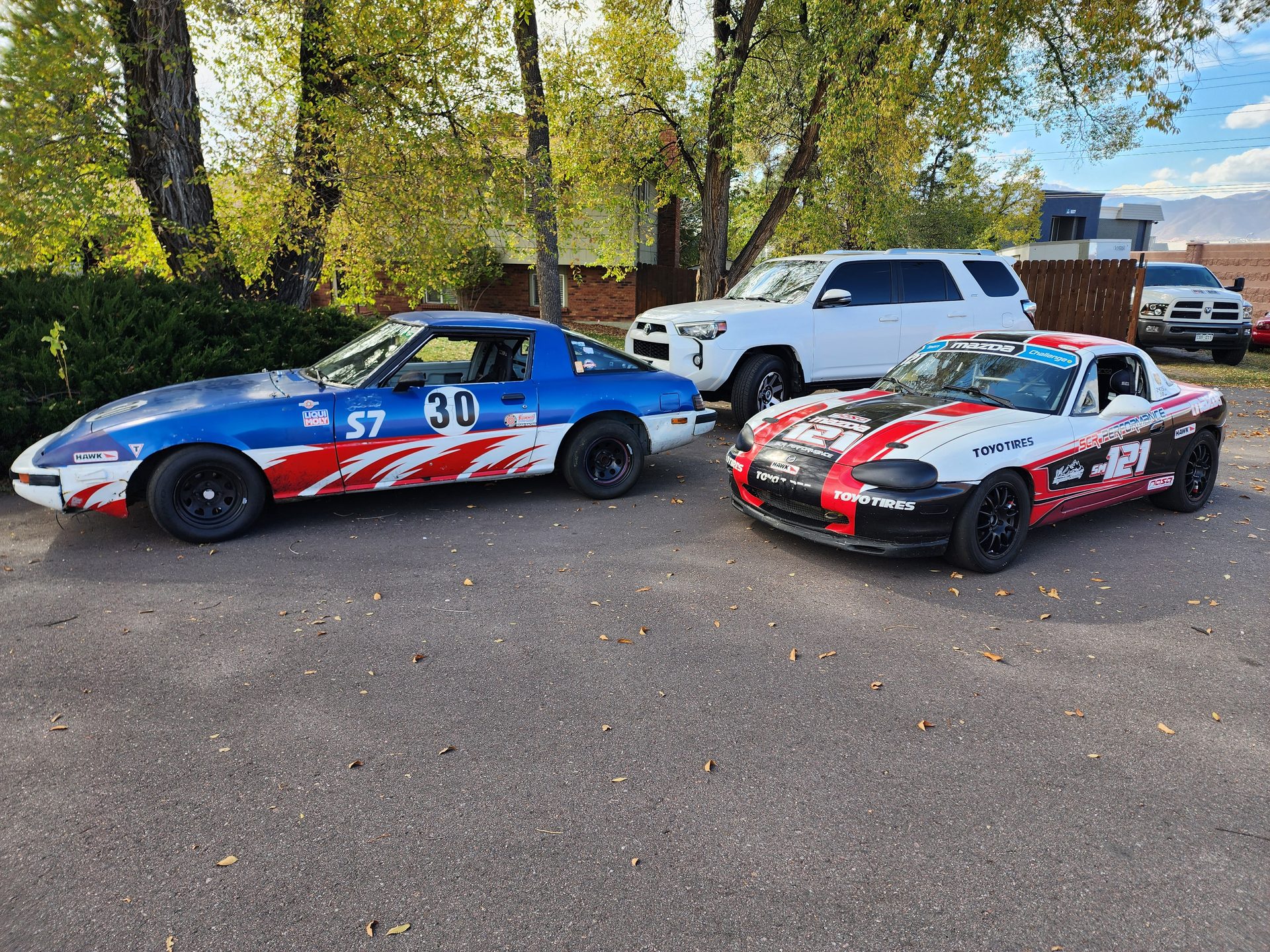 Paddock morning. Sound tech is a five-minute problem if you handled it at home, and a day-ending one if you didn't.
The Colorado angle: we have it good here
If you run in Colorado, this is mostly a non-issue, and it's worth knowing why.
High Plains Raceway sits out on the eastern plains near Byers, with very little around it. That's how it can post 103 dBA at the property line instead of the 90 dBA a track hemmed in by houses has to live with. Pueblo Motorsports Park doesn't publish a headline number the way HPR does, so check the event supps or ask the organizer before you tow down.
Plenty of Colorado drivers only discover sound rules when they trailer out to a coastal track and find out their exhaust is illegal there. If that's on your calendar, measure before you book the hotel. Our High Plains Raceway track guide covers the rest of what to expect at the local one.
Also worth saying plainly: most stock cars pass everywhere. If you're running the exhaust the factory put on it, you almost certainly have nothing to think about. This is a modified-car problem.
And it's part of why Spec Miata is welcome at basically every facility in the country. The class runs a muffler, the cars aren't loud, and nobody at the property line is filing a complaint about a 1.8 liter four-cylinder.
If you'd rather skip the whole question and drive something that's already through tech and already legal wherever it's entered, that's what our arrive and drive program exists for. You show up with a helmet. We handle the car.
Sources: High Plains Raceway facility rules, Counter Space Garage on Laguna Seca sound limits, Trackdays.co.uk noise limits and testing, SVANTEK on car racing noise measurement, Demon Tweeks guide to exhaust silencers. Limits verified against currently published track rules as of August 2026. Sound limits change, so always confirm with the organizer for your specific event date.
Do you believe?