
Walk through the paddock at any beginner track day and count the trailers. There won't be many. Most of the cars out there drove themselves in that morning, and they'll drive themselves home that night.
So yes, you can track your daily driver. The real question is what it costs the car, and whether you'll be comfortable driving it to work on Monday.
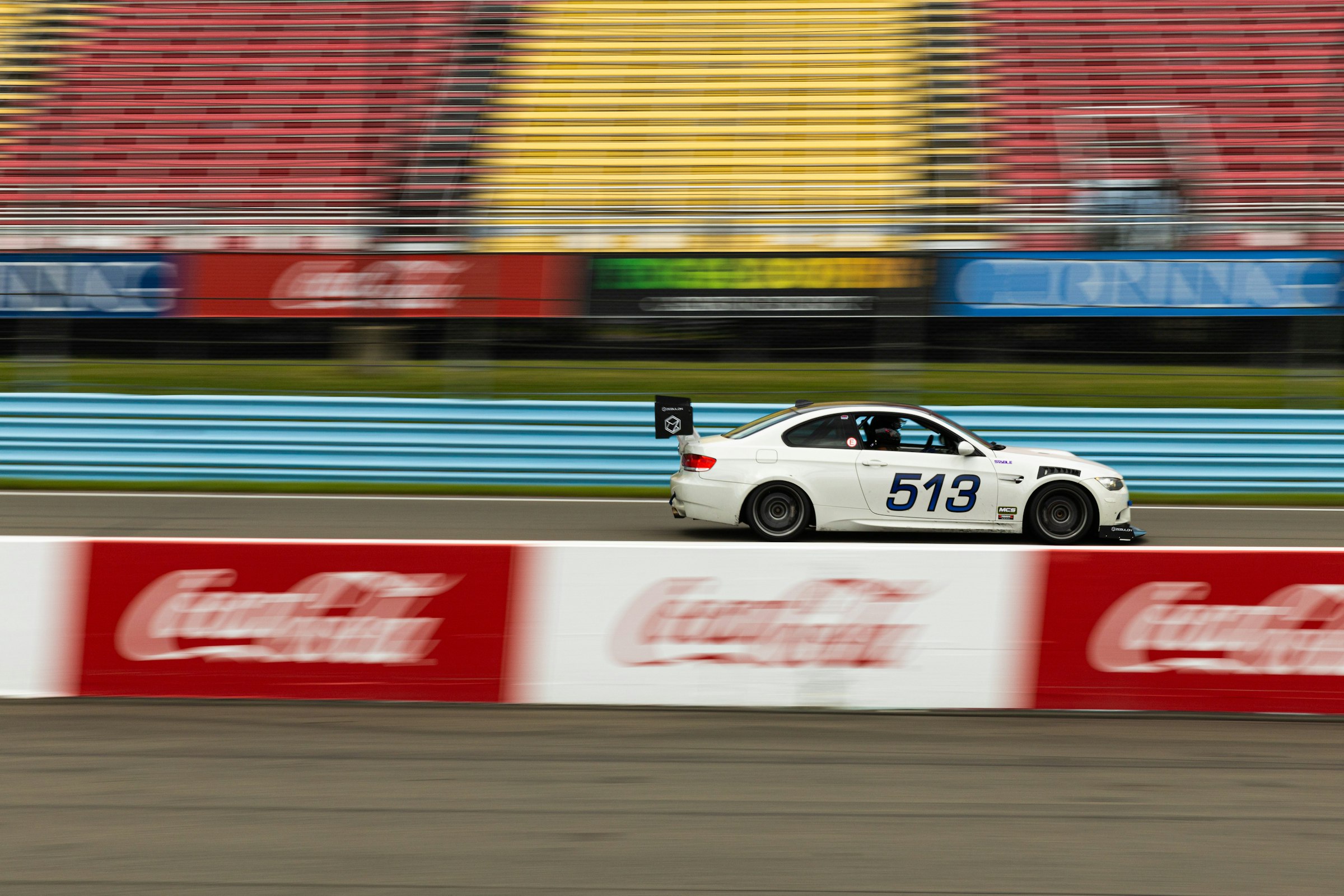 Photo by Charlie Holbech on Unsplash.
The Short Answer: Yes, and Most People Do
High Performance Driving Events exist for street cars. That's the whole design of them. NASA and SCCA novice run groups are built around stock vehicles with an instructor in the passenger seat, no passing except with a point-by, and a speed ceiling that comes from your own skill rather than the rules.
You do not need a cage. You do not need a race seat. You do not need slicks. For most beginner HPDE groups you need a car that passes a basic safety check, a helmet that meets the event's rating, and long pants.
The car that gets you to the grocery store will get you around High Plains Raceway. It just won't do it for free.
What a Track Day Actually Does to Your Car
Track driving isn't a harder version of street driving. It's a different job. Twenty minutes at seven-tenths asks more of your brakes than three months of commuting.
Here's where the damage shows up, in the order it shows up.
| System | What happens | What it costs |
|---|---|---|
| Brake pads | Heat cycles they were never designed for. Street pads can fade badly or wear out in a handful of days. | Roughly $20 to $80 a day in wear |
| Brake fluid | Old fluid absorbs water and boils. A boiled pedal goes to the floor. | $20 to $30 a bottle, plus a flush |
| Tires | Heat, load, and abrasion. A good performance tire may give you around ten track days. | Roughly $50 to $150 a day |
| Fuel | You'll burn a tank or more in a day of sessions. | $40 to $100 |
| Engine and trans fluids | Sustained high load pushes temps well past commuting range. | Cheap to change, expensive to ignore |
Add it up and the working number most people land on is about $300 a day in consumables on top of the entry fee. I broke the full financial picture down in our post on what a track day actually costs, so I won't repeat all of it here.
The part I want you to internalize is this: brakes go first, and they go faster than you expect.
The engine is rarely what ends your day. It's almost always the brakes, and almost always in the third session.
Fade sneaks up on you. The pedal gets long, then soft, then you're standing on it going into a braking zone that felt fine two laps ago. That's the moment new drivers panic. Fresh pads and fresh high-temp fluid remove that entire failure mode for a couple hundred bucks.
The Pre-Track Checklist for a Street Car
Most clubs use a tech inspection form. NASA lets you self-tech a car that's ten years old or newer; older or modified cars need an ASE-certified mechanic to sign the form. A shop inspection typically runs $100 to $200, and it's cheap insurance for a first event.
Whether you self-tech or pay a shop, this is what actually gets checked.
Brakes. Firm pedal, every time. No cracked or leaking lines. Pads with meaningful life left — more than you'd call acceptable for street use. If you're near 50 percent, replace them before you go.
Fluids. No leaks anywhere. Brake fluid flushed within the last six months, and ideally a high-temperature fluid rather than whatever came in the car.
Tires. Tread above the wear bars, no cords showing, no plugs, no damage to the sidewalls. Correct pressures and tight lug nuts. Nothing older than about five years, because rubber ages out whether you drive on it or not.
Battery and interior. Battery secured with real hardware and terminals covered. Seats bolted in tight, belts in good condition. Then empty the car completely — floor mats, phone chargers, the water bottle rolling under the seat. Anything loose becomes a projectile.
Wheels. Hubcaps and beauty rings come off.
Then bring a tire gauge, a torque wrench, water, and a chair. Corner workers won't loan you tools and the nearest parts store is usually a long way from the paddock.
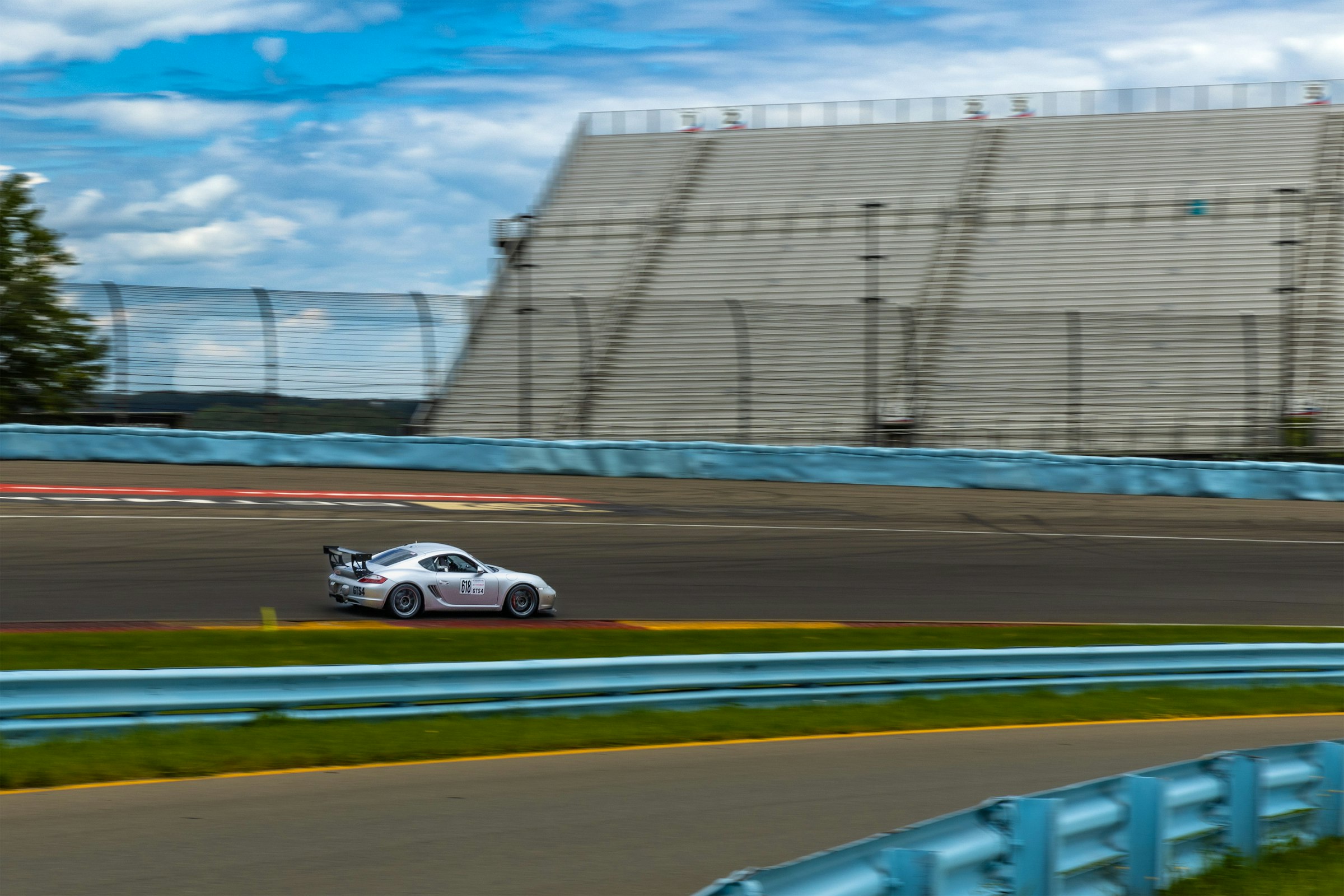 Photo by Charlie Holbech on Unsplash.
Warranty and Insurance: Read the Fine Print First
This is the part that bites people, and I'd rather you hear it from me than from a claims adjuster.
Your warranty probably isn't voided, but it isn't a blanket either. Manufacturers vary a lot. Some treat recreational HPDE as normal use of a performance car and say so in the owner's manual. Others exclude "racing and competitive driving of any sort" plus track use outright. The Magnuson-Moss Warranty Act means a dealer can't kill your whole warranty over one weekend, but they can absolutely deny a specific claim they can tie to track abuse.
And they can see it. Modern cars log RPM, speed, and thermal events. A technician looking at that data can tell what you did.
Go find the section of your warranty booklet titled "What Is Not Covered." Read it before you register, not after your clutch lets go.
Your auto insurance almost certainly excludes track use. Nearly every standard policy has a racing or track exclusion. That means if you put your daily driver into a tire wall, you may still owe on a car you can't drive. Standalone track day insurance exists and runs a few hundred dollars per event depending on the car's value. I laid out how those policies work in our guide to track day insurance and what it covers.
Neither of these is a reason not to go. They're a reason to go with your eyes open.
The Colorado Wrinkle: Heat, Altitude, and Cooling
If you're running out here, you get one gift and one problem.
The gift is that thin air makes everything a little slower. High Plains Raceway sits above 5,000 feet at its high point, and a naturally aspirated engine gives up roughly 15 percent of its power at that elevation. Lower speeds mean less energy going into your brakes and tires. I went deeper on the physics in our post on horsepower loss at altitude.
The problem is that the same thin air is worse at carrying heat away. Fewer air molecules moving through your radiator means less cooling for the same airflow. Add a 90-degree August afternoon on the eastern plains and a stock cooling system that's fine on I-25 can start climbing by lap five.
Watch your temperature gauge like it's a lap timer. If coolant or oil temps start rising, come in a session early. Nobody has ever regretted parking a car one session too soon.
If you've never seen the place, our High Plains Raceway track guide walks the layout corner by corner before you ever pay an entry fee.
When Your Daily Driver Stops Being the Right Tool
Here's the honest ceiling. Your street car is the right tool for your first few events. It stops being the right tool at a specific, predictable moment.
That moment is when you start caring about lap time.
Getting faster means stickier tires, better pads, more heat, more wear, and a real chance of a mechanical problem 200 miles from home. The car that was cheap to track at seven-tenths gets expensive fast at nine-tenths. And there's one thing a dedicated race car has that your commuter never will: if you break it, you're not stranded.
That's the fork in the road most people hit around event four or five. Some buy a second car and a trailer. Some keep it casual and stay in the novice group forever, which is a completely fine way to enjoy the sport. And some decide they want to find out how fast they actually are without gambling their transportation on it.
If that's you, this is where arrive-and-drive comes in. A team owns the car, preps it, and hands you the keys — tires, brakes, fuel, and crew all handled. We run that at High Plains Raceway and Pueblo Motorsports Park, and you can see how our arrive-and-drive program works whenever you're curious.
But start with what you own. Air up the tires, empty the cabin, flush the fluid, and go see what your daily driver can do. Almost everyone I know in this sport started exactly that way.
Do you believe?
Sources: NASA NorCal — HPDE First Day at the Track, NASA HPDE program overview, TrackManual — Preparing Your Car, No Money Motorsports — Buying Track Day Tires. Prep requirements and cost ranges verified against currently published guidance as of August 2026. Consumable figures are ranges, not promises — your car, your pace, and your track all move them. Warranty and insurance terms vary by provider, so read your own documents before you register.