
Everybody quotes the registration fee like that's the whole price. It's not. The registration is the ticket in the door. The real number is what you spend to walk back out with the car in one piece.
So let's do the honest math. Here's what a track day actually costs in 2026 — entry, the stuff that wears out, and the fees nobody tells you about until you're standing in the paddock.
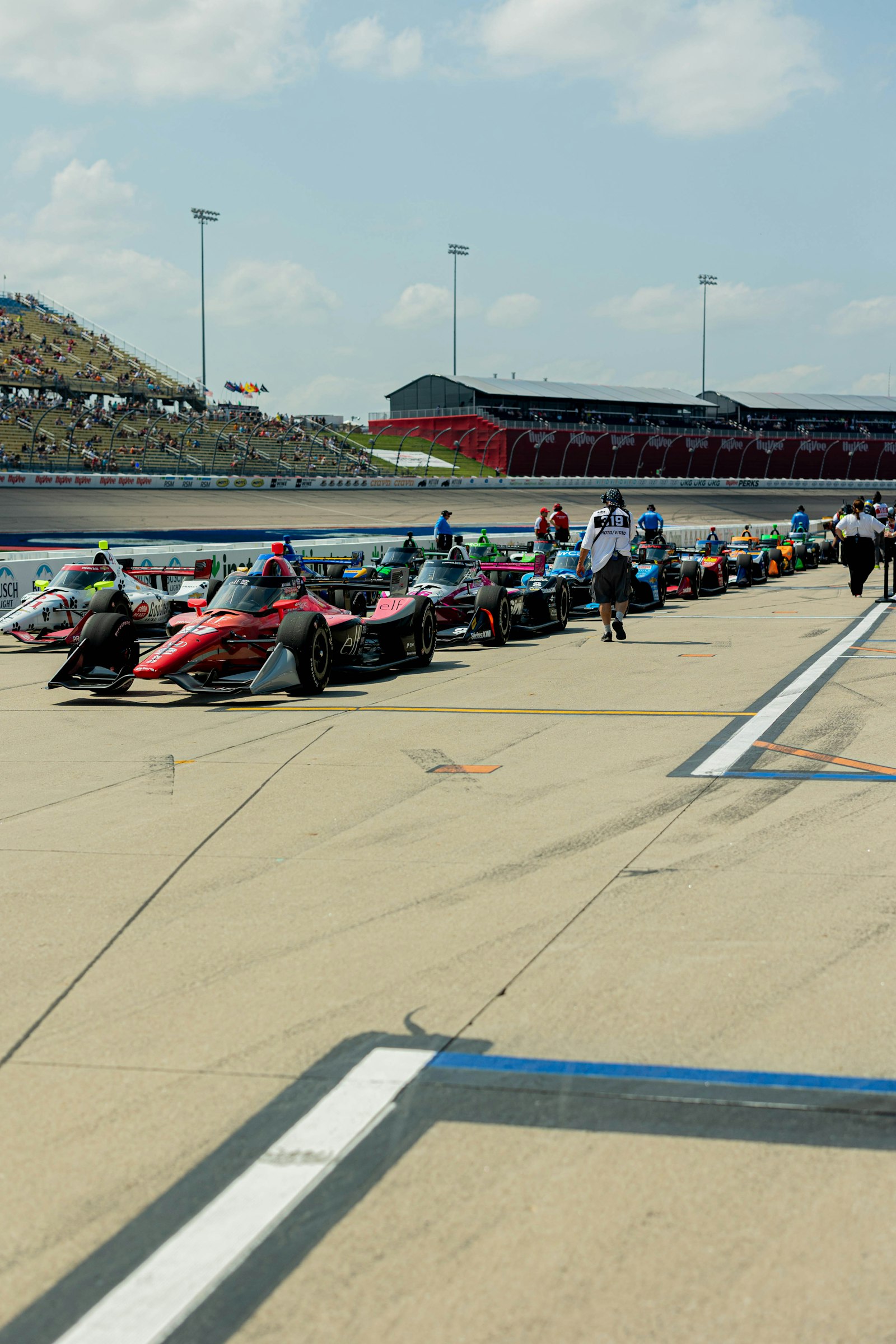 Photo by Sydney Rae on Unsplash.
The Registration Fee: $200 to $500 a Day
This is the part most people budget for. It's also the smallest part.
For a standard HPDE (High Performance Driver Education) track day, registration runs $200 to $500 per day. Beginner and intermediate run groups usually land in that range. Open lapping days with no instruction can be cheaper, around $150 to $350.
Here's a real Colorado example. The PCA Rocky Mountain "Drive to Thrive" HPDE at High Plains Raceway in Byers charges $250 for a single day and $395 for both days of the weekend. That's a fair, typical price for a well-run event in our region.
Two things bump that number. Instruction (if it's not already included) adds around $100. And most clubs want an annual membership, usually about $50 a year, or a small non-member fee of $10 to $30 per event.
So the "ticket" alone is realistically $250 to $600 for your first day. Now the part people forget.
The Consumables: About $300 a Day
Your car doesn't drive for free at ten-tenths. Track driving eats parts faster than the street ever will.
Budget roughly $300 per track day in consumables. That's the average across fuel, brake wear, and tire wear. Where you land depends on your car and how hard you push.
Here's the rough breakdown:
- Tires — the big one. A set of decent performance tires might last around ten track days before they're done. Spread the cost across those days and you're looking at $50 to $150 a day, more on a heavy or powerful car.
- Brakes — pads and fluid take a beating. Fresh high-temp fluid and a set of track pads before the season is smart. Figure $20 to $80 a day in wear.
- Fuel — you'll burn far more than a normal drive. A full tank or two per day, so $40 to $100 depending on your car and gas prices.
The registration is what you pay to get on track. The consumables are what the track charges you to leave.
That's the line most first-timers miss. Add the entry and the consumables together and a real, honest track day is closer to $500 to $900 than the $250 on the flyer.
The Costs Nobody Warns You About
This is where the "cheap hobby" turns into a surprise. Four line items sneak up on people.
Tech inspection. Most events require your car to pass a safety check before you run. You can do it yourself if you know cars, but a shop inspection runs anywhere from $60 to $300 depending on how thorough it is.
Safety gear. You need a helmet that meets the event's rating (usually Snell SA). A solid track helmet starts around $250 and climbs from there. Some clubs let you rent one for your first day. Buy it once and it lasts years.
Travel. If the track isn't local, add gas, a hotel, and food. In Colorado, driving from the Springs or Denver out to High Plains Raceway is doable in a day. Heading down to Pueblo Motorsports Park or making a weekend of it means lodging on top of everything else. Budget $150 to $300 if you're staying over.
Track day insurance. This is optional, but worth knowing about. If you damage your own car on track, your regular auto policy almost certainly won't cover it. Standalone track day insurance runs $150 to $500 per event depending on your car's value. I broke down exactly how it works in our guide to track day insurance costs — read that before you assume you're covered, because you're probably not.
So What's the Real Total?
Add it up honestly.
A bare-minimum first track day — cheap event, your own gear already owned, local track, no insurance — can land around $500 all-in for the day once you count fuel and wear.
A realistic track day for most people, including consumables and a little travel, is $700 to $1,200.
A fully loaded day with instruction, insurance, an overnight stay, and hard tire wear can push $1,500 or more.
Industry sources put the honest range at $300 on the very low end to $3,000 on the high end, with about $1,500 as a fair ballpark for a well-equipped day. That matches what we see out here.
The Version Where You Skip the Wear-and-Tear Bill
Here's the part that changes the whole equation for a lot of people. Every number above assumes you own the car — which means you also own the tires, the brakes, the tow rig, and every repair.
There's another way in. Arrive-and-drive means a team owns the car, preps it, brings it to the track, and hands you the keys. You bring a helmet and pay the rental. The tires, fuel, brakes, and crew are on the team.
At LeadFoot Racing that's one of the core programs we run, right here in Colorado at High Plains Raceway and Pueblo. Ours is for racing, not lapping days: we rent seats by the full season (six NASA Rocky Mountain events, paid in full before the season starts, no damage deposit), and pricing depends on the car and package. It's the exact model that got me hooked — I broke my own car during my license process, rented one to finish the weekend, and realized this was how you make racing reachable for someone without a shop.
The math is simple. If you're doing one to four days a year, you almost never come out ahead owning a car once you count the trailer, storage, and repairs. Arrive-and-drive lets you pay for the day and nothing in between.
If you want to go from track days to a real race season with a crew handling the expensive parts, take a look at how our arrive-and-drive program works. No garage required. Just a helmet and the belief that this is actually possible for you.
Do you believe?
Sources: Lockton Motorsports — Costs of a Typical Track Day, PCA Rocky Mountain 2026 Drive to Thrive HPDE at High Plains Raceway, NASA (National Auto Sport Association). Registration and cost figures verified against currently published 2026 rates as of July 2026. Any specific numbers here are ranges based on these sources plus our own track experience — actual costs vary by car, track, and event, so confirm before you commit.