
The tech line moves fast until it doesn't. Somebody ahead of you is standing there with the hood up, arguing about a battery hold-down, and the whole queue stops.
Don't be that guy. Tech inspection isn't a mystery and it isn't a trap. There's a printed form, the inspector works down it, and almost everything that fails is something you could have caught in your own garage the week before.
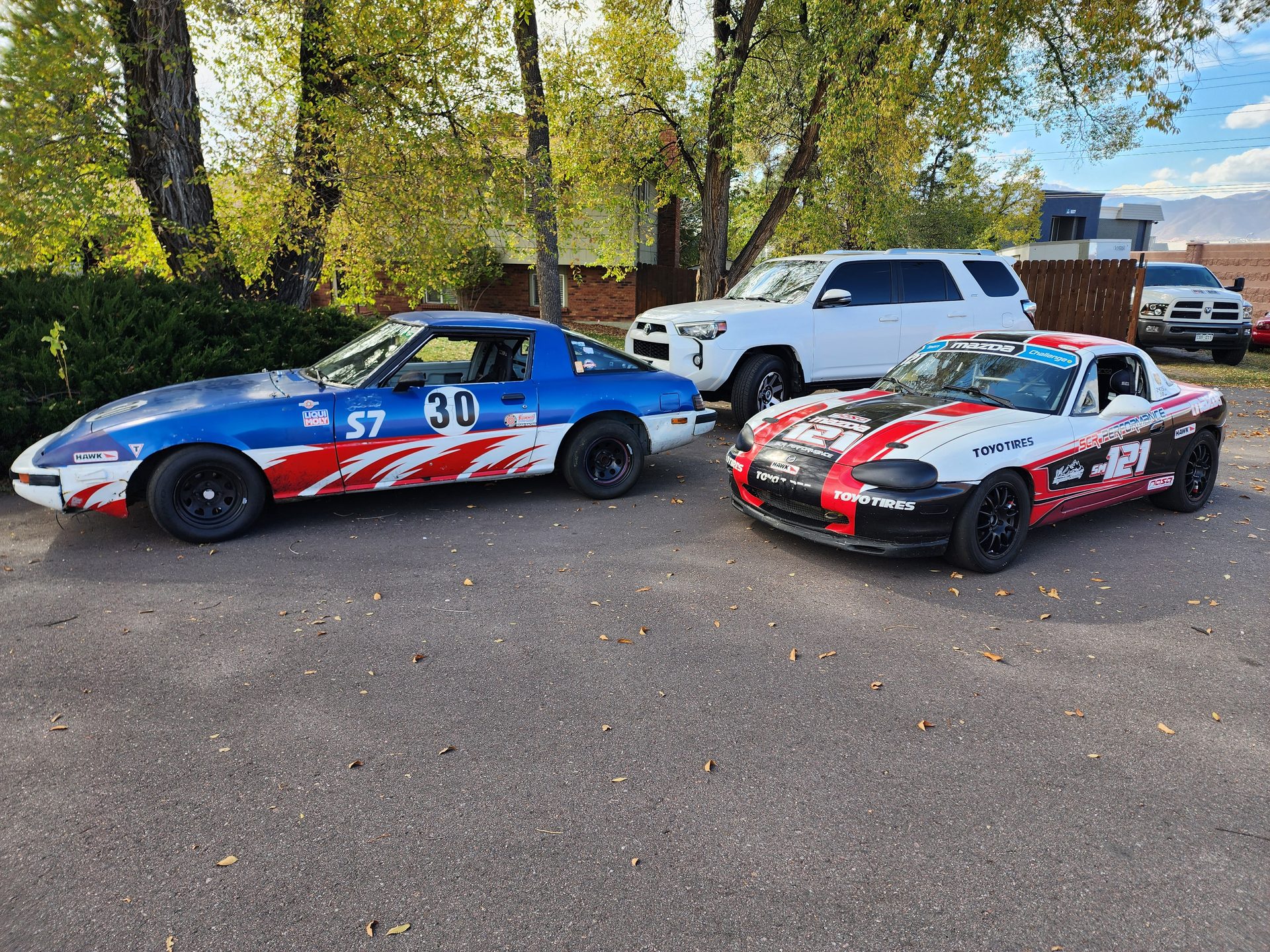 Paddock lineup. Every one of these cars has a logbook and a current tech sticker before it turns a wheel.
There are two inspections, and people confuse them
Annual tech is the big one. A licensed inspector goes over the whole car — cage, belts, seat, fuel, fire, brakes — and signs off that the build is legal and safe. If it's your first time, that's also how you get your logbook: the little book that travels with the car and records its inspections, incidents, and repairs for the rest of its life.
You can get annual tech done at the track, but most racers don't. It eats your Friday. A certified race shop or a regional inspector will do it in the off-season instead, and in some regions it costs nothing at all. Ask your region's Chief of Tech.
Event tech is the short version at the track. With a current annual sticker, many clubs don't need to re-inspect the car at all — you still turn in a completed tech form, but you're not in the line. Without one, you are.
The annual is where they check whether the car is legal. The event check is where they make sure nothing broke since the last one.
For HPDE and time trial cars, it's simpler. There's usually a one-page form you fill out yourself or have a shop sign, and a quick visual at the track.
The checklist they actually work from
Here's the substance of it, grouped the way an inspector moves around the car. These specifics come from the published SCCA club racing vehicle requirements and NASA's annual inspection form — your club's rulebook is always the final word.
Cage and structure
- Minimum six attachment points to the chassis
- Main hoop the full width of the cockpit, smooth bends, no crimping
- Tubing diameter and wall thickness matched to the car's weight (roughly 1.375 to 2.0 inch diameter, .080 to .120 wall under SCCA rules)
- High-density padding anywhere your helmet can reach
Driver restraints and seat
- A 5, 6, or 7-point harness meeting SFI 16.1 or 16.5, or FIA 8853/8854
- Dated label within the club's window — SFI harnesses carry a two-year date for wheel-to-wheel; FIA labels run longer. Check the tag, not your memory.
- Shoulder belts mounted behind the driver at the correct angle
- One-piece bucket seat, solidly mounted, with a headrest that won't fold under load
- Window net to SFI 27.1 with a working quick release, or arm restraints in an open car
Fire, fuel, and electrical
- Fire bottle: at minimum a two-pound handheld, mounted where you can reach it belted in. Onboard systems to SFI 17.1 or 17.2 are the recommended step up.
- Fuel cell to FIA FT3 or SFI 28.3 if the stock tank isn't between the axle centerlines, with a positive-locking cap
- Master switch reachable by the driver and from outside the car, marked with the blue triangle
- Battery mounted hard, terminals covered
Rolling gear and the rest
- Brakes: fluid clean and at level, pads with real life left, no cracked rotors, no soft pedal
- Tires with no cording, bubbles, or dry-rot cracks
- All lugs present and torqued, no play when they shake the wheel
- No leaks, anywhere
- Front and rear tow eyes with at least a two-inch opening, reachable without removing bodywork
- Numbers and class letters legible from a corner station
Then they look at you: helmet, suit, gloves, shoes, and head-and-neck restraint. NASA's published rules currently accept Snell SA2015 or EA2016 and newer, and the floor moves to Snell SA2020 (or an FIA 8859-2015/8860-2018 helmet) on January 1, 2027. If you're shopping for a lid right now, buy the newer sticker. We wrote more about that math in renting versus buying your first set of gear.
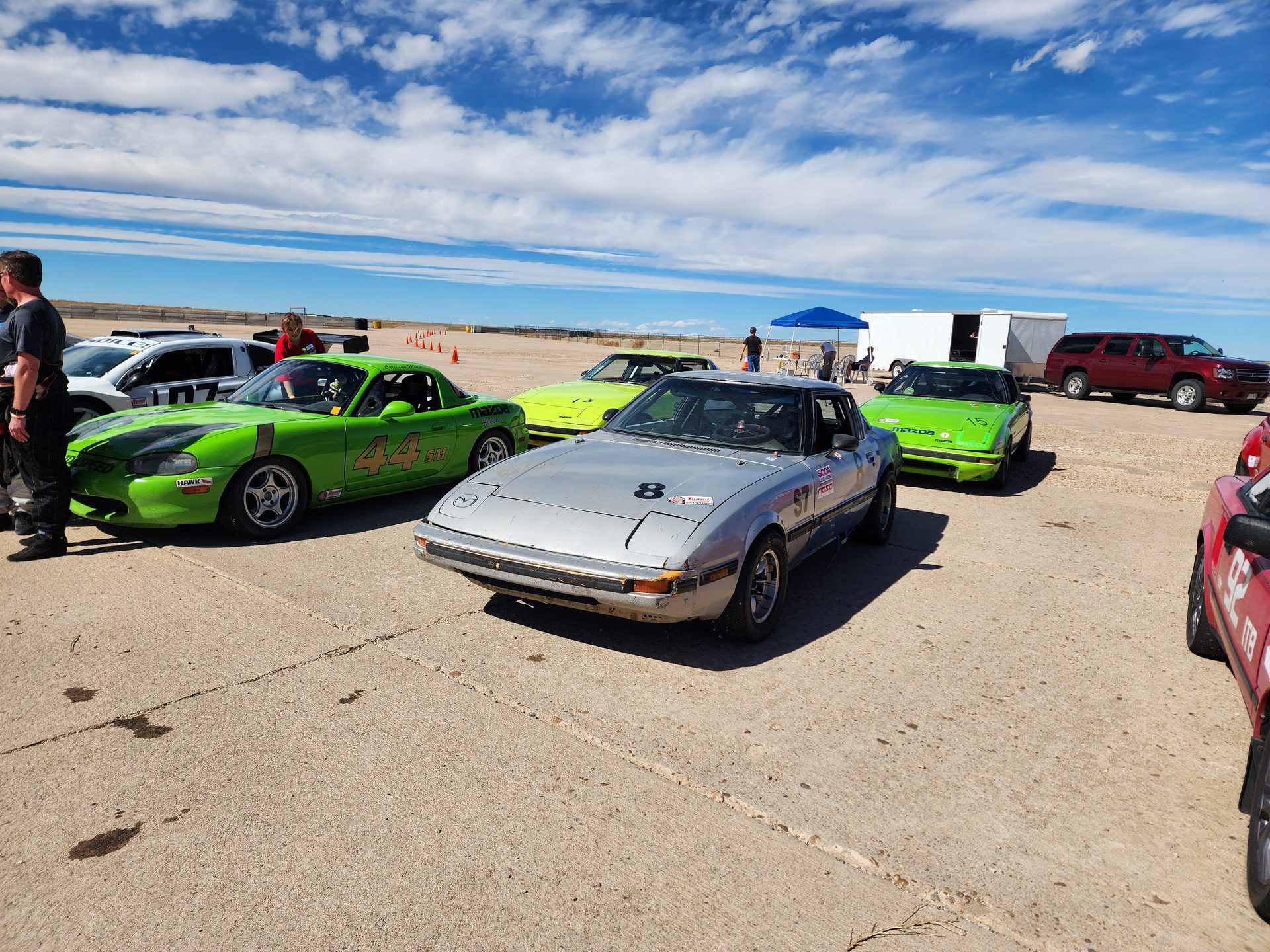 Nothing on the tech form is a surprise. It's all findable in your own garage on a Tuesday.
What actually fails
Very little of it is exotic. No Money Motorsports keeps a running list of the most common failures, and it lines up almost exactly with what I've watched hold up tech lines in our region:
- A car that isn't empty. Floor mats, a phone mount, the thing rolling around under the seat. First-timers get caught by this more than anything else.
- No numbers, or numbers a corner worker can't read at speed.
- A DOT helmet. Snell or FIA only. A motorcycle helmet from the shelf at a powersports store will not pass.
- Loose battery or bare terminals. A missing terminal cover is a five-cent failure.
- Overfilled brake fluid, which pushes out when everything gets hot.
- Tire age. Cracked sidewalls and bubbles get you sent home even with plenty of tread.
- Harness webbing wrapped through the buckle wrong, or clip-in ends that were never pinned.
- Missing roll bar padding where your helmet would land.
Our safety gear partner OG Racing published a good HPDE tech walkthrough that adds the ones a shop looks for: brake fluid that's still amber and flushed within the last 90 days, pads at half life or better, and no play when you grab the wheel at 12 and 6 on jack stands.
Pass on the first try
Do this the week before, not the morning of.
- Download your club's tech form and physically walk the car with it in your hand. That's the whole trick.
- Get annual tech done in the off-season so race Friday is yours.
- Bring the logbook. No logbook, no grid — it's the car's license.
- Empty the car at home, including the trunk and the glovebox.
- Check every label date: helmet, harnesses, and your fire bottle's gauge.
- Fix the small stuff yourself. Inspectors are volunteers who want you on track. They'll almost always let you correct a terminal cover or a floor mat and come back through.
In our region, NASA Rocky Mountain typically opens tech Friday afternoon and again early Saturday morning at High Plains Raceway and Pueblo. The Friday window is the one you want. Saturday morning tech at 7am with a problem to fix is how people miss their first session. Read the event supplements for the actual hours — they move.
If you want the rest of the weekend mapped out, we broke it down hour by hour in our Spec Miata race weekend schedule.
None of this is meant to keep you out. Tech exists because a corner worker is going to run toward your car if something goes wrong, and everybody on that grid gets to go home.
If you'd rather learn the racing part first and skip the inspection anxiety entirely, that's what our arrive-and-drive program is for. The car shows up teched, logbooked, and stickered. You show up with your gear.
Sources: SCCA Race Experience vehicle requirements, NASA Rocky Mountain, NASA Arizona tech inspection, NASA Race/TT Annual Inspector's Form, No Money Motorsports, OG Racing. Requirements verified against published rules as of August 2026. Specs vary by club, class, and year — your current rulebook is always the authority.
Do you believe?