
Racing Costs
Race Car Storage Cost in Colorado: Garage vs Unit (2026)
Jett Johnson9 min read
The short answer
- Car storage averages about $135 a month in Colorado Springs and $158 in Denver (StorageCafe, November 2026). Outdoor spots start near $15 to $36.
- A 10x20 unit in Colorado Springs runs from $38 to an average of $135 a month. That's about $1,620 a year, or about $675 for a November-to-March winter.
- A home garage costs the least, and NASA's own winterizing guide ranks a heated garage best. An enclosed trailer ranks last.
- Most facilities want current registration and insurance. A race car with no plates may not qualify, so call before you sign.
Race car storage in Colorado runs about $135 a month in Colorado Springs and about $158 in Denver. An open outdoor spot can cost as little as $15, and a home garage costs you almost nothing beyond a few supplies.
The price is only half the question, though. Colorado's dry air helps a stored race car. Our freezing nights and hail don't. Here's what each option really costs, and what each one protects you from.
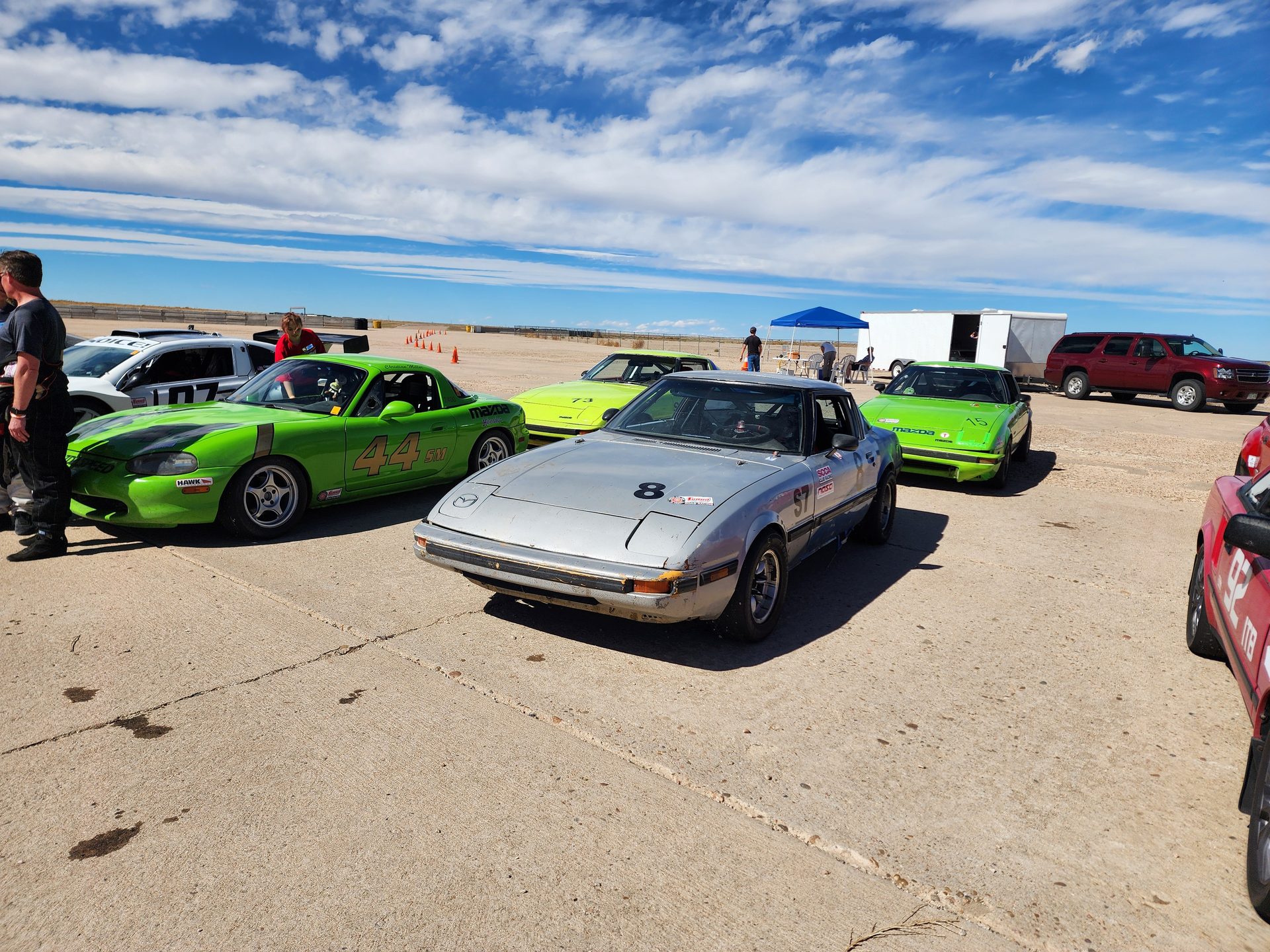 The #30 Spec 7 RX-7 and the #121 Spec Miata. Every race car needs somewhere to live between weekends.
How much does race car storage cost in Colorado?
There's no "race car" price at a storage place. You pay the same rate as anyone storing a car. Here's what Colorado listings showed when I checked:
| Storage option | Colorado price | Where the number came from |
|---|---|---|
| Outdoor parking spot, Colorado Springs | from $15/month | StorageCafe, Nov 2026 |
| Outdoor parking spot, Denver | from $36/month | StorageCafe, Nov 2026 |
| Car storage average, Colorado Springs | $134 to $135/month | StorageCafe (Nov 2026) and Public Storage (Sep 2026) |
| Car storage average, Denver | $158/month | StorageCafe, Nov 2026 |
| 10x20 unit, Colorado Springs | $38 low, $135 average | Public Storage, Sep 2026 |
| 10x30 unit, Colorado Springs | $66 low, $164 average | Public Storage, Sep 2026 |
Those averages mix every kind of car space, from open lots to indoor units. The national average on StorageCafe is $145, so Colorado Springs sits a little under it and Denver a little over.
Real listings also come with extras. One Public Storage 10x20 drive-up unit on East Saint Elmo Avenue in Colorado Springs listed at $77 a month online, $96 in the store, plus a $29 admin fee. Ask for the full move-in number, not just the monthly rate.
Here's the yearly math at those averages. This is my arithmetic, not a quote:
| Plan | Colorado Springs ($135/mo) | Denver ($158/mo) |
|---|---|---|
| Winter only, November to March (5 months) | about $675 | about $790 |
| Full year (12 months) | about $1,620 | about $1,896 |
What does each type of storage get you?
Price follows protection. RecNation, a national storage chain, published these ranges after checking rates in October 2026:
| Type | Typical national range | Most common |
|---|---|---|
| Outdoor, uncovered | $57 to $183/month | $78 to $126 |
| Outdoor, covered (canopy) | $99 to $351/month | $108 to $239 |
| Indoor, enclosed | $114 to $701+/month | $114 to $216 |
For a race car in Colorado, the open lot is the risky choice. Colorado has the second most hail claims in the country, per KOAA's report on the state's insurance data. A hailstorm can dent every panel on a car parked in the open. A covered canopy helps with hail and sun. An enclosed unit adds a locked door.
A Miata-sized car fits a 10x20 unit with room to walk around it. A bigger car, or a car plus a tire rack, may push you to a 10x30.
Is a home garage better than a storage unit?
Usually, yes. A garage you already have costs nothing extra each month. You can also work on the car there, and most storage places don't allow that.
NASA's own magazine ran a guide to winterizing a race car, and it ranked the options plainly:
- A heated garage, with the car on jack stands, is best.
- A regular garage is next.
- An enclosed trailer is the riskiest. The guide says a garage is "far superior to any kind of trailer, heater or no heater."
A home garage still has costs. Plan for a battery tender, jack stands, and a breathable car cover. Cars.com says to pick a tender with "a float mode or automatic shutoff" so it won't overcharge. It also warns against plastic tarps, which trap moisture.
So the real comparison looks like this:
| Home garage | Storage unit | Track-side garage | |
|---|---|---|---|
| Monthly cost | about $0 | about $135 average (Colorado Springs) | no Colorado listing found |
| Work on the car there | yes | usually not allowed | ask the track |
| Plates and insurance required | no | usually yes | ask the track |
| Power for a battery tender | yes | ask first | NJMP's garages include an outlet |
Can you store a race car at a Colorado track?
I couldn't find long-term storage advertised at High Plains Raceway or Pueblo Motorsports Park. HPR does rent RV spots and carports, but per event, booked through MotorsportReg.
Other tracks show what track storage costs when it exists. New Jersey Motorsports Park rents enclosed 15x25 garages for $2,400 for 6 months, or $3,960 for 12 months, plus tax. That's about $330 a month on the yearly deal. Thunderhill in California leases big 1,260-square-foot garages starting at $750 a month. A space that size fits several cars, so the rent can be split.
The same idea works here. If you want shop space, ask around your club. A shared garage may cost more per car than a unit, but you get a place to wrench, and a unit usually won't allow that.
Will a storage unit even take a race car?
This catches people. StorageCafe's June 2026 guide says most facilities want four things before a car comes in: a photo ID, current registration, proof of insurance, and a signed rental agreement. It also lists "no active mechanical work" on the property.
A dedicated race car often has no plates. If yours doesn't, call before you sign anything. Ask three questions:
- Do you take a vehicle with no current registration?
- Does it have to roll and steer, or start and drive?
- Is there power in the unit for a battery tender?
Then ask your insurer what covers the car while it sits. Don't assume the facility covers it. We walk through what racing policies do and don't cover in racing insurance, explained.
How do you keep a race car healthy while it sits in Colorado?
Our dry air is on your side. Colorado Springs averages about 52% relative humidity in the morning and 40% in the afternoon, per long-term climate data. That's easy on bare metal.
The cold is the problem. Here's the short list:
- Coolant. Lots of race cars run water, not antifreeze, because NASA's racing rules ban glycol. Water freezes. A cold unit or garage can split a radiator or crack a block. NASA's guide says to drain and fill with a 50/50 glycol mix for winter, then flush in spring. Our antifreeze-in-a-race-car post covers this step by step.
- Moisture. The NASA guide says to start the car every two to four weeks and bring it to full temperature to "boil the moisture out." Brake fluid soaks up moisture anyway, so flush it before spring.
- Battery. A tender with float mode, or pull the battery and store it somewhere it won't freeze.
- Fuel. Experts split here. A stabilizer helps a production tank. NASA's guide quotes a fuel cell builder who says to drain a cell, because sitting fuel can hurt the bladder and foam.
- Tires. Race tires don't like freezing cold. Store them indoors, even if the car stays outside. Here's how to store race tires over winter.
- Mice. Cars.com puts it simply: "Mice and other small animals can create trouble if they get inside your car." Check the car often, and don't put traps inside it.
Cheap storage that lets your engine freeze is the most expensive storage you can buy.
What we actually do
We race NASA Rocky Mountain weekends at High Plains Raceway and Pueblo Motorsports Park. Our cooling systems run water with ICE Water, from our partner Engine Ice, and that product has no freeze protection. So our crew rule covers storage too. Any night the forecast low is 34 degrees or colder, at the track or at home, the car gets kept warm, or the water comes out and the wheel gets a tag: "NO COOLANT, DO NOT START."
We also count storage as part of owning the car, right next to the trailer and the tow truck. It's one of the costs that sneaks up on new owners. There's more of that in the hidden costs of owning a race car, and our racing off-season plan covers the rest of the winter.
If your car's coming out of storage for a first race next season, the free Race Day Ready Pack has the checklists we use, so nothing that sat all winter gets missed.
Sources: StorageCafe, car storage in Colorado Springs (November 2026), StorageCafe, car storage in Denver (November 2026), Public Storage, how much does a storage unit cost in Colorado Springs (September 2026), Public Storage, Colorado Springs car storage units, RecNation, vehicle storage cost guide (rates checked October 2026), StorageCafe, what documents you need to store a car (June 2026), NASA Speed News, Into Hibernation: Winterizing a Racecar, Cars.com, how to store your car for winter, KOAA, hail risk and Colorado insurance costs, Current Results, annual humidity in Colorado, New Jersey Motorsports Park, garage rentals, and Thunderhill Raceway, lease a garage. Prices checked November 2026. Storage rates change often and promos are common, so get a full move-in quote before you budget.
Do you believe?

About the author
Jett Johnson
Founder of LeadFoot Racing, a Spec Miata race team in Colorado Springs that races in the NASA Rocky Mountain region. Jett holds degrees in mechanical engineering, mathematics and aerospace engineering, has raced since 2022 and has spent years working with sponsors in motorsport. What you read here comes from building the team's race cars, running race weekends and writing real sponsorship proposals.
Meet the team