
You find the contact form on the national brand's website. You write a good email. You attach the media kit. You hit send.
Nothing happens. Ever.
That's not because your pitch was bad. It's because you mailed a Spec Miata proposal to a department that buys Super Bowl inventory. The person who can actually fund your season was standing behind the counter of the store four miles from your shop.
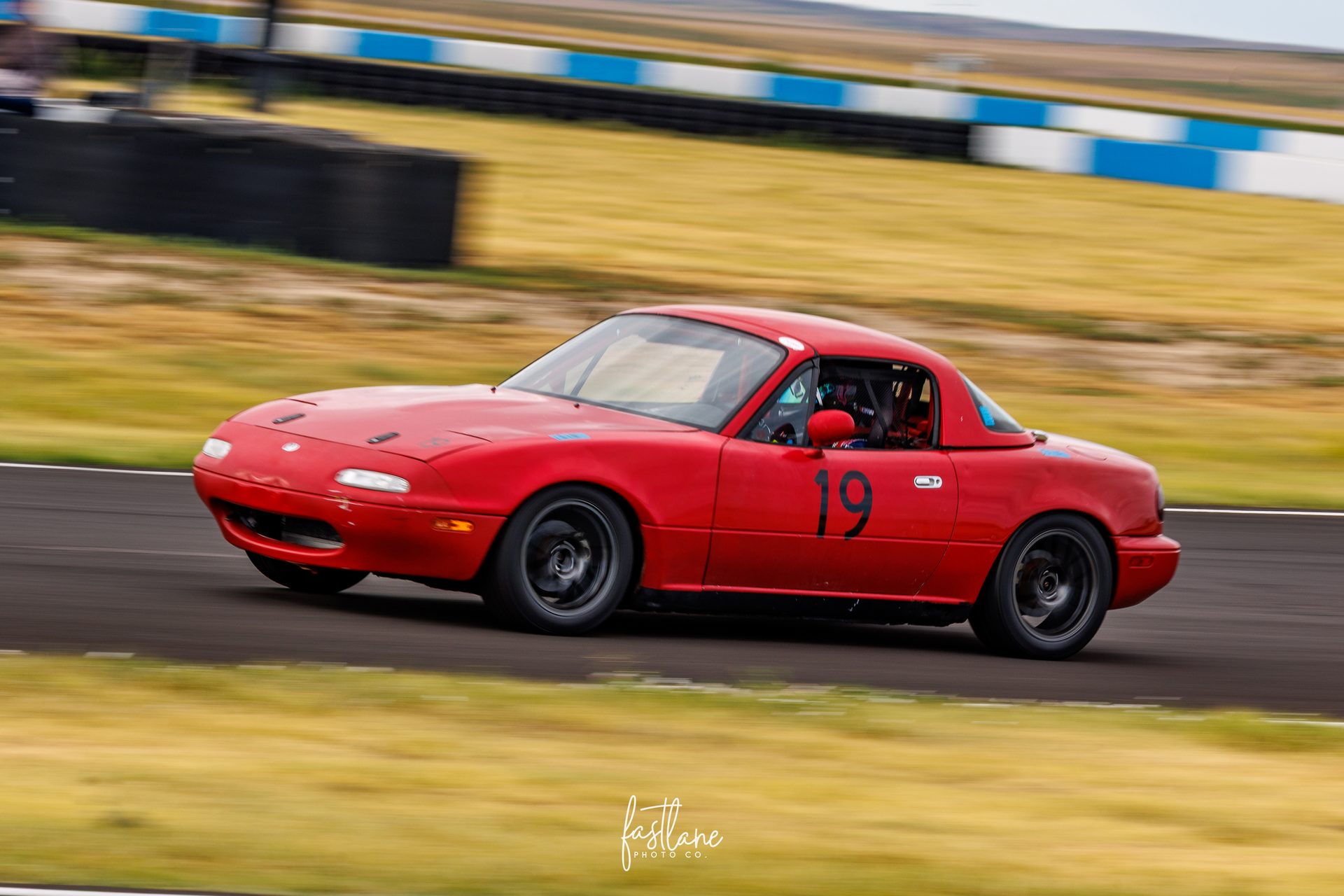 Number 19 hustling past the wall at High Plains Raceway, August 2026. The panel a local owner buys is the same panel corporate would never think about.
One logo. Two completely separate wallets.
Here's what most racers never learn. A franchise location is not a branch office. It's an independent business that licensed a name.
That owner pays into a national brand fund every month — a slice of sales going up to the franchisor to buy the ads you see on TV. That money is effectively out of reach. It's pooled, and the franchisor controls how it's spent.
But that same owner usually has a second marketing obligation. A local one. That one is theirs to spend.
The structure is public. Under the FTC's Franchise Rule, every franchisor spells it out in Item 11 of their disclosure document. 16 CFR § 436.5(k)(4) requires disclosure of the franchisor's own advertising obligations, whether franchisees must join a local or regional advertising cooperative, and the circumstances when the franchisor "will permit franchisees to use their own advertising material."
National fund, regional co-op, local spend. Three buckets. You're pitching the third one.
The manager can't approve a national campaign. But they may already be required to spend money in your zip code, and they may not have decided where.
The clause in their contract that quietly works in your favor
Most franchise agreements don't just allow local marketing. They require it.
Published clause samples show the pattern over and over. Real collected language includes "Franchisee shall monthly spend 2% of the gross revenues in the local marketing and advertisement," a "minimum of the greater of $2,000 or 5 percent of your Net Sales," and "three percent (3%) or more of your Gross Sales." Some set a flat floor instead — $2,000 a month, or $15,000 a year.
Across systems it commonly lands between about 1% and 5% of sales. That's a range on purpose. It varies by brand and market, and the only document governing a specific store is that store's own agreement. Nobody can quote you a universal number, including me.
Two details matter more than the percentage.
Many clauses require proof. One sample makes the franchisee "keep a record of all the receipts of all the local marketing expenses and furnish them to the Franchisor as and when required." That owner has to document local spending. A signed sponsorship agreement plus a season recap report is the cleanest receipt they'll get all year.
And the money exists whether or not they have a plan for it. Franchising trade coverage is blunt here. Local reps often commit to a partnership without a valid strategy or objective, sometimes just because they know somebody involved. The gap isn't budget. It's a good offer showing up at the right moment.
And there are a lot of these doors. FRANdata's 2026 outlook for the International Franchise Association projects US franchise establishments growing from 832,521 to about 845,000 units. The tire shop, the gym, the auto-glass outfit, the pest-control van. Plenty of the "local businesses" on your list are franchises. Still building that list? The free Local-Business Sponsorship Workbook is where I'd start.
"I have to check with corporate" is usually about the logo, not the money
This is where racers give up. It's also the most misread sentence in local sponsorship.
Sometimes it means no. Often it means something much narrower. They have to get the artwork approved.
Nearly every franchise agreement puts brand control on the franchisor. Published sample clauses require a franchisee to use only marketing "which [have] been previously approved by the Franchisor," with one requiring submission "at least 10 days prior to publication, broadcast or use." Brand non-compliance in local materials is one of franchisors' top complaints about franchisee sponsorships.
So decode it. Their hesitation isn't "we don't have budget for a race car." It's "I don't know if I'm allowed to put our logo on a race car."
Make approval easy instead of scary:
- Send a one-page mockup showing exactly where the logo goes, at what size, in their colors.
- Ask for their brand kit — logo files and usage rules. Then follow them exactly.
- Offer to hold the decal. Nothing goes on the car without a yes in writing.
- Respect their lead time. If the clause wants ten days, don't ask Thursday for a Saturday race.
- Say plainly that you won't post anything using their marks without approval. That one line moves you from risk to relief.
Hand a nervous owner a compliant, pre-built package and the only real objection in the room disappears. The mockup, the brand-approval email, and the one-page agreement are all built for you inside The First Sponsor System.
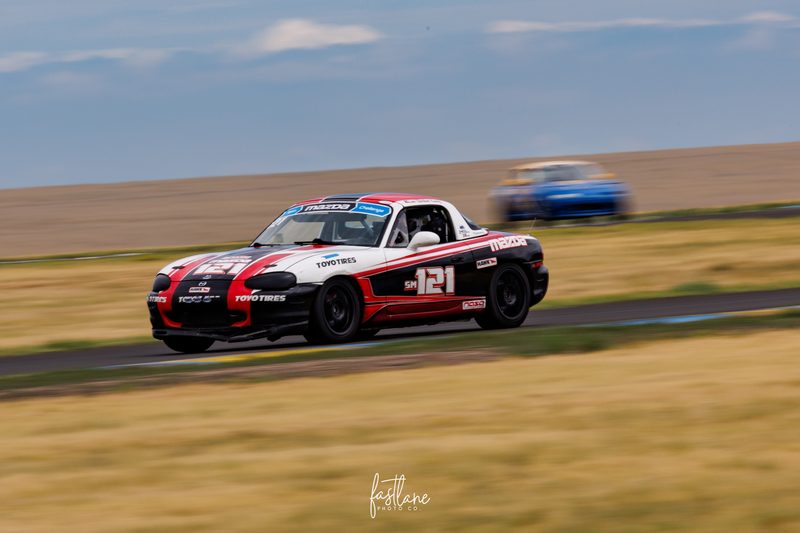 The photo is the deliverable. The decal is just what makes the photo worth money to them.
How to tell if you're standing in a franchise
Five minutes of homework before you write anything.
- Read the fine print on the receipt, the door, or the website footer. "Independently owned and operated" is the tell. So is a separate LLC name beside the brand name.
- Check your Secretary of State filings. If the local entity is "Front Range Hospitality LLC dba [Brand]," you now know who signs.
- Look for a franchise-opportunity page on the national site. If a brand sells franchises, your local store is probably one.
- Just ask. "Are you the owner, or is this a corporate location?" saves you a month.
If it's a franchise, your target is the owner or the multi-unit operator above them. Not the shift manager. Not the national marketing inbox.
The script, sized to their actual obligation
Short, and obviously local. Here's the shape:
Subject: Local sponsorship — [their town] race car
Hi [Name] — I'm Jett. I run a Spec Miata race team out of [town], and we race six weekends a season within driving distance of your store.
I'm not asking for a national deal. I'm asking about your local marketing spend. One race set of tires runs about $1,200, and an event entry runs around $500. For a set of tires: your logo on the car for the season, the photos and video from every weekend with rights to use them in your own ads, and a real activation at your location before the round.
If your franchise agreement needs artwork approval, I'll send a mockup and wait on your written yes before anything touches the car. Can I stop by for 15 minutes this week?
Three things are doing the work there. You named a line item instead of a season package — the full case for that is in ask them to buy your tires, not your season. You handed them a receipt they can file. And you killed the brand-approval fear before they had to raise it.
For the walk-in version, how to find local sponsors for racing is the companion piece. Weighing local money against a national brand at all? Local business vs big brand makes that call. The scripts, the activation menu, and the season recap template all live in The First Sponsor System.
When corporate really is the right door
I'm not saying corporate never matters. Three cases where it does:
- You want more than one location. A regional co-op or ad council can buy something a single store can't. Item 11 tells you whether a co-op even exists.
- You're pitching a multi-unit franchisee. Someone who owns nine stores is a different buyer. More budget, more process, actual marketing staff.
- You need product, not cash. Supplier relationships usually do live upstream, and the warm path runs through a partner you already have — that's getting your sponsor to introduce you to their suppliers.
None of it changes the first move. Start with the owner who can say yes this week.
Nothing here is legal advice. Agreements differ, and an owner should follow their own contract. Your job is to make following it easy.
So quit emailing the national inbox. Go find out who owns the store.
Then bring the whole method with you. The First Sponsor System is the sponsorship program we use to fund our own two Spec Miatas — list, mockup, agreement, activation, recap. And if you want a human to read your actual email before a franchise owner does, The Pitch Inspection is $39 and we'll tell you exactly what's getting you ignored.
Sources: 16 CFR § 436.5 via Cornell LII, Item 11 of the Franchise Disclosure Document — franchise.law, Law Insider local-marketing clause samples, Law Insider approved-advertising clause samples, Franchising.com on franchisee community sponsorships, IFA / FRANdata 2026 Franchising Economic Outlook. Local-marketing percentages and approval windows come from published franchise-agreement clause samples and vary by system — no figure here governs any specific store, and only that store's own FDD and franchise agreement do. Racing cost figures (~$1,200 race tire set, ~$500 weekend entry) are our own verified numbers. Nothing here is legal advice.
Do you believe?