
The best sponsor prospect you will ever pitch is already doing business with the sponsor you have.
Not their competitor. Their supplier. The company that sells them parts, software, uniforms, insurance, coffee. That business has a budget, a reason to care what your sponsor thinks, and exactly one person who can put you in the room with a single email.
Almost no racer asks. Here's how.
 Every logo on the car is a door into somebody else's vendor list. Photo: LeadFoot Racing.
Suppliers are the shortest line to sponsor number two
A referral does two things a cold email cannot. It gets opened, and it arrives pre-vouched.
The numbers back that up hard. Amplemarket's B2B referral roundup cites 84% of B2B decision-makers entering a purchase under the influence of a referral. SponsorFlo, writing specifically about sponsorship prospecting, says referral-sourced prospects close at three to five times the rate of cold ones and push back less on price.
There's peer-reviewed work here too. A 2011 Journal of Marketing study out of Wharton and Goethe University tracked nearly 10,000 new customers at a German bank. Referred customers were worth about 16% more than similar non-referred customers, and they were 18% less likely to churn.
Fair warning on all of that: none of it is motorsports data. It's B2B sales and retail banking. Nobody publishes clean grassroots-sponsorship conversion numbers and I'm not going to invent some. The direction is consistent across every source, though.
Suppliers specifically are the good ones because your sponsor isn't a fan making a favor request. Your sponsor is their customer. A customer's email gets read the same day.
Some of those suppliers already have money set aside for this
This is the part most racers have never heard of, and it's the reason the supplier chain beats a random referral.
Manufacturers hand marketing money down to the businesses that sell their stuff. 360insights breaks the two forms apart: market development funds are discretionary dollars a vendor gives a partner for marketing, while co-op funds accrue against sales, typically at 1% to 5% of revenue. Qualifying activities usually include events, local and regional marketing, and co-branded campaigns.
Then there's the part that should make you sit up. Computer Market Research's 2026 channel-funds guide puts roughly 60% of market development funds as going unused every year, with utilization hovering near 40% in manually run programs. The money is allocated. It's just complicated to claim, so it expires.
So when a local shop tells you they'd love to help but have no budget, that may be true of their own P&L and false of the vendor money sitting above it.
Now the honest part, because I'm not selling you a magic key. Every program has its own rules about approved creative, approved channels, and documentation deadlines. Plenty of them will not cover a race car, and neither you nor your sponsor gets to decide that. But the question costs you nothing:
"Do any of the brands you carry give you co-op or marketing dollars? Because a car running both logos may qualify as co-branded local marketing."
We've lived the chain version of this. Our OG Racing relationship is a dealer relationship, not a decal. And we went after FCP Euro as a European parts supplier partly for what sat one link further down the chain: a path to Liqui Moly at dealer pricing. You chase the relationship, then you look at who that relationship buys from.
Ask after you deliver, never before
Timing is most of this.
SponsorFlo's guidance is blunt: the moment to request a referral is right after you've delivered strong results. After an activation. After you send a report. After a renewal. Never in the same breath as the original ask, and never during a quiet stretch when your sponsor has seen nothing from you in six weeks.
Which means the referral ask isn't really a referral tactic. It's a byproduct of doing the reporting work — the mid-season proof drip I broke down in what to send a sponsor mid-season.
Send the report. Let them read it. Then ask.
That whole sequence — the activation menu, the scripts, the sponsor tracker that tells you who's owed a report and when — is built into The Get-Funded System. It's the same system we run, and this is exactly where it earns the $67.
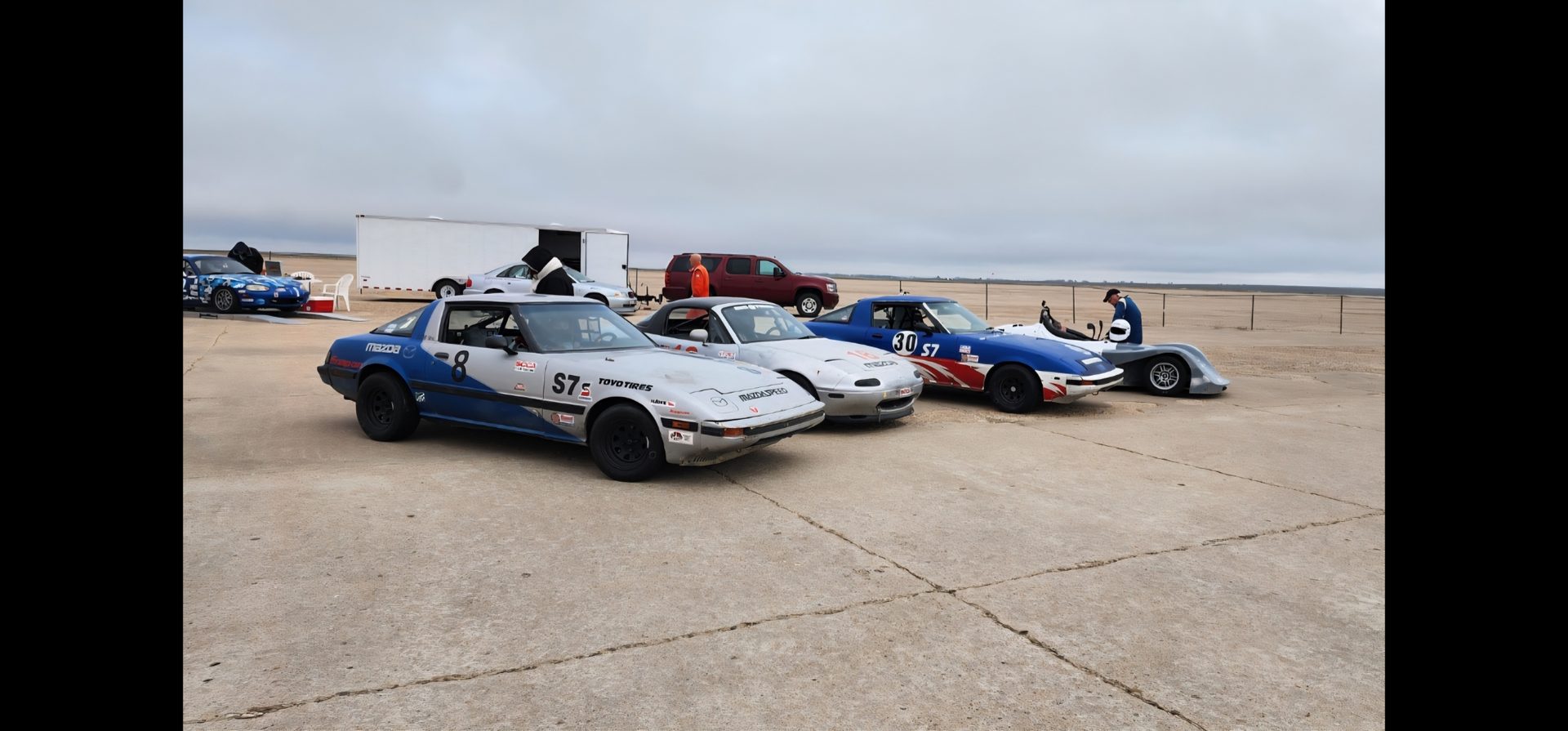 Ask for the introduction the week after you deliver, not the week you need money. Photo: LeadFoot Racing.
Steal the Friday Five
The Sponsorship Collective has a method I've never seen a racer use, and it's free.
Every Friday, send your referral network a short list of five named prospects and one question: do you know anyone on this list you could introduce me to? Their math is five prospects times fifty weeks, or 250 warm prospects a year.
Scale it down for a race team. One sponsor, five named companies, once a month.
Building the five is easier than it sounds. Pull from:
- The brands on their shelves or walls. Whatever they resell, install, or stock. Those vendors have channel money.
- The logos on their own website. Most small businesses list partners, distributors, or "we proudly carry" brands.
- Their trade association or chamber group. Your sponsor is a member. Members answer members.
- The businesses that service them. Insurance, payroll, IT, uniforms, signage, the linen company. Boring categories with real marketing budgets.
- Their biggest customer. If they're B2B, the company they sell to is a bigger fish who already trusts them.
Then name them. "Do you know anyone at X?" gets an answer. "Know anyone who might be interested?" gets a nod and nothing else.
Make the introduction copy-paste easy
The person doing you the favor should have to do zero writing.
Send them a forwardable paragraph they can paste with no edits. Four things go in it, and nothing else:
- Who you are in one line, with the sponsor's name in it
- What you actually delivered for that sponsor, with a number if you have one
- What you're asking the new company for, specifically
- One link — media kit or driver site
Then give an explicit out. Something like: "If it's not a fit or you'd rather not, no problem at all, just say the word." People make introductions when refusing is easy. That single sentence is why.
One more rule. Never pitch the supplier before the intro lands. Going around your sponsor to their vendor is a fast way to lose both.
Give first, and filter
A referral network runs on reciprocity. So send business back. Tag the supplier when you use their product at the track. Introduce your sponsor to somebody in your own paddock. Show up to their open house with the car.
And filter. Not every vendor in that chain belongs on your car. We won't run alcohol, tobacco, vaping, or anything that makes a 14-year-old driver feel out of place, and no amount of easy money changes that. I wrote about where that line sits in saying no to bad sponsors.
The compounding is real, though. Sponsor one buys you sponsor two, and it's the reason your second sponsor is easier than your first.
Go ask for one introduction this week
One sponsor. Five named companies from their own supply chain. One report sent first.
If you want the reporting cadence, the activation menu, and the scripts already written, The Get-Funded System is $67 and it's the whole funding method in one place — including the sponsor tracker that keeps this from living in your head.
And if your situation is messier than a blog post can fix, The LFR Game Plan Workshop is a live two-hour session, ten seats, where you bring your actual sponsor list and leave with a one-page plan. That's $297 for real airtime on your real problem.
Either way, ask for one introduction this week. The worst answer you get is no, and you're already at zero.
Do you believe?
Sources: Amplemarket — How to Ask for Referrals in B2B Sales, SponsorFlo — Sponsorship Prospecting Strategies, The Sponsorship Collective — How to Get 394 Warm Prospects in Your Pipeline for Free, 360insights — Market Development Funds 101, Computer Market Research — 2026 Guide to Channel Marketing Funds, Schmitt, Skiera & Van den Bulte — Referral Programs and Customer Value, Journal of Marketing (2011). Figures verified against these published sources as of August 2026. The referral and channel-fund statistics are general B2B and retail-banking data, not motorsports data, and are labeled as such in the post. LFR's own sponsor and supplier relationships are from our records. No customer, sales, or survey data of our own is claimed anywhere in this post.