
There isn't one ladder out of karting. There are two.
Most families only ever get shown the expensive one. Then they price it out, decide racing isn't for people like them, and the kid stops driving at 16.
So here's the whole map. Both ladders, the real 2026 numbers, and the gates that actually decide who moves up.
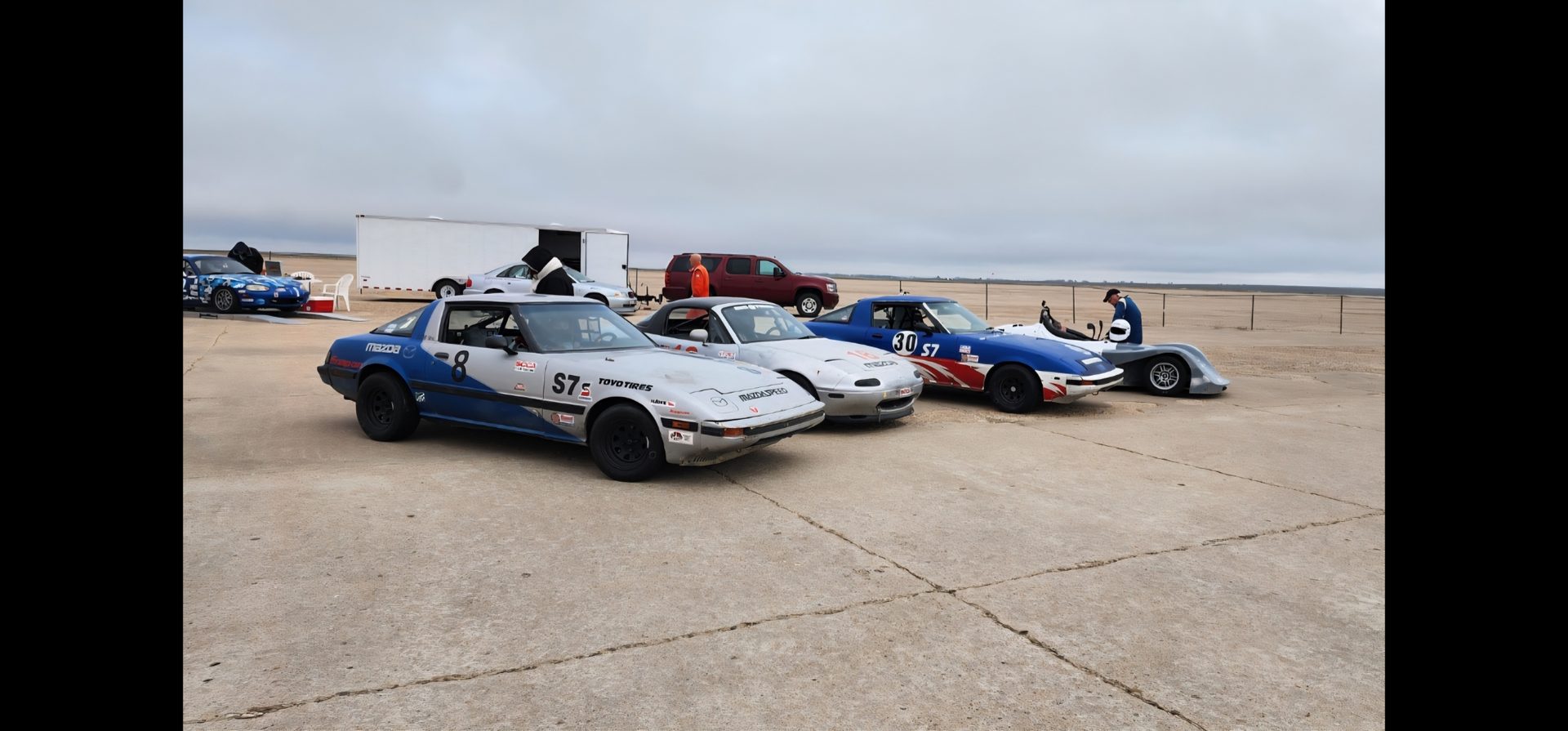 Every pro driver you can name started in a paddock that looked a lot like this one.
Ladder One: The Open-Wheel Road to Indy
This is the one everybody knows. Karts, then formula cars, then IndyCar.
In the US it runs through the USF Pro Championships — the program that used to be called the Road to Indy. Three rungs, stacked:
- USF Juniors — the first rung out of a kart, open to drivers as young as 14
- USF2000
- USF Pro 2000
Win one, and you get a scholarship to fund the next. That's the whole design, and the money is real. For 2026, the series is distributing more than $1.48 million in prize money and awards. The champion scholarships break down like this:
| Champion of | Scholarship | To move up to |
|---|---|---|
| USF Juniors | $249,675 | USF2000 |
| USF2000 | $405,050 | USF Pro 2000 |
| USF Pro 2000 | $594,500 | Indy NXT |
Those are big, life-changing numbers. Read the fine print, though.
Each of those scholarships goes to exactly one driver per season. One. Everyone else in the field pays their own way and comes back next year, or doesn't.
There's a parallel open-wheel rung too. The F4 US Championship is FIA-sanctioned, and it's one of the very few series honest enough to publish a budget. Their own Getting Started page puts the estimated season operational cost at $130,000 to $195,000.
That's not the price of a car. That's a season.
There's one more open-wheel door worth knowing about. The Team USA Scholarship sends young American drivers overseas to compete in events like the Formula Ford Festival and the Walter Hayes Trophy. It's a small number of drivers each year, but it's a genuine, merit-selected route that has fed into the Road to Indy pipeline.
If you want a fuller side-by-side on that fork, we broke it down in Spec Miata vs. Formula 4.
Ladder Two: The Sports Car Route Nobody Advertises
Here's the ladder that doesn't make the highlight reels.
You race a Spec Miata or a Spec MX-5 in club racing. You win, or you get noticed. You get nominated to the Mazda Shootout. You come out the other side with a funded pro ride.
Mazda has been running scholarship shootouts since 2006, and the 2026 awards are published:
- $150,000 to the MX-5 Cup Shootout champion, toward a season in the Whelen Mazda MX-5 Cup
- $100,000 to the runner-up
- $100,000 Women's Initiative Scholarship, awarded for the sixth straight season
- Two more scholarships at the Spec MX-5 level, supporting a season of amateur racing
You don't buy your way onto that list. You get nominated. Automatic nominations go to winners of amateur championships in Mazda-powered cars — SCCA Runoffs and NASA Champs Mazda winners, the Spec MX-5 champion from the SCCA Hoosier Super Tour. There are at-large spots for amateur and national karting drivers, and even for iRacing MX-5 Cup champions.
Read that last one again. A sim racer can get nominated.
The cheapest rung on either ladder is a used Spec Miata in a club paddock.
And here's the part that should change how you spend your next twelve months. Twenty-one finalists get two days of timed sessions and coaching debriefs. The judges score data understanding, coaching implementation, attitude, and media interactions. Not lap times alone.
The fastest kid in the room does not automatically win. The most coachable one often does.
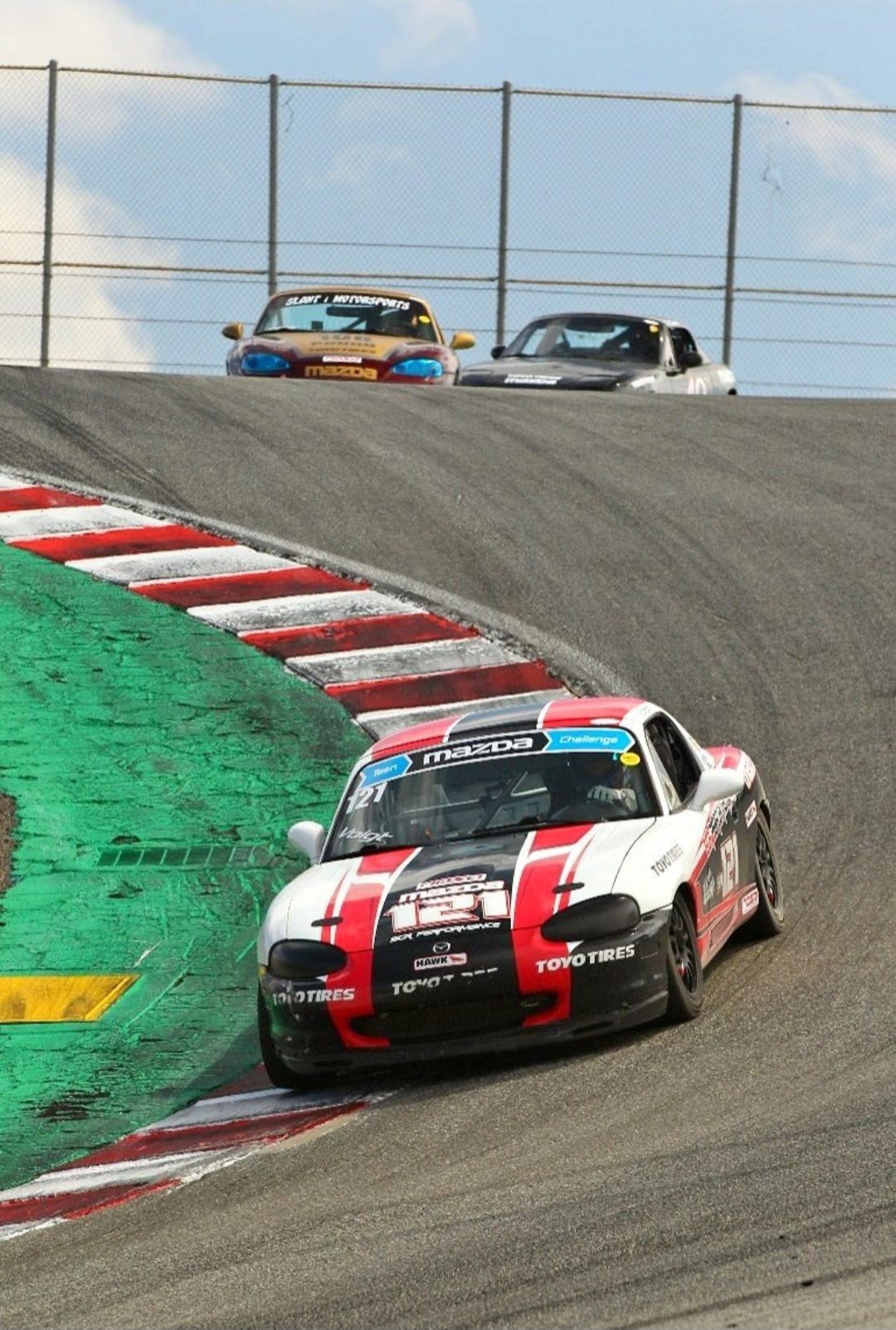 Car #121. A club-level Spec Miata is a legitimate rung on a professional ladder — not a consolation prize.
The Rung Nobody Names
Between karting and any of this, there's a year that isn't on any chart.
It's the year the kid ages out of a competitive kart class, the family looks at formula car budgets, and nothing happens. No seat. No series. No laps.
That gap is the single most common place a racing career quietly ends. We wrote about the money side of it in the karting-to-cars money cliff, and about the timing side in why most drivers wait too long to move up.
The fix is almost always the same: get into a cheap, competitive, full-size race car and keep racing. Not the perfect car. Any car. Momentum beats the ideal plan every single time.
In Colorado, that usually means Spec Miata with NASA. If the driver is 13 to 25, the Teen Mazda Challenge sits right on top of it and feeds the exact nomination system above. That's also the whole reason our Kart to Car program exists — to make that gap year a racing year instead of a lost one.
What Actually Moves You Up
Talent gets you a seat in a good field. It doesn't get you to the next rung by itself.
Three things do.
Funding. Every rung above club racing is paid for by someone. A scholarship, a family, or a sponsor. Only one of those three is available to everybody, and it's the one nobody teaches. If you're serious about this ladder, learn to raise money with the same seriousness you learn to trail brake. That's the entire reason we built The First Sponsor System — the working sponsorship documents we use to fund our own cars, packaged so a 16-year-old can run the same play.
Results in a class people actually watch. A championship in a class with 30 cars means more than a win in a class with four. Nominations follow real competition.
The off-track half. Debrief quality. Data literacy. How you handle a camera and a sponsor rep. Mazda literally scores it. So does every team owner deciding who gets the seat next year.
What the Ladder Doesn't Owe You
I want to be straight with you about something, because a lot of racing content isn't.
Nobody at any level of this sport owes you the next rung. Not the series, not a team, not a sponsor. The ladders exist, the scholarship money is real and published, and every year somebody's kid takes the step. It is not a queue you wait in. It's a competition you enter, over and over, and most entries don't win.
That sounds harsh. It's actually the good news.
If moving up were about who had the richest parents, there'd be nothing you could do about it tonight. But a nomination pathway that scores debrief quality and media skill, and a scholarship system that pays the champion of a class you can afford to run, are both things you can attack with work.
You can't out-spend the kid with a family budget. You can absolutely out-prepare him, out-communicate him, and out-fund him if you learn to raise money while he's waiting for a check from home.
Believe that, and the ladder stops looking like a wall.
If You're 15 and Karting Right Now
Do these in order. Not all at once.
- Keep racing something. Karts until the day a car seat is real. Gaps are what kill careers, not slow lap times.
- Get into a full-size car early. A test day or a coached evaluation day is enough to find out whether cars suit you. It costs a fraction of committing to a season.
- Race where the nominations live. Spec Miata and Spec MX-5 feed the Mazda pipeline. NASA and SCCA club racing feed both.
- Build the record. Results, photos, video, a driver page. Nobody nominates a driver they can't verify.
- Start raising money a full year before you need it. Sponsor budgets get set in the fall. Ask in March and you're asking for money already spent.
- Get coachable on purpose. Record your debriefs. Learn your data. The shootout scores it, and so does every real team.
None of that requires a rich family. All of it requires two years of consistency, which is honestly rarer than talent.
The Honest Summary
The open-wheel ladder is faster, more visible, and costs six figures a year with one scholarship per rung.
The sports car ladder is slower, cheaper, and hands out real money to drivers who race well in cars regular people can afford.
Both are real. Both end in a professional seat. One of them you can start this season with a used Miata and a set of tires.
If money is the thing standing between you and the next rung — and for most drivers it is — start there. The First Sponsor System is $67, and it's the only line in a racing budget designed to bring money back in. It's built from the documents we actually use to fund LFR's cars, including the chapters on scholarships, shootouts, and getting a seat without buying one.
Sources: Mazda Motorsports Shootout announcement, Performance Racing Industry — USF Pro Championships 2026, F4 US Championship — Getting Started, USF Juniors series overview, Team USA Scholarship. Scholarship and cost figures verified against published 2026 program materials as of August 2026. Series budgets outside F4 US are not publicly published — we didn't estimate them.
Do you believe?