
Your kid is fast in a kart. Faster than you expected. And somewhere in the back of your head, a voice is saying "cars are next." That voice is right. But nobody tells you what happens to the checkbook when you get there.
There's a cliff between karting and cars. Most parents don't see it until they're standing at the edge. I want you to see it now, while you still have time to plan.
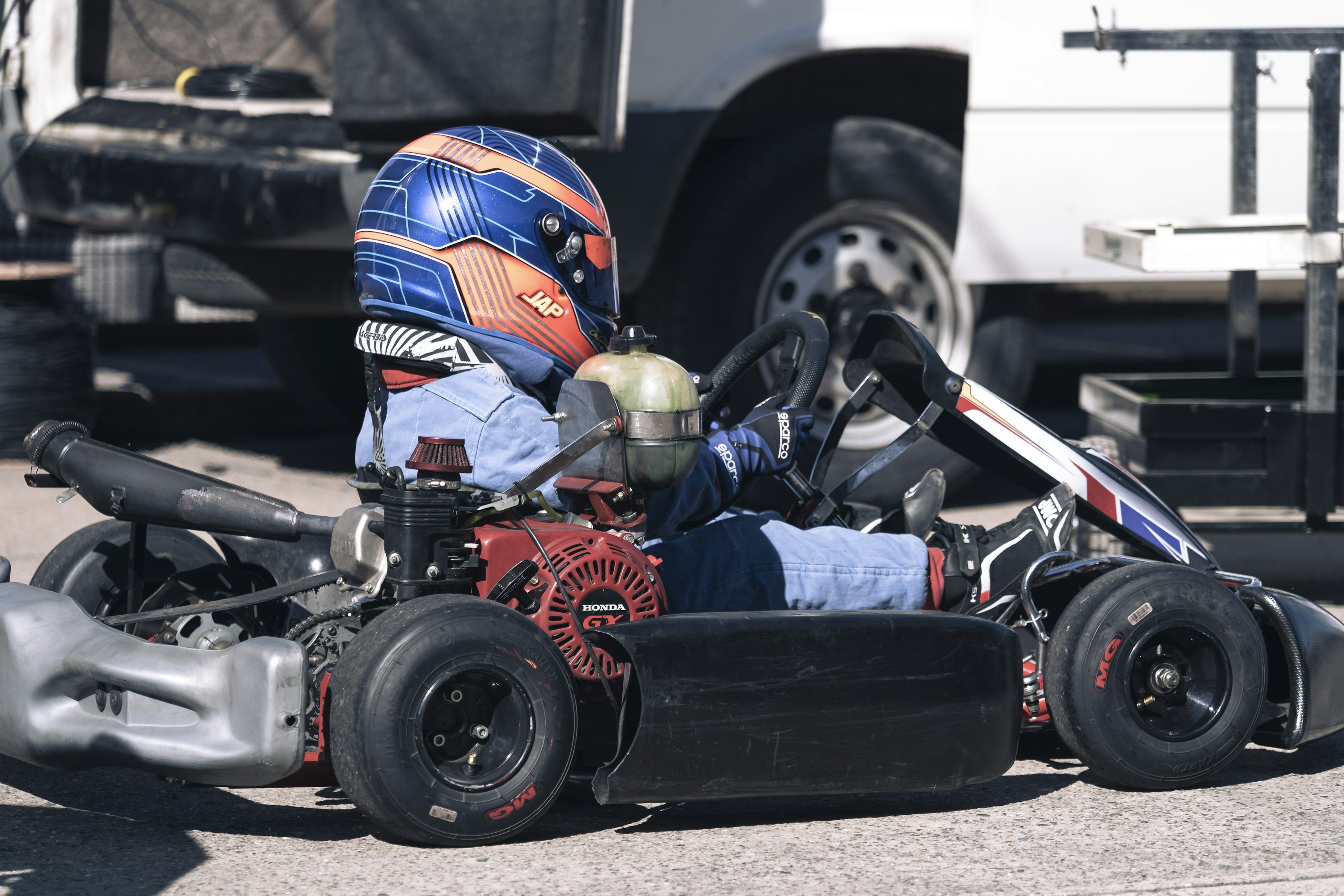 Photo by Mario Amé on Unsplash.
What Karting Actually Costs Per Year
Let's start with where you probably are right now. Club karting is genuinely affordable compared to the rest of motorsport. That's the whole reason it's the on-ramp.
A budget LO206 season runs about $2,300 to $4,700 a year for around 10 races. That covers entry fees, tires, fuel, and basic maintenance. Step up to a 100cc class and you're looking at $4,500 to $9,000.
Your first year is heavier because you're buying equipment. A used kart with an engine is $2,500 to $4,500. Add a first year of racing and you land somewhere around $7,000 to $12,000 in LO206, more in 100cc.
That's real money. But here's the thing — it's survivable money. A working family can stretch to make a karting season happen. That's by design. Karting was built to be the door.
Then Comes the Cliff
Here's what nobody says out loud at the kart track. The step into a real race car isn't a step. It's a cliff.
A Spec Miata — one of the cheapest real race cars you can buy — starts around $10,000 for an older car and lands in the $10,000 to $20,000 range for an average one. Championship-caliber cars go north of $30,000.
So before your kid turns a single lap, you've spent more on the car than you spent on multiple full karting seasons.
The kart was the down payment. The car is the mortgage.
And that's just the car sitting in the garage. Now you have to run it.
The Part-Time Job You Didn't Apply For
Running a competitive Spec Miata costs about $2,000 to $3,500 per weekend, all in — a fresh set of tires runs around $1,200, entry near $500, then fuel and consumables on top. You can scrape down to a $1,000 to $1,500 floor on old, heat-cycled tires, doing your own work with no incidents, but that's the bottom of the range, not the norm. One racer documented an unusually lean 2023 season at roughly $6,660 for the year — $4,335 in entry fees alone, plus fuel, brakes, oil, and consumables — but that's a low outlier that assumes barely replacing tires and never crunching the car, not what a typical season runs.
This is the number that catches parents off guard, and it's exactly why we built The Get-Funded System around funding — not just racing. Break down one weekend and the picture gets clear fast:
- Entry fees: $675 to $855 for a three-day event
- Race fuel: around $930 across a season
- Tires: a set is around $1,200 new. A budget racer can stretch one set across a season, but anyone running near the front puts on a fresh set most weekends
- Brakes, oil, fluids, wheels: a few hundred more
Then remember the car doesn't drive itself to the track. You need a trailer. A tow vehicle. Fuel for the hauler ran that season racer over $800 on its own.
None of this includes the moment something breaks. And in racing, something always breaks. I wrote a whole piece on the hidden costs of owning a race car because those surprise bills are what actually end most racing dreams — not the sticker price.
Why the Cliff Ends So Many Careers
Here's the sad math. A kid grinds through karting, gets genuinely good, earns the respect of the paddock — and then the family hits the cliff and the dream just... stops.
It's not because the kid wasn't fast enough. It's because nobody built a bridge across the gap. The talent was there. The plan wasn't.
This is exactly the moment I built our Kart to Car program for. But a program only helps the families who see the cliff coming and start preparing early. The ones who get blindsided at 16 are the ones who don't make it across.
The single biggest thing that gets a kid across that gap isn't a bigger checkbook. It's sponsorship. And sponsorship is a skill you can start teaching a 13-year-old right now — not something you scramble for the week the karting ends.
That's the whole reason we built The Get-Funded System. It's a $67 kit for exactly this situation: a parent watching a fast kid and wondering how on earth you fund what comes next. It walks you through what sponsors actually want from a young driver's program, how to package your kid's story, and how to start building relationships years before you need the money.
How to Cross the Cliff Instead of Falling Off It
You don't beat the money cliff by being rich. You beat it by starting early and getting organized. Here's the honest playbook.
Start the sponsorship conversation at 13, not 16. Local businesses back local kids. A hometown sponsor who watches your kid grow for three years is worth more than a cold pitch sent in a panic.
Treat the karting years as your proof. Every result, every photo, every social post is material a sponsor can use. Your kid is building a media platform whether you realize it or not.
Learn the pitch before you need it. The families who cross the cliff are the ones who already know how sponsorship works. If you want a head start there, our free resources on how to find local sponsors are a solid place to begin.
Plan the car budget backwards. Know the $10K car and the $2,000-plus weekend are coming. Build toward them instead of getting surprised by them.
The cliff is real. But it's not the end of the road. It's just the part of the road nobody warned you about — until now.
If your kid is fast and you can already feel the next step coming, don't wait for the cliff to arrive. The Get-Funded System is $67, it's built for exactly this crossing, and it's one of the cheapest insurance policies you'll buy in this whole sport.
Sources: Word Racing — How Much Does It Cost to Race Karts, No Money Motorsports — How Much Does a Season of Spec Miata Cost, No Money Motorsports — Spec Miata Buyer's Guide, NASA — Spec Miata. Numbers verified against current published rates as of July 2026. Any specific cost claims in this post are based on these sources plus our own Kart to Car experience.
Do you believe?