
Most kart-to-car cost guides start with the price of the car. That's the wrong place to start.
The car is the number everybody already knows is big. The part that surprises families is everything around it. Some of what you paid for in karting moves over for free. Some of it is worthless the second you climb into a caged car. And a few bills show up that karting never had at all.
So let's build year one the way it actually happens, line by line. What carries over, what you rebuy, and what the whole thing adds up to.
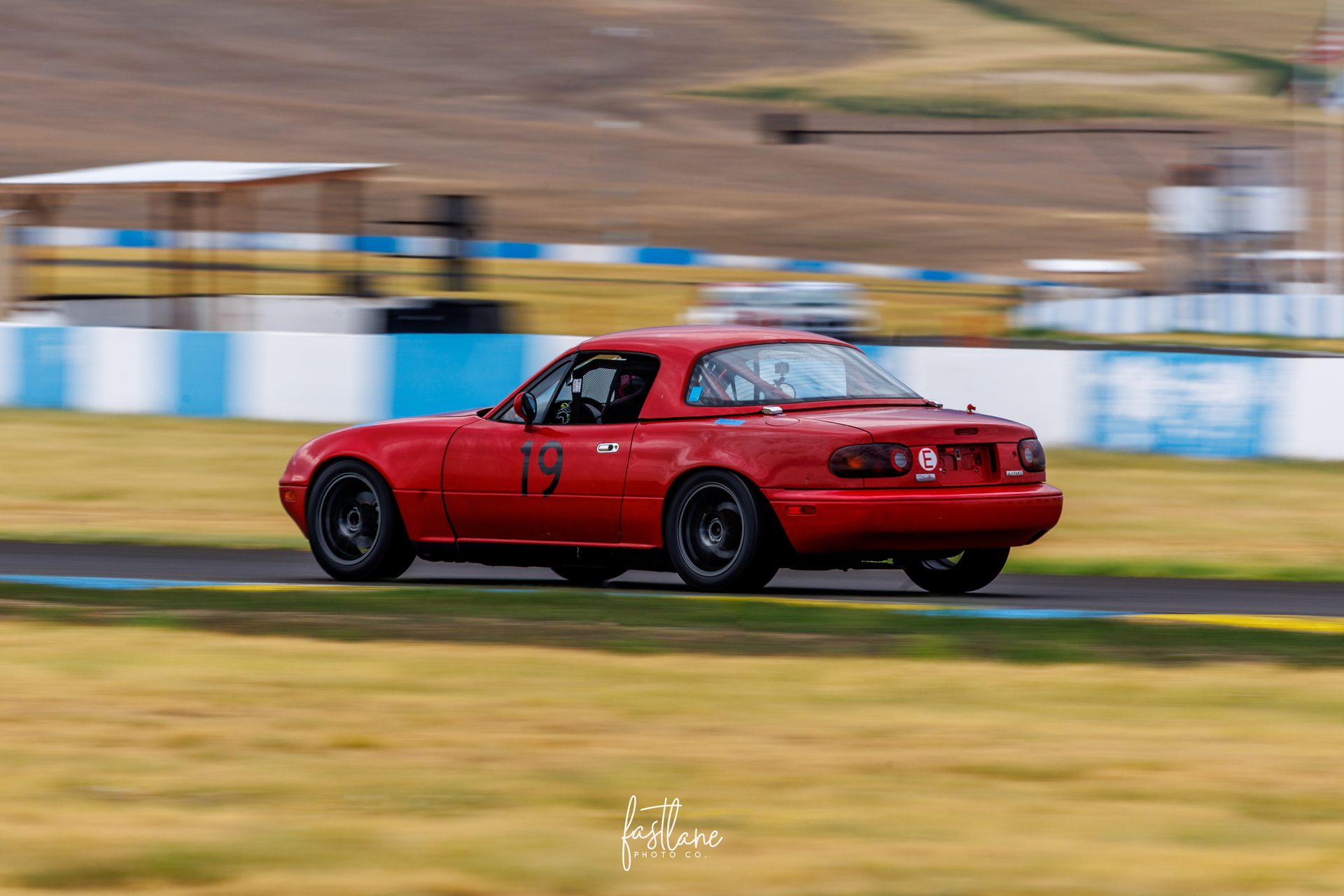 The #19 heading up the road at High Plains Raceway, NASA weekend, August 2026.
Same Weekend, New Price Tag
Here's the fastest way to feel the jump. Take the line items you already pay at the kart track and set them next to the car version.
| Line item | Club karting (LO206) | Spec Miata |
|---|---|---|
| Entry fee, per weekend | $70–$120 | $399–$499 (NASA Rocky Mountain), we budget ~$500 |
| One set of tires | ~$262 | ~$1,200 mounted |
| Fuel, per weekend | ~$20 | ~$155 (one documented season's average) |
| The machine, used | $2,500–$4,500 with engine | $10,000–$35,000+ race-ready |
| Safety gear | $800–$1,500 | ~$1,100–$4,700 with helmet and head restraint |
Nothing on that list gets cheaper. The entry fee alone runs three to seven times the kart number. Tires run more than four times as much.
That's why a competitive Spec Miata weekend lands around $2,000 to $3,500 all-in when you do your own wrenching. You can scrape down to about $1,000 to $1,500 on old, heat-cycled tires with zero damage. That's a floor, not a plan.
I walked through the big-picture version of this gap in the karting-to-cars money cliff. This post is the year-one ledger.
What Carries Over From Karting (For Free)
Good news first. Your kid's karting years aren't sunk cost. Some of it pays off on day one.
Laps count toward the license. This is the big one, and most families don't know it. NASA lists outdoor karting as real experience. An experienced outdoor karter can apply with a driving resume. A Regional Director reviews it, and may ask your kid to attend a one-weekend NASA school for a provisional license.
NASA also offers a "checkout ride" in an HPDE session for drivers with lots of on-track time. Karting is named as an example. Either way, you may skip a big chunk of the HPDE ladder a total beginner would climb.
The paperwork is cheap. Club dues, permits, and license fees add up to under about $300. The expensive part of getting licensed is seat time, not the card in your wallet. I broke down every step in how to get your competition license.
Racecraft and results. Reading a start, defending a line, and keeping your head in traffic all transfer. So does every result, photo, and post from the karting years. That's sponsor material, and it's already paid for.
Maybe the helmet. More on that next, because it's the one piece of gear that might move over.
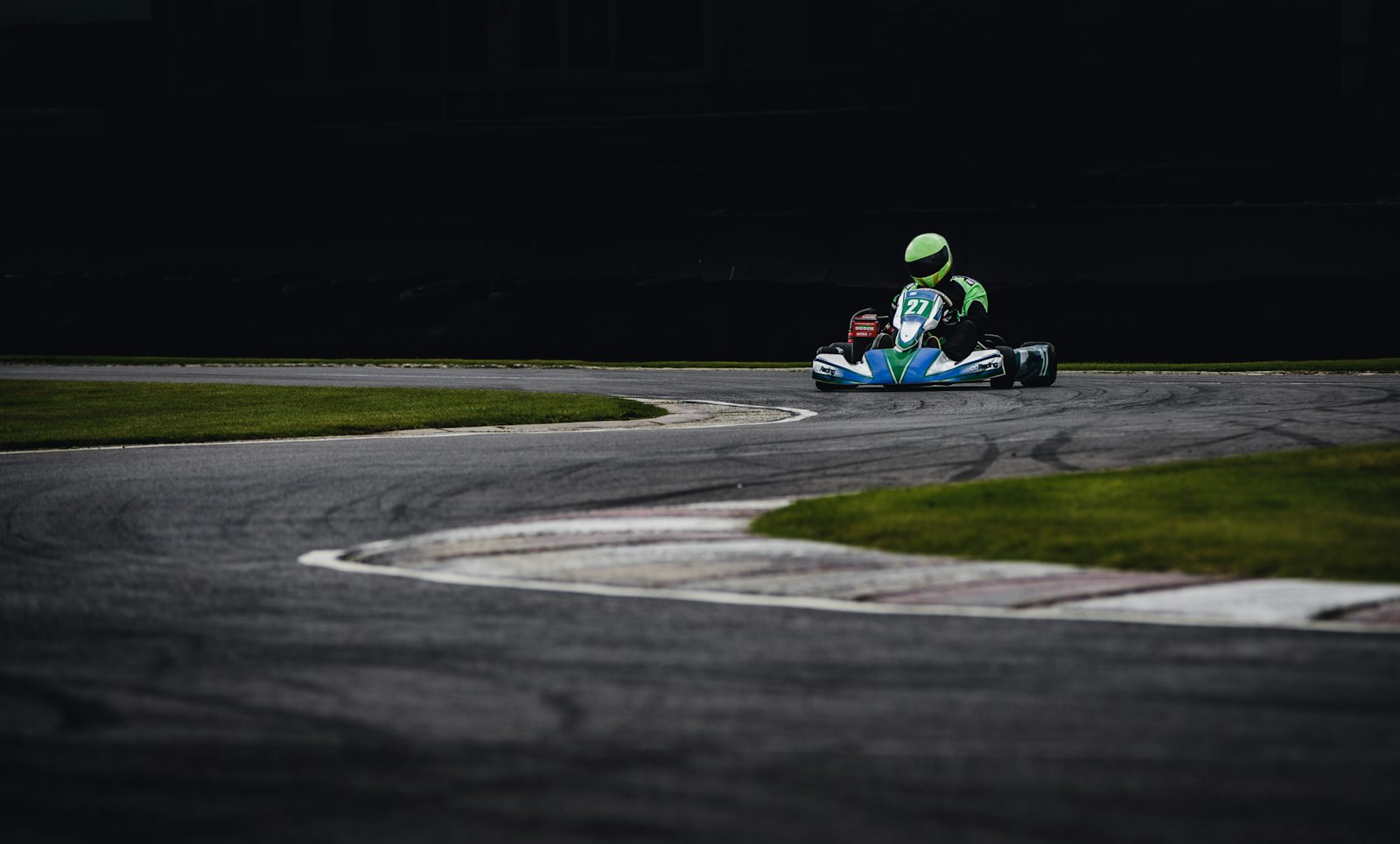 Photo by Alexander Andrews on Unsplash.
What Does NOT Carry Over (Budget to Rebuy)
This is the section that catches parents. Kart gear looks a lot like car gear. It isn't built for the same job.
The suit. Kart suits are made to survive a slide across the pavement. They're built for abrasion, not fire. Car clubs want a fire-rated suit. SCCA's gear page asks for an SFI 3.2A/1, SFI 3.4, or higher label, or an FIA homologation. An entry-level SFI 3.2A/5 suit runs about $240 to $300.
Gloves and shoes. Kart shoes are made for grip and feel, and they rarely offer fire resistance. Car gloves and shoes need to be fire-resistant. Entry-level rated gloves start around $55, and rated shoes around $67.
The neck collar and rib vest. Neither one does a job in a car. The car kit uses a real head-and-neck restraint instead. The device alone runs roughly $450 to $1,250, plus about $75 for the helmet anchors.
The helmet, probably. Check the label inside your kid's helmet. Snell K ratings are the karting standard. Snell SA is the auto-racing standard. SCCA's list accepts SA, SFI 31.1, or FIA helmets, and it doesn't list K.
If your kid already races in an SA2020 or SA2025 helmet, it may carry straight over. NASA moves its floor to SA2020 or newer on January 1, 2027. If it's K-rated, budget for a new one. Entry SA2025 helmets start around $210.
Add it up and a full car kit runs roughly $1,100 at the cheapest combo to about $4,700 at a premium one. The full shopping list lives in your first racing safety gear kit.
The New Bills Karting Never Had
Some costs simply don't exist in karting. They show up in year one whether you planned for them or not.
- The car. A race-ready Spec Miata is roughly $10,000 to $35,000+ for the car alone. Before you buy, run through our used race car buyer's checklist. A cheap car with a hidden problem is the most expensive car you can own.
- The tow rig. A kart fits in a van or a small trailer. A car needs a real trailer, a truck that can pull it, and somewhere to park both. If you don't already own a tow vehicle, this can rival the car itself.
- Timing. Car clubs score you with a transponder on the car. NASA Rocky Mountain rents them at $80 a weekend. A rechargeable unit costs about $210 with a year of subscription.
- Race school, if the resume route doesn't work. If your region wants formal schooling, budget for it. A one-day race school with a car runs about $1,995. A full three-day competition license program can run $7,495.
- Damage. Karts bend. Cars crumple, and the parts cost more. I won't put a fake number on this, because it ranges from zero to a totaled car. Read what Spec Miata crash damage really costs before you set your reserve.
The Honest Year-One Total
Here's my arithmetic for a family that buys a car and runs a six-weekend season. These are the ranges above added together, not a quote.
- Car: $10,000 to $35,000+
- Gear: $1,100 to $4,700
- License paperwork: under ~$300
- Race school: $0 if the karting resume works, up to $7,495 if it doesn't
- Six weekends at $2,000 to $3,500: $12,000 to $21,000
- Transponder: about $210 to $480
That's roughly $24,000 to $69,000 in year one, before the truck and trailer. The low end assumes a cheap car, entry gear, no school, and no damage. The high end isn't the ceiling. Front-runners who run fresh tires every weekend can spend $50,000+ on the season alone.
The good news is that year one is the heaviest year. The car and most of the gear are bought once. I wrote about what drops off in year two if you want to see the second-season picture.
The Other Way Through Year One
Owning isn't the only door. You can skip the car, the tow rig, and the garage entirely.
Nationally, a race-weekend arrive-and-drive seat runs about $3,150 for a two-day weekend at a leading program. That's a weekend price, not a season price, and it's market context only. At LFR, our arrive-and-drive seats are full seasons only. Pricing depends on the car and package, so it happens on a call.
For drivers coming straight out of karts, this is the exact year we built Kart to Car around. Full-season programs run $35,000, $40,000, or $45,000. That covers six NASA weekends, tires, coaching, sim work, fitness, sponsorship support, and a reserved car. Entry fees stay a pass-through, paid straight to NASA.
Is that cheaper than owning? Sometimes, sometimes not. It depends on the car you'd buy and whether you already own a truck. What it does is turn a five-figure surprise into one number you know in advance. And it puts a crew and a coach around your kid in the year they need them most.
Where the Money Actually Comes From
Here's what I tell every karting family. Don't try to cash-flow year one out of the checking account. Plan it like a project, with funding.
The families who make the jump start lining up sponsors a season early. They use the karting results they already paid for. A local business that watched your kid win in karts is a warm lead, not a cold pitch.
If you want the whole system for funding a season, step by step, The Funded Season Kit is $197. It's eleven modules built to fund a full season, not to land one lucky check.
Sources: Word Racing: How Much Does It Cost to Race Karts, Mazda Motorsports: Five Ways to Get Your NASA Competition License, SCCA Race Experience: Driver Safety Gear, SCCA Race Experience: Driver Eligibility, FAST RACER: The Hidden Dangers of Using Karting Gear for Auto Racing, No Money Motorsports: How Much Does a Season of Spec Miata Cost, Advanced Autosports, NASA. Numbers verified against published rates and rulebooks as of October 2026. The year-one total is my own arithmetic from these sources, plus my own racing experience. Gear rules vary by club and region, so confirm with your sanctioning body before you buy.
Do you believe?