
Being fast won't make you an HPDE instructor. Plenty of quick drivers never get asked. Plenty of steady, calm, clear-talking drivers do.
That's the part most people get backwards. Clubs aren't hunting for the best lap time in the paddock. They're hunting for the person they can trust in the right seat with a nervous stranger. Here's how that trust gets built, step by step.
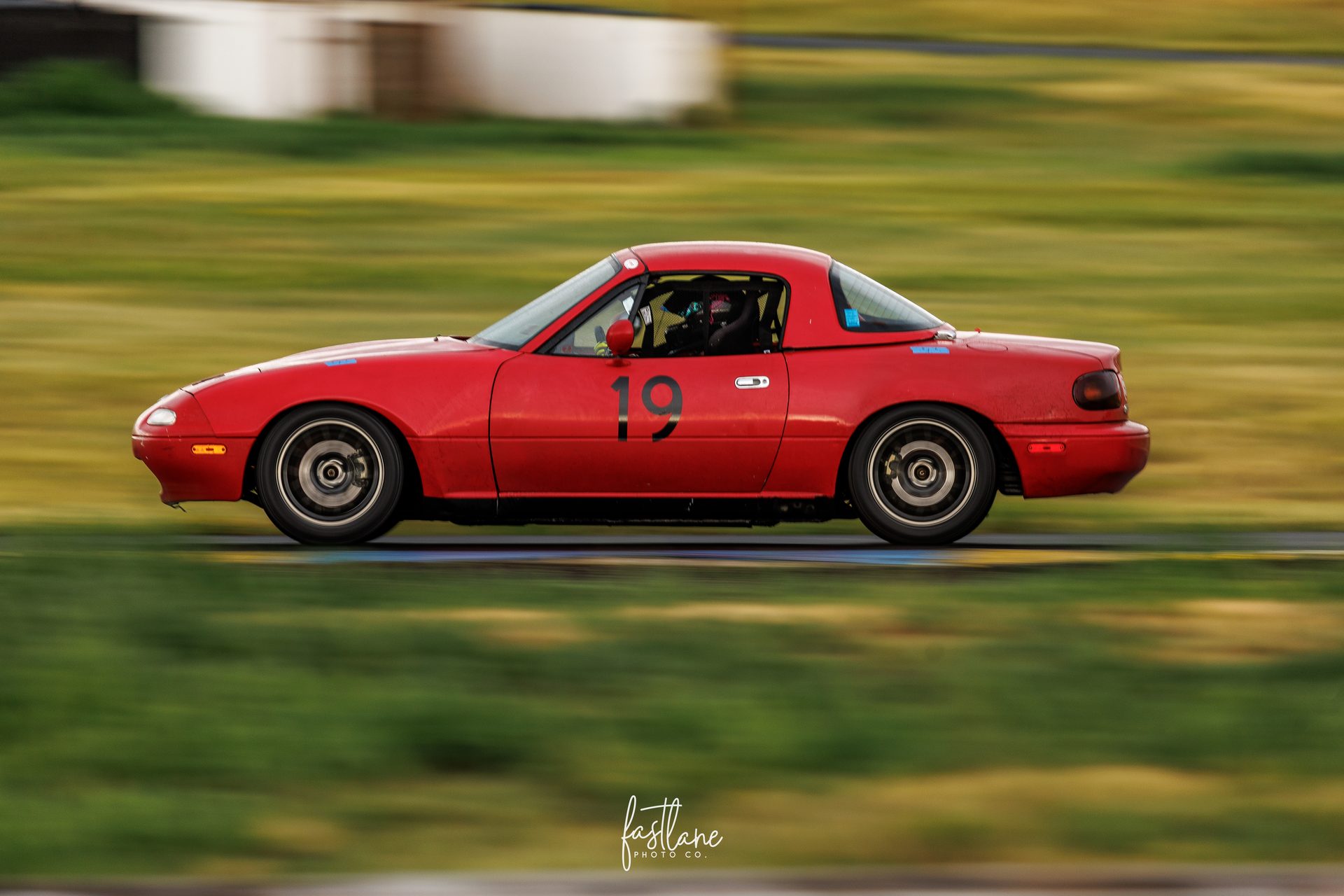
What an HPDE instructor actually does
An HPDE instructor rides in the passenger seat with a novice driver. You talk them through the line, the braking points, and where to look. You watch their mirrors when they forget to. You decide when they're ready for a point-by, and when they need to slow down.
Between sessions, you debrief. What went well, what to fix next time, one thing at a time. At the end of the weekend, you help the club decide if they're ready to move up a run group.
It's coaching, not racing. Your student's day is the job. Your own laps come second.
What clubs want before they'll let you instruct
There's no single national rule. Every club and every region sets its own bar. But the asks line up pretty closely.
- Experience. NASA's own magazine puts the bar at HPDE 3 or 4. Moving up to Time Trial counts too. No Money Motorsports, written by a working instructor, puts it at "at least a few years of HPDE experience."
- Car control. You need to know where the limit is, and you need to stay well under it with a student aboard.
- Clean conduct. NASA's article says your driving and behavior should be high quality, "if not exemplary," across several events. One bad weekend gets noticed.
- Communication. You have to explain what you're doing in plain words, fast, at speed. Some great drivers can't. That's fine. It just means instructing isn't their lane.
Notice what's missing. Nobody lists wheel-to-wheel racing. Nobody lists a lap record.
The path, step by step
- Tell the chief instructor. This is the first step everywhere. NASA says to tell your region's chief instructor or Regional Director. Ask them what you need to work on before you're ready.
- Go fix what they told you. Maybe it's consistency. Maybe it's your passing habits. Maybe it's just more days at more tracks. Do the work and show up clean.
- Attend an instructor clinic. Formats vary a lot. NASA Southeast runs clinics three times a year, and you instruct the same weekend you take the clinic. NASA Great Lakes runs two schools a year, and you have to attend both.
- Get mentored. Many clubs pair new instructors with a senior instructor. You might ride along, shadow, or get a senior instructor riding with you and your first student.
- Get signed off, then keep earning it. Instructor status isn't automatic and it isn't permanent. Clubs watch how your students do.
That's a multi-season plan. In the free track time post, I called it the long game. It still is.
MSF certification: the credential that travels
The Motorsport Safety Foundation (MSF) is a nonprofit that sets a common standard for HPDE coaching. Some clubs require it. Others just like seeing it. It matters because one club's sign-off doesn't always transfer to the next club.
Here's how the levels work, per MSF's own site:
| Level | What it is | Who it's for |
|---|---|---|
| Level 1 | An online course on how drivers build skill and handle traffic safely | Anyone on the instructor path; it unlocks Level 2 |
| Level 2 | A hands-on, in-car instructor school run by an MSF-certified club | New instructors ready to coach in the car |
| Level 3 | Senior certification for experienced coaches | Usually about three years of teaching across tracks, groups and clubs |
Here's one real Level 2 listing for July 2026, run by SCDA at Thompson Speedway. It asked for 50 or more HPDE events, or current instructor status with a recognized club. It cost $499 and capped the class at 10 candidates. Day one was classroom. On day two, an MSF mentor drove your car at about 60 to 70 percent pace while you coached. The cert is good for three years.
SCDA would credit that $499 back if you instructed for them five times within a year. Ask your club if it does something similar.
What you get, and what it costs you
The upside is track time. No Money Motorsports says most clubs let instructors drive free in exchange for coaching. Entry fees usually run $200 to $500 a day (see our track day cost breakdown), so that adds up fast. NASA also has an instructor benefits program, plus contingency credit from Hawk, VP Racing and Summit. NASA says that's $50 to $200 at three, five and seven days of instruction.
Free entry doesn't mean a free day, though. Your tires, brakes and fuel still wear like normal. And clubs differ on what instructors get, so ask before you count on it.
The downside is your own weekend. Here's what No Money Motorsports warns about:
- Your student comes first. Less time to work on your own car or your own laps.
- If your car breaks, you still ride with your student. You might miss your own sessions.
- You have to be on time, every time. A late instructor wrecks a novice's day.
- A small share of days go badly. The author guesses about 5 percent. You can park a student or hand them off when you need to.
The author's own summary is the honest one: instructing has "treated me very well, but it is certainly NOT for everyone."
Where to start in Colorado
Colorado has more than one club running HPDE days, which means more than one ladder.
NASA Rocky Mountain runs HPDE and Time Trial at High Plains Raceway in Byers and Pueblo Motorsports Park. If NASA is your club, the move is the same as everywhere: reach HPDE 3 or 4, then talk to the region's chief instructor.
The Porsche Club's Rocky Mountain and Alpine Mountain regions run their own instructor training. They've held an instructor refresher at Pueblo Motorsports Park, with mentors assigned to instructor candidates. In April 2023, Rocky Mountain held a free instructor-only training day in Golden, open to its instructors and instructor candidates. If PCA is your club, that's the ladder to ask about.
One tip for here: our tracks sit high, our weather turns quick, and our corners hide over crests. Instructors who know HPR well are worth a lot to a club. Run it a lot and learn it cold. That's how your name comes up when the chief instructor needs help.
Instructors still prep a car and pack a bag every event, same as their students. If you want the checklist we use, grab the free Race Day Ready Pack.
Sources: NASA Speed News: How to Become a NASA Instructor (Brett Becker, June 2024), No Money Motorsports: Become an Instructor, Motorsport Safety Foundation, SCDA MSF Level 2 at Thompson Speedway, July 2026 (MotorsportReg), PCA AMR & RMR Instructor Refresher, Pueblo Motorsports Park (MotorsportReg), PCA Rocky Mountain 2023 Instructor-Only HPDE (MotorsportReg). Checked October 2026. Instructor rules and benefits differ by club and region. Your chief instructor is always the authority.
Do you believe?