
Parents
What to Say to Your Kid Before a Race: 3 Lines to Use
Jett Johnson7 min read
The short answer
- Right before a race, say less. Three lines cover it: "I love watching you race," "What's your one thing?" and "Those nerves mean you're ready."
- Skip "you need to win," last-minute line coaching, and anything about what the weekend costs.
- Have the real talk the night before at home: expectations, safety, and what happens if it goes badly.
- Calling nerves excitement beat trying to calm down in Harvard researcher Alison Wood Brooks's studies.
The best thing to say to your kid before a race is short: "I love watching you race." Add one question about their plan, tell them their nerves mean they're ready, then step back and let them work.
That's it. The longer talk matters too, but it belongs the night before, not on grid. Here's what to say, what to skip, and when to say it.
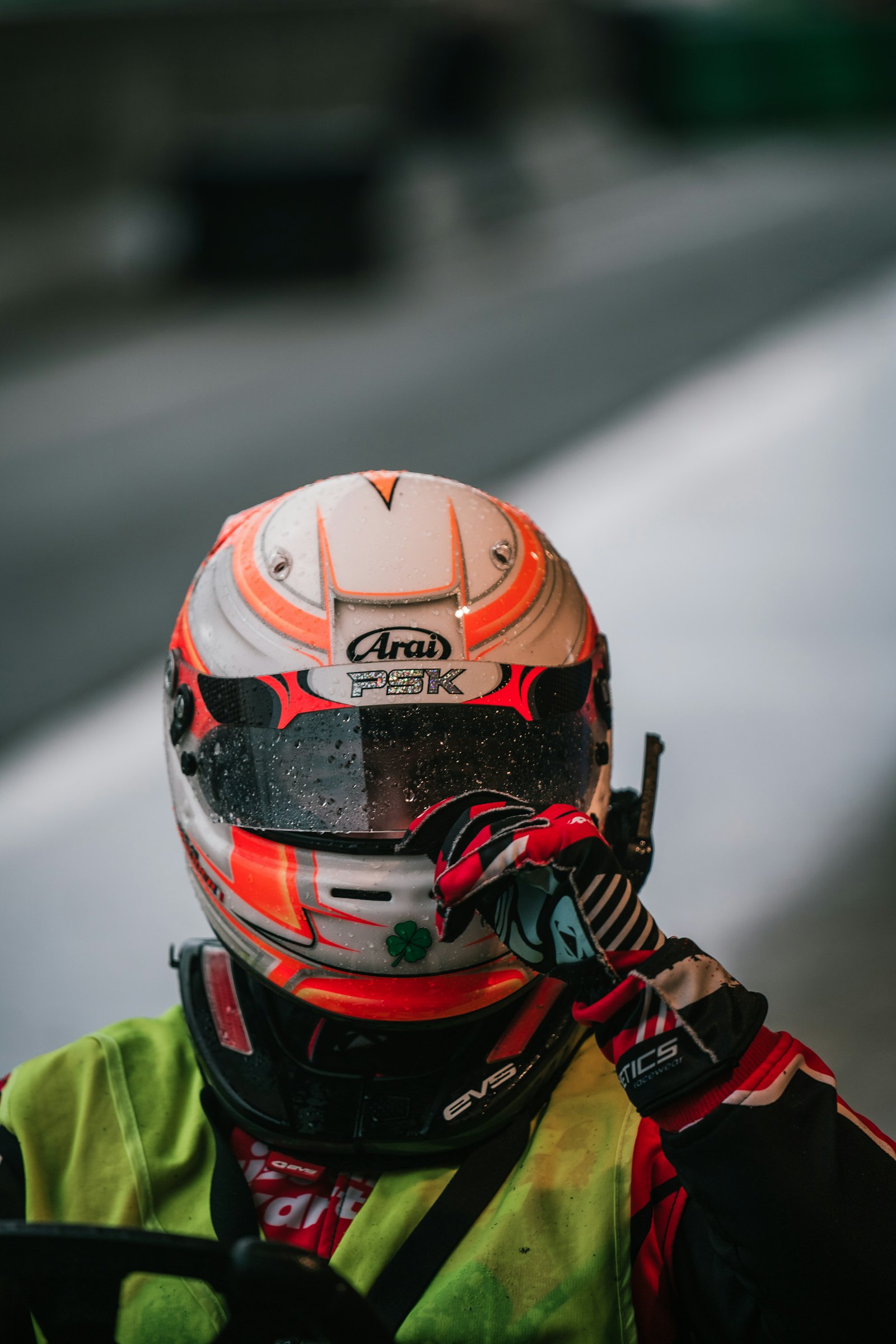 Photo by Alexis AMZ DA CRUZ on Unsplash.
What should you say to your kid right before a race?
Three lines. You can say all three in under a minute.
| Say this | Why it works |
|---|---|
| "I love watching you race." | It tells them your love isn't riding on the result. |
| "What's your one thing this session?" | It points their brain at a job they control, not a finishing spot. |
| "Those nerves mean you're ready." | It relabels the pounding heart instead of fighting it. |
Line one comes from athletes themselves. Coaches Bruce Brown and Rob Miller of Proactive Coaching asked college athletes what their parents said that made them feel great and want to play. The answer that kept coming back was six words: "I love to watch you play." Swap "play" for "race." Mean it.
Line two is a question, not a lecture. Let them answer it. "Brake later into turn one" or "Hit my marks" or "Just finish clean" are all good answers. If they say "I don't know," offer one: "How about clean laps?" Then drop it.
Line three works because of how nerves feel. We'll get into the research below. The short version is that a scared body and an excited body feel almost the same.
Then give them space. A hug, a helmet tap, whatever your family does. Walk away before the one-minute board, not after.
What should you not say before a race?
The phrases that hurt usually come from love. They still land as pressure.
| Instead of this | Try this |
|---|---|
| "You need to win this one." | "You can do this." |
| "Brake later in turn three, and watch the kid in the blue kart." | "What's your one thing?" |
| "Don't wreck it. We can't afford another one." | Say nothing about money at the track. |
| "Everybody's watching today." | "Have fun out there." |
| "Don't be nervous." | "Nerves mean you're ready." |
The "need to" swap isn't just word games. The Healthy Kids Running Series puts it plainly: telling a child they "should" or "need to" win is heard very differently than telling them they "can." "Need to" makes the race about your expectations. "Can" makes it about their choices.
Last-minute coaching is the other big one. Former F1 driver Allen Berg, who runs a racing school, wrote this in his dad's guide to karting: when you're talking to your driver at the track and his eyes glaze over, give the coaching a break. Five minutes before grid, every eye glazes over. We dug into this trap in the five mistakes parents make coaching their own kid.
And keep money out of it. Racing is expensive and your kid already knows it. They don't need that weight in the seat with them.
When should the real pre-race talk happen?
The night before, at home, with no clock running. This is where the longer conversation goes. Hit three things.
1. What a good day looks like. Agree on it together, and make it something they control. "Finish every session." "Make every call time." "Try the new brake marker." Not a finishing spot. If it's an early race, a rookie may start at the back by rule anyway, which we covered in your kid's first kart race.
2. Safety, out loud. Ask them to walk you through what they do if something feels wrong, if they spin, or if a flag comes out. They should be able to answer from what they learned at school and in the drivers' meeting. Then say the line every young driver needs from a parent: "You can always come in. I will never be mad at you for pitting."
3. What happens if it goes badly. Tell them now, while nobody's upset. "If you have a rough day, we'll get food and talk about it tomorrow." Knowing the plan for a bad day takes a lot of the fear out of having one. When it does happen, here's how to help your young driver after a bad race day.
Keep it to ten minutes. Then lay out the gear and go to bed.
How do you help your kid with pre-race nerves?
Don't try to make the nerves go away. Rename them.
Harvard Business School researcher Alison Wood Brooks tested this. She had people facing stressful tasks, like singing karaoke and giving a speech, say "I am excited" or "I am calm" first. As Harvard Magazine reported, the people who said "I'm excited" sang better on an objective score. Independent judges rated their speeches as more persuasive and confident.
Her reasoning fits a kid on grid perfectly. Anxiety and excitement are very similar states. Both come with a racing heart. It's easier to relabel that feeling than to switch it off. So "calm down" asks for the impossible. "That's your body getting ready" asks for something they can actually do.
The other half is you. The Healthy Kids Running Series warns that "your child will always hear your voice over all other voices." If you're pacing, snapping at the crew, or checking the timing screen every 30 seconds, they feel it through the helmet. Your calm is part of their setup.
What we actually do with our own drivers
We don't give our drivers a pep talk on grid. We give them a routine.
The mental-prep guide we develop our drivers with is built on a few simple ideas:
- Same routine, every weekend. Gear packed the night before, so race morning has fewer decisions in it.
- Box breathing before the session. Breathe in for 4 counts, hold 4, out 4, hold 4. A few rounds settle a pounding heart.
- Call the nerves readiness. Same racing heart, different label. Our guide says it straight: the goal is not to have no nerves.
- A process goal, not a result. The only job on grid is the one thing they set for themselves.
That's the same guide that sits inside The Driver System, the full library we develop our own drivers with. It's $47 and yours to keep. If your kid is old enough to read it themselves, the mental-prep section is a good place for them to start. If they're younger, read it yourself and borrow the routine.
What about after the race?
The same rule holds. Say less.
The three lines work after a session too, with one change: "I loved watching you race." Skip the debrief in the car. Save the notes for the next day, when they're ready to hear them.
The goal of every one of these lines is the same. You want your kid to climb in thinking about the track, not about you.
Make race morning calm before it starts
Most pre-race stress in a family isn't about the race. It's the lost glove, the missed call time, the scramble at tech. A calm morning makes the short talk on grid easy.
That's why we built the free Race Day Ready Pack. It's the packing lists and race-day checklists we actually use at the track. Print it, pack from it the night before, and the morning takes care of itself.
Sources: Harvard Magazine on Alison Wood Brooks's "Get Excited" research, MyTPI: The Six Words Your Kids Want You to Say (Brown and Miller), Healthy Kids Running Series: Psych Your Kid Up, Not Out, Allen Berg Racing Schools: Dad's Guide to Karting. Research summaries checked as of November 2026. The rest comes from how we prepare our own drivers.
Do you believe?

About the author
Jett Johnson
Founder of LeadFoot Racing, a Spec Miata race team in Colorado Springs that races in the NASA Rocky Mountain region. Jett holds degrees in mechanical engineering, mathematics and aerospace engineering, has raced since 2022 and has spent years working with sponsors in motorsport. What you read here comes from building the team's race cars, running race weekends and writing real sponsorship proposals.
Meet the team