
Your kid just spun on lap two. Or got punted off at turn one. Or finished dead last after a weekend of practice that looked so good.
They're climbing out of the kart with their helmet still on. You're walking over. And the next thing you say matters more than anything you say about racing all year.
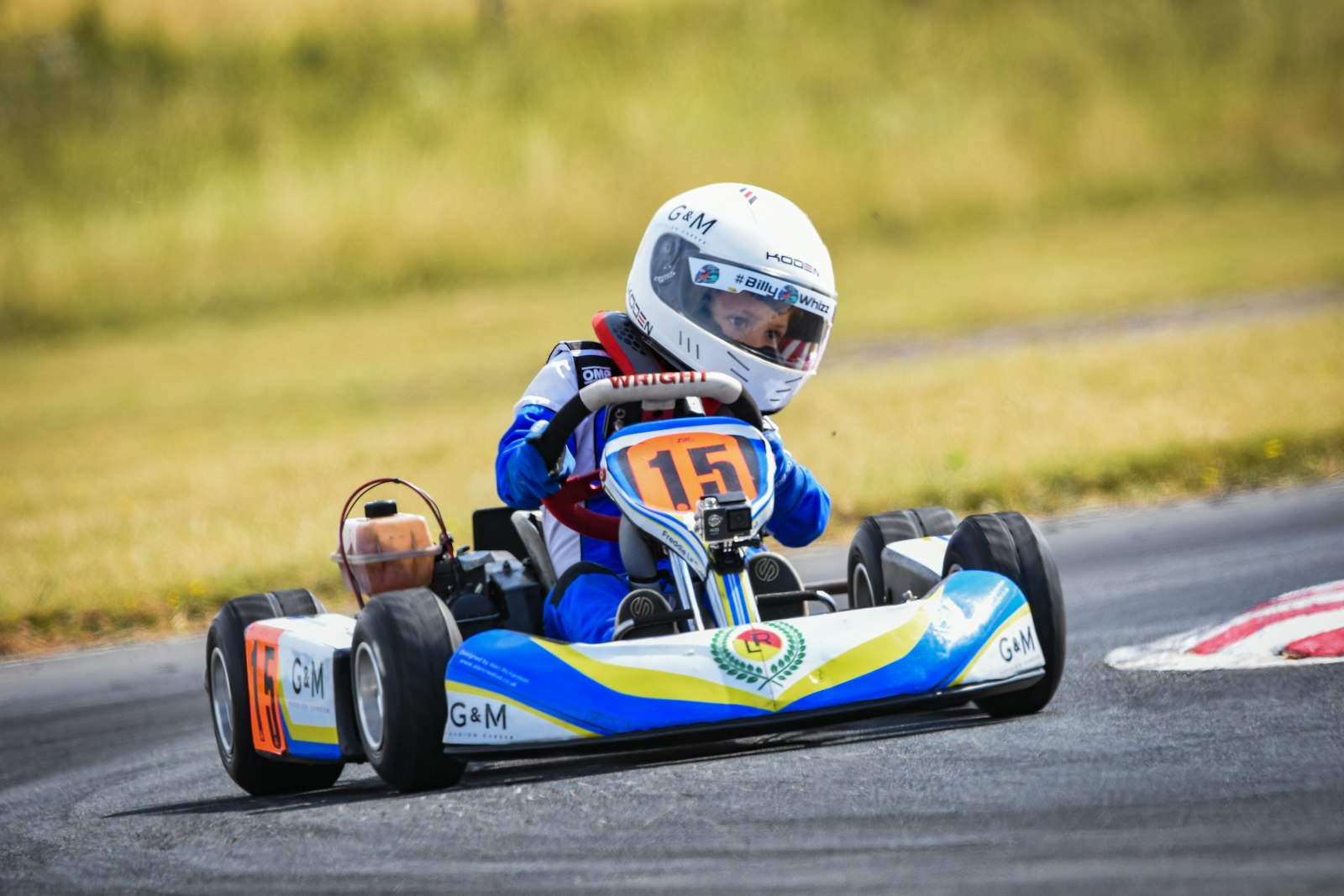 Photo by Jess Maund on Unsplash.
I've had bad days at the track. I broke a car during my own licensing process and had to rent one just to finish. I know the feeling of walking back to the trailer wanting to disappear. What helped me was never a breakdown of my mistakes. It was the people who let me get my head back first.
So here's how to handle a bad race, in the order it actually happens.
The first ten minutes: safety, then silence
If there was contact, your first job has nothing to do with racing. Check your kid.
The CDC's HEADS UP program lists what to watch for after a bump or jolt to the head. Look for a dazed look, slow answers, clumsiness, or a mood change. Listen for a headache, dizziness, nausea, or "I just don't feel right." The CDC also warns that signs can take hours or days to show up. So keep watching tonight and tomorrow, not just at the track. If anything looks off, get them seen by a medical professional before they drive again.
Then check the helmet. If it took a hit, the Snell Foundation's guidance is plain: if a helmet has been in an impact while in use, replace it. Even a good helmet can't protect the same way twice.
If everyone is fine, the rest of your job for ten minutes is easy. Hand them water. Help with the gear. Say nothing about the race.
Kyle Larson's dad had a rule for this when Kyle was a kid racing karts. When Kyle got upset, he had to sit in the kart and collect his thoughts before he climbed out. No thrown helmets, no scene. Larson says he still takes a breath and relaxes when things go wrong. That's a habit worth building early, and it starts with you staying calm too.
The car ride home: the least teachable moment
This is the one most of us get wrong. Me included.
You drove hours. You watched every lap. You saw exactly where the race fell apart. The ride home feels like the perfect time to fix it.
It's not. Coaches Bruce Brown and Rob Miller spent years asking college athletes about their sports parents. As writer Daniel Coyle reported, the moment athletes hated most was the conversation in the car after the game. Their parents meant well. It still felt like a second judging.
The Positive Coaching Alliance gives the same advice. The last thing your kid wants is to climb in the car and pick apart the race through your eyes. They may need a while to process it.
So try this instead:
- Ask one question. "Do you want to talk about it?" If the answer is no, respect it.
- Let them start. If they bring up turn three, listen. Don't add five more corners.
- Say the line that works. The same athletes said the words that felt best came after the game: "I love to watch you play." For us, that's "I love watching you race." Mean it.
A bad race is information. A bad car ride turns it into a memory they'll avoid.
That night: feelings first, fixes later
Some kids go quiet. Some cry. Some get angry at the kid who punted them. All of that is normal, and none of it needs to be fixed tonight.
What you can do is separate the result from the kid. Spinning out doesn't mean they're slow. Finishing last doesn't mean they don't belong. A first-year driver is supposed to have rough days. Plenty of kart clubs start rookies at the back on purpose. We covered that in what to expect at your kid's first kart race.
If they want to talk about quitting, don't panic and don't argue. A kid who says "I'm done" in the car often feels totally different on Tuesday. Let it sit.
The next day: turn it into notes
This is when the learning actually happens. A night of sleep turns "the worst day ever" into "okay, what went wrong?"
Sit down together for fifteen minutes, not an hour. Let your kid lead. Ask:
- What was the one moment that went wrong?
- Was it something you did, the kart, or just racing?
- What's one thing you want to try next time?
Then write it down. Track, weather, tire pressures, what happened, what they want to try next. A bad race you wrote down is worth more than a good race you didn't. It's the same habit we use with our car drivers. Our free Race Day Ready Pack has the setup log and checklists we actually use at the track. It works just as well at a kart club.
If you shot video, watch it together now. Not in the car. Seeing a mistake teaches more than hearing about it.
Before the next race: watch the pattern, not the one bad day
One bad race is just racing. A string of them is worth a closer look.
Is it the same mistake every time? That's a coaching question, and a good coach will spot it faster than you will. Here's how to pick a racing coach if you're at that point.
Is your kid scared to get back in? That's a confidence question. Shorter practice days and lower-pressure sessions help more than pep talks.
Has it stopped being fun? Pay attention to that one. It's the signal that matters most. We wrote about the parent side of this in what karting parents wish they'd known in year one.
And watch yourself too. If you dread the drive home as much as they do, the pressure might be coming from the front seat.
The bad days are the training
Every driver I respect has a pile of bad races behind them. The ones who kept going weren't the ones who never spun. They were the ones who had somebody in their corner when they did.
That's you. Be the calm person at the trailer.
If your kid has the fire and you're starting to think about what comes after karting, that's what we built Kart to Car for. It's coaching, sim training, and a real pathway into full-size race cars for drivers 13 to 25. Bad days included.
Sources: CDC HEADS UP: Signs and Symptoms of Concussion, Snell Memorial Foundation FAQ, Daniel Coyle on Brown and Miller's research, Little League University / Positive Coaching Alliance, Fatherly: Kyle Larson's parenting lessons. Guidance checked against these published sources as of October 2026. Medical signs come from the CDC; this post is not medical advice. Everything else comes from these sources plus my own time at the track.
Do you believe?