
Hiring a driver coach is one of the few purchases in racing with no spec sheet. You can't dyno a coach. You can't inspect one in a garage before you buy.
You hand over $500 to $1,000 for a day, plus their travel, and you find out afterward whether it was worth it.
Most drivers pick a coach the worst possible way. They ask who's fast.
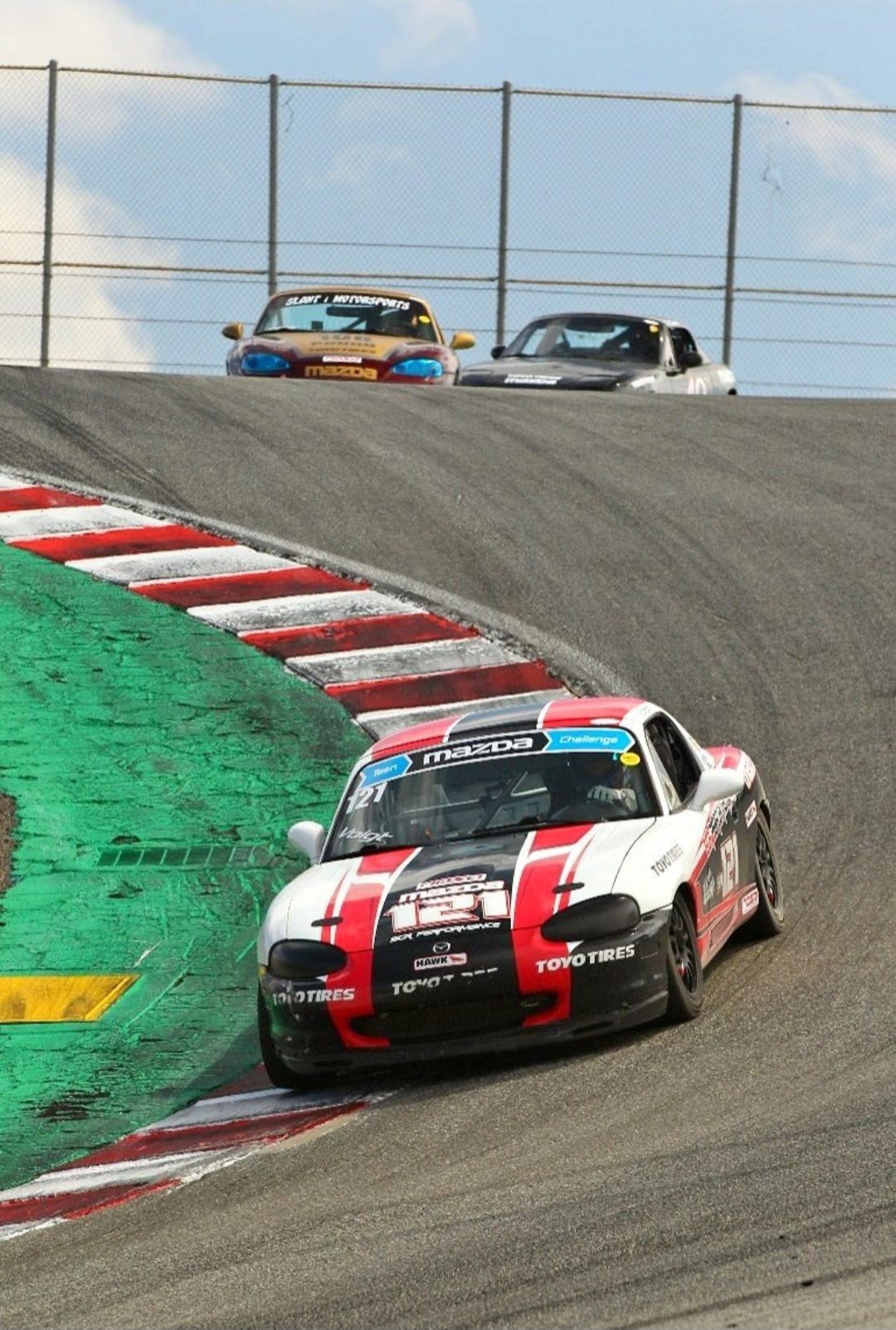 The 121 car at work. A coach's job is to see the half-second you can't feel from inside the helmet.
Fast and Good at Teaching Are Two Different Jobs
There's no license required to sell driver coaching in the United States. None.
The UK has one. ARDS certification is the formal instructor licence for circuit racing over there, renewed annually and checked against a public registry. Here, the closest equivalent is internal. NASA credentials its own HPDE instructors through regional instructor training schools, a standardized curriculum, and mentor sign-off. That certification governs their events. It doesn't govern the guy who DMs you offering private coaching at your next race weekend.
So the filter is on you.
And "fast" is a bad filter. A driver who wins races has proven they can drive. They have not proven they can watch you drive, figure out what you're actually doing wrong, and explain it in a way your hands understand by the next session. Those are different skills that happen to live in the same paddock.
The coaching industry knows this. One of the most respected coaching resources out there makes the point bluntly: a coach's own racing record matters far less than evidence they've helped drivers like you get better. Ask for that evidence.
The Four Red Flags
They lead with driving your car. Ask "how will you help me improve?" If one of the first answers is "let me run some laps in it," walk. Speed Secrets flags this specifically, and it's the cleanest tell there is. Your seat time is the product. A coach burning it to entertain themselves has their priorities backwards.
They can't open a data file. Video and telemetry review is table stakes now. A coach who only works off memory and vibes is giving you opinions. A coach who can pull up your trace and show you the exact 40 feet where you're releasing the brake too early is giving you something you can fix.
They coach every driver the same way. Some drivers need technique. Some need mental prep. Some need to understand what the car is telling them. A good coach asks what you want out of the day before they tell you anything. If the plan was written before they met you, it wasn't written for you.
They build you into a dependent. Watch for pricing and structure designed to keep you buying forever instead of teaching you things that stick. A coach's real job is to make themselves less necessary over time.
The Three Questions to Ask Before You Book
Have this conversation on the phone, not over text. Fifteen minutes will tell you most of what you need.
- "Who have you coached who was where I am now, and how did that go?" You're asking for a track record with drivers like you, not a trophy list. A real coach has names and stories. Ask if you can talk to one of them.
- "What does a day with you actually look like?" You want to hear structure: a goal-setting conversation, in-car or radio work, data and video review between sessions, and a written or verbal plan for what you practice after they leave. If the answer is vague, the day will be too.
- "What are we going to fix first?" Good coaches pick one thing. Drivers who try to rebuild braking, line, and throttle in one weekend fix none of them.
You're not hiring speed. You're hiring someone who can see what you can't and say it in a way that lands.
This is exactly why coaching is built into our Kart to Car program rather than sold as an add-on. Vetting a coach is a real skill, and a 16-year-old shouldn't have to develop it before they've turned their first competitive lap.
What a Good Session Feels Like
You should leave a coaching day tired and clear.
Tired because you drove. Clear because you can name the one thing you're working on, describe what it should feel like, and explain how you'll practice it between now and the next event. If you can't do those three things at the end of the day, the money didn't do its job.
Also worth saying plainly: price is a signal, not a guarantee. Bargain coaching is usually cheap for a reason, but an expensive coach who doesn't fit how you learn is still a wasted weekend. Fit beats resume.
And if you're not ready to spend on a coach at all, don't stall out. Find someone a season or two ahead of you and buy them lunch. We wrote about how to find a racing mentor for exactly that reason. It's slower than coaching, but it's free and it's real. The math on why a coach pays for itself still holds — just not until you can afford the right one.
If you'd rather race a car that's already sorted, with a crew and a data review after every session, that's what our arrive-and-drive seats are for. We rent them by the full season (six NASA Rocky Mountain events, paid in full before the season starts, no damage deposit), and pricing depends on the car and package, so it starts with a call.
Do you believe?
Sources: Speed Secrets — How Do I Find & Select a Driver Coach?, Your Data Driven — How To Be Taken Seriously As A Driver Coach, Sarah Moore Racing — What to Look For in a Qualified Driver Coaching Service, NASA Speed News — How to Become a NASA Instructor, Grassroots Motorsports — Why You Need a Personal Driving Coach. Coaching rates and certification details verified against current published sources as of August 2026.