
Buying seat time is not the same thing as buying development.
That's the trap. A driver pays for laps, gets faster for a weekend, then plateaus. The program did what it sold. It just never built the driver.
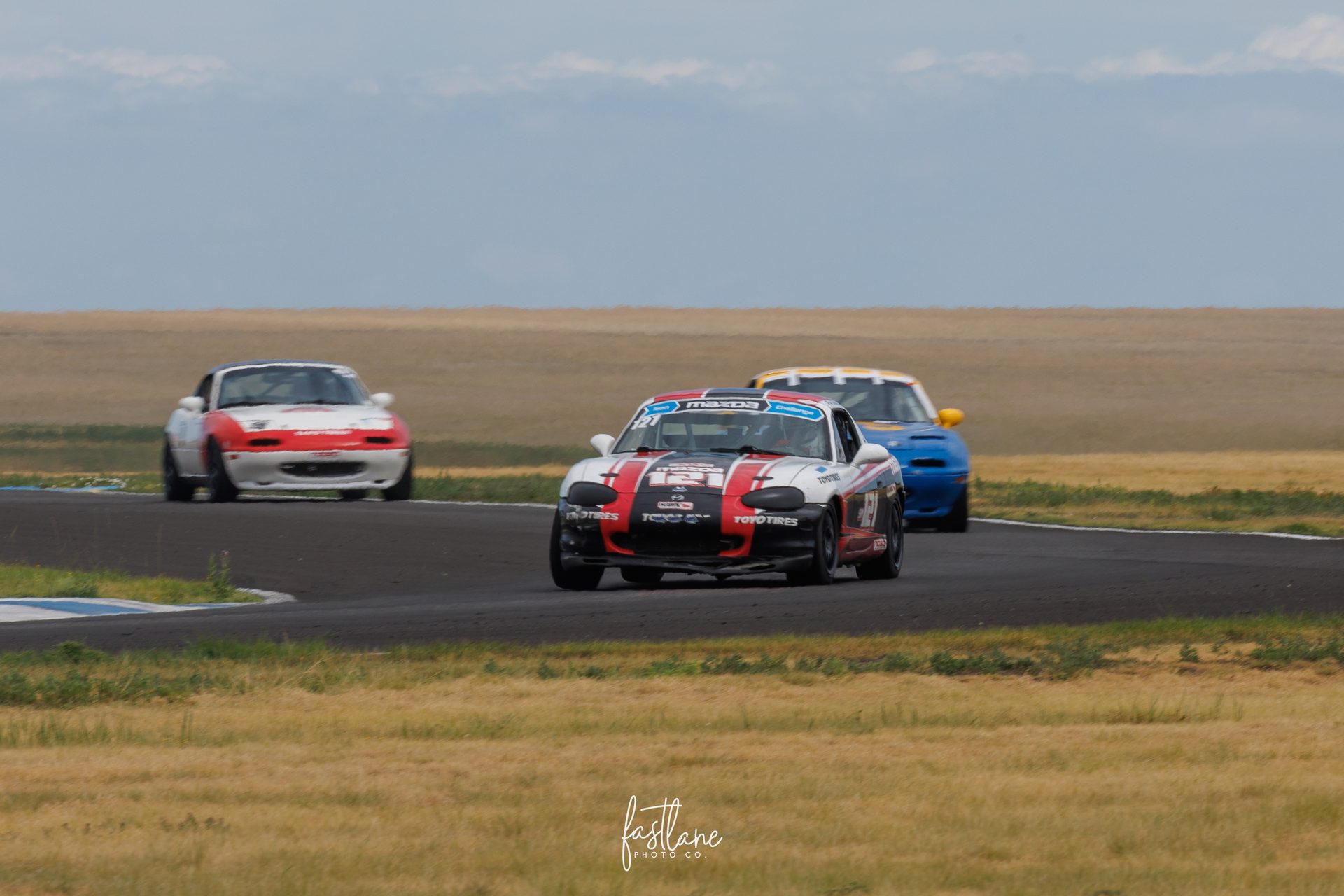 Leading a train at High Plains Raceway. Racecraft like this is a skill you can be taught. It doesn't just show up with more laps.
Start at the top of the ladder and work backwards
If you want to know what development means, look at what the people handing out real money actually judge.
Mazda's Shootout puts finalists in front of a panel for scholarships toward an MX-5 Cup season. The 2025 Shootout paid out $150,000 to the champion, $100,000 to the runner-up, and $100,000 for the Women's Scholarship. Lap time is not the sole factor. Drivers are also judged on their ability to understand data, implement what a coach tells them, their general attitude, and how they handle media.
Porsche's junior screening runs two days. Track performance is one piece. The rest is technical knowledge of car setup, interviews, media observation, and fitness, stress, and mental evaluations.
Every gatekeeper at the top of the sport grades five columns. Most grassroots programs only sell you one.
That's the whole idea. A good development program builds the driver the ladder is actually scoring.
1. Seat time on a schedule, with a goal per session
Repetition beats intensity. A program that runs you hard for one weekend and then vanishes for four months isn't developing anybody.
Ross Bentley's line on this is the best one in racing: practice does not make perfect, only the right kind of practice makes perfect. He breaks driving into individual skills and has drivers work one at a time, the way a football team drills a single play instead of scrimmaging all day. He also points out that three focused 20-minute sessions beat one continuous hour, because mental fatigue kills the returns.
So the test isn't how many days you get. It's whether anyone told you what each day was for.
Ask the program: what are my dates, and what is the goal of each session? If the answer is "just get comfortable," you're buying laps.
2. A coach in the loop and data every session
Porsche describes its junior setup plainly. A driver coach is there at race weekends, helps with the data analysis, and works on the driver's on-track behavior.
That pairing is the point. Data with no coach is a pile of numbers. A coach with no data is a pile of opinions. Together they turn a session into something you can repeat on purpose.
We put coaching and data on every session of an arrive-and-drive weekend for that exact reason. Not because it's fancy. Because a session you can't review is a session you can't learn from.
Three questions worth asking any program:
- Who is my coach, by name, and what have they actually driven?
- Are they in the debrief, or just on the radio?
- Do I keep my data after the weekend?
That last one matters more than people think. If your data leaves with the team, your progress does too.
3. An honest assessment, written down
Here's the uncomfortable one. A real program will tell you what you're bad at.
That's hard to sell. It's much easier to tell a paying driver they were quick. But a written assessment is the only version you can't argue with three months later, and it's the only version you can measure against next season.
Any program worth paying should be willing to give you one.
If a program has never told a driver "you're not ready yet," be careful. That sentence is part of the job.
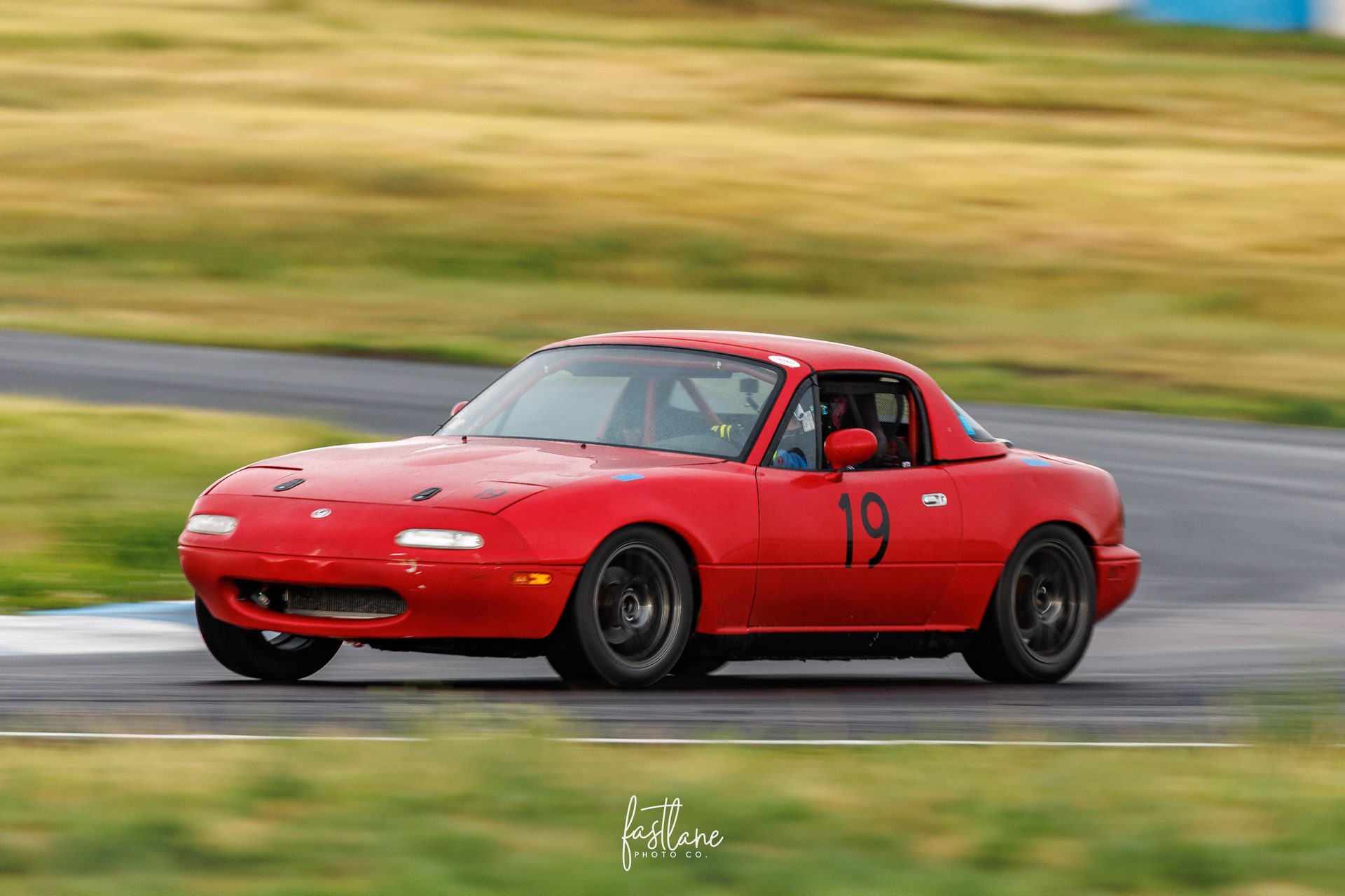 Development shows up in the boring places. Corner entry, consistency, and what you do with the debrief afterward.
4. The off-track half nobody wants to practice
Performance Racing Industry ran a special report on driver development programs, and the through-line is that the good ones spend real time off the track. Sponsorship retention, media, social presence. Antron Brown's program teaches drivers the marketing side and how to build a sponsorship deck, because, as he put it, there's no "Racing for Dummies" out there.
Porsche does the same thing from the factory side: media training, vehicle dynamics workshops, and appearances at sponsor events.
This is the part that decides whether you're still racing in year three. Speed gets you noticed. Funding keeps you on the grid. That's why Kart to Car includes sponsor coaching alongside the driving, and why our season programs include sponsorship support and sim work rather than just car and crew.
Parents, this is the part to press hardest on. You are not just paying for your kid to be fast. You are paying for them to be employable in a sport that runs on relationships. If you're sorting through all of this from the karting side, the Karting Parents Pack is $39 and built for exactly that decision.
5. Fitness and the mental side, treated as real work
The PRI report describes programs with nutritionists, heat training, and breathing tests. One team owner, Billy Venturini, said he's probably as much a sports psychologist as a team owner, and that most drivers who fail stop themselves, because they're worried about not making it.
Porsche pairs physical conditioning with mental resilience work on training plans that get adjusted as the driver develops.
You don't need a lab for this at grassroots level. You need somebody to treat it as part of the program instead of a nice extra. Heat, heart rate, and nerves cost more lap time than most setup changes do. We wrote up a no-cost version of the training side in how to train like a racer without a gym.
What no program can do for you
It can't do the work between weekends.
Bentley's other point is about reflection. Five or ten quiet minutes after a session, no judgment, just letting it settle, cements the skill deeper than more laps would. Nobody can do that for you.
A program also can't buy you a ladder seat. It can put you in front of the people who hand them out, prepared. That's a very different promise, and any program making the bigger one is selling you something they don't control. If you want the honest map of where those seats come from, we laid it out in the karting to pro racing pathway.
Judge programs on structure, not on promises. Dates, coach, data, assessment, off-track work, fitness. Six things you can ask about in one phone call. The same instinct applies when you're picking a coach on your own.
If you want to race a season with the coaching and data built in, that's what our arrive-and-drive seats are for. We rent them by the full season (six NASA Rocky Mountain events, paid in full before the season starts, no damage deposit), and pricing depends on the car and package, so it starts with a call.
Sources: Performance Racing Industry — Special Report: Driver Development Programs, Porsche Motorsport Junior Program — Youth Development, Mazda Motorsports Shootout and IMSA — Mazda Names 2025 MX-5 Cup Shootout Finalists, Ross Bentley — Speed Secrets: How to Practice. Scholarship figures and judging criteria verified against Mazda's and IMSA's published announcements.
Do you believe?