
Your kid climbed out of a rental kart, looked up at you, and said the thing you can't un-hear: "I want to do this for real." Now you're the one Googling at midnight, trying to figure out what "for real" actually costs and whether you're about to mess this up.
I've stood in a lot of paddocks next to parents having their first year. The panic is always the same. So is the list of things they wish someone had told them sooner.
Here it is.
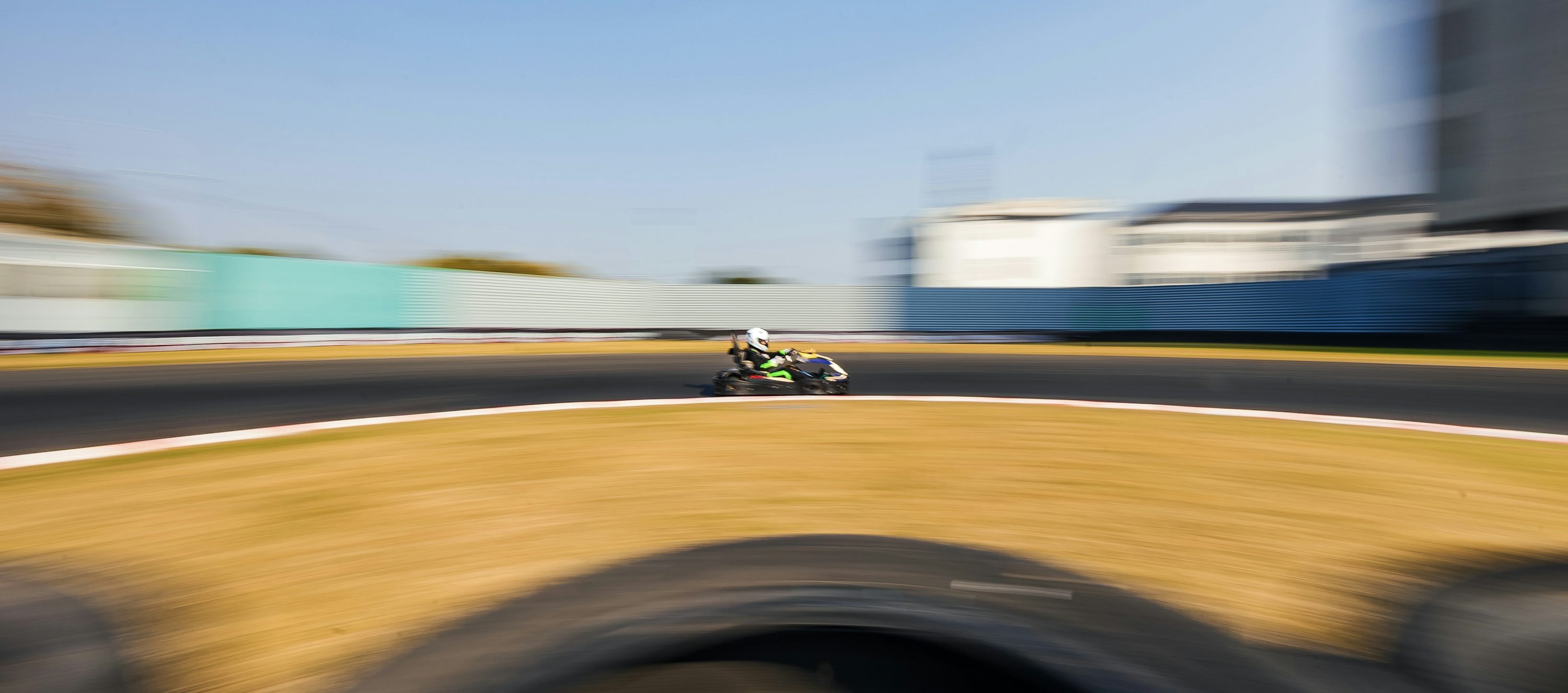 Photo by Todd Jiang on Unsplash.
The kart is the cheap part
The number that scares parents is the kart price. It shouldn't be.
A competitive kid's kart runs roughly $1,500 to $6,000 depending on new versus used. That's a one-time hit. What actually drains the account is everything that comes after.
Plan for these every single year:
- Tires — the biggest ongoing cost. Fresh rubber makes a real difference, so it gets replaced often.
- Maintenance and consumables — oil, chains, brake pads, spark plugs. Figure $500 to $1,200 a year at the entry level.
- Track fees — anywhere from a few hundred for a yearly membership to $1,000+ if you pay per practice day.
- Travel — fuel, food, hotels. This one sneaks up on everybody.
The kart is the down payment. The season is the mortgage.
Budget for the season, not the sticker price. Parents who only plan for the kart are the ones who hit a wall in month four.
Don't wait to move up
The most common regret I hear isn't about spending too much. It's about waiting too long.
Parents burn 12 to 18 months chasing lap records in inconsistent rental karts. It feels productive. It mostly isn't.
If your kid is consistently competent and clearly hooked, the guidance from experienced karting families is to move into competitive equipment within a few months of steady rental time. Rental karts teach the basics. They can't teach racecraft against real competition.
Waiting doesn't save money. It just delays the development your kid actually needs.
Overcoaching kills more than it helps
You will want to coach. You're paying for this, you're invested, and you can see the mistakes. Resist.
Watch for the glaze. When a kid's eyes go blank mid-lecture, the information stopped landing three sentences ago. Push past that and you're not teaching, you're just talking.
Kids figure out an astonishing amount on their own if you let them. The best thing you can do at the track is hand them the problem, then get out of the way.
When you do bring in a real coach, do it earlier than you think. A lot of families wait months. Two to four weeks in is a better target — before bad habits set like concrete.
The clothes matter more than you'd guess
Karting looks casual from the outside. It isn't.
Loose sleeves catch on hardware. Dangling drawstrings and jewelry become hazards. Slick-soled shoes slide right off the pedals at the worst possible moment.
Get your kid in proper gear from day one — a snug suit, gloves, real shoes, and a helmet that fits. This isn't about looking the part. It's about your kid being able to control the kart safely while their body learns what it's doing.
Fuel and water aren't optional
This sounds obvious until you live it. Race days eat time. You blink and it's the last heat and your driver hasn't eaten since 8 a.m.
A tired, hungry kid drives worse and feels worse about it. Then the meltdown isn't really about the race — it's about a granola bar.
Pack real food. Carrots, turkey, nuts, water. Skip the paddock junk food that spikes them and crashes them an hour later. Athletes eat like athletes, even at nine years old.
Make it their responsibility, not yours
Here's a mindset shift that pays off for years. The gear, the kart cleanup, the checklist — make your kid own it. Same as keeping their room clean.
When they check their own tire pressures and load their own gear bag, two things happen. They learn the machine, and they learn that this is their thing, not a hobby their parent is dragging them through.
That ownership is what separates the kids who stick with racing from the ones who quietly drift away. And it's the same muscle they'll need later. When a driver eventually wants to fund their own racing, knowing how to present themselves and their program is everything — it's exactly why we point parents to The Get-Funded System, the plain-English playbook for funding a young driver's racing: packaging their story, finding the right sponsors, and landing the checks that pay for what comes next.
Keep records like an engineer
Every session, write things down. Tire pressures, gearing, weather, how the kart felt, lap times.
It feels like overkill in year one. By year two it's the reason you show up to a new track and aren't guessing. Conditions change through the day, and the family that documents adjusts faster than the family that remembers.
Film the sessions too. Kids see their own mistakes on video in a way no amount of parent commentary can replace.
The real goal of year one
Here's what I want you to take away. Year one isn't about winning. It's about building a young driver who loves the process, respects the machine, and owns their development.
The trophies come later — if they come. What lasts is the kid who learned to prepare, stay calm, and get back out after a bad heat.
That's the same foundation every driver in our program is built on. If your kid's karting is starting to point toward full-size cars down the road, our Kart to Car program exists for exactly that leap — and it's worth understanding the pathway now, while you're still in the early, cheaper years.
Karting will test your patience and your budget. But watching a kid discover they can do something they thought was out of reach? That's the whole point.
Parents: The Get-Funded System is the playbook for funding your young driver's next step — who to pitch, how to package their story, and the plan to land it — for $67.
Do you believe?
Sources: Word Racing — How Much Does It Cost to Race Karts, Brett Cowell — 33 Learnings from Our First 6 Months in Cadet Karting, SpeedSportz — Go-Karting With Kids: Top Tips for First-Timers, Allenberg Racing Schools — Dad's Guide to Karting. Cost ranges verified against current published rates as of July 2026. Any specific numbers in this post are based on these sources plus my own time in the paddock.