
Here's the thing that surprises almost every parent who asks me this. In Colorado, your kid can't get a learner's permit until they're 15. They can't get a minor driver's license until 16.
But they can race a Spec Miata wheel-to-wheel, at speed, against adults, at 13.
That's not a loophole. Closed-course competition and public roads are two different worlds with two different rulebooks. Once you understand that, the whole age question gets a lot clearer.
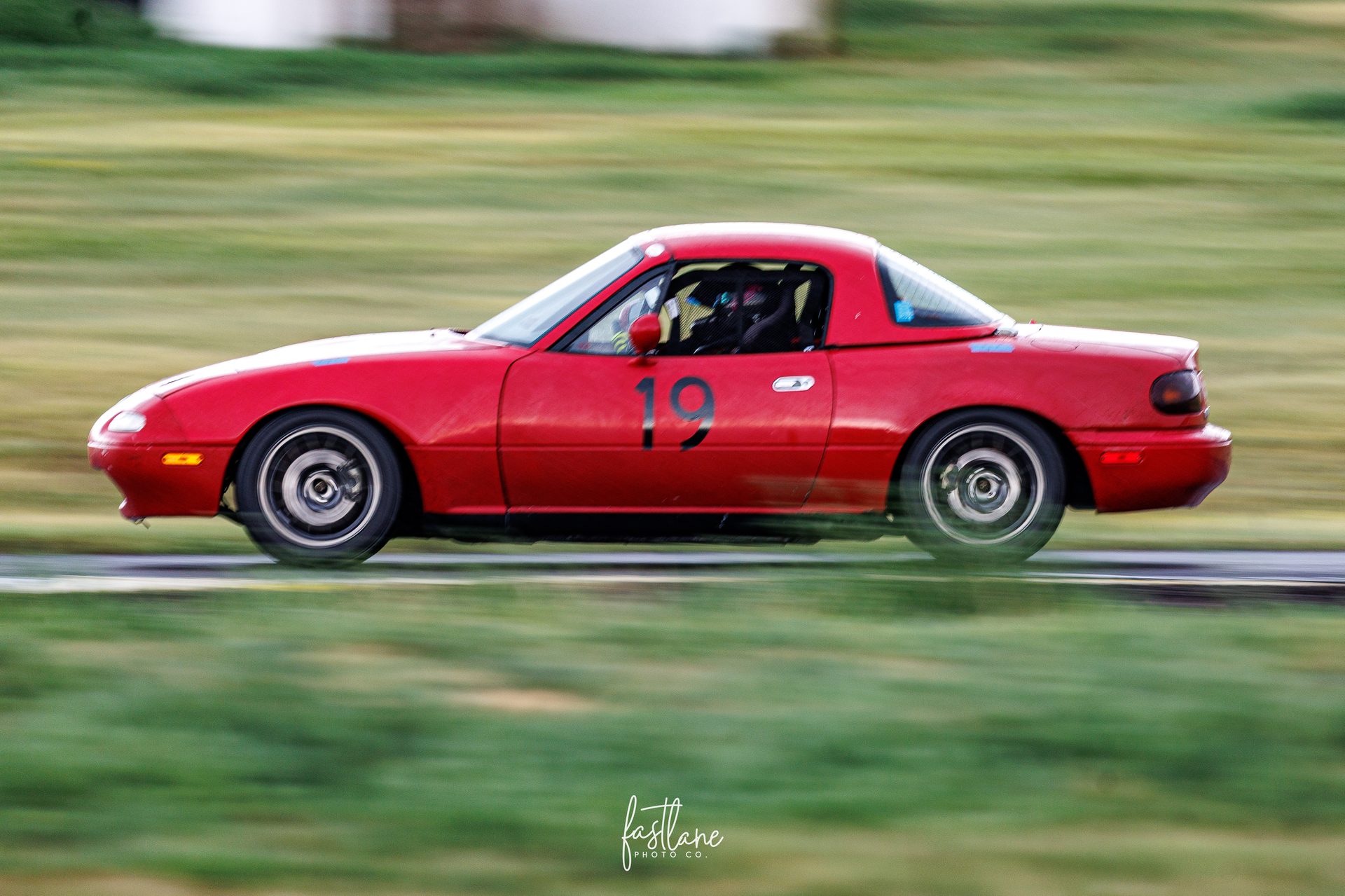 The #19 at High Plains Raceway. A 13-year-old can legally line up in this class.
The Short Answer, by Discipline
Every sanctioning body sets its own floor. Here's where they actually sit as of the 2026 season.
| Discipline | Minimum age | Notes |
|---|---|---|
| Kid Kart / Bambino karting | 5 | Must have had the 5th birthday; club rules vary |
| Quarter midgets (QMA / USAC .25) | 5 | Ages 5-16; rookie training program required first |
| Bandolero (INEX) | 7 | Bandit division is 7-12; 7-year-olds need track approval |
| Legend Car (INEX) | 10 | 10-11 requires two documented years of Bandolero, karting, or quarter midgets |
| SCCA road racing | 14 | 14-15 need a Novice Permit and full annual membership |
| NASA road racing / Teen Mazda Challenge | 13 | Some tracks set their own higher floor |
| HPDE (track days) | 18, or 16 with consent | Needs a valid state driver's license |
| SCCA Track Night in America | 18 | Valid driver's license required, no exceptions |
Read that table twice and you'll spot the strange part. The kid classes start younger than the adult ones, and the track day — the thing most people assume is the gentle first step — has the highest age floor of anything on the list.
Karts and Quarter Midgets Start at Five
If your kid is in elementary school, this is the door.
Kid Kart classes generally open at age 5, and most clubs require the driver to have actually had that birthday before they turn a wheel. Quarter midgets run the same floor, ages 5 through 16, and organizations like QMA put every new driver through a non-competitive rookie training program first. That program teaches lining up, passing, entering and exiting the track — the procedural stuff — before anybody scores a point.
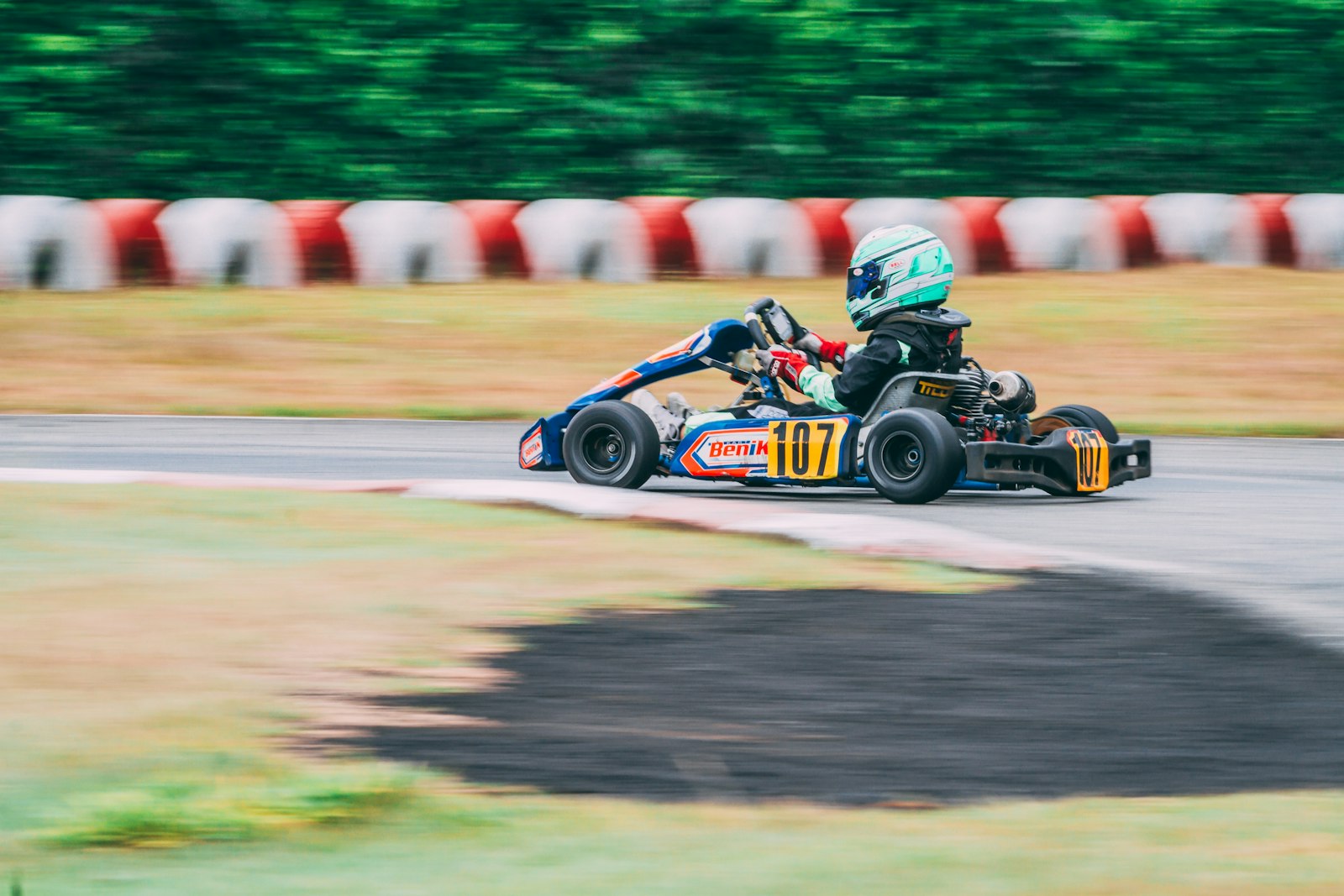 Photo by Diego Gavilanez on Unsplash.
From there the ladder is age-banded. Junior karting classes generally pick up around 12 and run to 15. Bandoleros cover 7 to 12. Legend Cars now open at 10, but a 10- or 11-year-old has to show two documented years of prior racing and get sign-off from both INEX and the individual track.
That last detail matters more than the number itself. The youngest entries almost always come with an experience requirement attached. Nobody is handing a race license to a 10-year-old who has never turned a lap.
Cars: 13 Is the Real Floor
For full-size, wheel-to-wheel road racing, 13 is where it starts — and only through one specific door.
NASA's Teen Mazda Challenge runs inside the Spec Miata class at regular NASA race weekends. Drivers can compete from age 13, up to a maximum of 25 by the first race of their season. Anyone under 18 needs a parental release on file. Individual tracks can still set a higher floor than the series does, so always check the specific venue before you plan a season around it.
SCCA sits a year higher. The club defines a Minor as anyone from 14 to the age of majority in their home state. A 14- or 15-year-old needs an SCCA Novice Permit or Full Competition License plus a full annual membership, and the parental consent paperwork has to be refiled every year until they age out. At 16 and up, they also have to satisfy their state's driver's license requirements.
If you want the full paperwork walkthrough for either club, we broke it down in how to get your competition license.
Why Track Days Have the Highest Age Floor
This is the part that trips people up, so it's worth saying plainly.
An HPDE — a high performance driving event — usually requires a valid state driver's license, because you're driving a street car on a track under a program built around licensed drivers. NASA's HPDE floor is 18, or 16 with parental consent. SCCA's Track Night in America is a flat 18 with a valid license and no minor path at all.
So the "easy" entry point isn't open to a 13-year-old. Wheel-to-wheel racing in a caged, purpose-built race car is.
A 13-year-old can go racing before they can legally drive themselves to the track.
That reversal changes how a lot of families plan. If your driver is 13 or 14 and you were waiting on a track day to test the waters, you're waiting on the wrong thing. The competition path is the one that's actually open.
Legal Age Is Not the Same as Ready
Every number above is a floor, not a recommendation. I've watched 13-year-olds who were completely ready and 17-year-olds who weren't. Here's what I actually look at.
Can they physically operate the car? They need to reach the pedals fully, see over the wheel, and hold their head up under sustained load for a whole session. Not for three laps. For twenty-five minutes.
Can they hold focus for a full session? Race pace demands continuous decisions. A driver who's sharp for eight laps and mentally checked out for the last ten is a driver who makes the mistake at the wrong moment.
Can they take coaching without taking it personally? This one predicts progress better than raw speed does. A kid who hears "you're braking ten feet too early into Turn 5" and just fixes it will pass a faster kid who argues about it within a season.
Can the family absorb the cost honestly? This is the real gate for most people, not age. The jump from karts to cars is where a lot of families stall out, and we wrote about that honestly in the karting money cliff.
Where Colorado Families Actually Start
If you're local, the ladder is compact and it's all within a couple hours of the Front Range.
Karting and quarter midgets both run out of IMI Motorsports Complex in Dacono, which houses multiple tracks on one property including a kart circuit and a quarter midget oval. The Colorado Karting Tour races there and is the main regional series to plug into.
When it's time for cars, NASA's Rocky Mountain region runs at High Plains Raceway in Byers and Pueblo Motorsports Park. That's where our own Spec Miatas race, and it's where Teen Mazda Challenge points get scored in this part of the country. If you want a wider look at the local options, we mapped them in Colorado race tracks for new drivers.
The honest sequencing advice: start in karts if your kid is under 12, because seat time is cheap there and the racecraft transfers directly. If they're 13 or older and already have kart seasons behind them, you don't have to wait. The door is open now.
If your driver is somewhere in that 13-to-25 window and you're trying to figure out what the next step looks like, our Kart to Car program exists for exactly that conversation. No pressure either way — the ages above are the same whether you call us or not.
Sources: SCCA Race Experience — Driver Eligibility, NASA Teen Mazda Challenge, US Legend Cars — New Age Minimums for Legend Car and Bandolero Racing, Quarter Midgets of America rulebook, NASA HPDE, Track Night in America — Rules and Regulations, Colorado DOT — Teen Driver FAQs, Colorado Karting Tour. Age minimums verified against published club and series rules as of September 2026. Club and track rules change, and individual venues can set a higher floor than the series does — always confirm with the specific event before you register.
Do you believe?