
Two drivers. One car. One hood.
You both need money. You both have a local business that's half-interested. And if you each go sell that hood on your own, one of you is going to break a promise you didn't realize you'd made.
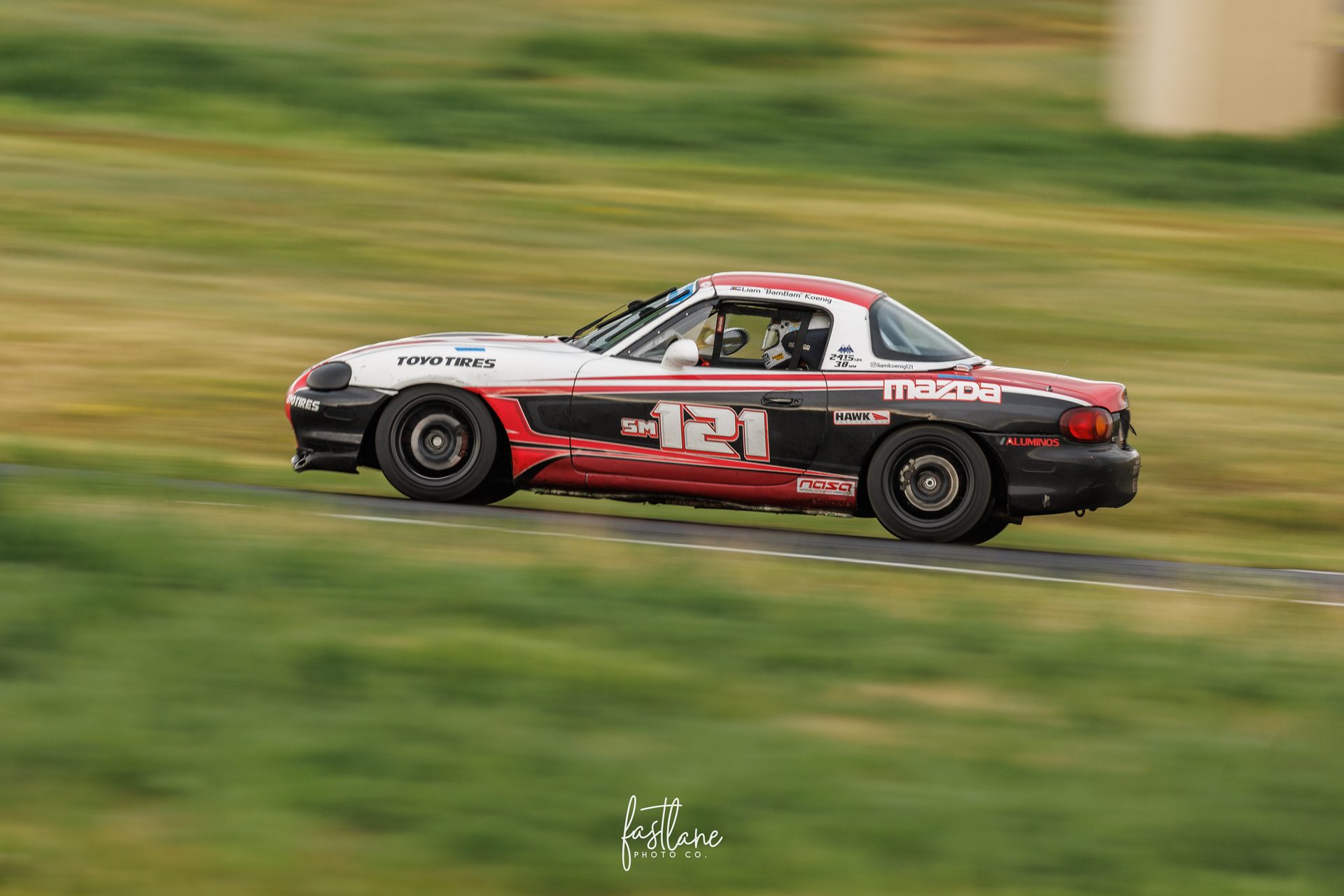 One car. One set of panels. The photo a sponsor wants to be in is a finite thing — which is exactly why two drivers can't both sell it.
You don't have two sponsorships. You have one property and two salespeople.
That's the whole problem in one line.
Shared-car racing is normal. Endurance series run on it — ChampCar's own FAQ notes that minimum driver counts depend on race length and that teams commonly share entry fees, tires, fuel, brakes, consumables and repairs. Sprint racers do it too, splitting a season across weekends because neither driver can fund six on their own.
What doesn't split cleanly is the sponsorship.
When you sign a sponsor, you're making a quiet promise that you actually control what you're selling. In a real sponsorship contract that promise is written down. Osborne Clarke's legal overview of sponsorship says the rights holder should warrant that it owns or has the exclusive right to license the intellectual property rights and that no conflicting contracts have been entered into relating to the sponsorship subject.
Read that again with your co-driver in mind.
If you sell the hood in March and he sells the hood in April, one of you just warranted something that wasn't true. The sponsor finds out at the first race, when a logo they paid for isn't where they were told it would be.
Nobody in this story is a villain. Two honest racers can torch a deal just by not talking to each other.
Split the car into three buckets
Before either of you pitches anyone, sit down and put every asset into one of three buckets.
1. Car assets — jointly owned, sold jointly. Hood, doors, quarter panels, windshield banner, mirrors, the trailer, the canopy. These belong to the car, not to either driver. Neither of you sells one alone. Ever.
2. Driver assets — 100 percent yours. Helmet, suit, gloves, your name, your face, your socials, your appearances, your email list. These travel with you to the next car and the next class. A brand can buy a relationship with you that has nothing to do with any panel on any chassis. That's the same split that makes renting a seat work, which I broke down in who owns the sponsorship when you rent the seat.
3. Output assets — shared, but licensed. Photos, video, results, the recap. Here's the trap: the photo of the car has both your sponsors in it, and neither of you may actually own that photo. A paid trackside shooter owns their frames, and a personal-use download does not cover handing it to a sponsor. I went through that whole mess in who owns the photo of your race car. Sort licensing once, for the team, not twice by accident.
Write the three buckets on one page. That page is your inventory map, and it is worth more than any pitch deck either of you will ever build.
If one of you already has a real offer sitting in an inbox and the split is tangled, Proposal Review is $147 and I'll go through the actual package with you before anybody signs anything they can't deliver.
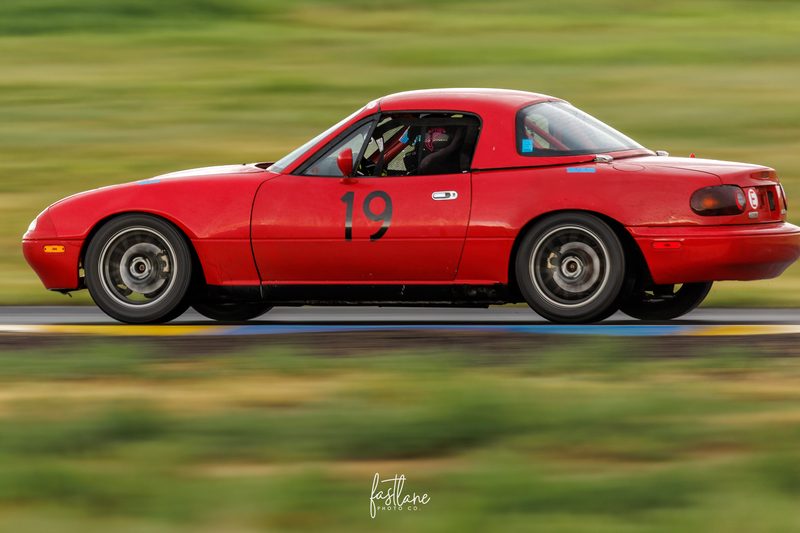 Every panel in this frame is one piece of inventory. Two drivers, one map, one price list.
Slice the season, not the price
Here's the instinct to fight: cut the car in half and sell each half at half price.
Don't. Slice by time instead.
Big-league racing already solved this. It's rare now for a Cup team to carry one primary all year — and the stated financial logic is that teams can offer full price for each race instead of potentially trying to discount each race slightly to sell a full season. Different primary, different weekend, same hood, no discount.
Apply that to a six-weekend club season split 3/3.
- Your three weekends: your sponsor is primary. Hood, doors, the photos.
- Their three weekends: their sponsor is primary. Same placement, same price.
- Associate-level decals for both partners run all season on the smaller real estate.
Now neither of you is selling a discount. You're each selling a real, full-price, three-race primary package with a defined window. A local business that can't stomach a full season often prefers three races — it's a smaller check with all of the visibility concentrated where their customers are.
One rule: the vinyl has to actually change. If you sell a weekend-specific primary and then never re-wrap, you've sold something you didn't deliver. Budget the decal cost into the package.
For the underlying math on what any of those packages is worth, don't guess — how to price racing sponsorship owns that method, and I'm not going to restate it here.
Clear categories before anyone pitches
Category exclusivity is what kills shared-car deals, and it kills them quietly.
You land an oil company. Two months later your co-driver lands a different oil company. Both brands now appear on the same car, in the same photo, at the same race. Neither of them bought that.
The Sponsorship Collective's guidance on sponsorship contracts is blunt about this — you need to define clearly the types of companies that your sponsor defines as competitors. You can't do that if you don't know what your co-driver has promised.
So build a shared prospect sheet. Two columns: category, and who's working it. A name goes on the sheet before the first email goes out, not after the yes.
Three practical rules:
- Call your category before you pitch it. First to claim it in the shared sheet owns the lane for the season.
- No exclusivity promised without both drivers agreeing. If a brand wants category protection across the whole car, that's a team-level decision and a priced one — here's what to actually charge for it.
- Tell each sponsor the truth in writing. "This car is shared with another driver. Your category is protected. Here's what else is on the car." Boring honesty beats a surprise at tech.
That third line is the one racers write badly, because it feels like confessing. It isn't — worded right, it reads as a team that has its act together. If you want the exact wording checked before it goes out, that's the kind of thing Proposal Review exists for.
Six lines to write down before the money lands
You are not going to hire a lawyer for a Spec Miata. Fair. But write these six lines in a shared doc and both type your names under them.
- Who sells what. Which categories, which assets, which windows.
- Where the money goes. One account or two, and what each dollar is earmarked for — entry, tires, fuel, repairs. A competitive DIY weekend runs roughly $2,000 to $3,500 once you count fresh tires and entry, so "we'll figure it out" is not a plan.
- Who pays for damage. Decide this cold, in February, not at 11pm in the paddock.
- Who reports to whom. Every sponsor gets one report from the person who sold them. Not two. Not zero.
- What happens if a driver leaves. Does their sponsor stay on the car? Do they take it with them? Say it now.
- What happens if a sponsor leaves. Who covers the gap, and does the remaining driver get the freed-up panel?
None of that is legal advice — I'm a racer and a team owner, not a lawyer, and a real agreement deserves a real set of eyes. It's a handshake you can point at later, which is all most grassroots teams ever need.
The templates for the inventory map, the category sheet and the sponsor tracker live inside The First Sponsor System — the same working documents we use to fund our own Spec Miatas. Built for small teams with real cars and no agency.
The version that actually works
Stop thinking of the car as the sponsorship. Start thinking of it as one shared asset that two separate personal brands take turns standing next to.
The car is the stage. You and your co-driver are two different acts. Sell the acts.
Done that way, a shared car stops being a constraint on both of your programs. It becomes the cheapest way either of you ever got on a racetrack — which, on a good day, is most of the point.
Got a real shared-car deal in front of you? Before you send it, Proposal Review is $147 and I'll read your actual package — inventory, split, exclusivity language, the whole thing — and tell you straight what a sponsor is going to push back on. One deal saved pays for it many times over.
Do you believe?
Sources: Osborne Clarke marketinglaw — A Legal Overview of Sponsorship, The Sponsorship Collective — How to Write a Sponsorship Agreement, ChampCar Endurance Series — FAQ, The Daily Downforce — Should NASCAR Drivers Run Permanent Paint Schemes?, Harper James — How to Write a Sponsorship Agreement. NASCAR sponsorship figures and structures are professional-level and are not grassroots benchmarks — no published shared-car grassroots pricing benchmark exists that I could verify, so this post gives structure rather than dollar amounts. The DIY weekend range is LFR's own verified cost ground truth. This post is general information from a racer and team owner, not legal advice. No LFR customer, sales, or survey data is claimed anywhere in it.