
The email says they'd love to be your "exclusive automotive partner." It reads like a promotion. You're already picturing the decal.
One word in that sentence just took four other deals off your table.
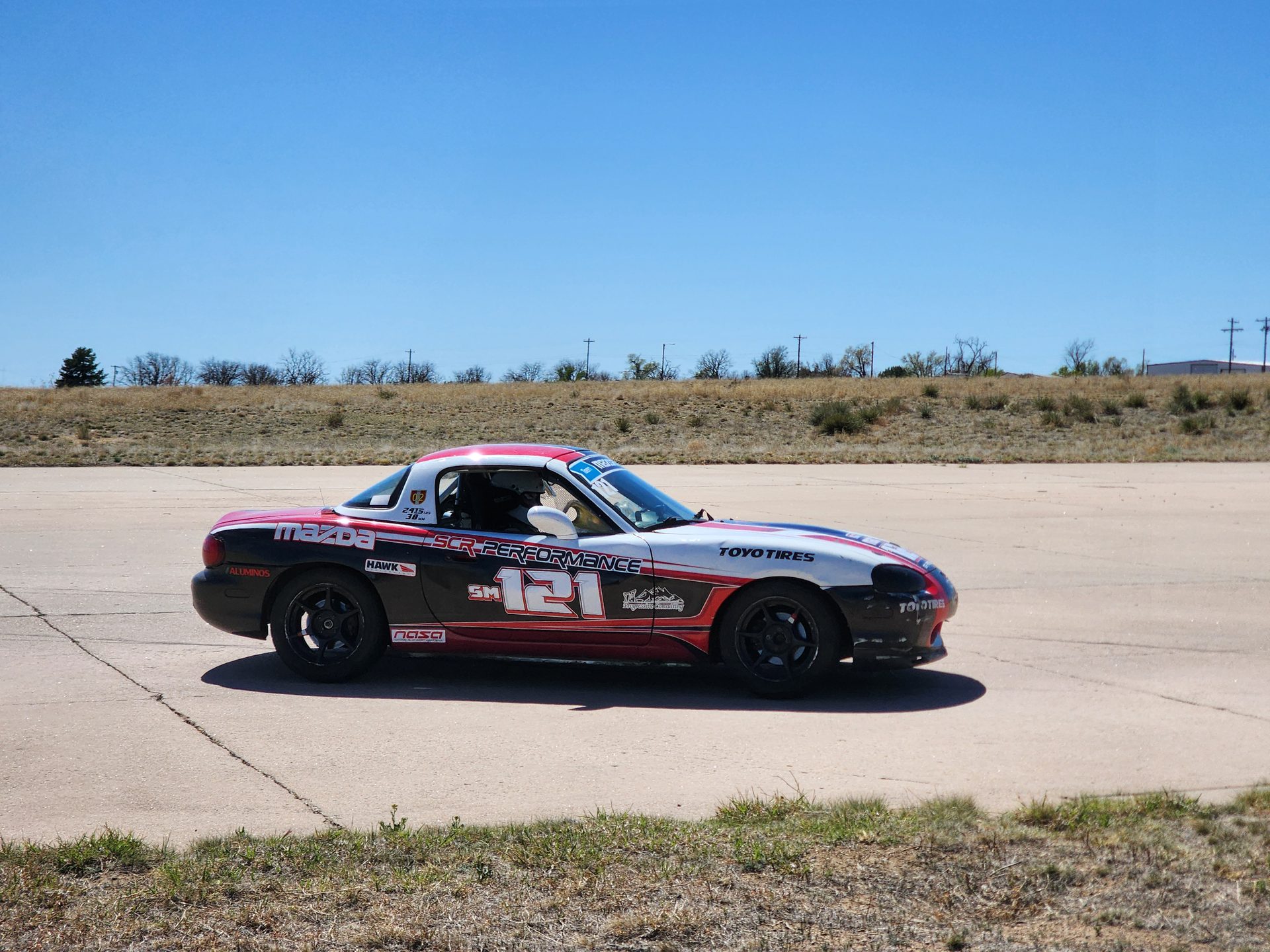 The flank of our #121 car. Every panel on it is inventory, and exclusivity decides how much of it you're allowed to sell.
I'm a racer and a team owner, not a lawyer, so none of this is legal advice. It's what I've learned pricing our own car's real estate.
The word to fight over is "category," not "exclusive"
Exclusivity itself is not a red flag. RTR Sports traces modern category exclusivity back to the 1984 Los Angeles Olympics, when the IOC capped the official sponsor list and gave each one a protected product category. Every property since has worked the same way — one sponsor per category. So when a brand asks, they're being normal, not greedy.
The money is in how wide that category gets drawn. RTR describes product categories as a hierarchy: category, then macro class, then class, then sub-class. Cosmetics, then skin care, then day cream.
Translate that to a race car.
"Automotive" is the category. It locks out a tire shop, a brake company, a detailer, a wrap shop, a dealership, and the independent mechanic down the street. "Engine oil and lubricants" is the class. It locks out exactly the shelf your sponsor sells on.
Same clause. Same signature. Wildly different season.
Loose category wording is the number one source of exclusivity disputes, which is why contract guides tell you to name the products included and the adjacent products excluded instead of leaning on one vague word.
Ranked: four exclusivity asks, from sign-it to walk-away
S tier — Narrow category, one season, your car. "Sole engine-oil partner of the #121 car for the 2026 NASA Rocky Mountain season." Sign it today. You were never selling that shelf twice anyway, so you just gave away nothing and got paid for it.
A tier — Narrow category plus a right of first negotiation. Also fine, as long as that window has a hard date. A right of first negotiation makes you talk to them first for a set period before you shop the category. Sports counsel John Dorsey calls the ROFN the common middle road in sponsorship agreements — and warns that the window has to expire early enough that you can still sell the category to someone else if they pass.
B tier — Wide category, same money. Negotiate. They're not buying decal space anymore, they're buying your ability to say no to other people. That's a separate product with a separate price.
F tier — Wide category, open-ended term, first right of refusal, no deadline. Rewrite it or walk. Kim Skildum-Reid at Power Sponsorship is blunt about how that clause gets abused: some sponsors just keep saying they're very close to approving the renewal, over and over, blocking every competitor while investing nothing. It can also trap you into renewing an underpriced deal forever.
One more trap if you drive for someone else's team. Your personal deals have to be checked against the team's existing category conflicts before you sign anything — team-level exclusivity can quietly make your own partner illegal.
If you've got a live offer sitting in your inbox right now and it's reading like B or F tier, that's the exact moment a 1:1 Strategy Call is worth more than another blog post. We go line by line on your actual clause and decide what to counter.
What exclusivity is actually worth
Here's the honest part. There is no published benchmark for what category exclusivity costs on a grassroots Spec Miata program. Anyone who quotes you one made it up.
What does exist is the creator and influencer side of the industry, which publishes rate benchmarks — the closest real comparable, because it's also individual-scale rights sold by one person. Those guides put full exclusivity around a 50 to 80 percent premium for 30 days, category exclusivity closer to 10 to 15 percent per 30 days in a quiet category and up to roughly 50 percent in a contested one, and a right of first refusal at a small premium of 10 to 20 percent.
Do not quote those numbers to a sponsor as motorsport data. They aren't. What they establish is the principle, and the principle is the whole point.
Exclusivity is a priced line item. It is not a free bonus you throw in to seem agreeable.
The racer version of the math is simpler than a percentage. Name the deals the wide category actually kills. Add up what those were worth. That's your number.
And if you can't name a single deal it kills? Then exclusivity costs you nothing. Give it, thank them, and stop negotiating against yourself. Most first-time sponsored racers are in exactly that spot, and the honest advice is to sign.
If you're still not sure what your car and your audience are worth before you start adding premiums, start with how to price racing sponsorship and build up from the base number.
The three-sentence counter
You don't need a lawyer's vocabulary. You need three sentences, in this order.
- Say yes first. "Yes to exclusivity — happy to make you our only oil partner for the season."
- Scope the category. "Let's define it as engine oil and lubricants, so I can still work with a tire shop and a local mechanic. Neither of those competes with you."
- Price the wide version. "If you'd rather lock all of automotive, that's a bigger ask. That one prices at [X], because it takes three conversations I'm already having off the table."
Then stop typing.
Most brands take door number one, because they only ever cared about their own shelf. The ones who take door three just told you they value exclusivity — and now they're paying for it.
Whatever you land on, write the carve-outs down. Undocumented carve-outs are how a friendly deal turns into an argument in July. That belongs in your one-page sponsorship agreement, right next to the deliverables and the payment dates.
Don't let it eat next season
The last thing exclusivity touches is your renewal.
If they want first crack at next year, give them a right of first negotiation with a real deadline — say 30 days, ending 90 days before your season starts. That gives you time to sell the category elsewhere if they stall. What you don't want is an open-ended first right of refusal that lets a hesitant sponsor sit on your most valuable category while you burn through the offseason.
Set that date now, and your renewal conversation happens while you still have leverage instead of after you've run out of options.
Two ways to get help with this. If you want to learn the whole thing yourself, The Get-Funded System is $67 and includes Before You Sign — the contracts module this post is a trailer for, covering scope, term, image rights, and exit language in plain English.
If the offer is already on the table and you need a decision this week, book the 1:1 Strategy Call at $497. We read your actual clause, price the exclusivity for your actual market, and write the counter together. That's it — no course, no drip sequence, just the deal in front of you.
Exclusivity isn't the enemy. Giving it away for free is.
Do you believe?
Sources: RTR Sports — Sponsorships and Product Categories: The Guarantee of Exclusivity, Power Sponsorship — Is First Right of Refusal the Sponsorship Equivalent of a Ball and Chain?, John Dorsey — Sponsorship Agreements: Rights of First Negotiation and Rights of Last Refusal, Contracko — Category Exclusivity Clause, Influencer Exclusivity Pricing Guide. The exclusivity premium percentages come from creator and influencer marketing rate guides, not motorsport data, and are labeled that way in the post on purpose — no grassroots-racing exclusivity benchmark is published anywhere I could verify. This post is general information from a racer and team owner, not legal advice. No LFR customer, sales, or survey data is claimed anywhere in it.