
You landed the sponsor. Congratulations. Now here's the awkward part nobody mentions in the group chat: you don't own the car.
You rented it. So when that brand asks "where does our logo go?" — the honest answer is "let me check." And if you've already promised them the hood, you have a problem that starts before your first session.
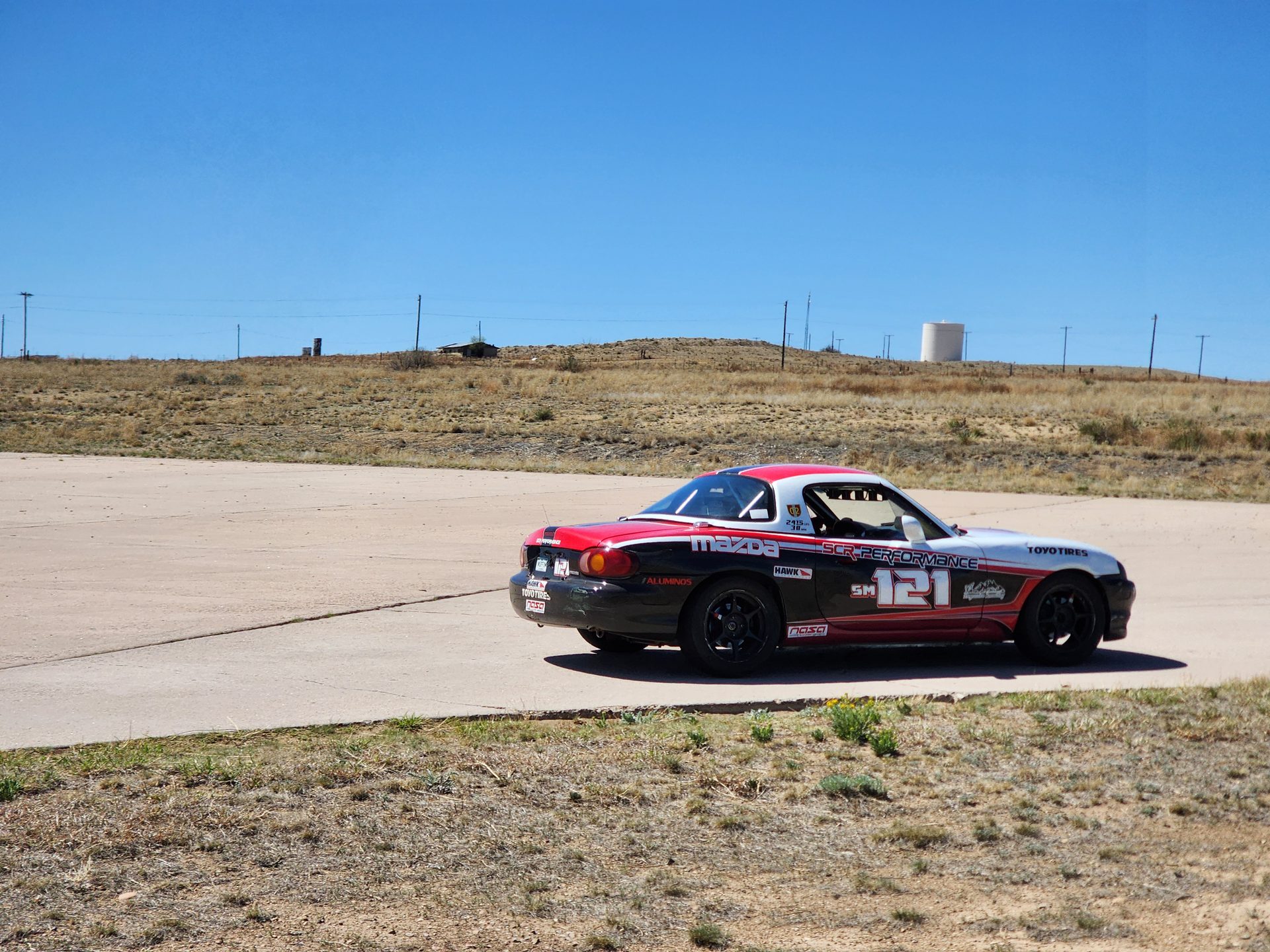 Every panel on this car is already spoken for. That's the part racers forget when they sell a hood they don't own.
The car is not your inventory
This is the whole post in one line. In an arrive-and-drive deal, the car is the team's asset, not yours.
That sounds obvious written down. It stops being obvious the second a local business says yes and asks what they get. Every instinct you have says "the car" — because that's what sponsorship looks like on TV.
But the team already sold that car. Motorsport rights packages are stacked in tiers: title and primary partners take the most visible panels, and associate or technical partners take the smaller secondary positions, per RTR Sports' 2026 breakdown of how motorsport sponsorship works. A rental team runs that same structure. The livery you're about to promise away is somebody else's paid placement.
So the first move isn't a design mockup. It's a question to the team: what space, if any, is mine?
What you actually own in a rented seat
Here's the good news. You own more than you think — it's just smaller and more personal than a hood.
- Your helmet. The one piece of equipment that is genuinely yours, every weekend, in every car you'll ever drive. We wrote a whole post on why your helmet is your best-owned brand asset.
- Your suit, gloves, and shoes. Same logic. They travel with you when the car doesn't.
- Your name and likeness. Your face, your story, your quotes. A brand can buy a spokesperson relationship with you that has nothing to do with any car.
- Your social channels and content. Your feed, your footage, your email list if you have one.
- Your appearances. Showing up at the sponsor's shop, their staff meeting, their customer event. This is often worth more to a local business than a decal anyway.
Notice what that list is: a personal brand, not a race car. In the broader sport, that split has a name. Driver sponsorship puts a brand on the helmet and suit and buys access to the driver's media footprint. Team sponsorship buys the car. They are two different products sold by two different parties.
If you want the working documents for packaging that personal side — the method, the templates, the outreach sequences, and a 16-item activation menu of things you can actually deliver — that's what's inside The First Sponsor System. It's built from the paperwork we use to fund our own Spec Miatas, and it sells your assets, so you never have to promise something you don't control.
This has been a written-down thing for forty years
Racers at our level treat this as a vibes conversation. The pros treat it as a schedule with a diagram.
In F1 driver contracts, the areas of the helmet, the overalls, and the car where a driver's personal sponsors may appear are set out in the agreement itself — often as a schedule with schematic images showing the precise location and size of every permitted logo, as HCR Law lays out in its guide to the difficult bits of driver contracts.
How specific does it get? Clause 3.9 of Ayrton Senna's 1987 Team Lotus agreement gave him three spots on his helmet for personal sponsors, plus four patches on the front of his overalls and one on the back, per Motorsport Prospects' review of those contracts. Nelson Piquet's deal the following year went the other way — no personal sponsor logos on his overalls, none on his helmet, and the cap he wore was a team sponsor's.
Two world champions, same team, completely different answer. The answer wasn't a principle. It was a negotiation.
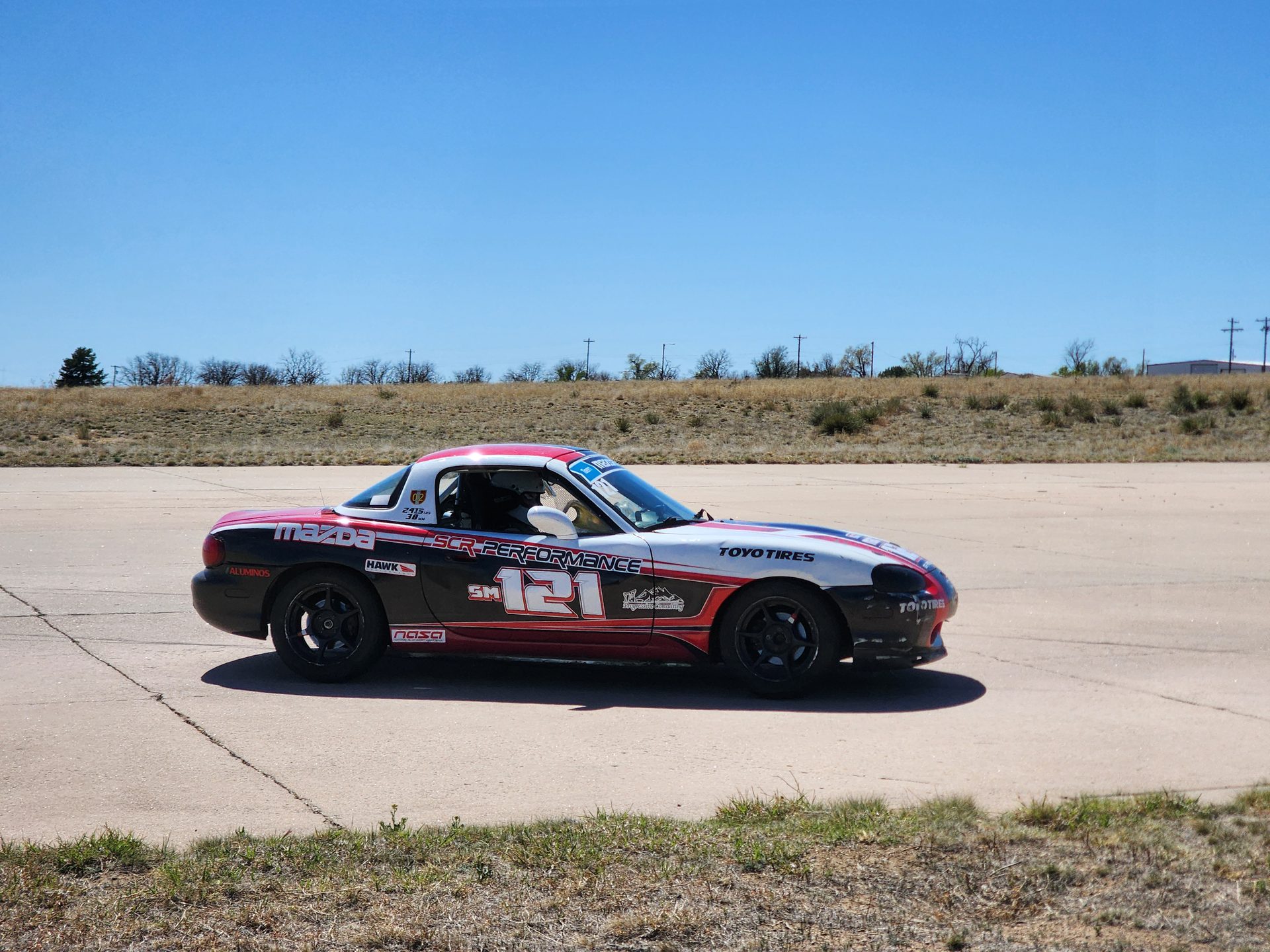 Sponsor real estate, side view. Which of these panels is yours is a question you settle before the deal, not after.
The conflict nobody plans for
Here's the one that actually blows up deals at our level.
You land a sponsor. Great brand, good money. Then you show up and the car already carries a competitor in that same category. Now your sponsor sees their rival on the door they're paying to be photographed next to.
That's a category-exclusivity collision, and it is not the team being sneaky. It's you selling a category you never had the rights to. RTR Sports makes the point that brands often believe they have category protection when the contract's exclusivity language isn't airtight. Your sponsor will assume protection unless someone tells them otherwise.
Three rules that keep this from happening:
- Ask the team for their current partner categories before you pitch anyone. Oil, tires, gear, energy drink, local trades — get the list.
- Tell your sponsor in writing what they are and aren't getting. "You're on my helmet and suit and in all my content. The car carries the team's partners, including a competing brand in X." Boring honesty beats a surprise in the paddock.
- Never promise exclusivity you can't enforce. If they want it, that's a bigger conversation — and a priced one. We covered what to actually charge when a sponsor asks for exclusivity.
Five questions to ask before you book the seat
Ask these of the team, in email, before money moves. Save the reply.
- What sponsor space on the car, if any, is available to me — and what size and location?
- What partner categories are already committed on this car or team?
- Can I put my own logos on my helmet and suit with no restriction?
- Who owns the photos and video from the weekend, and can I give my sponsor usage rights?
- Will the team credit or tag my sponsor in team content, or is that on me alone?
If asking a team those questions feels awkward, that's normal — and it's the exact ground the How to Get a Seat (Without Buying One) and Before You Sign chapters of The First Sponsor System cover.
None of that is confrontational. It's the same list a team hopes you'll ask, because the alternative is finding out at tech inspection. For the record, this is how we handle it on our own full-season arrive-and-drive seats — the car has partners, the driver has a helmet and a story, and we'd rather help you sell the second one properly than watch you oversell the first. Our season drivers get our full sponsorship library and one-on-one sponsor coaching for exactly this reason.
One honest caveat: I'm a racer and a team owner, not a lawyer. Nothing here is legal advice, and a real agreement should get a real set of eyes.
The reframe that fixes all of it
Stop selling the car. Start selling the driver.
The car is borrowed. The helmet, the story, the audience, the appearances, the content — those follow you to the next seat, the next class, and the next team. Sponsors who buy you renew. Sponsors who bought a panel on a car you gave back in October do not.
Build the package around what you actually own, and renting a seat stops being a limitation. It becomes the proof photo.
Ready to build that package properly? The First Sponsor System is $67 and hands you the working documents a real race team uses to fund its own cars — the method, the templates, the outreach sequences, the sponsor tracker, and the get-a-seat playbook. If your situation is tangled enough that you want it worked through live with me, book a 1:1 Strategy Call and we'll map your exact seat, your exact assets, and your exact ask in an hour.
Sources: RTR Sports — How Does Motorsport Sponsorship Work (2026), HCR Law — Formula 1 Driver Contracts: The Difficult Bits, Motorsport Prospects — Lessons on the Evolution of F1 Sponsorship, Part 1. LFR program details are our own. This post is general information, not legal advice.
Do you believe?