
Your best frame of the season is sitting on your phone right now. Car loaded up, curbing under the left tires, the whole thing sharp.
You didn't take it. Somebody at the fence did.
And the moment you attach that photo to a sponsorship pitch, you just handed a company something you don't own.
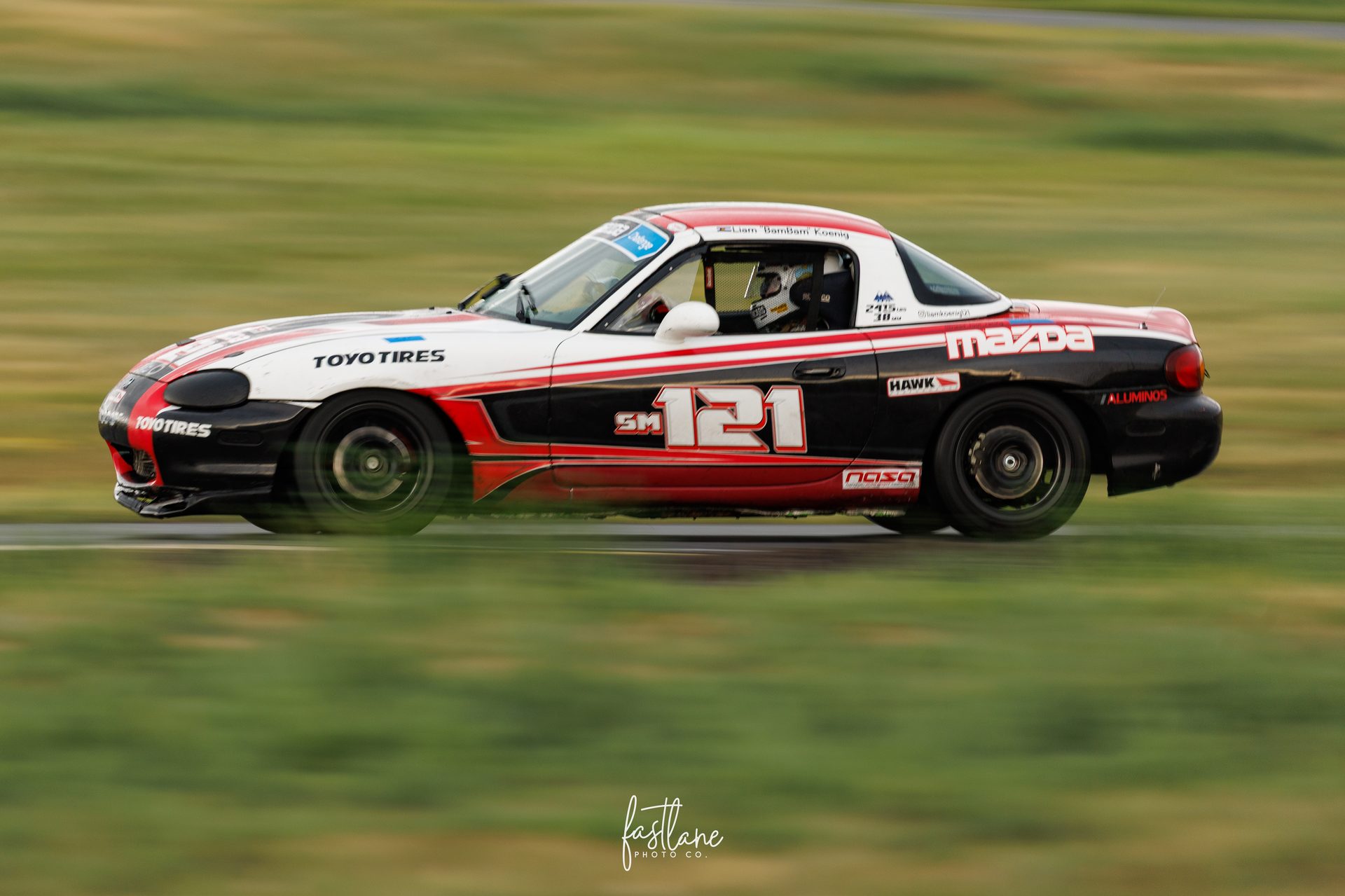 Full song down the straight at High Plains Raceway, NASA August weekend. Shot by Fastlane Photo Co — and we have the usage rights, which is the entire point of this post.
The shutter fires and someone owns that picture
US copyright law is not subtle here. The Copyright Office says a work is protected "the moment it is created and fixed in a tangible form." And the statute says copyright "vests initially in the author" — the person who made it.
The author is the photographer. Not the driver. Not the car owner. Not the team that paid the entry fee.
It doesn't matter that it's your car. It doesn't matter that you're in the helmet. The frame belongs to whoever was holding the camera.
Copyright can move to you, but the law treats that as a real transfer, and real transfers get written down. Venmo-ing someone $40 for a gallery link is not a transfer.
Credit is a courtesy. A license is permission. They are not the same thing, and only one of them protects you.
"Personal use" is not "sponsor use"
Here's where almost every grassroots racer trips.
When you buy a digital download from the shooter who worked your weekend, you are usually buying a personal-use license. One working motorsport photographer states it plainly in their FAQ: photos "may be used for personal use only, typically limited to printing, sharing, and normal social media," and anything commercial or resale requires a separate conversation.
Read that again with your pitch deck open.
Putting the photo in your Instagram post: covered. Putting the same photo in a proposal a company is using to decide on a $2,500 check, and then handing that company the file for their own marketing: not covered.
This isn't a small-time quirk, either. IMSA runs a whole non-editorial licensing program on exactly this logic — track media isn't for advertising, isn't for implying endorsement, and isn't for distributing to sponsors and suppliers without a separate agreement and fee.
The big series formalized it. The shooter at your regional NASA weekend works under the same law, just without the legal department.
Most racers never find out, because nobody audits a small pitch. But the pitch is exactly where it matters. If you're not sure what your package looks like from the buyer's side of the desk, that's what The Pitch Inspection is for — $39, you send the actual thing you're about to email, and we mark it up in writing.
Your sponsor cares about this more than you do
Racers think of image rights as a photographer problem. The brand you're pitching thinks of it as a liability problem, and their legal team is the one who taught them that.
Published guidance on sponsorship agreements is consistent. Sponsors ask for broad indemnities covering third-party intellectual-property infringement, and warranties that what you hand over doesn't infringe anyone's rights. Good activation practice is to clear every piece of third-party IP first — because the alternative is an infringement claim landing on the brand.
So picture the deal going well. They love the car, they sign, they run your photo in a Facebook ad.
Then the photographer sees it.
Now the company that just backed a local racer is getting a demand letter over a photo you gave them. You will not get a second season. You may not get a second phone call.
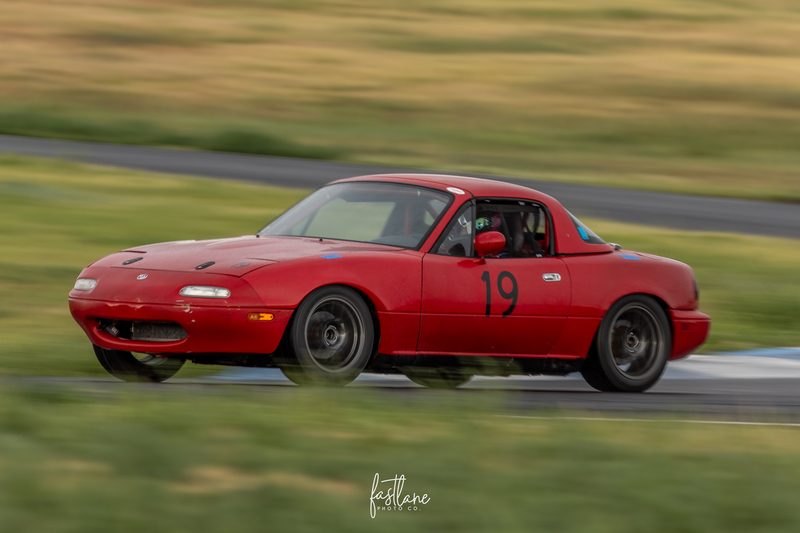 Another frame from the same pass — #19 flat out over the curbing at High Plains Raceway. Also licensed. Also boring paperwork that took ten minutes.
What it actually costs you if it goes bad
The statute allows a copyright owner to elect statutory damages between $750 and $30,000 per work, and a court can push that to $150,000 if the infringement was willful.
Now the honest part, because I'm not here to scare you with numbers that won't apply to you.
Those figures come with a gate. Under section 412, no statutory damages or attorney's fees are available unless the work was registered before the infringement started, or within three months of first publication. Most club-level shooters never register anything. So the realistic outcome isn't a six-figure judgment. It's a takedown demand, an invoice for a license you should have bought, and a photographer in your own paddock who now tells other racers not to work with you.
That's the real cost. In a regional paddock, your reputation is a smaller and more fragile asset than your bank account.
Fixing it takes one email and about $50
This is the good news. The whole problem dissolves with a short, direct message before the weekend.
Send this to the shooter working your event:
"Hey — I'm pitching a couple of sponsors for next season and I'd like to use a few of your shots in the proposal and give the sponsor a handful of images for their own channels. What does a commercial license for that look like? Happy to pay for it and credit you on everything."
Three things happen. You find out the number, which is usually far smaller than you fear at club level. You get a photographer who now wants you to do well. And you get a line you can put in writing to the sponsor: these images are licensed for your use, credit Fastlane Photo Co.
Then build the habit. Buy the license the same weekend you buy the tires. Keep the receipt and the terms in the same folder as the images. Name the photographer every time you send a recap — we lay that out in how to write a race recap for sponsors, and it's also why the image standards in the media kit post matter more than the layout.
That whole documented, hand-it-over-clean asset library is part of what ships inside The First Sponsor System — $67 for the working media kit, recap, and outreach documents we use to fund our own Spec Miatas.
This isn't legal advice, and licensing terms vary by photographer, series, and state. Read what you're actually buying.
We do this on our own cars
Every action shot on this page came from our NASA weekend at High Plains Raceway in August. They were shot by Fastlane Photo Co, we have usage rights, and the credit mark stays on the frame.
That's not us being precious about it. It's that we hand these images to real sponsors, and a partner should never have to wonder whether the photo we gave them is going to become their problem.
One licensed frame you can legally give away is worth more than fifty you can't.
Before you send your next pitch, run the whole package — the email, the proposal, and the photos attached to it — through The Pitch Inspection. $39, back in five business days, marked up by the team that pitches sponsors for its own race cars. You get a rewritten opening you can paste and the three fixes that will actually move your reply rate.
No car reaches the grid without passing tech. Send the pitch through inspection before you send it to them.
Sources: U.S. Copyright Office — Copyright FAQ, 17 U.S.C. § 201 — Ownership of copyright (Cornell LII), 17 U.S.C. § 504 — Remedies for infringement (Cornell LII), 17 U.S.C. § 412 — Registration as prerequisite to certain remedies, IMSA non-editorial media licensing, Former Instants — photography FAQ, Osborne Clarke marketinglaw — A legal overview of sponsorship, Harper James — How to write a sponsorship agreement. Statute text verified against published sources as of September 2026. This is general information from a race team, not legal advice — confirm your own terms with the photographer and, where it matters, a lawyer.
Do you believe?