
The email is always friendly. "Our sales director is a huge racing guy. Any chance he could get a few laps in the car at High Plains?"
Nobody is trying to make your life hard. They just don't know that the thing they asked for isn't yours to give.
And if you answer that email badly, you either lose the deal or lose the car.
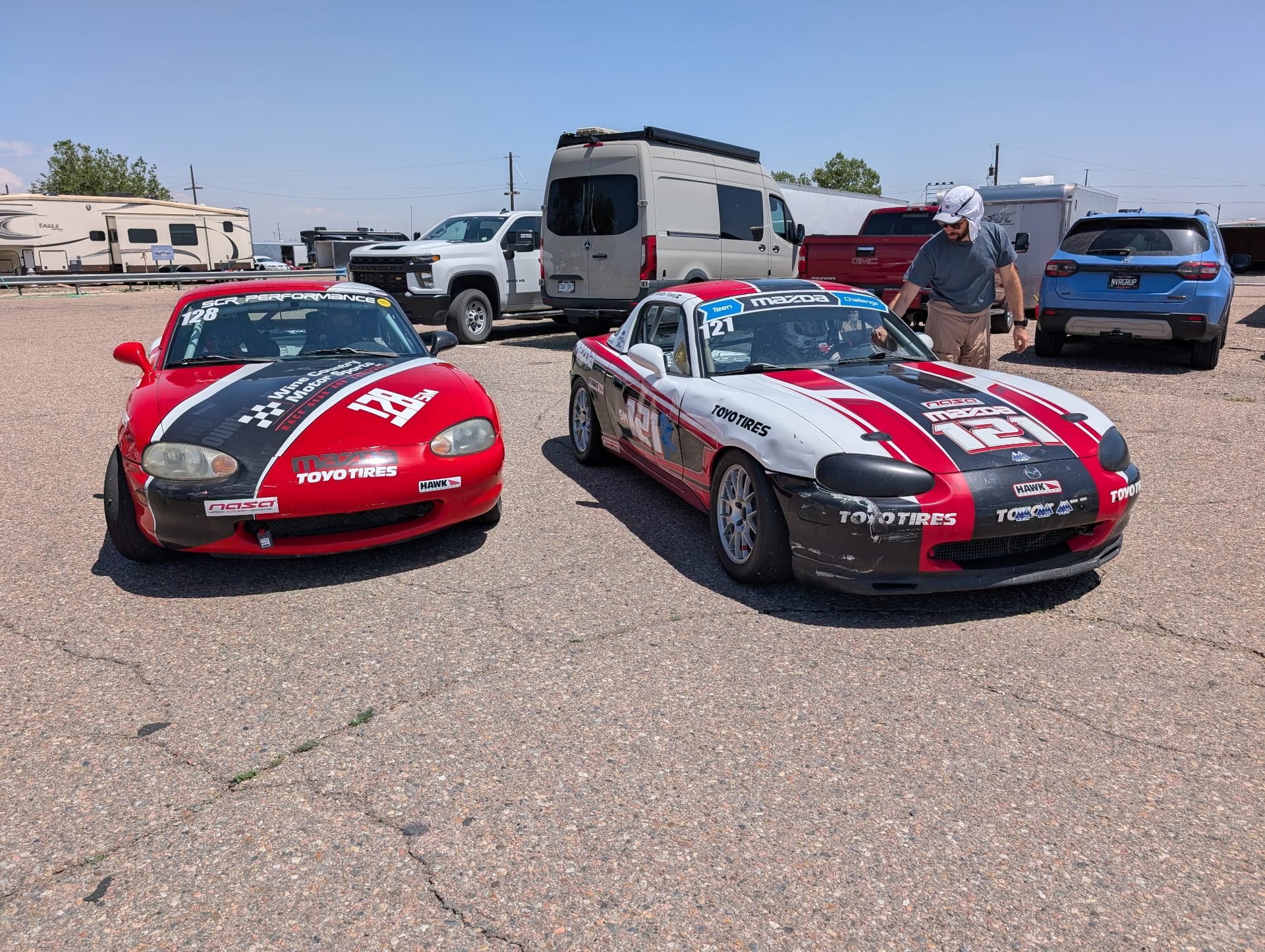 End of a long day. Who gets to sit in these, and when, is decided by a rulebook — not by whoever wrote the biggest check.
You are not the one who decides this
A racer's instinct is to treat the car like a personal possession. It isn't, not at a sanctioned event. On a race weekend, the driver of record is a licensed competitor named on an entry, and the sanctioning body approves that name.
NASA is clear that a competition license is required to participate in any NASA race. The path there is a weekend-long competition school with racecraft, passing drills and practice starts, plus a medical evaluation, and you come out holding a provisional license. You stay a rookie until you've finished a set number of races without incident.
Read that again and put your sponsor's sales director in it. He needs a school, a medical, and a license before he is legally allowed to turn a lap in a race group.
So the honest answer isn't "no." The honest answer is: I can't sign for that, and neither can you. If you want the fuller picture of what that process looks like, it's in how to get your SCCA or NASA racing license.
The ride-along version dies just as fast
The fallback ask is usually smaller. "Fine, can he ride with you?"
Look at the car. In a Spec Miata the passenger seat is gone. There's one containment seat, one harness, one set of head restraints, and a cage built around one occupant. There is no second place for a human to be.
Even in cars that do carry a passenger, it never happens in a race session. Ride-alongs live in specific programs with published minimums, and plenty of sessions allow none at all. The guest-access side of this is in how to host a sponsor at the track, and the family version in the rules for bringing family to a track day.
Never promise a seat, a lap, or a ride you haven't already confirmed in writing with the club.
I've watched racers say "should be fine, I'll ask" in March and spend October apologizing.
The insurance answer is the one that ends the conversation
Here's the part that actually protects both of you, and it's the argument to lead with.
Most personal auto policies exclude track use outright. Insurers now write in language covering "racing or speed contest events" and time spent on a "racing surface," and the comforting line racers repeat — it's not a race, it's an educational event — doesn't reliably beat that exclusion. Specialty track-day policies exist, but many of them cover non-competitive events only. Competition needs its own coverage.
Now stack the sponsor's side on top. There is a whole insurance product built for owners and sponsors, sold specifically because a sponsor can get pulled into a claim when, as the carrier puts it, "their name or branding is connected to an incident." It exists to fill gaps when a claim exceeds or falls outside somebody else's policy.
So the real sentence is this: if your sponsor's employee climbs into an unregistered seat and something goes wrong, nobody's policy is standing behind it, and the company whose decal is on the door is the name on the lawsuit.
Say that out loud and the ask disappears. Not because you refused, but because you just did their risk manager's job for them.
Four things to sell instead
Never end the conversation on a no. The ask told you something valuable — this sponsor wants to participate, not just be seen. That's the best kind of partner. Give them a real version of it.
1. A crew credential with an actual job. This is the good one. Published club supplemental regulations are strict: hot-area access, including pit lane and grid, is for members holding valid credentials, and the person has to be identified as crew on the driver's entry. That usually means a full membership or a weekend membership bought at registration. One series' regs put a $500 fine on anyone who enters the hot pits unregistered, and that fine lands on the team. Do it properly and their guy holds the pit board, runs the tire gauge, and goes home having worked a race weekend.
2. A Track Night in America entry in their own car. This is the cheapest legal door in the country. Eighteen or older, a valid driver's license, a safe street car, a current-standard helmet, no prior experience and no membership needed. One published 2026 event listed $185 for members plus a $25 weekend membership for non-members. Book it, go with them, coach them in the passenger seat where that's allowed.
3. A real school seat. SCCA's Race Experience program takes annual members with a valid driver's license and is explicitly open to people with or without previous racing experience, with a chief instructor doing classroom work and debriefs. If your sponsor's guy genuinely wants to race, hand him the front door instead of a back one.
4. A sim seat. Cheapest, fastest, zero paperwork. We put attendees behind the wheel of our rig at Spark the Springs and it does something a decal never will — it makes a person feel what your job is.
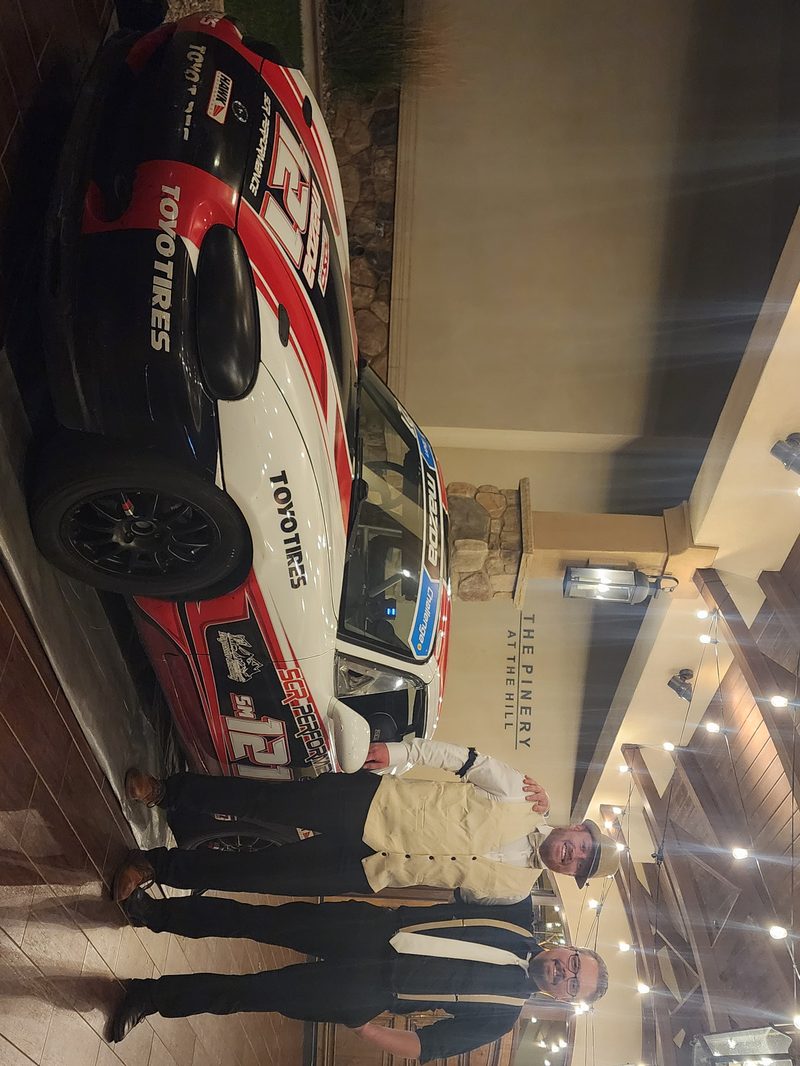 Our sim rig at Spark the Springs. This is the yes you can always say — no license, no medical, no insurance conversation.
If you're about to put any of these in a package, get the wording checked before the sponsor reads it. That's literally what a Sponsorship Proposal Review is for — $147, you send the actual document, and it comes back marked up with your two weakest pages rewritten.
Write the clause before you ever get asked
The cleanest fix is to decide this in the agreement, months before the sales director gets excited. Four lines do it.
| Line | What it says |
|---|---|
| Who | Names the number of people the sponsor may credential per event, and that eligibility is set by the sanctioning body, not by us |
| What | Spells out exactly what the credential includes — paddock, garage, a defined crew role — and what it does not include: driving, riding, or hot-area access without the required membership |
| Who pays | Memberships, entries, gate fees, travel. Put a name next to each |
| If denied | If the club says no, we substitute an agreed alternative at no extra cost |
That last line is the one racers forget, and it's the difference between a disappointed partner and a dispute. The broader term sheet lives in the one-page sponsorship agreement every racer needs, and the make-good ladder is in what to do when your season under-delivers.
I'm a racer and an engineer, not a lawyer — none of this is legal advice, and a real agreement should get a set of professional eyes. A Proposal Review is the cheap version of that second read: I go through the document you're actually sending and tell you which promises you can't keep.
The script
Keep it short and put the reason on their side of the table, not yours.
"Love that he's into this. Driving the race car needs a competition license and a medical, and the club approves the entry — I can't sign for it and neither can we. What I can do is credential him as crew for the weekend so he's in the hot pits with a real job, and get him his own on-track day in his car in May. Want me to price both?"
That's a no that reads like a yes. It also quietly tells them you know how the sport works, which is worth more than the lap ever was.
The prospecting method, the mockups and the agreement templates we use to write clauses like this all sit inside The First Sponsor System — that's the do-it-yourself route if you'd rather build it than hand it over.
And if the package is already drafted and there's real money on it, don't guess. Send it in for a Proposal Review — $147, back to you in five business days with a written markup and a recorded walkthrough, so the appearance language is airtight before a sponsor ever reads it.
Sources: NASA licensing, NASA regional race licensing requirements, SCCA Race Experience program and driver eligibility, Track Night in America rules and regulations, SCCA event supplemental regulations (hot area access and crew credentials), K&K Insurance — motorsports owners and sponsors liability, Hagerty — HPDE and track day insurance FAQ, Heritage Track Days — track day insurance guide 2026. Licensing, credential and entry-fee details verified against published club and event material as of September 2026. The $500 hot-pit fine is from one series' published supplemental regulations, not a universal rule, and the $185 + $25 Track Night figure is one specific 2026 event listing — both vary by club, region and track. Rules change; read the supps for your own weekend before you promise anybody anything.
Do you believe?