
You signed up for your first track day. Then your wife asked if she and the kids could come watch. And you realized you have no idea what the answer is.
Short version: almost always yes. But there are four rules that trip people up, and one of them can end your day before it starts.
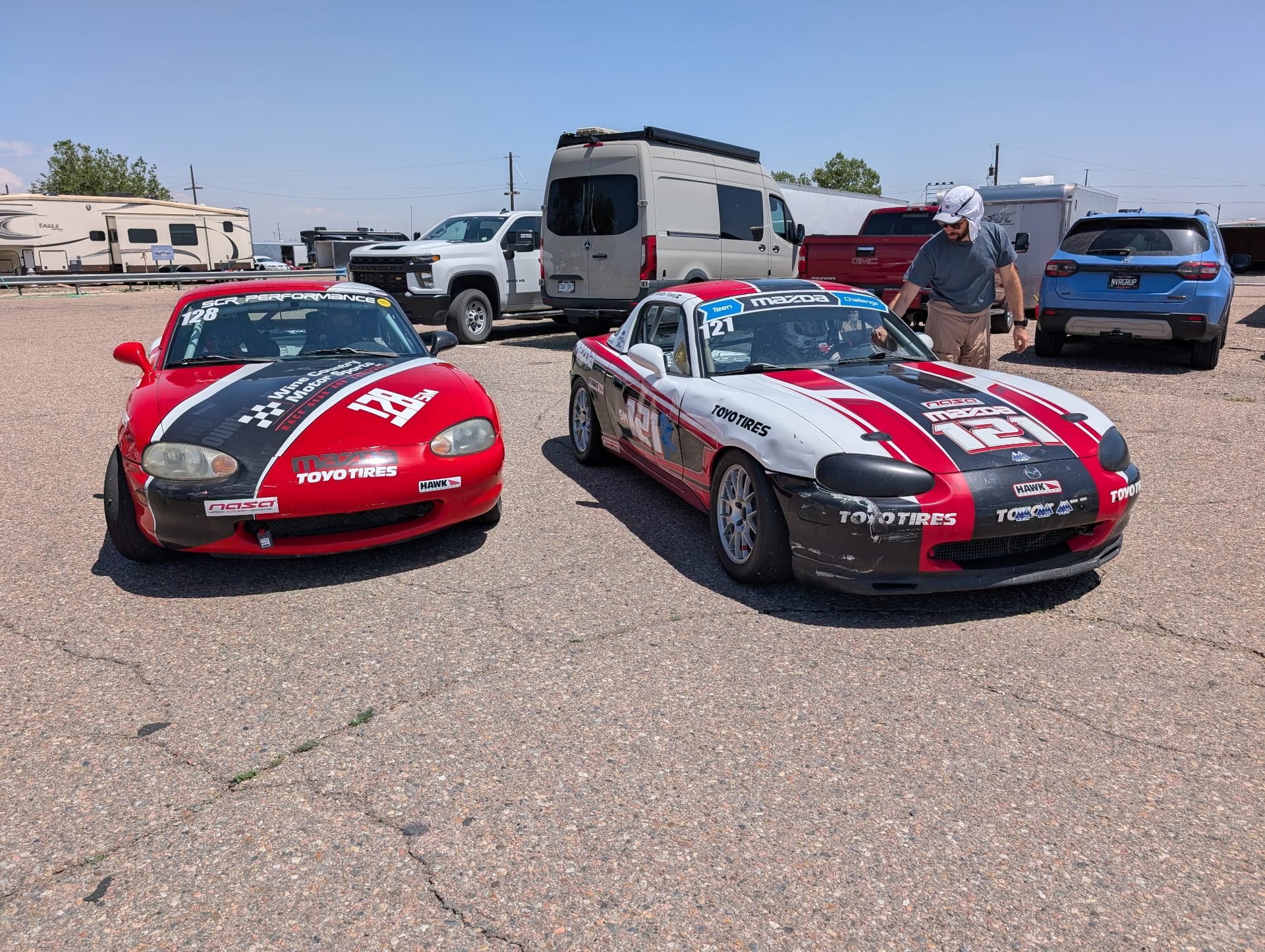 End of the day in the paddock. This is where your family will spend most of their time — and they're allowed to be here.
Yes, and it usually costs nothing
Club-level motorsport is not a ticketed sport. At most HPDE days and club race weekends, guests walk in free.
Colorado Region SCCA puts it plainly on their site: spectating is free and encouraged, no tickets needed. NASA Rocky Mountain's club race listings at High Plains Raceway have run with "No Charge for Spectators." Pueblo Motorsports Park says passengers and spectators are always free of charge for open lapping events.
A few private or promoter-run events do sell a paddock pass. That's the exception, not the rule.
So the honest answer is: check your event's registration page, and if it doesn't mention guest fees, assume your people get in free.
One caveat worth saying out loud. "Free" doesn't mean "no paperwork." Which brings us to the thing that actually ruins mornings.
Everybody signs a waiver. Everybody.
This is the rule people get wrong, and it's the one that costs time at the gate.
High Plains Raceway states it in all caps on their facility rules page: no one is permitted on HPR property without first signing a liability waiver. Not just drivers. Your spouse. Your dad. Your eight-year-old. Pueblo is the same — you sign at the gate or digitally before you arrive.
So if your family shows up two hours after you, they'll be standing at the gate filling out forms while you're on track. Bring them with you at check-in and get it done once.
For minors, the gate waiver is signed by the parent or legal guardian on their behalf. That's separate from the SCCA competition minor waiver, which is a different animal entirely — and only comes into play if your kid is actually competing or working a hot flag station. If your kid is just hanging out in the paddock eating a sandwich, you don't need it.
Get the whole family through registration when you check in. Don't make them figure it out alone at 10am.
Where they can go, and where they can't
Tracks split the world into "cold" areas and "hot" areas. Cold means no cars are moving at speed. Hot means they are.
Your family lives in the cold areas. That covers the paddock, the grandstands or viewing berms, registration, the vendor area, and the walking paths between them. That's plenty — the paddock is where the whole sport actually lives.
Hot areas are off limits to guests. In SCCA terms that means the racing surface, pit lane, grid, and impound. Those spots are for credentialed participants and workers, and the rule exists because a car coming into a hot pit is not expecting a nine-year-old.
| Area | Family allowed? |
|---|---|
| Paddock (your pit spot, tent, trailer) | Yes |
| Spectator berms, grandstands, fences | Yes |
| Registration, vendors, restrooms, concessions | Yes |
| False grid / staging | No |
| Hot pit lane | No |
| Impound and the racing surface | No |
Age lines for minors vary by club and by event. SCCA guidance keeps minors out of hot areas entirely unless they're a credentialed competitor or worker, and the minimum age to work a hot area is 14 with an annual minor waiver on file — signed by both parents, completed on my.scca.com before the event, not at it. A lot of event supplemental regs also require that kids under 16 be supervised by an adult anywhere in the paddock.
HPR's facility rules say it more simply: small children may not be left unattended. That one's on you, not the track.
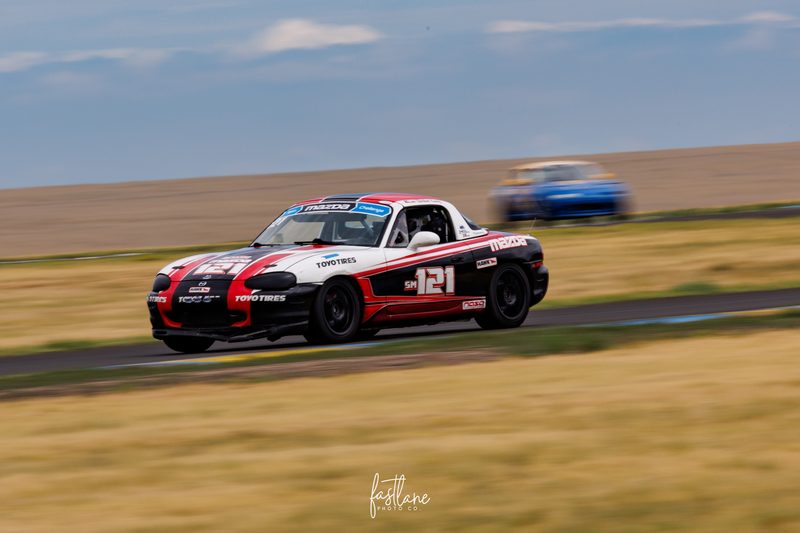 Your family will see more from a fence line or berm than from your pit spot. Walk them out there between sessions.
Can they ride along with you?
This is the question every dad asks and most get a "no."
For NASA HPDE, the rulebook is specific. All passengers must be at least 18 years old. Only one passenger at a time. The passenger has to wear the same minimum safety equipment the driver does — helmet, and whatever the group requires. Group 1 beginners need their instructor's explicit permission first. And if you spin or go off with a passenger aboard, you can lose passenger privileges for the day.
So your adult brother might get a ride. Your twelve-year-old will not.
That stings if you were picturing a father-son lap. But there's a real reason: a passenger seat in a street car isn't built for it, and a kid's body doesn't fit a harness meant for an adult. If you want your kid in a car at speed, the legitimate path is getting them licensed in their own seat — which starts younger than most people think. We covered the real minimum ages in what age a kid can start racing cars.
Also worth knowing: passenger privileges are a privilege, not a right, and any track or organizer can revoke them at any time. Pueblo says exactly that in their rules.
You are legally responsible for every person you bring
This is the part nobody reads and everybody should.
The NASA Club Codes and Regulations put it directly. Drivers are responsible at all times for the conduct and behavior of everyone accompanying them — crew, mechanics, friends. Any offense committed by your crew or your friends is charged directly to you, the driver. Same section covers property damage: if your buddy or your kid damages the track surface, fencing, paddock, a wall, a trailer, or somebody else's car, you're the one making restitution.
That's not a scare tactic. It's just how the entry works. When you signed up, you signed for them.
Practically, it means three conversations before you leave the house:
- Paddock speed is a crawl. HPR posts 10 mph in the paddock, 25 on the entry road. Pueblo posts 15. That applies to your tow rig, your golf cart, and your kid's scooter.
- Nobody wanders behind a car that's running. Not to look, not for a photo.
- Stay out of anything roped, coned, or marked "authorized personnel."
Two more house rules that catch people. Dogs are usually fine but must be leashed at all times on track property. And alcohol is not a paddock thing — HPR doesn't allow anyone to drink anywhere on property until the track surface is cold at the end of the day. Bring the cooler. Just know the timing.
What to actually pack for them in Colorado
High Plains Raceway sits out on the plains east of Byers at about 4,900 feet. There is essentially no natural shade, and the wind is a permanent feature. Pueblo runs hot in summer and cold in the shoulder months, sometimes in the same weekend.
For a Colorado track day, guests need: a pop-up or shade structure, sunscreen, more water than feels reasonable, a jacket for the wind, closed-toe shoes, and ear protection for anyone under about ten. Camp chairs beat standing for eight hours. If you're picking a track for a first family outing, our High Plains Raceway guide walks through the layout and the facilities.
And set expectations. A track day is 20-minute sessions with an hour between them. That's a lot of downtime. Bring something for the kids to do, or your "great family day" becomes four people sitting in a hot car asking when you're done.
Honestly, though — the downtime is the best part. Walking the paddock, looking in open trailers, asking a stranger about their car. That's how most people in this sport fell into it. If your family gets curious in the paddock, how to watch a club race weekend is a good next read for them.
When we run our arrive-and-drive weekends, the family is part of the plan — chairs, shade, food, a spot to stand. If you want a first track weekend where somebody else handles the logistics and your people are actually taken care of, that's what our arrive-and-drive program is built for.
Sources: NASA Club Codes and Regulations, 2026.3 edition (sections 4.2, 4.5, 23.2), High Plains Raceway facility rules, Pueblo Motorsports Park rules, Pit Talk — Minors Under 18, NCR SCCA waiver guidance. Rules verified as published in September 2026. Policies vary by region, track, and event — always read your event's supplemental regulations, because those override anything you read here.
Do you believe?