
The cheapest thing in motorsport is also the most overlooked. You can stand at a fence, watch real race cars at speed, walk into the paddock, and talk to the drivers. Most weekends it costs you nothing but gas money.
Almost nobody does it. People spend a year researching how to get into racing and never once drive out to watch a race.
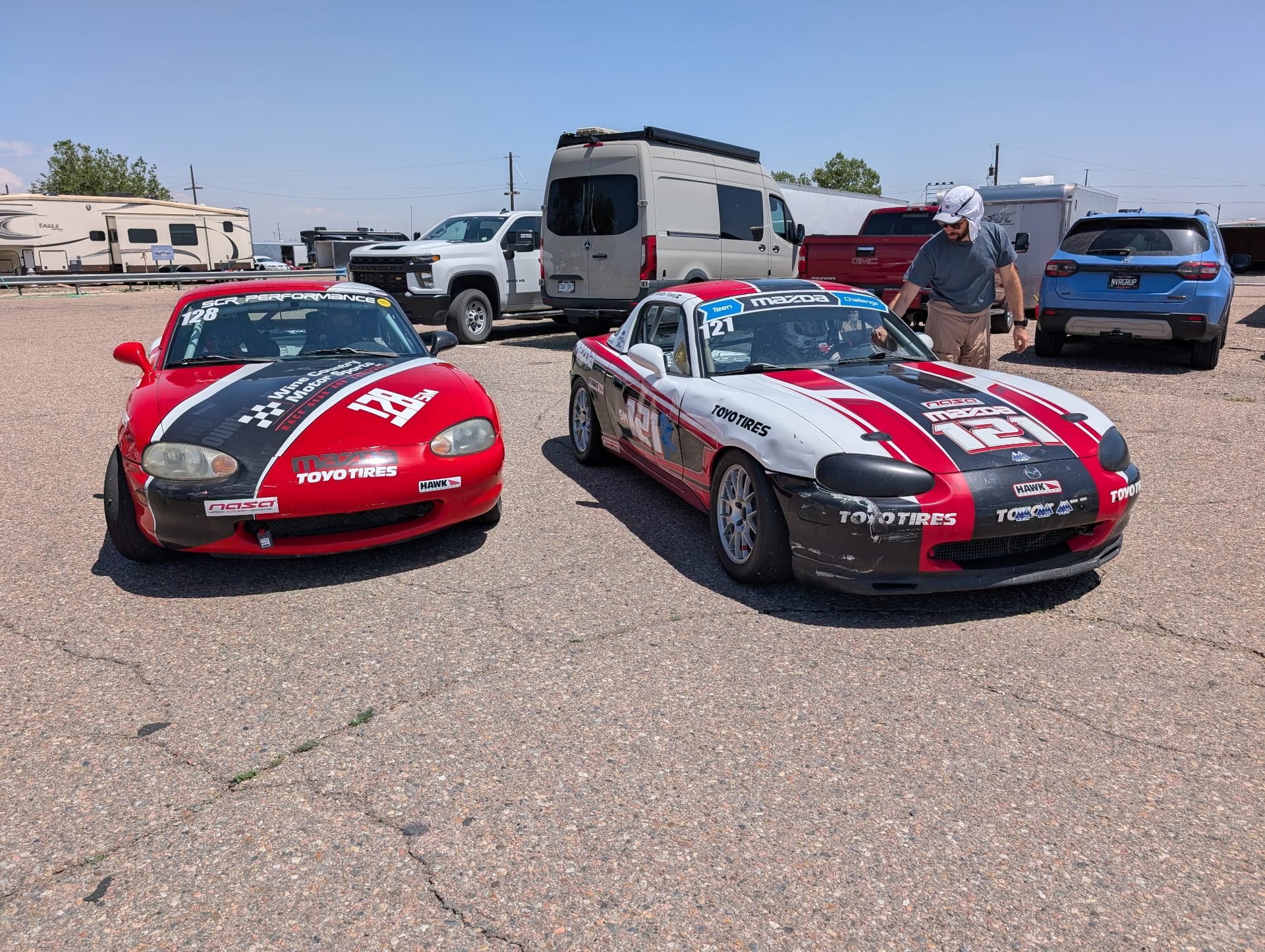 Paddock, end of the day. This is where the actual conversations happen — and you're allowed to be standing here.
Yes, you can just show up
Club racing is not a ticketed sport. Colorado Region SCCA says it about as plainly as it can be said: "No tickets are needed. Spectating is free and encouraged."
NASA is the same at most events. The NASA Rocky Mountain club race listing for High Plains Raceway reads "No Charge for Spectators — Gates Open both days at 7AM." Rocky Mountain Vintage Racing runs free to the public too.
There are exceptions, and they're small. Some SCCA Colorado weekends charge $10 at the gate for spectators who aren't SCCA members, with kids under 12 free and the money going to the volunteer fund. Competing drivers get four crew passes; anyone past that pays the ten bucks.
One thing to know about track websites: High Plains Raceway doesn't set those rules. The host club does. HPR says so directly — admission prices for weekend events are set by the club running it, not the facility. So check the event page on MotorsportReg, not the track's homepage.
Bottom line: budget $0, carry $20 in cash, and you'll never be turned away.
When to show up, and when the racing happens
A club race weekend has a rhythm, and if you show up at the wrong hour you'll see an empty track.
Gates usually open around 7am. On-track activity starts near 8am. The morning is practice and qualifying — cars going out in run groups, coming back in, adjustments getting made. Then there's a lunch break, usually around 1pm, when the track goes quiet.
The feature races run in the afternoon, and most club weekends are done by 5pm.
Here's the counter-intuitive part. If you're going to learn something, get there in the morning, not the afternoon.
Race sessions are exciting but short. The morning is when crews have their hoods up, when drivers are standing around with coffee, when there's actual time to ask a question. By the time the features run, everyone is busy. Come early, stay for the races, leave when the checker flies.
The paddock is the whole point
This is the part people don't believe. At a club race, you can walk into the paddock. Colorado Region SCCA tells spectators they're free to wander the pits, look at the cars up close, and talk to drivers and crew.
Try that at a pro event and you'll need a credential and a friend in the right place.
Use it. Walk the rows. Find the class you think you want to run — Spec Miata, Spec E30, whatever pulled you here — and look at ten of them parked next to each other. You'll learn more about what a real build costs in twenty minutes than in a month of forum reading.
Then talk to someone. Racers are almost universally happy to explain their car to a person who's genuinely curious. A few things that make it go well:
- Ask between sessions, not while a car is on jackstands with a session in ten minutes. If the crew is moving fast, come back later.
- Don't touch anything. Bodywork, tires, tools, none of it.
- Ask real questions. "What did this cost to get on track?" and "what would you do differently?" get much better answers than "how fast does it go?"
- Stay out of hot areas. Grid and pit lane are working spaces. Don't walk in unless someone who works there invites you.
And if you're bringing kids, bring them into the paddock. That walk is the thing a 12-year-old remembers.
Where to stand to actually see something
Club tracks are built for cars, not crowds. Seating is usually limited or nonexistent, so bring a folding chair and plan on standing at fences.
The best viewing is almost never the front straight. Cars at full speed in a straight line all look the same. Go find a slow corner or a braking zone. That's where you see the real differences — who's carrying more speed, who's getting the car rotated, who's making the pass.
A corner with a decent run-up to it is the sweet spot: you get braking, turn-in, and the exit all from one spot.
While you're there, watch the flag stations. Every corner has one, and you'll start noticing the workers before you notice the flags. Learning what those colors mean before you ever run an event is free homework — we broke all of them down in our guide to racing flags.
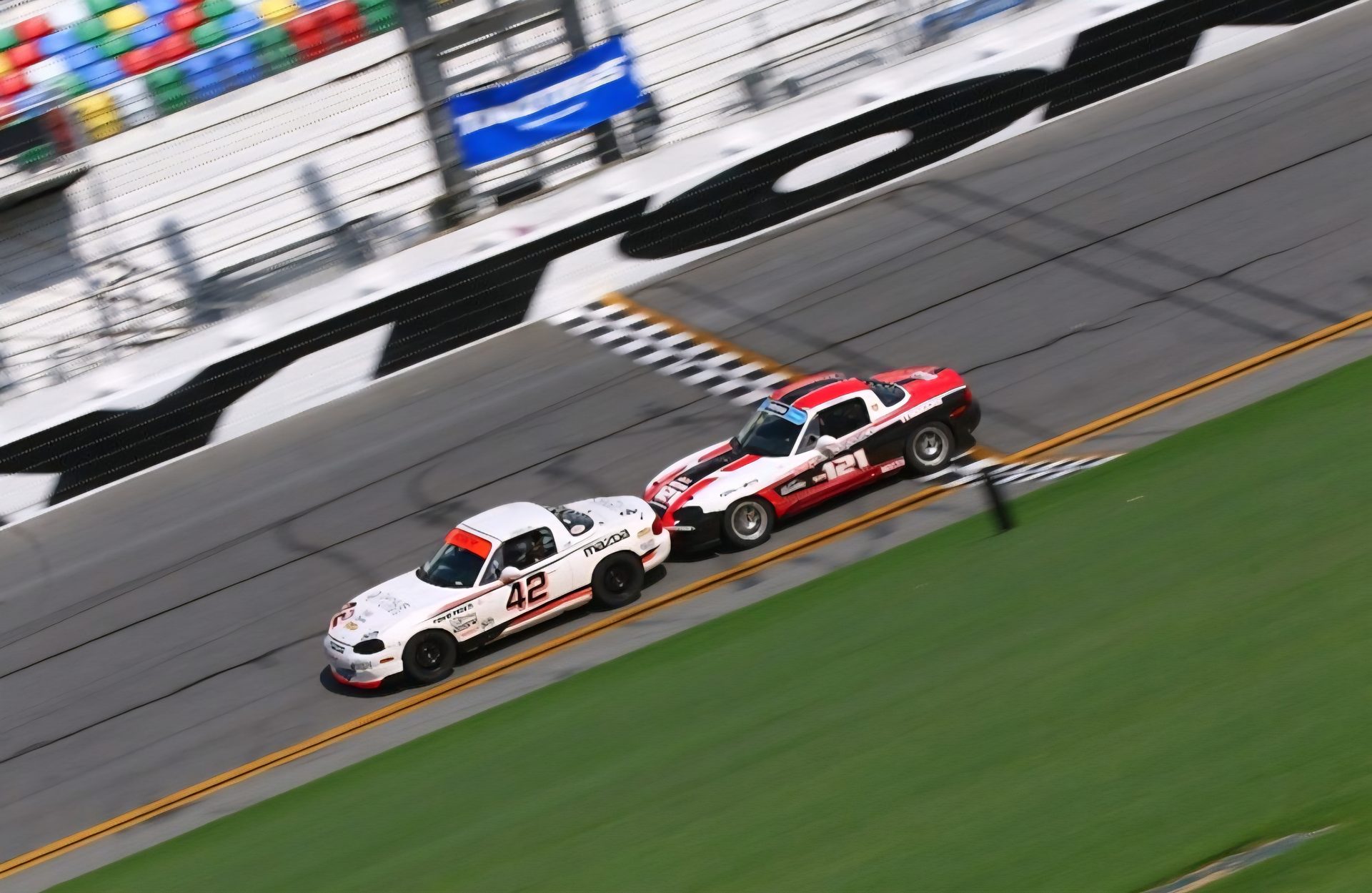 Side by side is the whole appeal of Spec Miata. You don't get a sense of how close it really is until you're at the fence.
What to bring
Colorado Region SCCA's own spectator advice is short and correct: water, sunscreen, earplugs. Race cars are loud.
Add to that:
- A folding chair. Assume no seating.
- Cash. For a gate fee if there is one, and for the concession stand.
- Layers. Colorado mornings at 5,000-plus feet start cold and end hot. HPR in particular has no shade and no shelter from wind.
- Closed-toe shoes. You'll be walking on gravel and hot pavement in the paddock.
- A schedule, screenshotted. Cell service at these tracks is unreliable. Save the run group schedule to your phone before you leave the house.
Leave the drone at home. Every facility bans them without prior approval.
The Colorado version
If you're in Colorado, you have two road courses and a genuinely healthy club scene.
High Plains Raceway sits near Byers, about an hour east of Denver. It hosts SCCA, NASA Rocky Mountain, RMVR, and 24 Hours of Lemons across the season. It's flat, open, and windy, with good sightlines from several corners. If you're going to pick one place to spend a Saturday, this is it. Our High Plains Raceway track guide covers the layout if you want to know what you're looking at.
Pueblo Motorsports Park runs the road course plus a drag strip, and spectators and passengers get in free for open lapping events. It's a longer drive from Denver but a short one if you're in the Springs.
A word on ride-alongs, since people always ask. At NASA weekends at HPR, passengers have to sign a waiver at Registration, wear a wristband, and be 18 or older. It's not a walk-up thing at a race weekend — but ask, politely, and don't be shocked if the answer is no on a race day.
Here's the honest reason we push people to go spectate first. Most drivers who wash out of their first season did it because the reality didn't match the picture in their head. A Saturday at the fence fixes that for free. You see the cold morning, the trailer full of spare parts, the guy fixing a broken hub at 11pm, and the two cars going door-to-door for eleventh place like it's the championship. Then you know whether you actually want it.
If you go, and it does exactly what watching a race is supposed to do to you, the next step is seat time in a car you don't have to build. That's what our arrive and drive program is for.
Sources: Colorado Region SCCA spectator information, NASA Rocky Mountain club race listing at High Plains Raceway, High Plains Raceway calendar and event policies, SCCA Colorado Region event listing on MotorsportReg, Rocky Mountain Vintage Racing. Admission policies and schedules verified against currently published event listings as of August 2026. Gate fees and times are set per event by the host club, so always confirm on the specific event page before you drive out.
Do you believe?