
Nobody gets pulled off track at their first HPDE for being slow. They get pulled off for missing a flag.
Once the helmet is on and you're rolling out of the hot pit, flags are the entire conversation between you and the people running the event. No radio. No spotter. Just a person standing at a corner station holding a piece of colored cloth, trusting you to look.
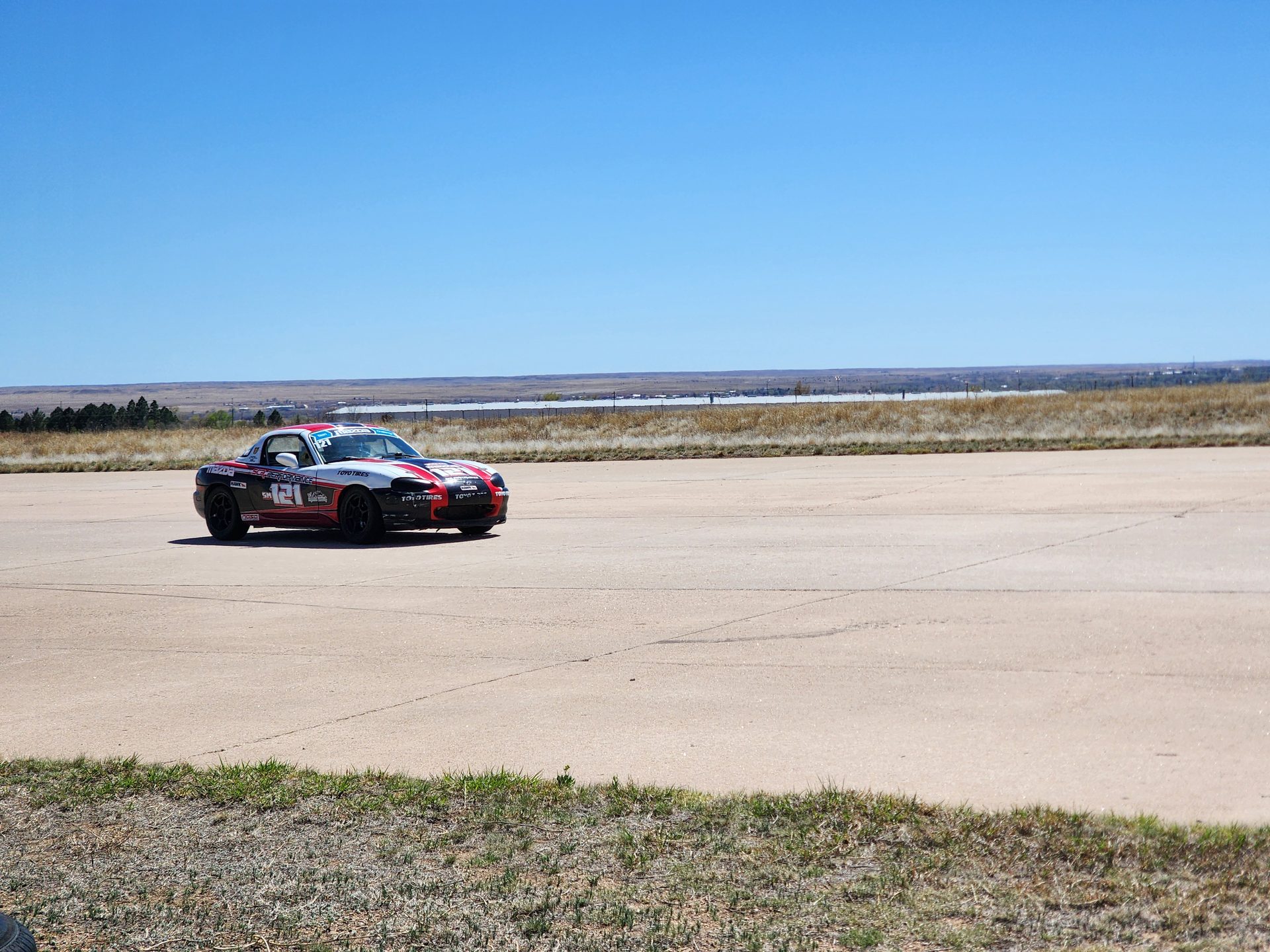 Front straight, past the starter's stand. That's where you'll see most of them — but it's the corner stations that matter more.
Every flag, in one table
| Flag | What it means |
|---|---|
| Green | Course is clear. Session is open or restarting. |
| Standing yellow | Hazard off the racing surface. Slow down. No passing in the zone. |
| Waving yellow | Hazard on the racing surface. Slow way down, be ready to stop or take evasive action. No passing. |
| Double yellow | Full-course caution. No passing anywhere on track. |
| Yellow with red stripes | Debris or a slippery surface. Oil, coolant, gravel, sand, bodywork. |
| White | A slow-moving or emergency vehicle is on course ahead of you. |
| Blue with a yellow diagonal stripe | A faster car is closing on you. Check your mirrors. |
| Black, open, with your car number | Come to the pits. Officials want to talk to you. |
| Black, furled or rolled up | Warning. Something you did got noticed. |
| Black with an orange disc ("meatball") | Mechanical problem with your car. Pit at reduced speed. |
| Black shown at every station | Session is being stopped. All cars to the pits at a safe pace. |
| Red | Session stopped. Come to a controlled stop off the racing line. |
| Checkered | Session is over. Cool-down lap, then pit lane. |
Save that. Then go read your own organization's version, because the wording shifts a little between clubs. NASA puts flags in Section 19 of the Club Codes and Regulations, and competition license candidates get tested on it. SCCA covers the same ground in the GCR. Your event's drivers meeting is the final word.
Yellow is the one you have to get right
Every other flag is easier than this one.
A standing yellow means there's a problem near the track but not on the driving line. A car in the grass. A tow truck. A corner worker out in the open where he shouldn't have to be. Lift, leave margin, and do not pass.
A waving yellow means the problem is in your way. Slow down hard enough that you could stop. Assume a stalled car is sitting in the middle of the corner you can't see yet, because sometimes it is.
Two things trip up new drivers here.
The first is the passing zone. The no-passing area runs from the station showing yellow until you're past the incident and clear of the flagged section. Different clubs word the end of that zone differently, so ask at the drivers meeting rather than guessing at 90 mph.
The second is what "slow down" means. It does not mean brake in a panic in the middle of a pack. Lift, get off the throttle early, and give yourself room. Somebody behind you is also reacting, and they may have seen the flag two seconds later than you did.
The corner worker's body language tells you as much as the flag. A lazy standing yellow and a two-armed frantic wave are different emergencies.
The flags that are about you, not the track
Four flags are addressed to one car. If they come with your number on a board, that car is yours.
Open black flag. Complete the lap at a safe pace and come into the pits. You're not in trouble yet. In HPDE this usually means an off-track excursion with two or more wheels in the dirt, an illegal pass, a loose item in the car, or something the officials want to check before you go back out. Drive in, listen, go back out. Arguing at the black flag station is the fastest way to make a five-minute conversation into a day-ending one.
Furled black flag. The flag is rolled up and pointed at you. That's a warning. Whatever you're doing, stop doing it, because the next one comes unrolled. This one is rare in HPDE — most clubs just black-flag you and talk it out.
Meatball — black with an orange disc. Something is mechanically wrong with your car and the corner workers can see it from outside. Fluid, smoke, a dragging splitter, a door that popped open. Pit immediately, at reduced speed, and get off the racing line if you're leaking anything. Nobody wants your oil on the fast line.
Black at all stations. The whole session is being stopped. Everyone goes to the pits. Keep a reasonable pace on the way in — crawling at 30 mph clogs the track for the emergency crew who needs it.
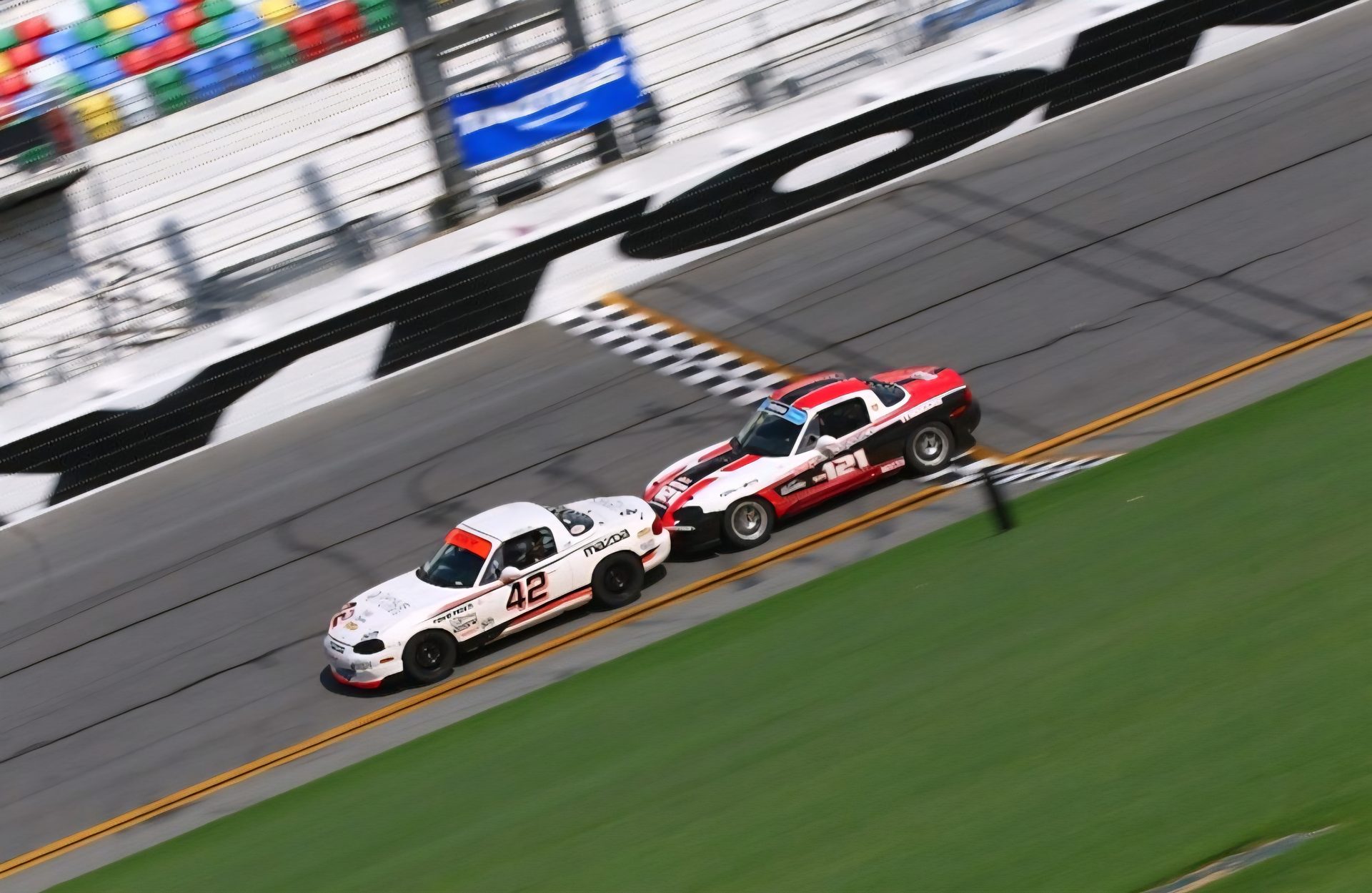 Side by side is a race weekend thing. In HPDE, passing happens in designated zones with a point-by, and the blue flag is how officials remind you to give one.
The blue flag and the point-by
Blue with a yellow diagonal stripe is the flag most beginners under-react to.
It means a faster car has caught you. In club racing it's advisory — you don't have to move over, and the overtaking driver is responsible for making the pass. In HPDE, treat it differently. You're there to learn, not to defend a position that doesn't exist, and a driver who ignores blue flags all session tends to see a black one eventually.
The mechanics matter more than the flag. In beginner run groups, passing is only allowed in designated zones and only with a point-by from the car in front. That means:
- Check your mirrors on every straight, not just when you're bored
- Point with your arm out the window, clearly, to the side you want them to pass on
- Hold your line and your speed — don't lift suddenly, don't move over into their lane
- Give the point early in the zone so the pass finishes before the braking marker
As you move up the HPDE run group ladder, the passing rules loosen and the point-by requirements relax. Until then, the point-by is a skill you're being graded on.
Three flags beginners get wrong
White is not the last lap. On TV, in NASCAR and IndyCar, white means one lap to go. In club road racing it means a slow-moving vehicle is on course — an ambulance, a tow rig, or a car limping back to the pits at half speed. If you treat it like a checkered warm-up, you'll come over a crest at full commitment behind a truck. Pass with real caution and expect the vehicle to be somewhere you don't want it.
The debris flag stops waving before the debris leaves. Yellow with red stripes gets displayed for a couple of laps and then comes down. The oil doesn't. Assume that corner is greasy for the rest of the session and give yourself a margin the first time back through.
Red does not mean stand on the brakes. Red means the session is stopped and you need to come to a controlled stop. Check your mirrors. Slow progressively. Pull off the racing line where a corner worker can see you, stay in the car, stay belted, keep your helmet on, and wait for a hand signal. Do not drive to the pits unless you're directed to. There's often an emergency vehicle heading toward the incident on the track surface, and it needs a clean path.
Where to actually look for them in Colorado
Flags only work if you know where the stations are, and that's track-specific.
High Plains Raceway is the hard one. It's 2.55 miles, 15 turns, and over 300 feet of elevation change per lap. Crests hide apexes, which also means crests hide flag stations. You have to know a station is coming before you can see it, and on your first day out there you won't. Ask an instructor to point out the stations during the parade lap.
Pueblo Motorsports Park is friendlier for this. Long straights, hard braking zones, flatter ground, and longer sightlines. Both tracks show up on our 2026 NASA Rocky Mountain calendar, and both drivers meetings will tell you which stations are manned that day. Sometimes not all of them are.
One habit that will serve you for the rest of your driving life: pick up every station with your eyes on every lap, even when it's empty. Make it part of your visual routine, the same way you look for your braking marker. Then you'll never be the driver who saw the flag one corner too late.
Before your first session
Learn the table above cold. Then walk the paddock, find the flag stand at start-finish, and watch a session from the fence before you drive one. Twenty minutes of watching flags fly at somebody else's session is worth more than reading this post twice.
If you want the rest of it handled, we put the flag reference, the tech checklist, and the packing list into our free Race Day Ready Pack — the same stuff we hand our own arrive-and-drive customers before their first weekend. It pairs with our first track day gear checklist if you're still figuring out what to buy.
Nobody expects you to be fast on day one. They expect you to see the flags.
Do you believe?
Sources: Washington D.C. Region SCCA Guide to SCCA Flags, Chicago Region SCCA track flags, NASA Club Codes and Regulations, Section 19 Flags, Signals and Communication, Vintage Racer Group flag rules, No Money Motorsports HPDE flag guide, and NASA Speed News on passing in HPDE 1 and 2. Verified against current published rules as of August 2026. Flag meanings and passing rules vary between sanctioning bodies, regions, and even individual events — your drivers meeting and event supplemental regulations always override anything you read here.