
The list of gear people think they need for their first track day is way longer than the list they actually need.
You do not need a fire suit. You do not need a $2,000 helmet. You do not need a trailer full of tools. For a beginner HPDE in your own street car, the required list is short, cheap, and mostly stuff you already own. Here's exactly what to bring, in the order it matters.
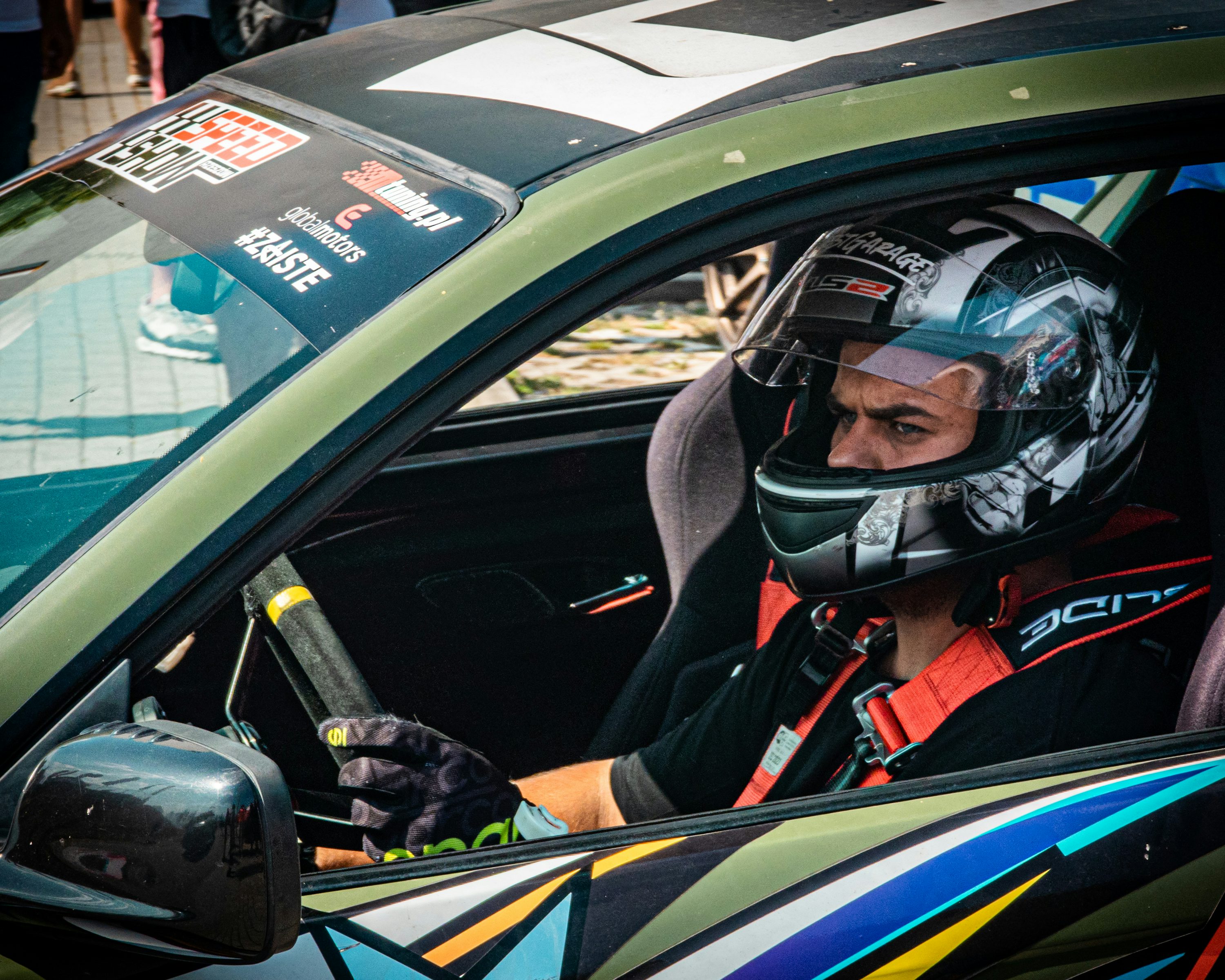 Photo by Scroll_ua on Unsplash.
First rule: read your organizer's tech and gear rules
Before you buy or pack a single thing, find the event's rulebook.
Every HPDE organizer publishes gear and tech-inspection requirements, and they are not identical. One club accepts an SA2015 helmet. Another wants SA2020 or newer. One lets you wear a cotton hoodie. Another wants long sleeves in natural fibers only. The differences are small, but showing up wrong means you don't drive.
So the real first step isn't gear. It's ten minutes reading the event page. If you're running with NASA in the Rocky Mountain region, their tech sheet spells it out. Same with any SCCA or private track-day group. When in doubt, email the organizer. They answer beginner questions all day.
The gear you must have
This is the short list. Get these squared away and you'll pass tech.
- A Snell-rated helmet (SA rating). Not a DOT motorcycle lid, not a bicycle helmet. It needs to say "SA" and a year on the Snell sticker inside. As of October 2025, SA2025 is the current standard and older SA2015 helmets have started aging out. If you're buying new in 2026, get an SA2025 or a still-legal SA2020. A solid entry-level auto helmet runs around $220 to $340. Many beginner groups also rent loaner helmets, so ask before you spend.
- Closed-toe, flat-soled shoes. Skate shoes or thin sneakers work fine. You want to feel the pedals, not clomp around in hiking boots.
- Long pants and a long-sleeve shirt, natural fibers. Cotton is the safe call. Some groups require it; almost none will turn you away for it. Skip synthetics that melt.
- Your car, prepped and emptied (more on that below).
- Driver's license and event paperwork.
That's genuinely it for the "won't drive without it" list. Notice what's not on it: no suit, no HANS device, no fireproof gloves. Those come in when you move up to wheel-to-wheel racing in a caged car, not at a beginner HPDE.
Prep your car before you leave home
Your car has to pass tech too, and most beginner tech failures are things you could've caught in your driveway.
Two or three days before the event, walk through this:
- Empty the car completely. Floor mats out. Glovebox cleared. Trunk emptied. Garage door opener, phone mount, loose change, water bottles — all gone. Anything loose becomes a projectile under hard braking.
- Check your fluids. Oil, brake fluid, coolant, all topped off. Track driving is far harder on fluids than the street.
- Look at your brakes. Pads with plenty of life left, rotors not cracked or scored. Brakes are the number-one thing that gets abused on track.
- Check your tires. Good tread, no cords showing, no dry-rot cracks in the sidewall. Set them to a sane starting pressure; you'll adjust at the track.
- Tighten your lug nuts to spec. A torque wrench is worth borrowing for this.
The car doesn't need to be fast. It needs to be safe and boring — no leaks, no rattles, nothing about to fall off.
If you're not sure what track driving does to a street car, our walkthrough of what to expect at your first HPDE covers how the day actually unfolds session by session.
The nice-to-have kit
None of this is required. All of it makes the day better, and most of it is cheap.
- A tire pressure gauge. This is the single most useful tool you can own. Hot tires gain pressure, and checking between sessions teaches you more about your car than almost anything else.
- A basic tool bag. A socket set, a few wrenches, a torque wrench for your lug nuts. You probably won't need them, but the one time you do, you'll be glad.
- Painter's tape or blue tape. For taping over headlights and putting your car number on the doors, which many groups require.
- A folding chair and a pop-up canopy. Track days are long and shade is scarce. Your paddock spot is your home base for the day.
- A cooler with water and real food. Heat and adrenaline dehydrate you fast, and hungry drivers make sloppy mistakes. This matters more than people think.
- Sunscreen, a hat, and layers. Colorado tracks like High Plains Raceway out near Byers sit on the open plains east of Denver. It can be cold at the 6:30 a.m. gate and baking by noon. Dress for both.
Packing all of this the night before is the difference between a smooth morning and a frantic one. We actually built a free Race Day Ready pack for exactly this — checklists so nothing gets left in the garage when you're half-asleep at 5 a.m.
What you can skip until later
Save your money. A first-timer does not need any of this yet:
- A fire suit, gloves, or balaclava (required only in caged race cars, not beginner HPDE)
- A HANS or other head-and-neck restraint
- A camera or data logger — fun, but learn to drive first
- New tires, brake pads, or any performance parts
- A trailer and tow rig
Buy gear as the sport asks you to, not before. The most common beginner mistake is dropping a grand on kit and then running out of money for the thing that actually makes you better: seat time.
The bottom line
For your first track day, the real list is a Snell helmet, safe shoes, long sleeves, a prepped and emptied car, and your paperwork. Everything else is comfort and convenience. Read your organizer's rules, prep your car in the driveway, and pack the night before.
Do that and you'll roll through tech, make your driver's meeting, and spend the day learning instead of scrambling.
If you want the full packing and prep checklist so nothing gets forgotten, grab our free Race Day Ready pack and print it out before your first event.
Do you believe?
Sources: Snell SA2025 Helmet Certification, Competition Motorsport, Track Minded HPDE Packing List, What Is a Snell-Rated Helmet, Lockton Motorsports. Helmet standards and gear requirements verified against current published rules as of August 2026. Requirements vary by organizer — always confirm with your specific event. Any cost or gear claims here are based on these sources plus my own racing experience.