
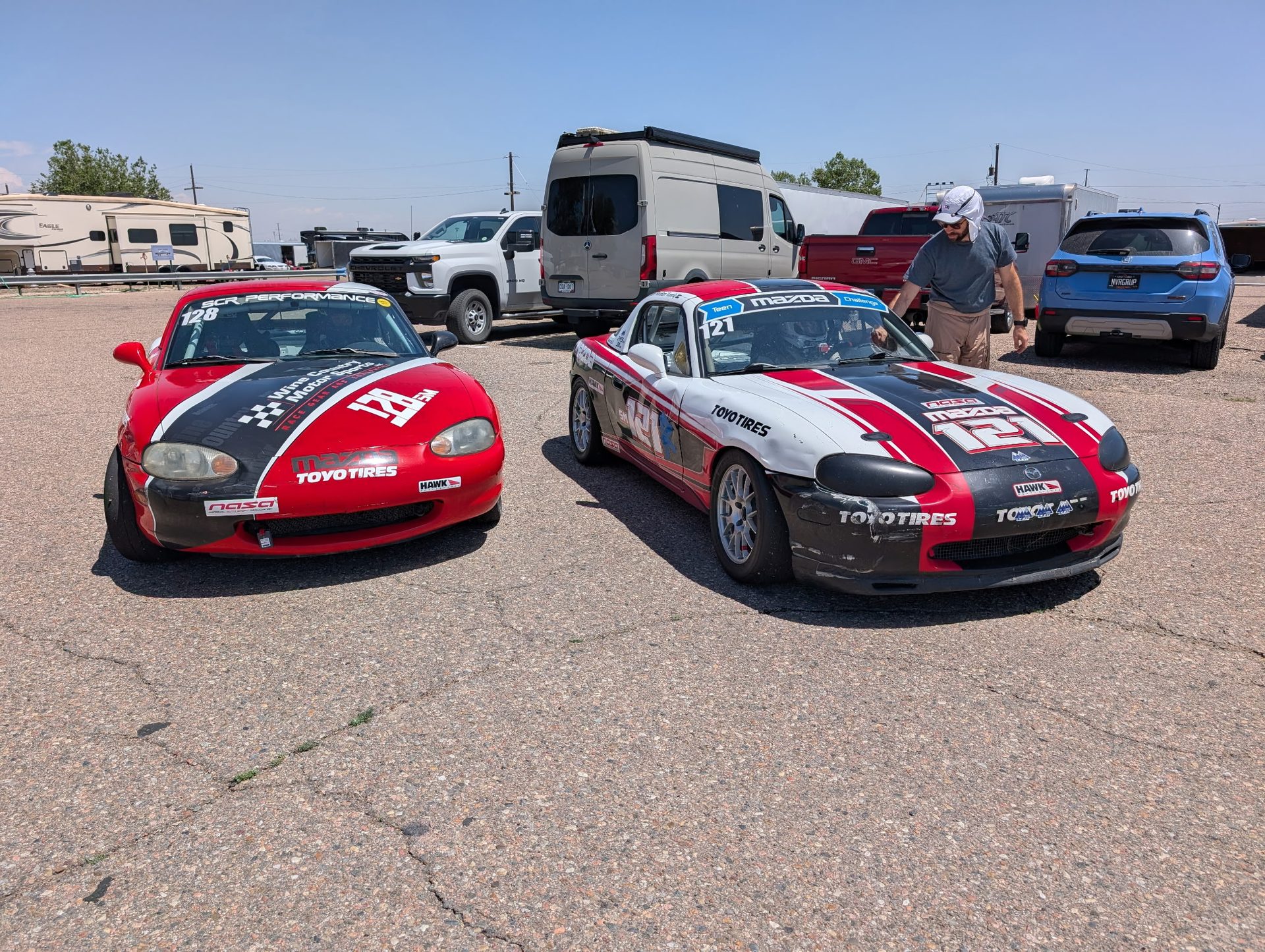
I broke a car during my own license process. Had to rent one to finish the job. That's a real thing that happened to me, and it's part of why LeadFoot Racing exists at all.
But that was my money. When it's someone else's logo on the hood and their check in your account, a broken car stops being a repair bill and starts being a phone call you don't want to make.
Here's the honest answer to the question every racer whispers after a wrecked season: probably not. But what you owe instead is bigger than a refund.
Quick disclaimer before we go further: I race cars and sell sponsorship training. I'm not a lawyer, and none of this is legal advice. If real money is on the line, get a real attorney to read your agreement.
You didn't sell results. Go check.
Pull up whatever you signed. Read it out loud.
I'd bet the deliverables are things like decal placement, social posts, a race recap, an appearance, logo on the hauler. Assets. Not finishing positions.
Sponsorship law guidance from the UK firm Brabners is blunt about this. Rights holders should nail down exactly what they're granting and avoid vague drafting or provisions left "to be agreed between the parties." The deal is a list of rights, not a promise of a podium.
That matters, because a DNF season and a failed season are two different things. If your engine let go in June but you still posted every week, still put their name on the car at every event you made, still sent the recaps — you delivered most of what you sold.
Sponsors buy exposure and association. Results are the story, not the product.
The exception: if you promised something you flatly didn't do — six race weekends, and you ran two — that gap is real. Own it. Don't hide behind "well, technically."
The remedy ladder, cheapest to most painful
When rights don't get delivered, there's a standard order the industry works through. Outside GC lays it out for sports agreements: rescheduling, equivalent inventory, fee reduction, or termination — in that priority. Brabners says the same, framing it as "alternative rights or a pro-rata refund."
Cash back is the last rung, not the first. Here's the ladder in grassroots terms:
- Reschedule. You missed Round 3? Give them Round 5 with double the activation. Costs you effort, not money.
- Equivalent inventory. Swap the undelivered thing for something of similar value — an extra shop day, a driver appearance, a paddock hospitality slot, a content package.
- Extend the term. Roll the shortfall into next season at no charge. This one quietly turns a bad year into a renewal conversation.
- Fee credit. Discount next season instead of writing a check today.
- Pro-rata refund. Only the prepaid portion tied to rights you never delivered. Not the whole deal.
Almost every grassroots situation gets solved on rungs one through three. If you jump straight to rung five, you've handed back money and ended the relationship. That's the worst possible trade.
If your specific situation is messier than a list — a half-refunded deal, a sponsor who's gone quiet, a class change on top of a blown motor — that's exactly the kind of thing racers bring to the LFR Game Plan Workshop. Ten seats, two hours, you submit your situation ahead of time and we work it live.
Say it before they notice
This is the part people get wrong, and it's the part that actually decides whether you keep the partner.
Research on B2B service failures (Baliga et al., Journal of Business Research, 2020) found that acknowledgment, apology, and recovery mechanisms only work when they're used proactively or immediately. Wait, and the delay itself becomes the failure.
The same paper adds the line I'd tattoo on a toolbox: customers take an apology seriously only if they see a corresponding change in behavior.
So the call sounds like this. Not a paragraph of excuses — three sentences.
- Here's what broke and what it cost us.
- Here's what you were owed that I couldn't deliver.
- Here's what I'm doing instead, and by when.
No hedging. No "hopefully." A date.
Most sponsors have written off a bad quarter before. What they haven't forgiven is finding out in November that they've been paying for a car that hasn't turned a lap since June.
What a grassroots make-good actually looks like
You probably can't buy your way out. You can work your way out. Real, cheap, deliverable make-goods:
- A season-end report that's honest about the failure and specific about the exposure you did generate
- Extra content — the teardown, the rebuild, the diagnosis. Broken stuff performs better than clean stuff, and it's free to film.
- An appearance at their location, on your time
- Their logo bumped up a tier next season at this season's price
- First right of refusal on the position they hold before you sell it to anyone else
Notice that four of those five cost you labor, not cash. That's the point. The relationship is the asset — protect it with sweat.
And if the deal survives, don't drift back into silence. What you send a sponsor mid-season is what keeps this from happening again.
The number that should actually scare you
Kelley Drye makes a point worth sitting with: even a pro-rata refund often doesn't make a sponsor whole, because they've already spent money on marketing and activation around you.
So money back doesn't fix their problem. Proof does.
Showcare's 2026 Event Sponsorship Pulse Report found that only 40% of association sponsorship teams report retention rates between 51% and 75%, while nearly 60% of respondents measure sponsorship ROI inconsistently and 40% blame the lack of consolidated reporting for not being able to prove value.
Read that again from the sponsor's chair. A big share of partners walk away not because the thing underperformed, but because nobody could show them what it did.
Which means the racer who had a rough season and sends a clear, honest, numbers-first report will beat the racer who had a decent season and sends nothing. Every time.
If you want the report templates, the renewal conversation scripts, and the deliverable tracker to build that yourself, they live in The Get-Funded System for $67. If you'd rather have me look at your actual situation and tell you which rung of that ladder to stand on, the Game Plan Workshop is $297 and you leave with a one-page action sheet and the recording.
So — do you owe a refund?
Almost certainly not. You owe a phone call you make first, a make-good you actually complete, and a report that tells the truth.
Do that, and a wrecked season becomes the reason they trust you. Skip it, and you'll never hear from them again — and you won't know why.
Racing breaks things. That's the sport. The partners who stay are the ones who watched you handle it.
Bring your situation and we'll build the plan. Reserve a seat in the LFR Game Plan Workshop — 2 hours, live, 10 racers max, $297. Or start with the free sponsorship resources if you're not there yet.
Sources: Brabners — Negotiating Sport Sponsorship Agreements, Outside GC — Sports Sponsorship Agreement Considerations, Kelley Drye — Do Your Sponsorship Agreements Address Event Cancellation?, Baliga et al., "Service Failure and Recovery in B2B Markets," Journal of Business Research (2020), Showcare — 2026 Event Sponsorship Pulse Report. Verified against published guidance as of August 2026. Contract terms vary — yours is the one that governs, not this post.
Do you believe?