
Every article about sim racing as race prep makes the same assumption: that the track you're about to race is sitting in your sim, laser-scanned and waiting.
For most grassroots racers, it isn't.
iRacing has over 140 tracks. High Plains Raceway isn't one of them. Neither is Pueblo Motorsports Park. Those are the two circuits our entire NASA season runs on, and the biggest sim in the sport has never modeled either one.
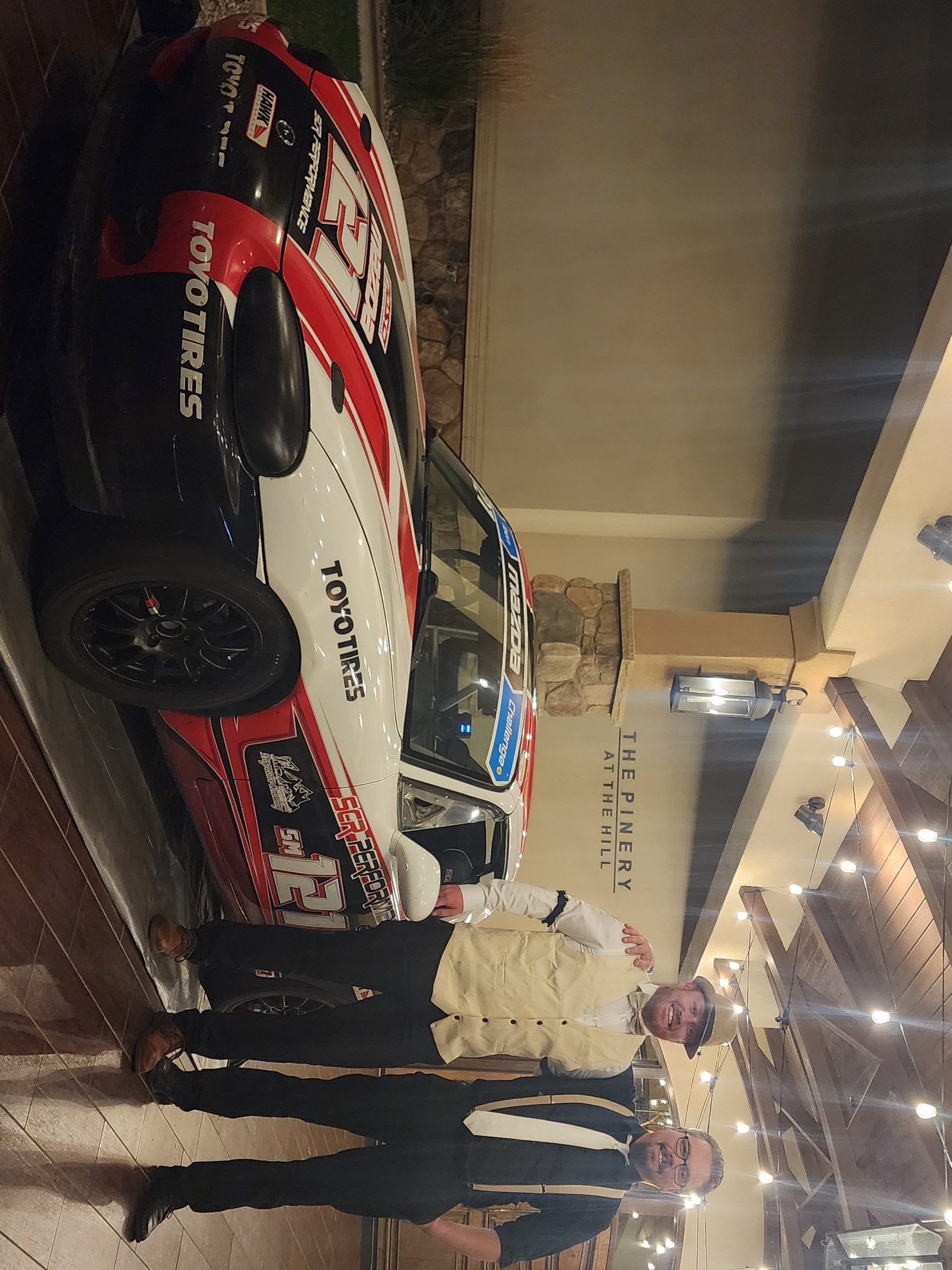
That doesn't make the sim useless. It just means the advice you've been reading was written for people racing Road Atlanta. Here's how to actually use a sim when you're racing the tracks nobody scanned.
First, Go Find Your Track
Before you write off sim prep, spend twenty minutes searching.
Assetto Corsa has a modding community that has quietly built hundreds of club-level circuits no commercial sim will ever bother with. High Plains Raceway is one of them — a free, scratch-built version with four layouts, on GitHub and mirrored across the usual mod sites. Somebody built the whole thing because they wanted to.
Two things to know before you get excited.
Mod quality varies wildly. Some are built from survey data and drone footage. Some are built from a satellite photo and a guess. A bad mod will teach you a corner that doesn't exist, which is worse than showing up blind.
None of these are laser-scanned. The elevation is approximate. The curbs are approximate. Treat everything you learn as a rough draft that the real track gets to overwrite.
If your track genuinely isn't modeled anywhere, you're not out of options — you're just doing job three and four below instead of one and two.
Job One: Learn the Sequence, Not the Lap Time
The single most valuable thing a sim gives you before a race weekend has nothing to do with speed.
It's knowing what comes next.
A new track eats your first session because your brain is doing two things at once: driving the corner you're in, and guessing at the corner you're about to arrive in. That guessing is expensive. It makes you tentative on entry and late on the throttle everywhere.
Fifty laps in a rough mod fixes that. Not because the grip is right, but because after fifty laps you know that Turn 5 dumps into a blind left, and that the back section is three corners that flow together instead of four separate ones. You stop being surprised.
Get the sequence in your head at home, and your first real session becomes about grip instead of geography.
That's the difference between using your practice session to learn the track and using it to learn the car. I wrote a full breakdown of how to spend those first 10 laps at a new track — the sim work is what lets you skip straight to the useful part.
Job Two: Build Braking References You Can Actually See
Here's where most sim prep goes sideways.
Racers memorize a braking point as a number: "brake at 3." Then they arrive at the real track and there's no marker board at all, or it's in a different place, or it's faded. The number is useless.
Instead, use the sim to build a habit of hunting for permanent visual references — a bridge, a fence post, a change in pavement color, a tree line. Then when you get to the real track, you already know the job: find the thing that isn't going to move.
Pro driver Colin Mullan, who does this at the professional level, describes his sim prep as identifying visual markers, braking zones, and lines before he ever arrives. He also gives the warning that matters most for our purposes: he asks himself where he'd realistically brake in that car, rather than trusting a number the physics engine handed him. Sims let you brake later than physics allows. Real cars don't offer a reset button.
If you want more on which sim habits actually carry over and which don't, we broke that down in sim racing tools that translate.
Job Three: Rehearse the Weekend, Not Just the Lap
This one works even if your track doesn't exist in any sim.
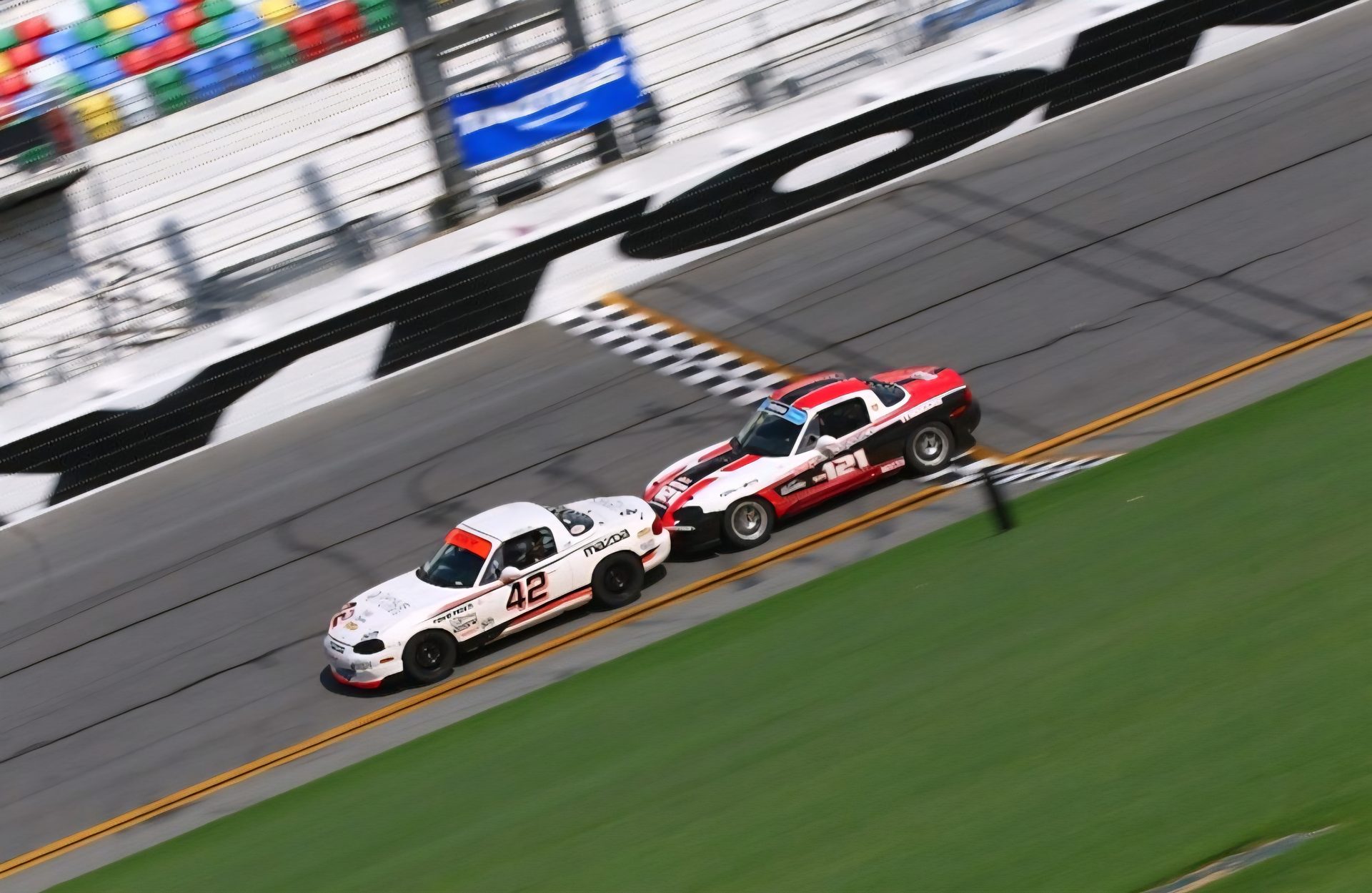
Mullan replicates entire race weekends on the sim — practice session, then qualifying, then the race — specifically to build the mental discipline of performing under pressure. Not to get faster. To get used to the shape of the day.
You can do exactly that on any track you own. Set a 20-minute practice. Get out, take a break, come back and run a 15-minute qualifying session where you only get three real flying laps. Then grid up and race.
What you're training is the part almost nobody trains: the transitions. Coming into qualifying cold. Deciding whether to abort a lap. Managing a restart. Racing side by side without lifting.
That last one matters more than lap time, and it's the one thing a sim actually gives you unlimited reps of for free. Real wheel-to-wheel practice costs money and body panels. Online racing costs a subscription.
Job Four: Prove the Skill Is Real
There's decent evidence that a sim reflects genuine driving skill, not just video game ability.
A study published in PLOS One put seven professional racing drivers — from F3, GP2, and Porsche Supercup — and ten non-racing students on the same fixed-base simulator. Not a single non-racing driver's personal best lap beat any racing driver's. The pros got to full brake pressure in 0.38 seconds versus 1.12, and drove an actual racing line while the students hugged the centerline.
Be honest about the limits: seventeen people, no motion. It doesn't prove sim time makes you fast. It does suggest the sim measures something real.
So if you're consistently quick against real fields online, that's worth putting in front of a coach. It isn't a resume. It's evidence you're worth a test day.
What the Sim Will Not Give You
Be clear-eyed about this, because the drivers who get humbled are the ones who weren't.
- Load through your body. You feel a car rotate through your hips. A wheel can't tell you that.
- Consequences. Every decision you make in the sim is free. That changes your risk calculus in ways you won't notice until it's real.
- Heat, noise, and a five-point belt. Physically, a race car is a much harder job than a desk chair.
- A car that changes underneath you. Tires go off. Brakes fade. Fuel burns off. Sims model some of this. None of them model your car, on your tires, on that day.
The honest framing: sim work moves you from lost to oriented. Getting from oriented to fast still happens in the car.
That's why our arrive-and-drive seats put you in a prepped Spec Miata for a full season (six events, paid in full before the season starts, no damage deposit), with pricing that depends on the car and package. If you're a young sim racer, Kart to Car is the structured version. Most of what sim racers learn in their first weekends in a real car is about their own body, not the racing line.
The Four-Week Plan Before Your Next Race
| When | What to do |
|---|---|
| 4 weeks out | Find a mod of your track. Run 30-40 easy laps just to learn the sequence. |
| 3 weeks out | Hunt for permanent visual references at every braking zone. Write them down. |
| 2 weeks out | Run full session structures — practice, qualifying, race — even on a different track. |
| 1 week out | Online races only. Get your racecraft reps. Stop chasing sim lap time. |
| Race week | Stop driving the sim. Watch onboard video of your track instead and rehearse the lap in your head. |
That last line surprises people. Late-week sim laps mostly build confidence in numbers that won't survive contact with reality. Trade them for mental reps and a good night's sleep — which is where our race weekend warm-up routine picks up the story.
Sim racing didn't put you behind. It put you further ahead than you think. It just isn't the last step.
If money is the thing standing between your sim rig and a real seat, that's the exact problem we built the LFR scholarship to attack. Get on the waitlist — we want belief to be the only barrier left.
Do you believe?
Sources: PLOS One — Differences between racing and non-racing drivers: A simulator study using eye-tracking (2017), Blayze — How Colin Mullan uses sim racing, Traxion — Complete iRacing track list, iRacing support — How much does it cost to use iRacing, High Plains Raceway Assetto Corsa mod (GitHub), High Plains Raceway. iRacing track availability verified against the published 2026 track list as of August 2026 — High Plains Raceway and Pueblo Motorsports Park are not in it. The PLOS One study used 7 professional and 10 non-racing drivers on a fixed-base simulator, so treat it as directional. The four-week plan is LFR's own practice, not published research.