
Your first two laps are the most expensive laps of the weekend. Qualifying is 20 minutes. You get two, maybe three real flying laps out of a set of tires. If you spend the first half of the session waking up, you didn't lose time — you gave it away.
Almost nobody trains for that. Drivers spend months on car prep and zero minutes on the 15 that come right before they roll out.
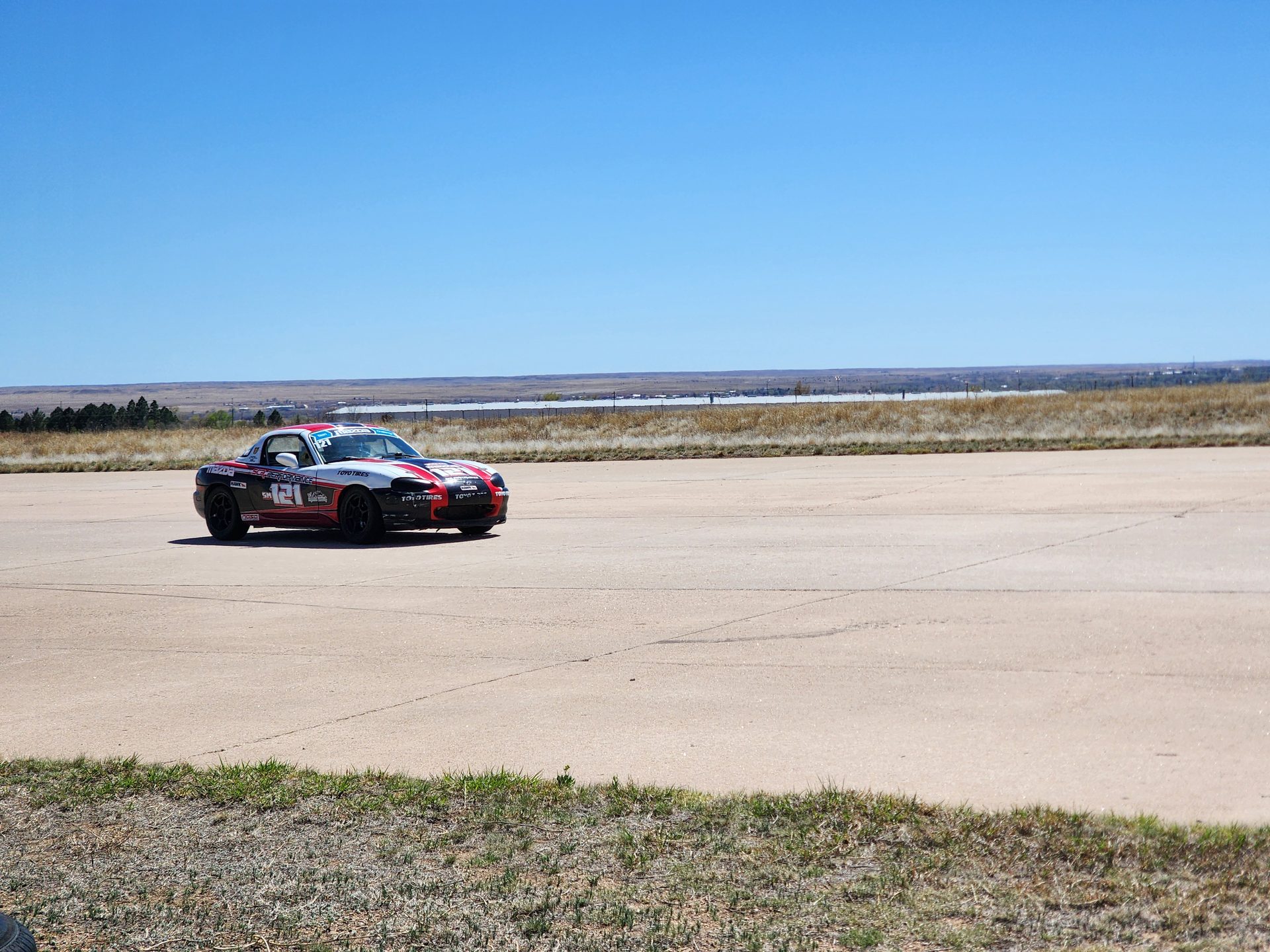
Why Your First Lap Is Slower Than It Should Be
A race car does something to your body that nothing else does.
In a 2025 study that put licensed professional drivers in both a real race car and a simulator, heart rate in the real car averaged 159 beats per minute — about 85% of maximum. In the sim, running the same event, it averaged 112. Core temperature after ten minutes of real racing hit 38.5°C versus 37.4°C in the sim. Same drivers. Same track. Completely different physical event.
That was five pro drivers, so don't treat it as gospel. But it matches what every racer already knows in their gut: the car asks for more than you expect, and it asks immediately.
Here's the problem. Your body doesn't get there on its own for a few minutes. If you climb in cold, those first laps are your warm-up — and in a 20-minute qualifying session with a tire that's only good for three hot laps, you don't have minutes to spend.
The routine isn't about being fit. It's about arriving at green flag already switched on.
The Night Before: Two Boring Jobs
Neither of these is exciting. Both are worth more than anything you'll do in the last five minutes.
Sleep. Not "get to bed eventually." Actually decide on a time and hit it. In our paddock, the cars are done Friday evening and everybody eats and sleeps — a team wrenching at midnight has already lost Saturday. I laid the whole thing out in our hour-by-hour race weekend walkthrough, and the pattern holds every time. The calm teams on Saturday morning are the ones who finished Friday.
Hydration. You cannot fix this at 8:55am with a bottle of water on grid. Researchers measuring stock car drivers during competition found sweat rates around half a liter per hour behind the wheel. A systematic review of hypohydration found that once you're down more than about 2% of body mass, attention, executive function, and motor coordination take a hit — the evidence is mixed and reaction time itself may hold up, but attention is the one you actually need in traffic.
So drink through Friday and Saturday morning, not just before you get in. If you want the practical version of this, the hydration section of our at-home driver fitness plan covers what to do and what to skip.
Eat a real meal the night before and something small and boring two hours before your session. Race morning is not the time to try the taco truck.
The 90 Minutes Before Your Session
This is the part most people improvise. Don't. Build a countdown and run the same one every session, all weekend.
| Time before green | What you're doing |
|---|---|
| T-90 min | Light food. Fill your bottle. Sunscreen if it's a Colorado afternoon. |
| T-45 min | Gear laid out in the order you put it on. Nothing hunted for later. |
| T-25 min | Look at your notes from the last session. One thing to fix, not five. |
| T-15 min | Physical warm-up. 8-10 minutes, standing next to the trailer. |
| T-10 min | Mental lap. Eyes closed, run the track in real time. |
| T-5 min | Suit up, drink, helmet on, belts checked, roll to grid. |
The point of the table isn't the exact minutes. It's that decisions get made once, in your driveway, instead of 40 times at the track while your heart rate is climbing.
That's also why we built the Race Day Ready Pack as a free download — it's the checklists and setup sheets we actually run, so a first-year driver isn't inventing a system in the middle of the weekend they're trying to survive.
The 10-Minute Warm-Up That Fits in a Paddock
You don't need a gym. You need blood moving and your neck, shoulders, and hands awake. Driver coaches generally suggest finishing about 10 to 15 minutes before you go out, so you're warm but not gassed.
Here's the version that works next to a trailer with no equipment:
- Two minutes of easy movement. Walk fast, jog to the tech shed and back, anything that gets you breathing.
- Arm circles, 10 each direction. Forward and back, straight arms. Wakes up the rotator cuff before you start fighting an unassisted steering rack.
- Neck work, gently. Slow nods and side tilts, then light resistance with your own hand — 5 seconds each direction. Your neck is the muscle that will actually be sore Sunday night.
- Hip hinges, 10 per side. Hands sweeping toward the floor. Your back has been in a seat and it's about to go back in one.
- Reaction work, 60 seconds. A tennis ball bounced off the trailer wall and caught is the cheapest reaction trainer in motorsports. Have your crew chief throw it if you've got one.
Gentle is the operating word. This is activation, not training. Nobody has ever qualified better because they did pushups on grid.
If it's your second session of the day, you're already warm. Two or three minutes of neck and reaction work is enough.
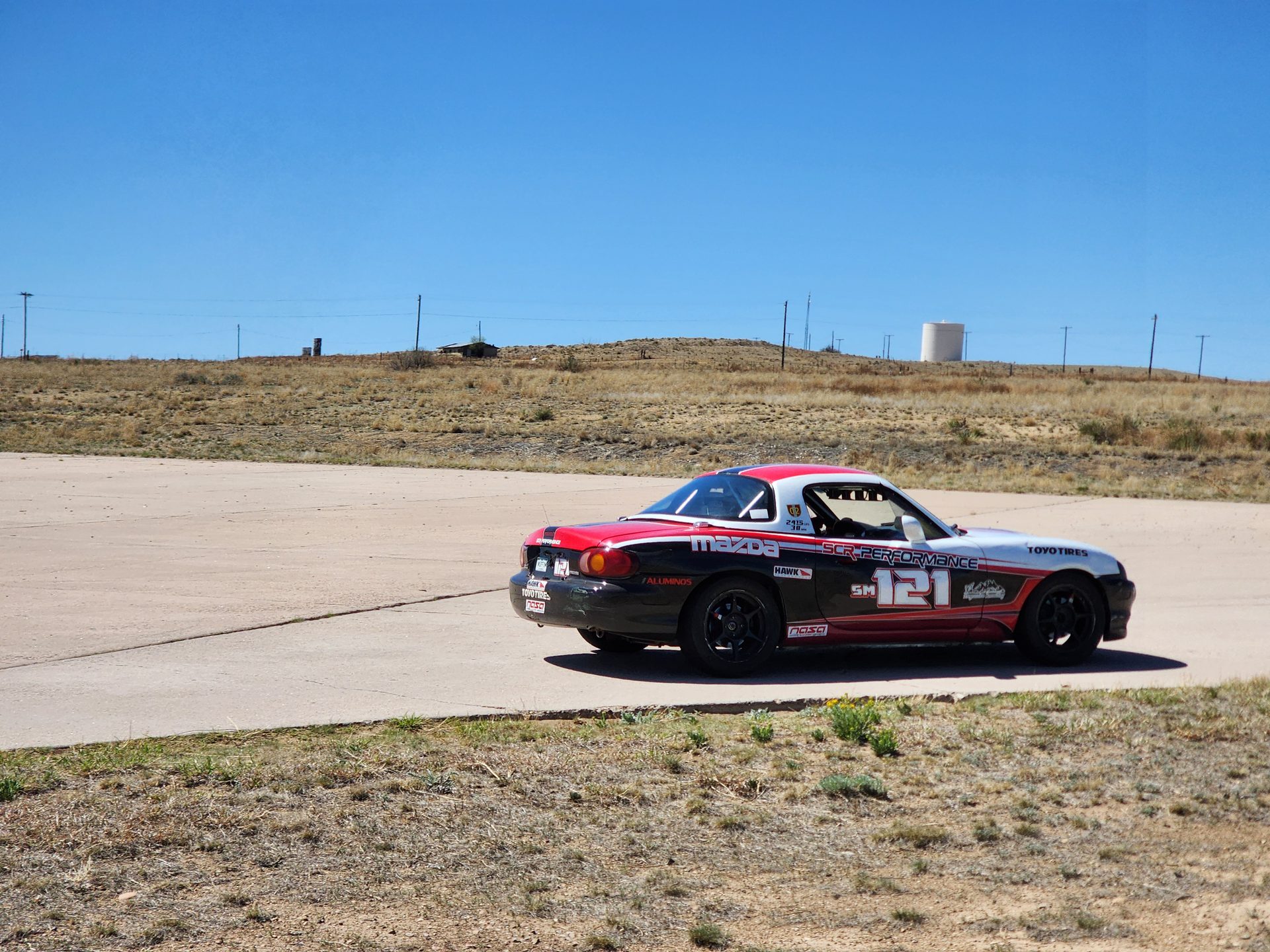
Drive the Lap in Your Head Before You Drive It
This is the part young drivers skip because it feels like nothing.
Mental practice has been studied for decades, and the meta-analyses keep landing in the same place: rehearsing a motor skill in your head does improve performance, and it works best stacked on top of real practice rather than replacing it. Nobody visualizes their way to being fast. But visualizing before a session is close to free, and free is the whole point of this post.
Do it properly:
- Real time, not fast-forward. If your lap is 1:58, your mental lap is 1:58. If you finish in 40 seconds, you skipped the hard parts.
- Name your reference points out loud in your head. Brake at the 3, turn at the second patch, throttle at the curb.
- Include the mistake. Rehearse getting it wrong in Turn 1 and settling down by Turn 3. Then you've already practiced the recovery instead of panicking through it.
- Do it with your eyes closed and your hands moving. Sitting on the trailer gate looks ridiculous. Do it anyway.
Then get in the car and stop thinking about it. You already made the plan.
The Out Lap Is Part of the Routine
Your warm-up doesn't end when the belts click. The out lap is where tires, brakes, and driver all come up to temperature together, and it's the single most wasted lap in club racing.
I won't rewrite it here — we already broke down how to use the out lap in qualifying and how to get up to speed at a track you've never seen. Read those two and your first flying lap gets meaningfully better.
Between sessions, run a 20-minute reset. Drink. Eat something small. Get in the shade and get your feet up. Write down what the car did while it's still true — five honest minutes right after a session beats an hour of remembering wrong on Tuesday. Our post-race debrief method is the format we use.
Same Routine, Every Single Time
The reason to standardize all of this isn't the physiology. It's that a fixed routine gives your brain something to do while it's nervous.
Race day nerves come from uncertainty. When the next 90 minutes are already decided — food here, gear there, warm-up now, mental lap now — there's less room for the spiral. New drivers who follow a checklist look calmer than experienced drivers who wing it, and looking calm is usually a sign of being calm.
Write your countdown on an index card. Tape it inside the trailer door. Run it for practice, qualifying, and the race, even when practice "doesn't matter." Routines only work if they're automatic, and automatic is built by repetition on the sessions that don't count.
You don't need a trainer, a coach, or a dollar to start this. You need to decide it matters.
If you want to run this routine for real — on a prepped Spec Miata, with a crew handling the car so your only job is being ready to drive — that's exactly what Kart to Car is built for. Apply here and let's find out what you can do when the first lap is already your best one.
Do you believe?
Sources: Frontiers in Sports and Active Living — Physiological responses of race car drivers in authentic and simulated motor-racing (2025), Physiology & Behavior — The effect of active hypohydration on cognitive function: a systematic review and meta-analysis, Applied Ergonomics — Physiological strain of stock car drivers during competitive racing, Psychology of Sport and Exercise — Does mental practice still enhance performance? A 24-year follow-up meta-analytic replication, Your Data Driven — Driver Warm-Up to Maximise Your First Laps, Winding Road / Speed Secrets — Preparing Your Body for a Race Weekend. Physiological figures verified against the published studies as of August 2026; the heart rate and core temperature study used five professional drivers, so treat it as directional, not definitive. Session timings and the countdown itself are LFR's own race weekend practice.