
Most drivers think qualifying is about being brave for one lap. It isn't. In Spec Miata, the cars are so close in pace that your grid spot comes down to two things you can actually control: getting a clear track and getting a tow. Miss both and your fastest lap never shows up on the sheet.
I've watched fast drivers start mid-pack because they burned the whole session stuck behind slower cars. I've also watched slower-feeling drivers grid up front because they planned. Qualifying rewards the planner.
Why Spec Miata Qualifying Is Different
In most classes there's a clear pace gap between the front and back. You put in a clean lap and you land where your car belongs. Spec Miata doesn't work like that.
The rules keep every car within a few horsepower and a few pounds of each other. So the field bunches up tight. Half a second can be the difference between pole and tenth.
That tightness changes the whole game. When everyone is this close, a clean lap in clear air is worth more than a hero move in traffic. And because the cars make so little power, the aerodynamic draft — the tow off the car in front — is worth real time down every straight.
That's the puzzle. You need clear space to drive your line, but you also want a car just far enough ahead to give you a tow. Solving that puzzle is the actual skill of Spec Miata qualifying.
The Out Lap Sets Up Everything
Your fast lap is only as good as your out lap. Cold tires don't grip, and a cold Spec Miata will just push and slide while you throw away time.
The good news is the spec Toyo Proxes RR — a 40-treadwear DOT race tire — warms up fast. A hard out lap gets it close to working temperature in a lap or two. So use the out lap with a purpose.
Here's what the out lap is for:
- Heat the tires. Weave gently on the straights and lean on them in the corners. Don't crawl — a slow out lap wastes the session.
- Warm the brakes. Drag them a little so the pads bite when you need them.
- Build a gap. Look up the road and start hunting for a window of clear track before you ever start pushing.
If it's cold out or the track's damp, keep dragging the brakes lightly to fight the cooling. A Spec Miata gives up temperature quickly, and a cold car on your money lap is a wasted session.
Finding Clear Track (And a Tow)
This is where sessions are won and lost. Your goal is a lap with nobody holding you up in the corners and, ideally, a car a few lengths ahead pulling you down the straights.
Don't just tuck in behind traffic and hope. Manage your spacing on purpose.
The move most drivers miss is backing off to build a gap. Slow down for half a lap, let the pack pull away, then start your push into clean air. You lose one lap to gain a great one. That trade is almost always worth it.
If you catch a car mid-lap, decide fast: is it faster to pass, or to back out and reset? A messy pass mid-corner ruins the lap for both of you. Sometimes patience means aborting a lap early and coming around again clean.
Your best lap time in Spec Miata is usually the draft and your corner exits — not your braking.
This kind of think-ahead racecraft is exactly what we drill in our Kart to Car program. New drivers show up believing speed is all bravery. Then they watch a calmer driver plan a clear lap, catch a tow, and start three rows ahead of them. Qualifying is the first place that lesson lands.
Using the Draft Without Getting Greedy
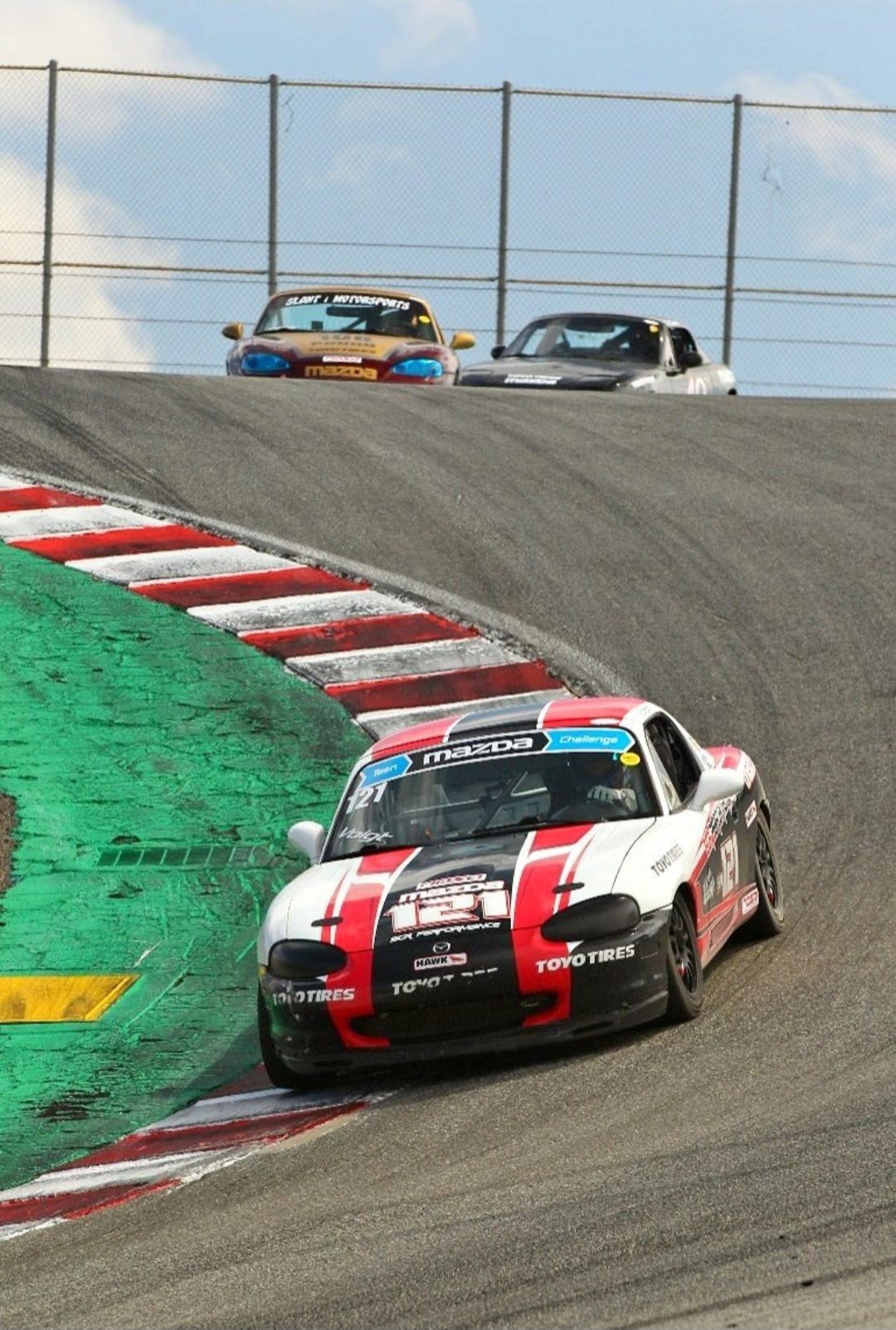
The tow is free time, but it comes with a catch. Sit too close behind another car through the corners and you'll lose grip from the disturbed air and overheat your car. Then your corner speed drops and you give back everything the straight gave you.
The sweet spot is a car a few lengths ahead. Far enough that your corners stay clean, close enough that you catch the draft on the straights. That's the balance to chase.
And know who you're following. A tow only helps if the car ahead is running a similar pace. Latch onto someone slower and they'll cost you more in the corners than they give you on the straight. Pick your dance partner.
Where Your Lap Time Actually Comes From
When you finally get that clear lap, don't try to reinvent your driving. Qualifying speed comes from doing the normal things a little cleaner.
Focus on your exits. A clean, early throttle exit onto a straight carries all the way to the next braking zone. In a low-power car, a good exit is worth far more than a late, dramatic brake. Nail the exits onto the longest straights first.
Then protect the lap. One locked brake, one dropped wheel, and the lap is gone. Drive at about nine-tenths with clean inputs rather than ten-tenths with mistakes. Smooth is fast here.
And run more than one flyer if the session lets you. Track and tire temps shift through the session, traffic clears, and your best lap often isn't your first attempt. Keep digging until the checker flies.
Put It on One Page
Qualifying isn't a mystery once you break it down. Warm the tires on the out lap. Build a gap. Find clear track with a car a few lengths up for the tow. Nail your exits. Protect the lap. Do it more than once.
The hard part isn't knowing all that. It's remembering it at 6 a.m. in a cold paddock when your hands are shaking with nerves. That's why we built our free Race Day Ready Pack — the out-lap routine, the pre-session checklist, and the notes that keep your head clear when the session clock is ticking. Print it, run the process, and stop wasting the one lap that sets your whole race.
Do you believe?
Sources: SpecsData — Spec Miata Racing Guide and Car Setup Tips, LVRY — Race Day Essentials: Level-Up Your Out-Lap for Peak Performance, Worth Driving — Miata Motorsport Tire Guide, NASA Speed News — Top Drivers Set Fast Qualifying Times at NASA Championships. Out-lap, tire-warmup, and draft/traffic strategy verified against these published sources as of July 2026, plus our own race-weekend experience.