
Open most Spec Miata season budgets and you'll find tires, entry fees, and maybe a line for a hotel room. You won't find a line for the drive itself.
That's the gap. Getting to the track and back costs real money every single weekend, separate from anything that happens once you're there. Here are the five pieces of that bill nobody puts in a spreadsheet, with real Colorado numbers.
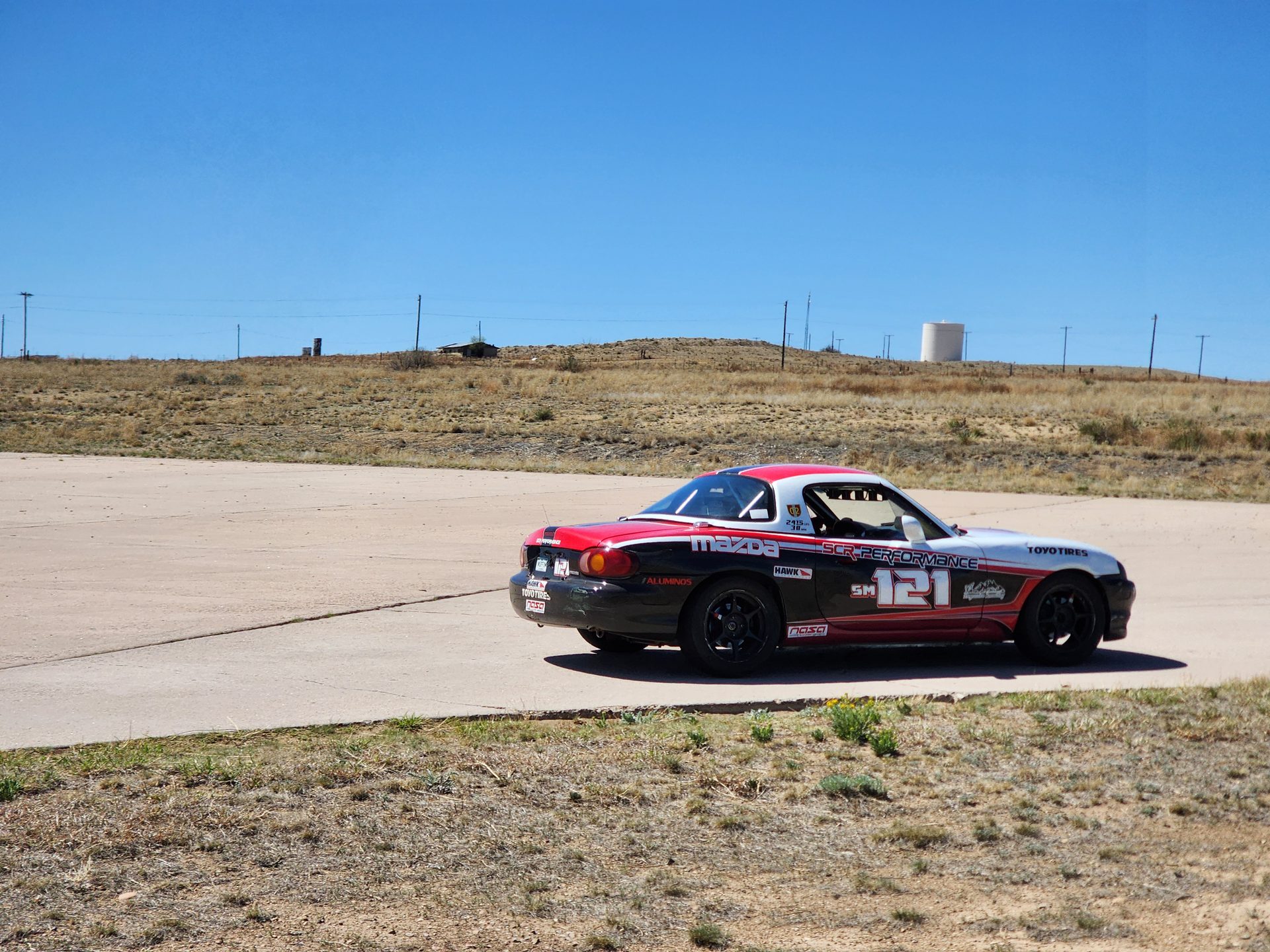 Car #121. Getting it here cost money before a single lap was driven.
1. Towing Fuel Is Worse Than Your Daily Driver Math
A truck that gets 18 miles per gallon unloaded does not get 18 miles per gallon towing a race car. Pulling a mid-weight load commonly drops that same truck to somewhere around 10 to 13 mpg, according to published towing fuel-economy breakdowns. A Spec Miata on an open trailer lands right in that weight range. Weight and wind drag are both working against you at once.
Run that math on our two home tracks, at the AAA national average of $4.41 a gallon as of early October 2026:
| Track from Colorado Springs | Round trip | Towing at ~11.5 mpg | Fuel cost |
|---|---|---|---|
| High Plains Raceway (~117 mi one-way) | ~234 miles | ~20 gallons | ~$89 |
| Pueblo Motorsports Park (~45 mi one-way) | ~90 miles | ~8 gallons | ~$34 |
That's the tow alone — hauling the rig out Friday and back Sunday. It doesn't include a single mile of the local driving you do once you're there.
2. The Real Number Is Bigger Than the Pump Price
The fuel math above is only what leaves your wallet at the gas station. Brakes, tires, oil changes, and the truck's own depreciation all move in step with the odometer too, and towing accelerates every one of them.
The IRS publishes its own figure for exactly this. It's a blended, all-in estimate of what a mile of driving truly costs once you count fuel, maintenance, and depreciation together: 72.5 cents a mile for the first half of 2026, rising to 76 cents for the second half.
Apply that full rate to the same two round trips, and it replaces the fuel-only number above as the honest total:
- HPR, 234 miles: roughly $169–$178 all-in
- Pueblo, 90 miles: roughly $65–$68 all-in
That's the real cost of the drive. The pump receipt in section one is only about half of it — the rest is wear you don't feel until the truck needs brakes or tires sooner than it should.
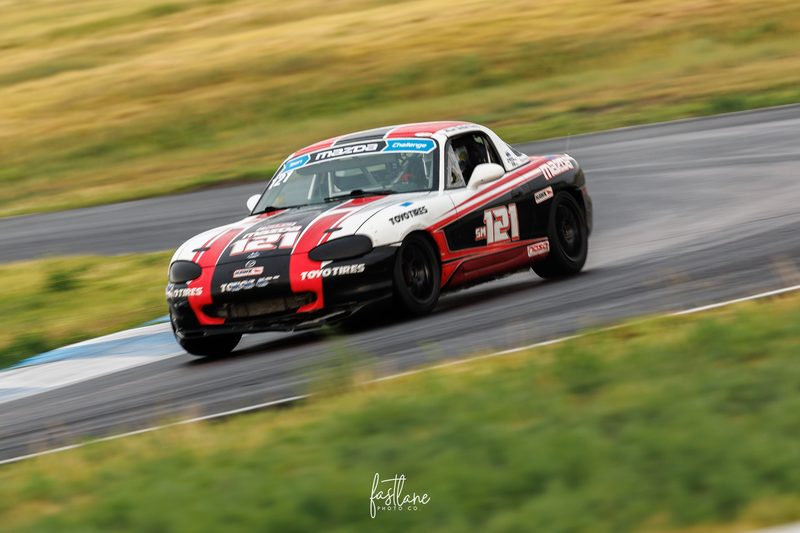 Every inch of curbing used here came after a few hundred miles of towing to get here.
3. Feeding Yourself for Three Days Adds Up Fast
A real weekend is rarely one day. Add a Friday test day to a two-day race and you're feeding yourself and whoever rode with you for three days straight.
Call it $15 to $25 a meal, three meals a day, for two people, across three days. That's $270 to $450 before anyone orders a second coffee. Our own advice on camping at the track is to bring cold food that doesn't need a stove — it's not just about convenience, it's the cheapest way to cut this number in half.
4. The Bed You Still Have to Pay For
We've already written the full breakdown on camping versus a hotel for a race weekend, so we won't repeat the numbers here. The short version: free paddock camping exists at both of our home tracks. A hotel near High Plains Raceway can still run you around $400 once you count two nights and the extra driving. That line item lives on top of everything in this post, not instead of it.
5. The Cost Nobody Invoices You For
Here's the one that never shows up on paper at all: your time.
A Friday test day means a day off work for a lot of racers. That's PTO burned, or hours you didn't get paid for if you're hourly. A three-day weekend away means three days you're not earning, not just three days you're spending. That cost is different for every single racer, which is exactly why nobody puts a number on it. It's real anyway. Budget it the same way you'd budget a tank of gas: plan for it, don't just discover it.
What a Real Weekend's Travel Bill Looks Like
Using the IRS's all-in rate as the honest total for the drive itself — before a single meal or hotel night — a weekend at High Plains Raceway is already carrying roughly $170 to $180 in driving costs. Pueblo, being so much closer, holds that number down to roughly $65 to $70. Add $270–$450 in meals and, if you're not camping, a $400 hotel, and the gap between our two home tracks gets even wider.
None of this replaces the roughly $2,500 in consumables a competitive weekend already costs in tires, entry, and fuel for the car itself. It sits on top of it. Towing to the track in Colorado already covers the grades, the wind, and the altitude that make this drive its own skill. This post is about what that same drive costs you in dollars, not just nerves.
If travel costs are the reason you're racing fewer weekends than you'd like, that's exactly the kind of gap a sponsor covers well. A local business isn't going to pay your mortgage. But a tank of gas and a hotel room are a completely reasonable ask once you've got the right pitch in front of them. The First Sponsor System is the $67 system we built for finding and landing exactly that kind of partner — the prospect list, the templates, and the outreach sequence, all in one place.
And if the whole ownership math is what's actually keeping you off the grid — the car, the truck, the trailer, every mile between them — a full season through Kart to Car hands you a car that's already at the track. You still travel. You just stop paying to haul anything there yourself.
Do you believe?
Sources: AAA — National Average Dips Following Record-Setting September, IRS — Standard Mileage Rates, Ultimate Rides — How Much Does Towing Lower My Fuel Economy?, Distance Cities — Colorado Springs to Byers, CO. Mileage, fuel-economy, and gas-price figures verified as of early October 2026 and will drift with the market — run your own truck's numbers before you budget off ours. Consumables and track-distance figures referenced from our own previously published numbers.