
Most racers pick sponsor prospects by asking, "Who would look cool on my car?" That's the wrong question.
The better question is, "Who is already spending money to get noticed right now?" A business with a marketing budget in motion is a much easier yes than one you have to convince to start spending. And you can see a lot of that spending from your couch, for free.
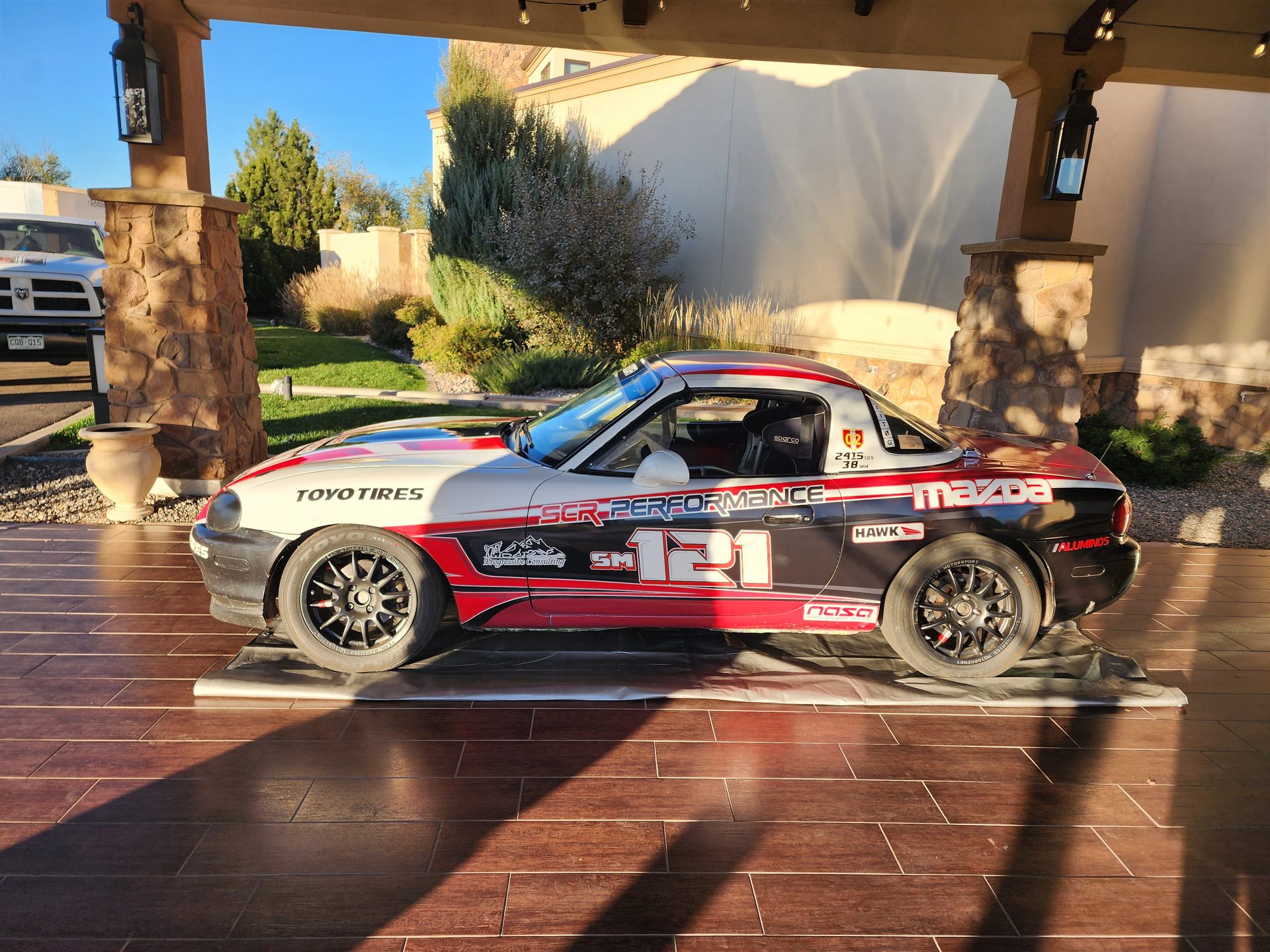 #121 on display at The Pinery during Spark the Springs. A business putting on an event is a business with a reason to spend.
Why timing beats fit
Sales teams have a name for this. They call it a buying signal. Crunchbase defines it simply: a buying signal shows "when a prospect is in a position to purchase." Their list includes new product launches, changes in leadership, and hiring.
Sponsorship works the same way. A local shop might be a perfect fit for your audience. But if they just cut staff and froze spending, your pitch lands at the worst possible time.
Flip it around. A shop that just opened a second location is actively trying to get its name out. It has a goal, a deadline, and money set aside. You're not asking them to start marketing. You're offering a better way to do marketing they're already doing.
That's the whole idea of sponsor market research. You're not hunting for brands that might like racing. You're hunting for brands that are already in motion.
Here are the six signals I watch for.
1. They're running ads right now
This is the clearest signal there is. If a business is paying for ads, it has a marketing budget and someone in charge of spending it.
You can check this for free. Meta's Ad Library lets anyone search the active ads running across Facebook and Instagram. Type in the business name, set the country, and look.
What you're looking for:
- Are they running anything at all? A local business with active ads is spending today.
- What are they promoting? A spring sale, a new service, a hiring push. That tells you what they care about.
- Who are the ads aimed at? If the photos show families, young adults, or car people, your audience might overlap.
Then use what you find. "I saw you're promoting your new detailing package" is a much stronger opener than "Would you like to sponsor me?"
2. They just opened a new location
A new location is a business shouting, "Notice us!" They need new customers in a new area, fast.
Watch for ribbon cuttings. In Colorado Springs, the Chamber & EDC lists them publicly and markets them on its website. And here's the part most racers miss. Per the Chamber's own 2023 page, a ribbon cutting is a member service that starts at its Business Advocate level, a $1,500-a-year membership. A business that paid to cut a ribbon is a business that pays to be seen.
Your local chamber probably does something similar. Check its events calendar once a month. Grand openings, anniversaries, and reopenings all count.
If you want new names before the ribbon is even cut, your state keeps business filings public. In Colorado, that's the Secretary of State business search. A filing alone doesn't mean they have money. But it tells you who's starting something near you.
3. They're hiring someone in marketing
A job posting for a marketing coordinator or social media manager tells you two things. First, they have budget for the role. Second, a new person is about to walk in needing early wins.
That new hire is a great contact. They want fresh ideas. They want content. And they haven't locked in a plan for the year yet.
Check the business's website careers page and the big job boards. Search the business name plus "marketing." If you see a posting, note the date. Reach out a few weeks after the hire starts, once they've had time to settle in.
4. New owner or new leadership
When a business changes hands, the new owner usually wants to put their stamp on it. Crunchbase lists changes in leadership as a buying signal, because new leaders often bring budget shifts.
For small local businesses, this often shows up as a new sign, an "under new ownership" banner, or a post on their social page. For bigger regional brands, look for a news release or a LinkedIn post about a new general manager or marketing director.
Be careful here. New owners are sometimes cutting costs, not adding them. Ask before you assume. A simple "What are you hoping to change this year?" tells you which kind of owner you're talking to.
5. They already sponsor something
A business that already sponsors a Little League team, a 5K, or a car show has done this before. They know what sponsorship is. They have a process. Someone there has said yes to something like you.
Chris Baylis of The Sponsorship Collective suggests a version of this for any property: look at who your competitors partner with. In racing terms, walk the paddock and read the cars. Look at the banners on the outfield fence. I wrote a whole post on the sponsor prospects already hanging on a fence.
If a brand already backs another racer, don't skip them. That's a sign the category works for them. Here's how to pitch a brand that already sponsors your rival without stepping on anyone.
 Every logo on a car was a business that said yes once. Read the cars around you. They're a list of who already buys.
6. They're launching something with a date on it
A new product, a new menu, a 10-year anniversary, a big sale weekend. Any launch with a date on it means the business needs a crowd on that day.
That's where a race car earns its keep. Parked out front, a real race car pulls people out of their cars. We've covered how to use a race car for brand activation events if you want the full playbook.
Launch dates also help with timing. Sponsorship decisions are slow. Baylis notes they often go up a chain, where "they have to ask someone over them." If you know a launch is coming in March, pitch in December. That's also why it pays to know a sponsor's marketing calendar and where your season fits.
How to run this research in one evening a month
You don't need paid software. Here's the setup I'd use:
- Set Google Alerts. Google Alerts emails you when new results match a topic. Set alerts for your town plus "grand opening," "new location," and "now hiring marketing." You can choose how often they arrive and what region they cover.
- Check your chamber calendar. Write down every ribbon cutting and anniversary.
- Run your top 10 names through the Ad Library. Note who's actively running ads.
- Walk one event. A car show, a race weekend, a youth game. Photograph every sponsor banner.
- Log it all. One row per business, with the signal you saw and the date you saw it. Our post on tracking sponsor conversations in a spreadsheet has a simple layout.
Then sort by freshness. A signal from this week beats one from last spring.
A signal tells you when to call. It doesn't tell you they'll say yes.
Be honest with yourself about that. None of these signals guarantee a deal. They just move you to the front of a shorter line.
Lead with the signal, then ask questions
The research only pays off if you use it in the first line of your pitch. "Congrats on the new east-side location" proves you did your homework. It also tells them you're thinking about their goals, not just your car.
Then stop pitching and start asking. What are they trying to get out of the new location? Who are they trying to reach? What did they try last year that didn't work? We built the free 37 Discovery Questions for exactly this moment, so you walk into that first conversation with the right questions instead of a sales speech.
When their answers line up with what your car and your audience can do, the pitch almost writes itself.
Your next step
Pick one signal from this list and check it tonight. Run five local businesses through the Ad Library, or pull up your chamber's events calendar. Write down what you find.
If you want the whole system, from building the prospect list to closing and keeping the sponsor, that's what The Funded Season Kit is for. It's 11 course-style modules with worksheets and a sponsor tracker, $197 once.
Sources: Crunchbase: Buying Signals, The Sponsorship Collective: Event Sponsorship Guide (Chris Baylis), Colorado Springs Chamber & EDC: Ribbon Cuttings and Ground Breakings, Meta Ad Library and Meta Transparency Center: Ad Library Tools, Google Alerts Help, Colorado Secretary of State Business Search. Details verified against these sources as of November 2026. The chamber membership figure is from the Chamber's 2023 page and may have changed. Everything else here comes from these sources plus my own experience pitching sponsors.
Do you believe?