
Most racers hunt for sponsors by guessing. They email a company that has never paid for a logo anywhere and wonder why it goes quiet.
Here's a faster filter. Drive to the nearest youth ball field. Read the outfield fence.
Every name on that fence is a local business that already said yes to sponsorship once. Someone approved that check. That is the prospect list most racers skip.
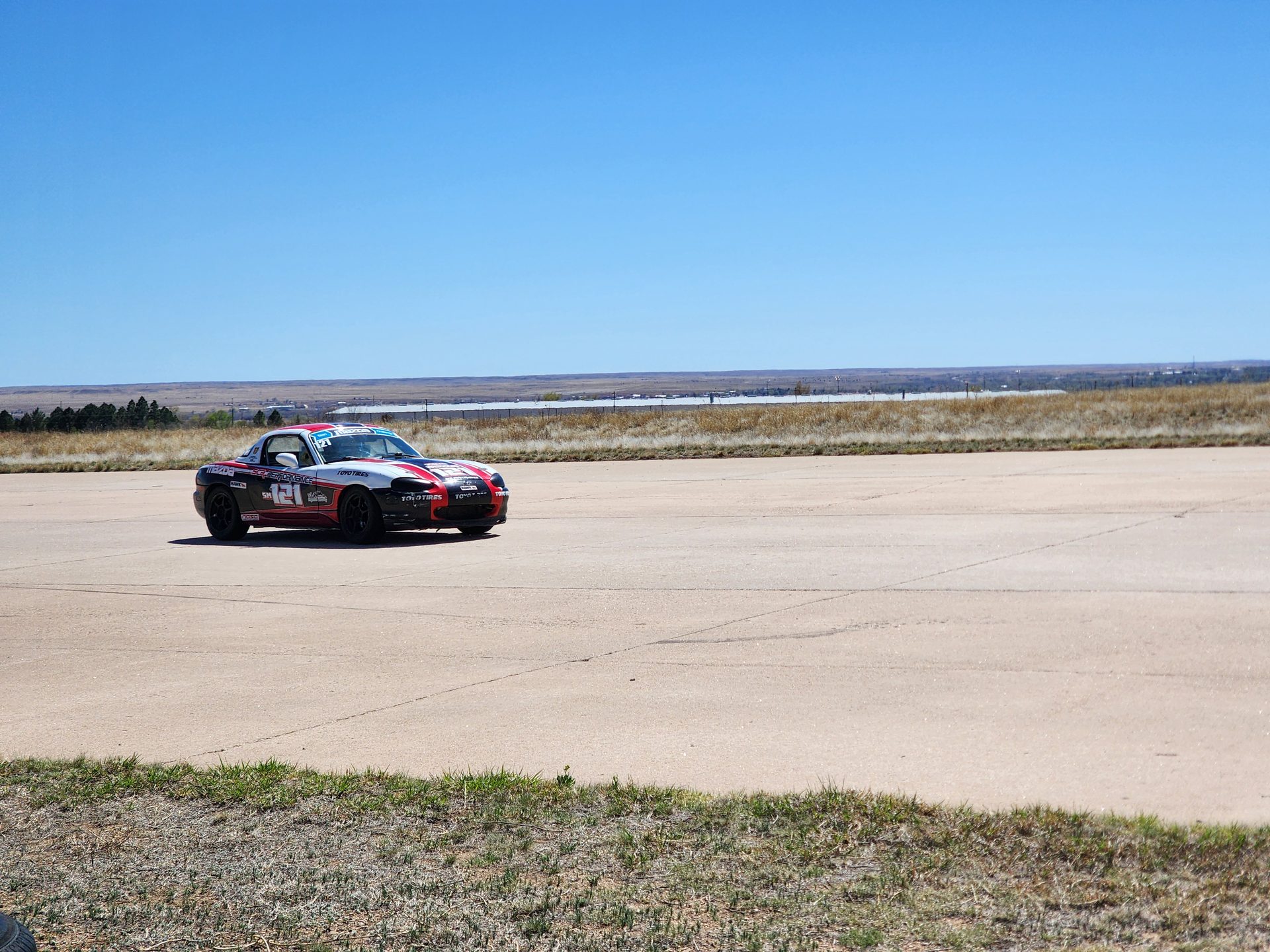 The #121 on the front straight. Our own logo space is the part we have to sell.
Why a fence beats a guess
Little League's own guidance for local leagues says it plainly. Their sponsor-manager page lists fence signs, uniform sponsors and registration sponsors as typical offerings, and says sponsorships and donations from local businesses and organizations help provide the necessary funding. It even tells leagues to build a list of local businesses and find the owner or manager to contact.
That is the same job you have. Somebody already did the hard part for you: they found the businesses that will write a check for local visibility.
Why do those businesses say yes? Generic small-business sources keep naming the same reasons. One 2025 roundup lists brand visibility, networking, credibility and community ties as the main benefits of sponsoring events. That's a general list, not a racing study. But it tells you what the owner on that fence was already buying.
A business with a banner has a budget line, a person who signs, and a habit of sponsoring. A business with no sponsorship history has none of those. I wrote about that second case here.
If you want the shortcut for everything after the walk, The First Sponsor System is the kit we built for it. More on that below.
The 45-minute banner walk
You need a phone and one lunch hour.
1. Pick three places. A youth ball field. A school sports program or stadium. Your track or a local 5K's start-line banner. Any place where local logos hang.
2. Photograph every name. Take one wide shot and a close-up of each sign. Don't judge yet.
3. Log what you see. One row per business: name, what kind of sponsor they are (fence, team, event), and how many places you spotted them. A business on three banners is a business that sponsors on purpose.
4. Flag the repeat names. Two sightings means they sponsor more than once. Mark those first.
5. Find the owner. At a small shop it is usually the owner. Check the website's About page and the state business filing. Our guide to finding local sponsors covers the rest.
6. Open with the banner. Don't pitch a stranger. Pitch a neighbor: "I saw your name on the Little League fence and at the 5K. I race a Spec Miata on weekends, and I'd like to show you what a season of racing could do for you."
That opener is honest, specific and hard to ignore. It also tells the owner you did your homework before you asked for a dime.
Where the system comes in
You can run the walk with a notebook. The part that eats time is everything after: who to email first, what to say, how to track the replies, and what to put in front of a shop owner who has only ever bought a 2-by-4-foot sign.
That's what The First Sponsor System is for. It's the set of working documents our own team uses to pitch and sign sponsors, including the outreach templates, a sponsor tracker, and the Race-Ready Sponsor List of companies that back racers. Your banner log goes straight into the tracker. The email templates turn "I saw your name on the fence" into a message you can send tonight.
Don't pitch them a fence sign
Here's the trap. A fence sign is a cheap, one-size item. A race car is not. If you walk in asking for fence-sign money, you'll get fence-sign thinking.
Show the owner what is different. A car travels, shows up in photos, and gets seen by people who never go to the ball field. Use your real numbers: events, followers, photos, what you will report back. Our breakdown of what a race team delivers for $2,500 shows how to list it line by line.
And please size the ask for the business. A shop on a fence sign is probably not ready for a five-figure check.
What I can't promise
I'll be straight. I can't tell you what percentage of fence sponsors will say yes to a racer. Nobody has published that number, and I won't invent one. One league article I found is from 2008, and it only showed a league hoping to grow to 100 advertisers from 32. It tells us sponsor fences are old, local and common. It does not tell us your close rate.
What I do know is that several of LFR's current partners, such as Engine Ice and OG Racing, support us with product and discounts, not big cash checks. So I won't pretend a banner walk turns into a big check overnight. It gives you a shorter, warmer list. The rest is on you.
Do the walk this week
Go look at a fence. Take 20 photos. Circle the repeat names.
Then get the machinery to do something with that list. The First Sponsor System has the templates, tracker and company list so your banner log becomes real conversations instead of a photo album.
Do you believe?
Sources: Little League International: Sponsorship and Fundraising Manager, local league role, Small Business Trends: benefits of sponsoring an event (published July 2025), Bronx Times: TNLL raises funds one sign at a time (May 2008). Verified as of November 2026. The banner-walk method is my own, not a published study. LeadFoot Racing has no customer, sales, or survey data in this post.