
A local business owner asked me a fair question last year: "What do I actually get for that?"
I gave the answer most racers give. Logo on the car, some social posts, we'd love to have you out to a race. He was polite about it. He also didn't sign.
So I went home and built the thing I should have brought in the first place. An itemized list. Here's what $2,500 buys from a grassroots race team, line by line, and what each line replaces on a marketing budget.
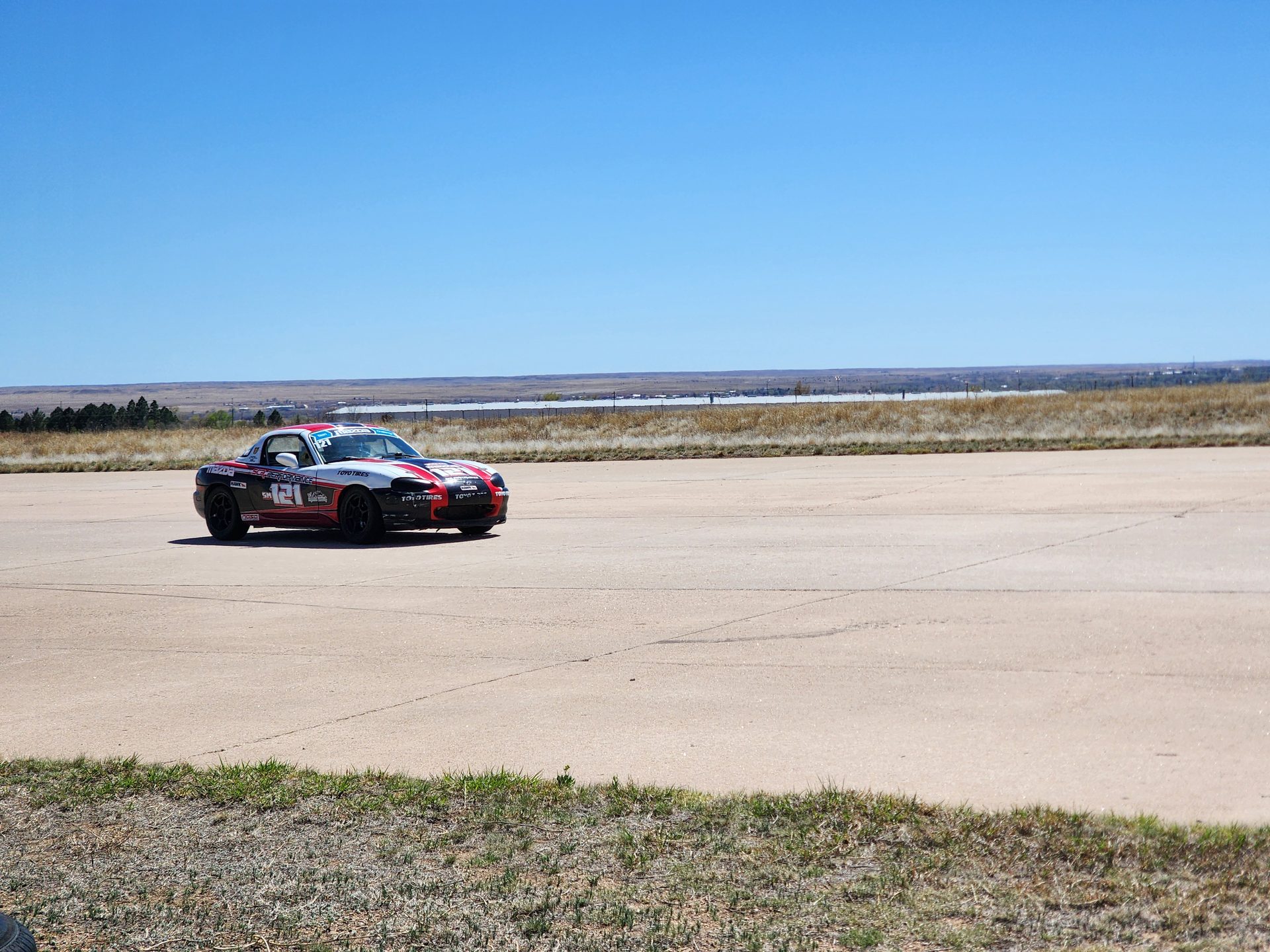 Our #121 Spec Miata. Every panel is inventory. The trick is knowing what each one is actually worth to a business.
First: what $2,500 buys everywhere else
You can't price a sponsorship in a vacuum. A marketing director isn't comparing you to other racers. They're comparing you to the other things that $2,500 could do.
Here's the honest competition:
- A static billboard. Rates run from about $750/month in secondary markets up past $15,000 in major metros. Denver averages roughly $4,500/month, per DashTwo's 2026 billboard cost guide. So $2,500 doesn't even get a Front Range board for a full month.
- Local radio. A 30-second spot in a small market runs about $25 to $100. Real money buys frequency, not one ad.
- Paid social. Cheap to start, easy to measure, and completely forgotten the second the budget stops.
That's the bar. Not high, honestly. Every one of those options rents attention and gives the brand nothing to keep.
Which is exactly the gap a race team fills.
The line-by-line: what $2,500 actually buys from us
This is the package I'd build today. Nine lines. Each one is a thing that gets made, delivered, and documented — not a promise about "exposure."
| The deliverable | What it replaces for the brand |
|---|---|
| Logo placement on the car for all six NASA Rocky Mountain weekends | Outdoor signage that moves, in front of a captive paddock audience |
| Placement on the driver suit and the trailer | A rolling board on every highway between Colorado Springs and the track |
| A set number of dedicated social posts and race-weekend Stories | Content their own team would have to shoot, edit, and schedule |
| A licensed photo and video library from the season | A photo shoot. This one alone is often worth the deal to a small business |
| Two paddock guest passes per weekend + a garage walkthrough | A client-entertainment budget line, with a better story attached |
| One activation at their location — car display, staff meet-up, photos | An event they'd otherwise have to build from scratch |
| A trackable link or code in our email and post captions | Attribution. The thing "brand awareness" never gives them |
| Named partner listing on our sponsors page with a real write-up | A backlink and a third-party endorsement from a real team |
| An end-of-season fulfillment report with proof of every line above | The renewal conversation, already written for them |
Notice what's not on that list: a promised impression count I can't verify. I'll show a brand our real audience numbers and our real content plan. I won't hand them a made-up reach figure, because the first time a sponsor checks the analytics, the relationship is over.
A sponsorship isn't a rented billboard. It's a content studio, a hospitality venue, and a sales channel, wrapped around a race car.
Building that menu was the hardest part of learning this business, so we stopped making people build it from scratch. The Sponsor Activation Menu inside The Get-Funded System is 16 sellable deliverables with the scripts for each — the exact list I wish I'd walked into that first meeting holding.
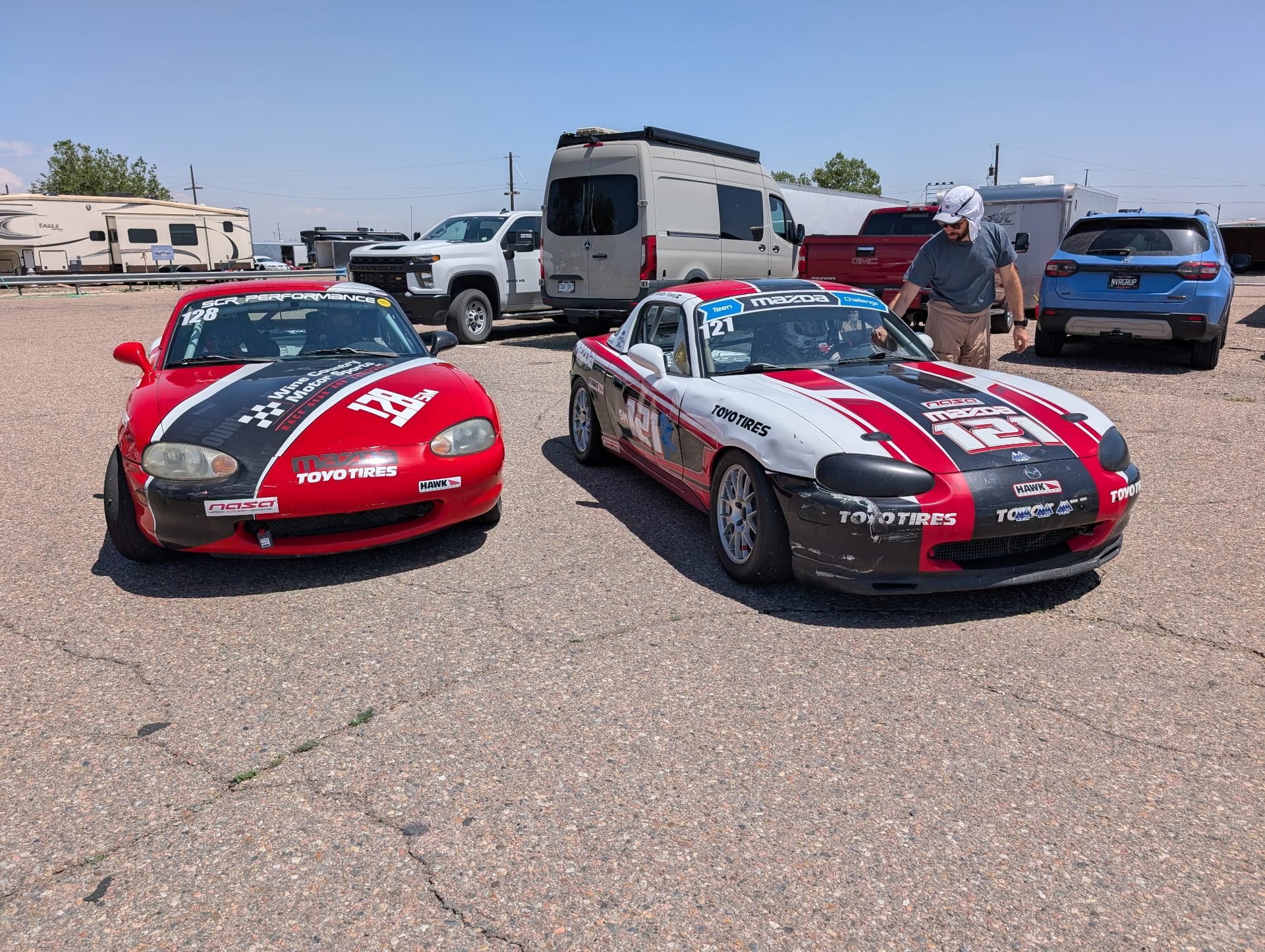 Hospitality is the line racers undervalue most. A brand's best client, in the paddock, at dusk. That's not something a billboard does.
The line most racers skip is the one that gets you renewed
Look at the bottom row of that table again. The fulfillment report.
It's the least glamorous deliverable on the list and the single highest-leverage one. A sponsorship fulfillment report shows what you promised, what you delivered, and the proof behind each item — screenshots, photos, metrics, and an honest note on anything you missed. Send it while the season is still fresh, ideally within days or a couple of weeks, not six months later when you want more money.
Here's why it matters more than anything else in your package. Sponsors renew when every promise gets delivered and documented. If a brand paid for 12 activations and only 9 ran, the renewal conversation is already at risk — and clean documentation is what protects you when it happens.
Most grassroots racers never send one. That's your opening. Be the racer whose sponsor gets a real report in the offseason and you've stopped competing on price.
We got tired of rebuilding ours every season, so the fulfillment report template ships inside The Get-Funded System alongside the pricing calculator and the sponsor tracker. Fill in the boxes, attach the proof, send it. It takes an evening and it's the cheapest renewal you'll ever buy.
Why $2,500 is the number I picked
Because it's a real one. On our side of the ledger, $2,500 is roughly one competitive Spec Miata race weekend in consumables — a fresh set of tires runs about $1,200, entry is around $500, and then fuel, brake pads, and fluids on top. That's before prep labor, before the tow, before anything breaks.
One sponsor at $2,500 equals one race weekend. That's the whole math of grassroots racing, and it's why the number isn't arbitrary.
It's also why we're upfront that a full arrive-and-drive weekend with us is $5,000, not a thousand bucks. Racing costs what it costs. Pretending otherwise is how racers end up underpricing their own package and resenting the deal by round three.
If you want the method for turning that number into a defensible price for your program, we walked through the asset-by-asset math in how to price racing sponsorship.
The trap on the brand's side (warn them about it)
Here's the thing to say out loud in the meeting, because it makes you sound like a partner instead of a vendor.
A sponsorship only works if the brand actually uses it. The long-standing industry guideline is that a brand should spend at least $1 activating for every $1 in rights fees — some studies push that to 2:1 or higher. Reality is nowhere close. The global average activation ratio sits at 0.81:1, and only 18% of sponsors hit 1:1 or better, per a World Federation of Advertisers report.
Translation: most brands buy the logo and then do nothing with it. Then they conclude sponsorship doesn't work.
So build the activation into the package. The posts, the report, the store visit, the tracked link — those all live on your side of the line, which means the sponsor can't accidentally waste their own money. That's not generosity. It's the single best renewal strategy there is.
Bring the invoice, not the ask
The difference between the meeting I lost and the ones that went somewhere wasn't a better car or a faster lap. It was walking in with a list of things I would make and deliver, and a price attached.
Nine lines. One page. A number that ties to a real cost on your side and a real replacement cost on theirs. That's the whole pitch.
If you want the built version — the 16-deliverable activation menu, the pricing calculator, the fulfillment report template, and the outreach that gets you in the room to show it — that's The Get-Funded System, $67. It's the system we run on our own partnerships, built by a team that's still turning wrenches at High Plains Raceway.
Stop asking businesses to believe in you. Hand them the invoice and let them do the math.
Do you believe?
Sources: DashTwo — Billboard Advertising Costs in 2026, Lumency — Why Activation Ratios Matter, The Sponsorship Collective — Super Simple Fulfillment Report Template, Tandem Partnerships — Fulfillment Reports for Sponsors, Big Red M — Sponsorship Fulfillment. Advertising rates and activation-ratio figures verified against these published sources as of August 2026. Racing cost figures are LFR's own real numbers. No customer results, survey data, or sponsor names are claimed that we can't back up — the $2,500 package above is the menu we'd build, presented as such.